

Nostalgia Factor: Low.
Difficulty: Easy. The real time action sequences offer a new kind of challenge.
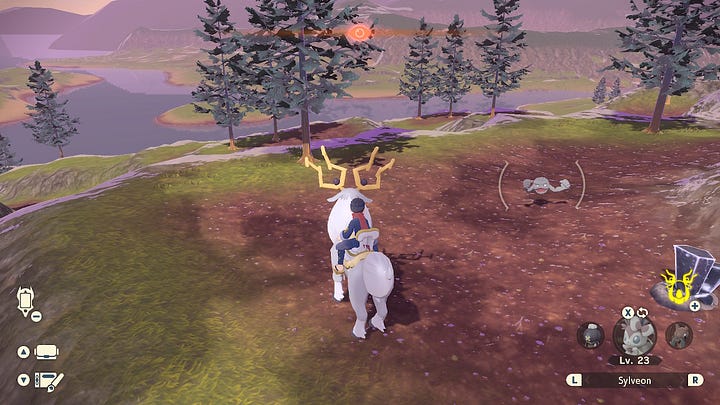
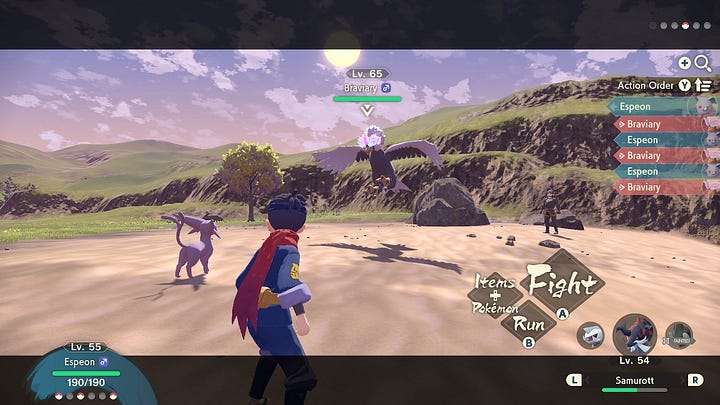
I’m very mixed on how I feel about this game. On one hand, Pokemon Legends: Arceus has introduced some of the most interesting and addictive gotta-catch-em-all gameplay I’ve seen yet from the Pokemon franchise. On the other hand, Legends: Arceus scores very low marks in two categories that are critically important to me and many other gamers – graphics and storytelling.
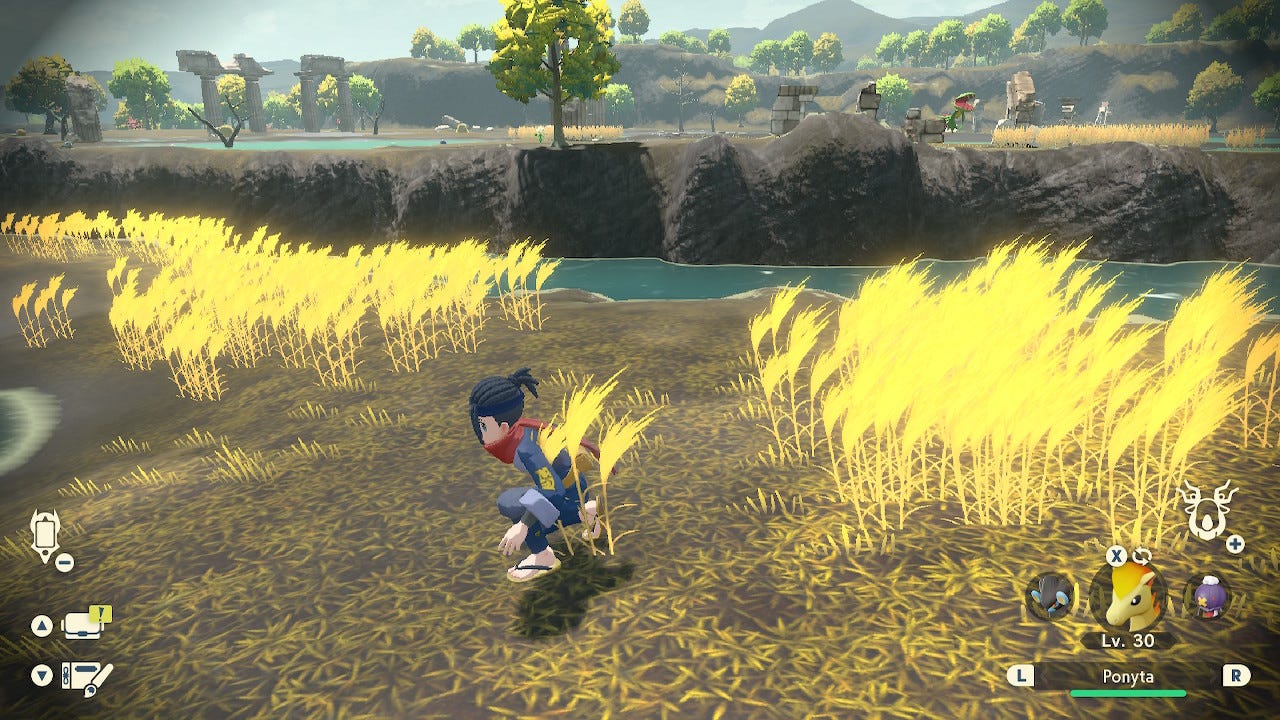
But first, let’s begin with this game’s main strength, the gameplay. The first thing you’ll notice as you’re working your way through the tutorial content is that catching Pokemon in this game is a real-time activity. And, it’s fun. You can tell they invested a lot of time in refining this catch mechanic. You can run, you can crouch, you can hide in tall grass, and when you’re ready, you wind up to throw, aim, and then release. You can even use the left trigger to lock onto targets, which is something they carried over into Pokemon Scarlet and Violet.
At first, this takes some getting used to, but after some practice, I became very confident in my ability to snipe unsuspecting Pokemon with a Pokeball from a distance. The trick is to aim slightly above your target, as gravity begins to pull the ball downward when thrown from a longer distance. The sound effects and the little trickle of fireworks becomes an addictive ritual that keeps you chucking balls over and over and over again. Yet, as great as this catch mechanic is, it does grow a bit stale after about 20 hours of gameplay. There is a lot of catching to do in this game.
Initially, I didn’t understand the Pokedex system and thought I had to catch 25 of each Pokemon in order to complete the Pokedex entries, but you only have to gain a certain amount of “research levels” from various categories in order to hit the required research level (level 10). For example, I caught Bidoof six times, which earned me six research levels, since that research task has a bonus. I also defeated Bidoof four times, and that earned me three more research levels. One of the six Bidoof I caught happened to be a “large specimen”, which earned me one additional research level, bringing his total research level to level 10, thus completing the Bidoof Pokedex entry. It’s unnecessarily complicated, but as you begin completing entries, you’ll get the hang of it.
At first, the familiar completionist siren call of checking boxes and watching bars go up pulled me in, but after dozens of hours of repeating this same activity, just with different Pokemon in different locations, this experience started to feel hollow. The catch mechanic is fantastic, but it just wasn’t enough to carry me through a 25-30 hour Pokemon game that’s missing some core features that I’ve come to love from the franchise. Plus, the weak graphics and storytelling do not help in carrying the repetitive gameplay across the finish line.
I will say, I loved the crafting feature. This is one way that you are rewarded for exploring the Hisui region. You can collect apricorns and special stones that you use to craft all kinds of different Pokeballs. You can collect herbs and berries to craft your own potions, which you can later upgrade to more powerful potions. There’s a big variety of other craftable items as well that you can use to help lure Pokemon, stun Pokemon, or battle Pokemon.
The battles are still turn based, so it does pull you out of the real time flow a bit when a Pokemon wants to battle. The way battle stats are calculated is also very wonky. They certainly were shaking things up with this game. I knew something was off when a level 2 Buizel was still doing notable damage to my level 14 Oshawott. A level 46 Staravia used Quick Attack on my level 44 Espeon which took away 60% of its health. I know Espeon is no tank, but still, a Quick Attack from a similarly leveled Pokemon should not be doing that much damage. I actually checked an online Pokemon damage calculator, and in Sword and Shield, this same move from Staravia would only take away 20-25% of Espeon’s health, not 60%. Expect battles to feel very different.
The agile and strong moves are an interesting addition, but I’d be lying if I said I understood the convoluted turn order system at all. I honestly just muddled my way through battles, with very little desire to fully comprehend how this absurd turn order nonsense works. (Here is a link to a thorough breakdown of how this system works for those that do want to understand).
There is a sense of danger in this game that’s never been present in a Pokemon game before. Pokemon can actually attack you — not just your Pokemon, you. If you don’t throw out one of your own Pokemon to intercept an attacking wild Pokemon, you will take damage. After 3-4 consecutive hits, you will black out, losing some of your items and respawning at the nearest camp. It’s easy to run away from attacking Pokemon, but still, this ever-present threat from aggressive wild Pokemon adds a welcome intensity to the franchise.
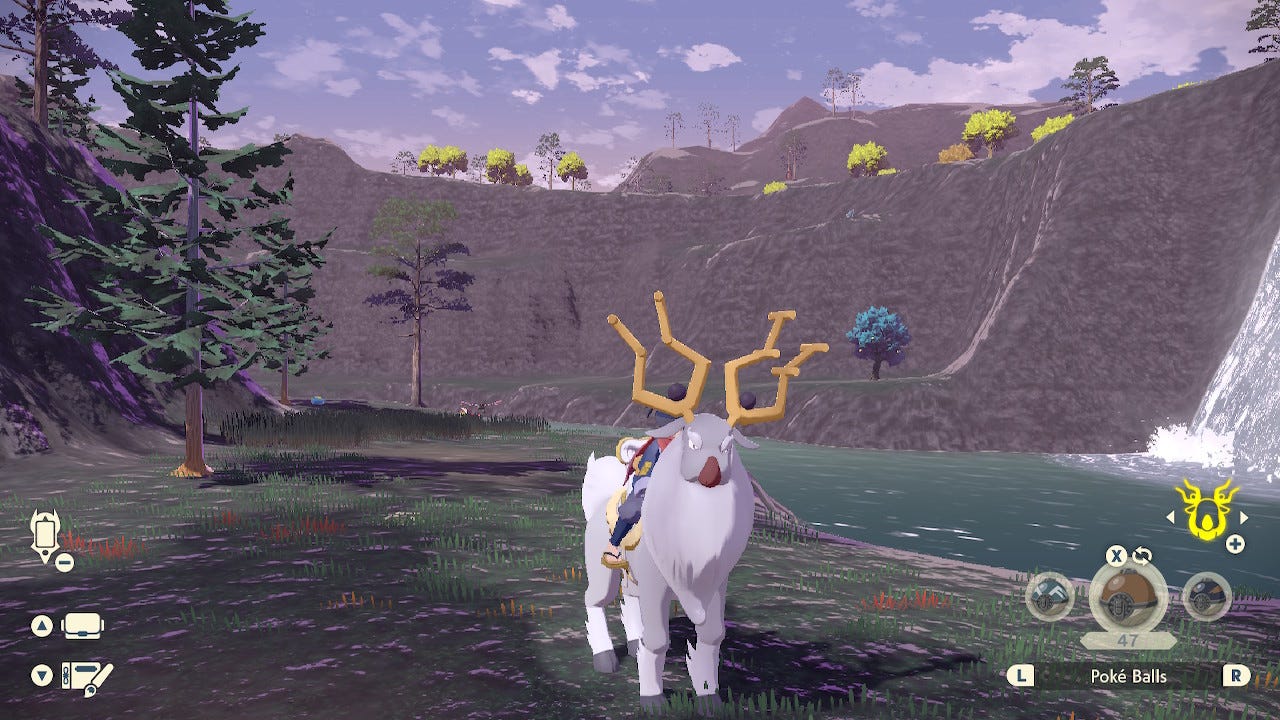
Later in the game, you get access to rideable Pokemon that greatly increase your speed and mobility over all types of terrain. This makes ingredient gathering for crafting much more enjoyable. It also reduces the threat from aggressive wild Pokemon, as it becomes much easier to escape.
You’re able to fast travel between camps you’ve unlocked within a main area, but you’re not able to fast travel between the main areas, which is very frustrating. If you’re in the Obsidian Fieldlands, and you’re ready to jump over to the Coronet Highlands, you can’t just zoom out on the map and click on a new location. Sorry. You’ve got to first fast travel to a camp, speak to the Professor, ask to return to the village, then immediately leave the village, which brings up the map again so you can select Coronet Highlands as your new destination. Each of these steps has its own loading screen as well. This is unconscionable for a modern game. I really do not understand why they designed fast travel this way. Someone please explain it to me.
There’s a move tutor in the village that essentially replaces TMs. There are no TMs littered throughout the region, but you can pay to teach your Pokemon all kinds of moves. There’s also a kiosk that sells you rare stones and other evolution items, but you have to grind out Merit Points by finding lost satchels. Finding satchels is tedious, and I find myself missing the thrill of exploring caves and hideouts, hunting for valuable TMs and evolution stones. The convenience of the Move Tutor is nice, but I can’t help but feel like I’ve been robbed of an important aspect of Pokemon gameplay.
I will say, one convenience I really appreciated was having access to more than one Eevee in this game. There’s at least one Eevee that spawns in the Obsidian Fieldlands. I was able to catch several by leaving the area and returning, so that the Eevee would respawn. I was finally able have more than one of my favorite Eeveelutions on my squad – Sylveon, Flareon, and Espeon. I was too lazy to go for a Glaceon too.
In addition to the main quest, there are loads of side quests in this game. After major milestones in the main quest, more side quests are unlocked and their markers appear. It can be a bit overwhelming. Some of these side quests are clever and fun, but many of them just feel like busy work, with cookie-cutter NPCs and minimal story content. The rewards for completing these quests are often not worth the hassle, so I just gave up on the side quests after a while.
There are some refreshing challenges in this game. The real-time noble Pokemon battles are quite fun. It’s the most action oriented Pokemon gameplay the franchise has seen yet, other than Legends: Z-A, of course. Battling the noble Pokemon requires carefully timed dodging and throwing projectiles at your opponent. A few of these battles could use some tweaking, but most are designed well. The time distortions are also very intense. Sometimes multiple high level Pokemon will just zap into range and start attacking you simultaneously. It’s a proper challenge that requires some quick decision making and intentionality.
Towards the end of the game, there are some very exciting battles that bring some challenge as well. During a particular quest, there’s a massive level 70 alpha Pokemon blocking your exit. It feels a bit like a mini boss. There’s also a tough 1 vs. 3 trainer battle in the late game. That’s right, you get one Pokemon, and your opponent fields three Pokemon at once. Not fair, by any means, but still a very fun challenge.
Unfortunately, the game’s visuals are a major weak point. Even though I was able to find a few scenes in Legends: Arceus that didn’t look too bad, by and large, this is one of the ugliest games I think I’ve ever seen from a major franchise on a Nintendo console. I played Pokemon Violet before tackling Legends: Arceus. I was very hard on Scarlet & Violet’s horrid visuals in my review, and yet, after playing Legends: Arceus, I can see that Scarlet & Violet’s visuals were actually an improvement over Legends: Arceus. The pop-in is atrocious, textures look horrid from many angles, and there are loads of copy-paste assets in the main village.
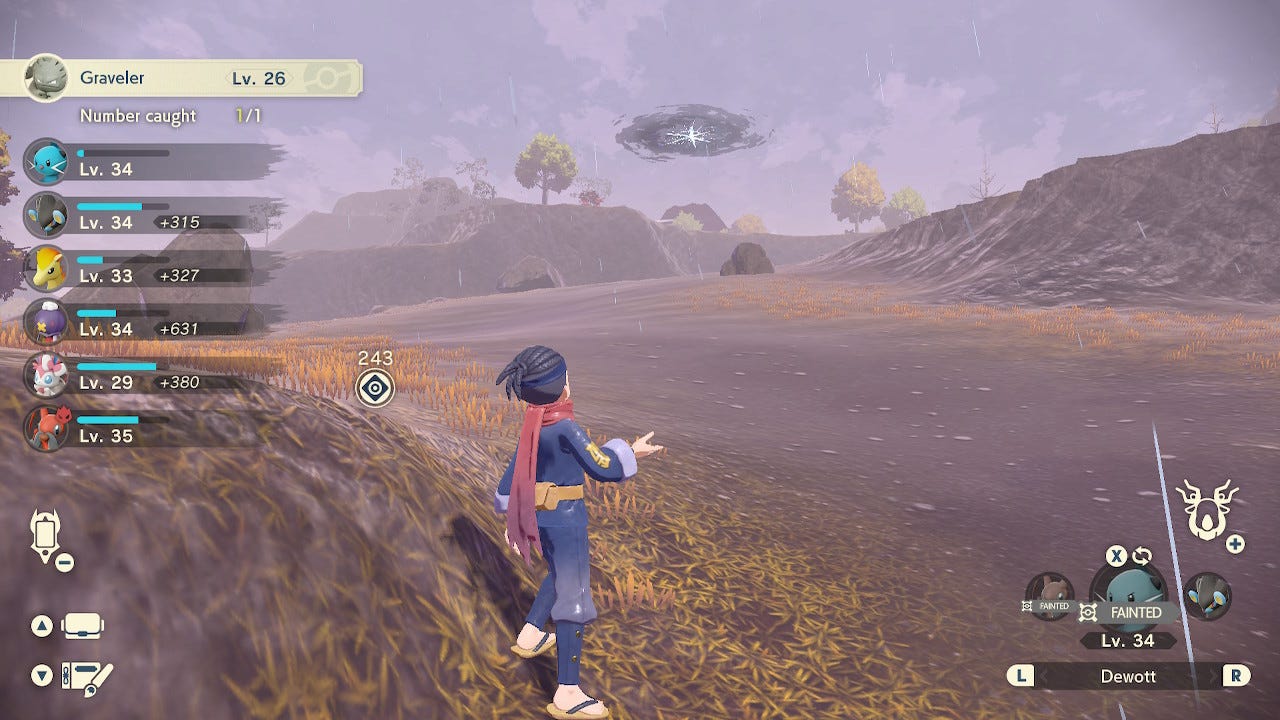
I mourn that this game had to come out on the Nintendo Switch. If they could’ve dressed up this 3D world for a more powerful system, this game would easily be an 8 out of 10 for me. When you’re spending this much time frolicking through a digital landscape chucking Pokeballs at anything that moves, the environments have to be breathtaking.
Skyrim came out more than 10 years prior to Legends: Arceus. The Switch port of Skyrim is no showstopper, but the environments look magnificent compared to the bald and lifeless topography of Legends: Arceus. I’m not sure how much blame can be assigned to the Switch’s limitations, as Breath of the Wild is proof that Switch games can look incredible in spite of the system’s limitations.
Some credit where credit’s due, the evolution animation is probably the most epic evolution sequence in the entire franchise. Wow! Also, the battle animations look fantastic, the best I’ve seen yet. Kudos to the team that developed the battle animations. I love the historical theme of the game, which seems to be inspired by the Republic of Ezo (now called Hokkaido), circa late 1800s based on some of the technology available (Professor Laventon has a primitive camera similar to this one). It’s such an epic concept and theme. I just wish this game had the visuals to support it.
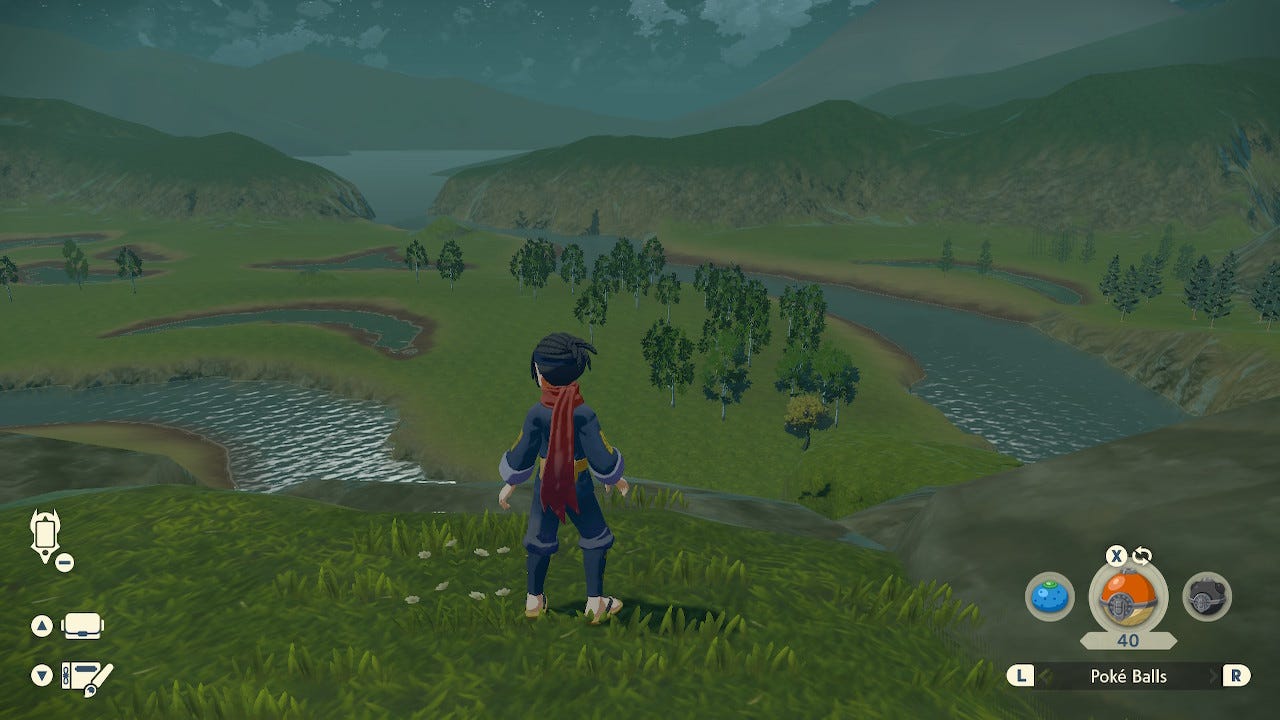
Late in the game, you gain the ability to fly, and the scenery is… laughably bad:
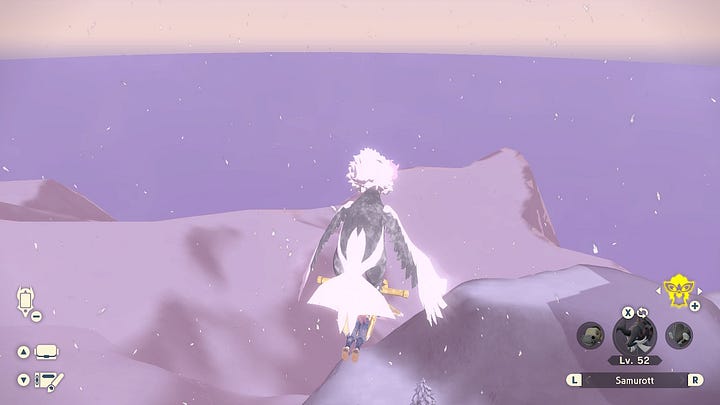
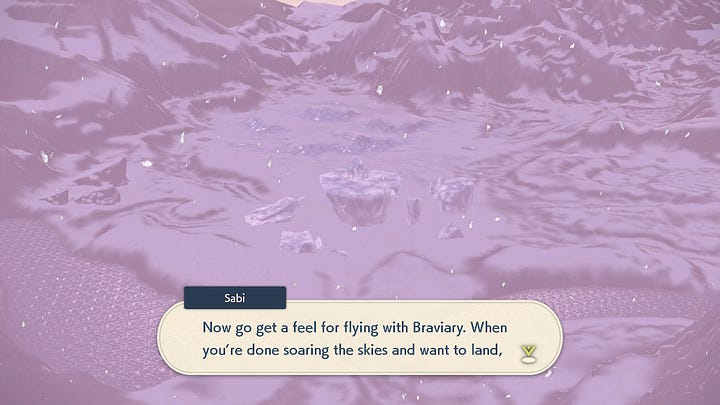
Thankfully, not ALL of the game looks that bad. There are at least a few spots in this game that manage to portray some decent visuals:
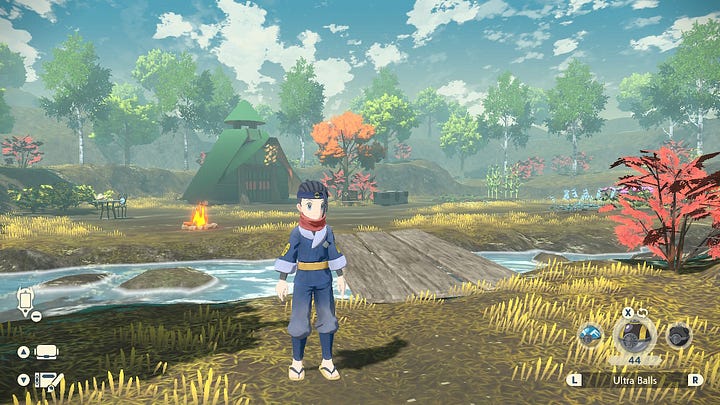
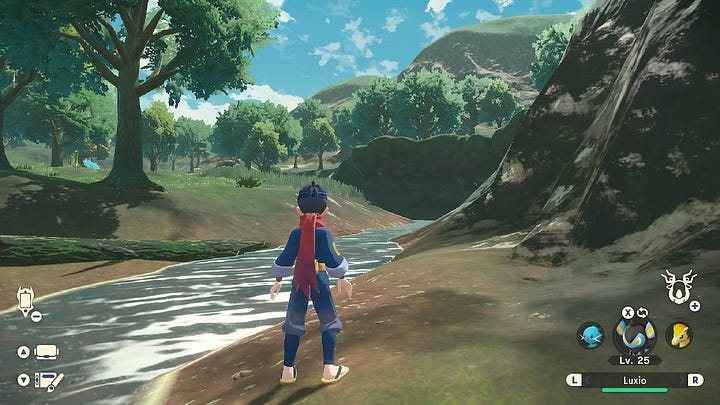
I don’t have too much to say about the game’s music. It’s a bit of a mixed bag. There are some decent tracks, and there are some tracks that make me scratch my head. The Jubilife Village track is woefully bland and repetitive, especially since you hear this track more than most other tracks. It’s just the same three chords repeated over and over. There’s a handful of the odd, bouncy and and slightly funky or jazzy tracks that I’ve come to expect in recent Pokemon games.
I was expecting a period appropriate soundtrack, since this game takes place in a historical era. Instead, much of this soundtrack just sounds completely out of place, using a lot of modern instrumentation and even some quirky synthesized instruments. I think this soundtrack would’ve been so much more effective if the composers primarily utilized historical instruments like the shakuhachi, the shamisen, the koto, the biwa, and taiko drums.
The game’s story may be the most frustrating element for me. I’ve grown used to the typical overly-affirming Pokémon plot and writing, but what I find so frustrating is that this story actually has potential to be good. There are enough interesting themes and pieces of narrative here to make a great story, but the writing just bungles the execution.
From the start, we’re met with some challenging questions about whether or not Pokemon should be feared as monsters or valued as friends and partners. Irida doesn’t believe it’s right for Pokemon to be trapped in Pokeballs. Some Pokemon are even revered as gods. These are fantastic starting points for some engaging dialogue, but the writing is just so clumsy. Early in the game Professor Laventon, who is supposed to be an authority on Pokemon, says that “Pokemon are terrifying creatures.” OK, I can accept that this may be the general perspective for the people of Jubilife Village. This sets up a great opportunity for some story beats to help demonstrate that Pokemon don’t have to be feared. This could become a recurring theme throughout the game. Wouldn’t it be great to watch these characters slowly develop and change their mindset about Pokemon over time? But, not much later in the game, Akari just randomly blurts out, “We need to stop fearing Pokemon!” Ah, OK, so much for subtlety. Not even an hour into the game, we’ve already burst that bubble.
What’s ironic is that, in spite of this exhortation from Akari, Pokemon have never been more threatening or terrifying than in this game. My youngest daughter was so frightened when a Shinx chased her and launched electrical attacks at her. She did not like that at all. Alpha Pokemon have these menacing red eyes, their own intimidating backing track, and they make frightening sounds when they spot you and charge at you.
I was initially very confused when trying to figure out how Pokeballs work in Legends: Arceus without the advanced technology found in the mainline Pokemon games, but I found a video that provides an adequate explanation. Powerful stones have always played an important role in Pokemon games, and it seems that the stones used to create these primitive Pokeballs interact with the Pokemon themselves, allowing them to shrink down to fit inside the apricorn container. When you first arrive in the region, Professor Laventon seems to convey that no one else is capable at catching Pokemon, and yet, you encounter plenty of strong trainers late in the game with plenty of Pokemon that they’ve captured. These kinds of inconsistencies become more noticeable as you progress through the game.
I can’t tell if there are translation issues, or if they’re intentionally trying to use strange grammar and phrasing to indicate some sort of historical dialect. Whatever the case, there’s some very odd lines. There’s a lot of talk of death and danger of death. It seems at times that they’re trying to posture this as a more mature Pokemon game, but the rest of the writing does not follow through. Still, in spite of the disappointing writing, there are a few strong moments and some thought provoking lines. It’s not all bad.
I have more thoughts about the game’s story, but it’s major spoiler town, so I’ve moved those paragraphs to the end of this article (after a spoiler tag).
Overall, I enjoyed the first half of my time with Legends: Arceus. The incredible catch mechanics alone are enough for me to encourage any Pokemon fan to at least give this game a few hours of your time. Unfortunately, I hit a wall at about 20 hrs of gameplay. I reached a critical mass of disappointment with the writing, the graphics, and the repetition. At that point, I just wanted to get through the rest of the main quest and move on.
I was very surprised to see such favorable ratings on Metacritic. I’m guessing that when this game came out, critics and fans were swooning over the excellent catch mechanic and the move towards more open-world exploration. Perhaps over time, some others have also realized that Legends: Arceus feels like half a game. It’s got a great catch mechanic, sure, but just one major town, bland and empty environments, and heaps of repetition. It’s rare for me to skew on the negative side of a Metacritic rating, since I tend to be so positive about games (because video games are AMAZING), but I really struggled with the later chapters of this game after the initial excitement wore off. Catching hundreds of Pokémon over and over again might be enough for some, but not for me.
Most of my objections to the story in Legends: Arceus have to do with the game’s final moments. This is when the writers really jump the shark. After quelling the fury of several noble Pokemon and receiving an overload of positive affirmation from your colleagues, the player character is suddenly hit with one of the most absurd cases of narrative whiplash I think I’ve ever seen.
Out of nowhere, Commander Kamado shifts from singing your praises as Galaxy Team’s newest member, recommending you for multiple difficult missions, to accusing you of turning the sky red. This crucial moment is supposed to be received in all seriousness, but I actually laughed out loud. I laughed. It was such an unexpected and poorly written plot twist. It was just completely unearned. This kind of dramatic character betrayal could be executed well with the right build up, with some subtle hints, perhaps a behind the scenes conversation between Kamado and some of his elite guards as they express their concerns and doubts about yoy, but no. This scene slaps you in the face and is clumsily executed, just like the rest of the story.
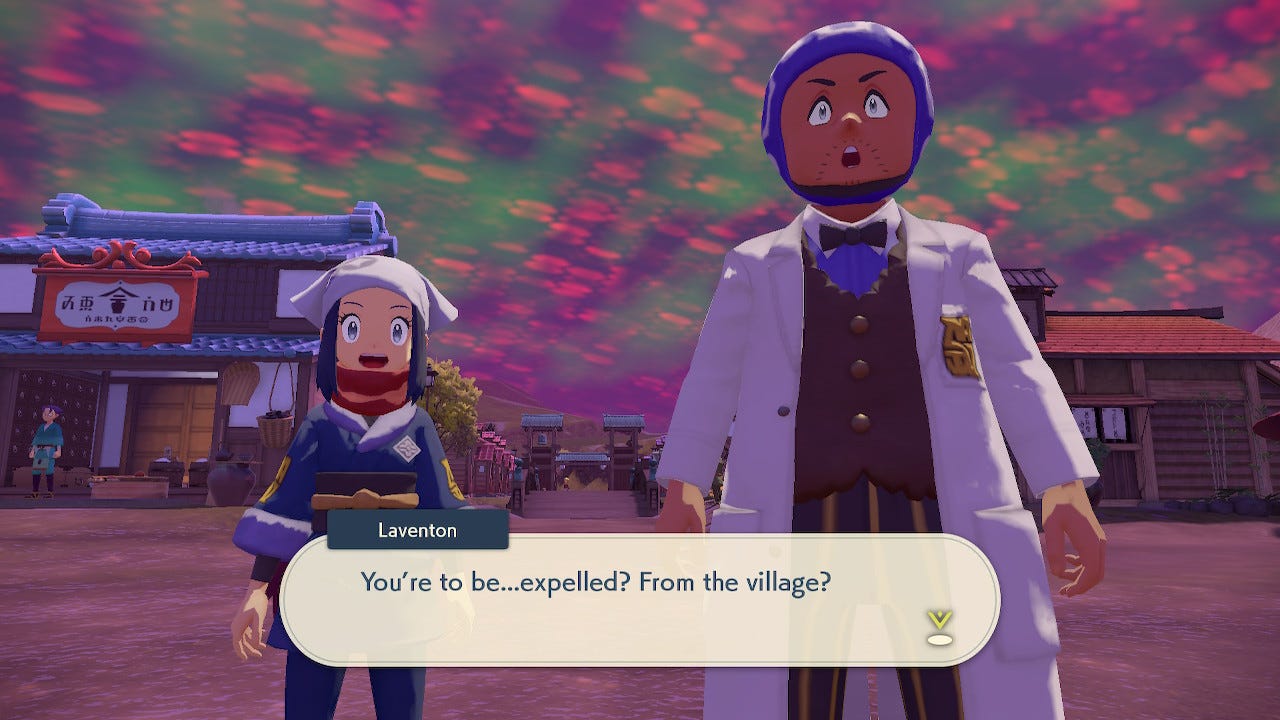
To add insult to injury, Akari has a look of joy on her face when she learns that you’re being banished from the village without trial. The sky is red, dissonant piano chords are sounding, and Akari has a huge grin on her face. This is obviously an oversight. It HAS to be, and yet, I can’t blame her. I laughed at the absurdity of all of this too.
There are some inconsistencies in this final sequence. I’m no longer trusted. I’m banished from the village, and yet, I still get access to my pasture of Pokémon? Hmm. I can tolerate Saturday morning cartoon plot, which seems to be par for the course in Pokémon games, but at least the mainline games can deliver a proper build up and finale without the whiplash of flawed writing. As events unfolded, I kept saying to myself, “What? Huh? Why?"
Nearing the climax of the finale, the clan leaders believe that Sinnoh is about to come through the portal. This entire game, they’ve been clamoring for a chance to meet Sinnoh. And yet, when it seems that Sinnoh is about to come through the portal, they say, “We need to close the portal!” Why? Is Sinnoh evil and dangerous now? I thought you wanted to meet Sinnoh. This inconsistency could easily be explained with some clever dialogue, but clever dialogue is in very short supply in Legends: Arceus.
I really struggled with the concept of catching these godlike legendary Pokemon. I understand that’s what Pokemon games are all about, catching epic Pokemon, but once they started introducing these god-tier legendaries with such weighty lore, it’s been hard for me to follow. After all of this hype from the clan leaders about this god-tier Pokemon coming through the portal, this derpy kid in a hat just walks up and catches the god of space with an ultra ball. At least Palkia wanted to be caught, for some reason. Both Palkia and Dialga were transferred to my pasture after I caught them. It just felt so… wrong. There they are, the gods of time and space, just chilling in Pasture 7 next to some Bidoofs. This derpy kid caught these foundational Pokemon gods and just carries them around in homemade Pokeballs on his belt. It all just feels like a dorky middle-school power fantasy.
The postgame has it’s own twists and turns, and they really try to pull on your heartstrings at the end, but for me, it just felt empty and forced. It’s probably because these writers lost me halfway through with their sloppy writing. They just didn’t earn my engagement. Once the suspension of disbelief was shattered, I was a lost cause. I wasn’t able to recover. Hopefully you enjoyed the ending more than I did.
No posts
Comments
Nothing yet. Say the first thing.
Sign in to join the conversation.