

I’ll never forget the excitement I had when I finally received that email from Blizzard. I had been accepted into the Hearthstone closed alpha in late 2013. I felt so privileged, so “in”. I had been following every announcement and update. I watched every clip from the charismatic Ben Brode, Hearthstone’s original game director. For months, nearly all of my gaming time went to Hearthstone. I didn’t have a proper gaming PC or console, and Hearthstone was one of the few games that would actually run on my chunky white-plastic Macbook.
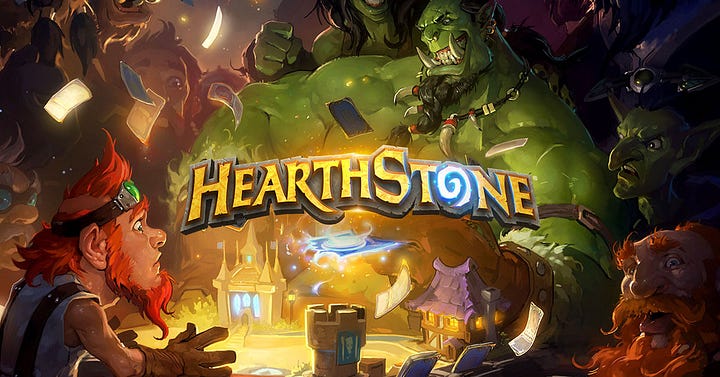
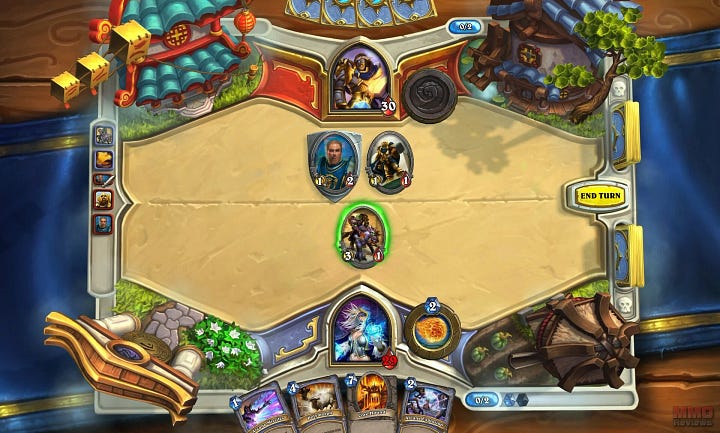
I had almost no experience whatsoever with DCCGs. I hadn’t played many physical TCGs either, other than Yu-Gi-Oh. Hearthstone launched me into a new obsession that lasted years. I played Hearthstone regularly, passionately, for at least four years straight. I watched hours upon hours of tournament footage and Hearthstone Twitch streamers. I put in my time on the ladder, grinding my way up the ranks with Face Hunter and One Turn Kill Druid. Eventually, the burnout finally caught up to me, and I took a big step back from Hearthstone, but I would still return periodically to catch up on new content. I’ve always enjoyed the PvE solo adventures too. Sadly, they haven’t released any new new solo adventure content since 2022.
Late 2022 is also when Hearthstone began to experience significant decline in player engagement. Ben Brode left the Hearthstone team in 2018 to start his own development studio (Second Dinner, the studio behind the formerly-popular Marvel Snap), and fans grew tired of Blizzard’s increasingly aggressive monetization.
Still, Hearthstone dominated the online card battling scene for years, peaking in 2018 with over 100 million registered players. That’s insane. If the peak Hearthstone player base was a country, it would be the 17th largest country in the world by population today. Hearthstone was not only the most popular DCCG, it was one of the most popular F2P games from any genre. Just about any studio with a valuable IP was trying to put together some kind of card battling game to emulate Hearthstone’s success. Wizards of the Coast responded with Magic Arena, Konami responded with Yu-Gi-Oh! Duel Links, and many other studios attempted and failed to grab a slice of the DCCG pie — Elder Scrolls: Legends, Gwent, and Legends of Runeterra, just to name a few.
Hearthstone was king, and it managed to remain on that throne for a long time, which is no easy feat in the oversaturated F2P market. But why was Hearthstone so popular? How was it able to hold the attention of so many gamers for so long?
There were a few bugs that needed to be worked out in Hearthstone’s alpha and beta, but by and large, Hearthstone launched as an incredibly polished digital card game experience. The game just worked on multiple platforms, including mobile. I used to love playing Hearthstone on my old chunky iPad.
The game’s art is pristine. The music is great. The variety of game modes has continued to grow and grow. It seems like the Hearthstone devs have tried just about everything under the sun. During the game’s peak, each release of new cards was surrounded by so much hype. The game is incredibly kinetic – when you play a card, you can almost feel that digital card slamming onto the board. Sound effects and/or voice acted one-liners trigger with every card played. The “game board” designs not only give you something to look at while you wait for your opponent to finish their turn, but you can interact with various objects along the periphery. If you click on certain objects enough, the objects might break or even trigger an animation.
Hearthstone’s level of polish and production quality set the standard for DCCGs. What else gave Hearthstone such an edge?
I don’t have access to Blizzard’s data, of course, but I have to imagine that a significant chunk of the World of WarCraft playerbase at least dabbled with Hearthstone to see what all the fuss was about. I never played WoW much myself, but I’ve played through the WarCraft 3 campaign multiple times. WarCraft lore runs deep, and I’ve spent hours reading lore articles online. Blizzard has invested a lot into their WarCraft universe, and these familiar names and characters brought instant value to Hearthstone.
It’s hard to describe the giddy triumph of slamming down Ragnaros the Firelord onto the board, watching him obliterate your opponent’s Archmage Antonidas with a fireball while screaming “DIE INSECT.” I can’t tell you how thrilling it is to drop the nasty combo of Force of Nature and Savage Roar to smash your opponent’s dome for lethal damage, while spamming Malfurion’s obnoxiously pompous “a natural mistake” emote of course.
It’s likely that many DCCGs failed to survive because they lacked the benefit of recognizable names and characters. The foundation of WarCraft’s rich lore set Hearthstone apart from competitors. Still, there’s one very obvious factor that has contributed to Hearthstone’s success.
Of course, whenever a game comes out on top in a competitive market, the impact of the almighty dollar cannot be understated. Those who have money make money. Activision Blizzard had plenty of money, and they were making even more, year after year.
In 2018, Hearthstone’s peak year, Activision Blizzard had a net revenue of $7.5 billion. They spent $1.06 billion in sales and marketing that year. Granted, much of these marketing dollars went to Black Ops 4, Overwatch, Candy Crush, and World of WarCraft, but a sizeable chunk of these advertising dollars fueled the Hearthstone craze. I remember seeing Hearthstone ads all over the place during these early years.
The combination of sublime production quality, WarCraft lore, and fat stacks of marketing cash is what propelled Hearthstone to the top and kept it there for so long. Today, the reigning king seems to be Pokemon TCG Pocket, but we’ll see how long that lasts. The attention of span of many gamers today seems to be getting shorter and shorter. There are more games to play now than ever before, and TikTok (or your short form video reel platform of choice) is not only competing for time that might be spent gaming, but it’s doing something to our brains that affects our ability to stick with something long term. Marvel Snap’s time in the spotlight seemed dismally short.
Today, Hearthstone continues to be a major player in the genre. New and exciting games will come and go, but I doubt any DCCG will ever match the massive hype and lengthy reign achieved by Hearthstone. It will be remembered in gaming history as one of the greatest F2P games of all time.
No posts
Comments
Nothing yet. Say the first thing.
Sign in to join the conversation.