
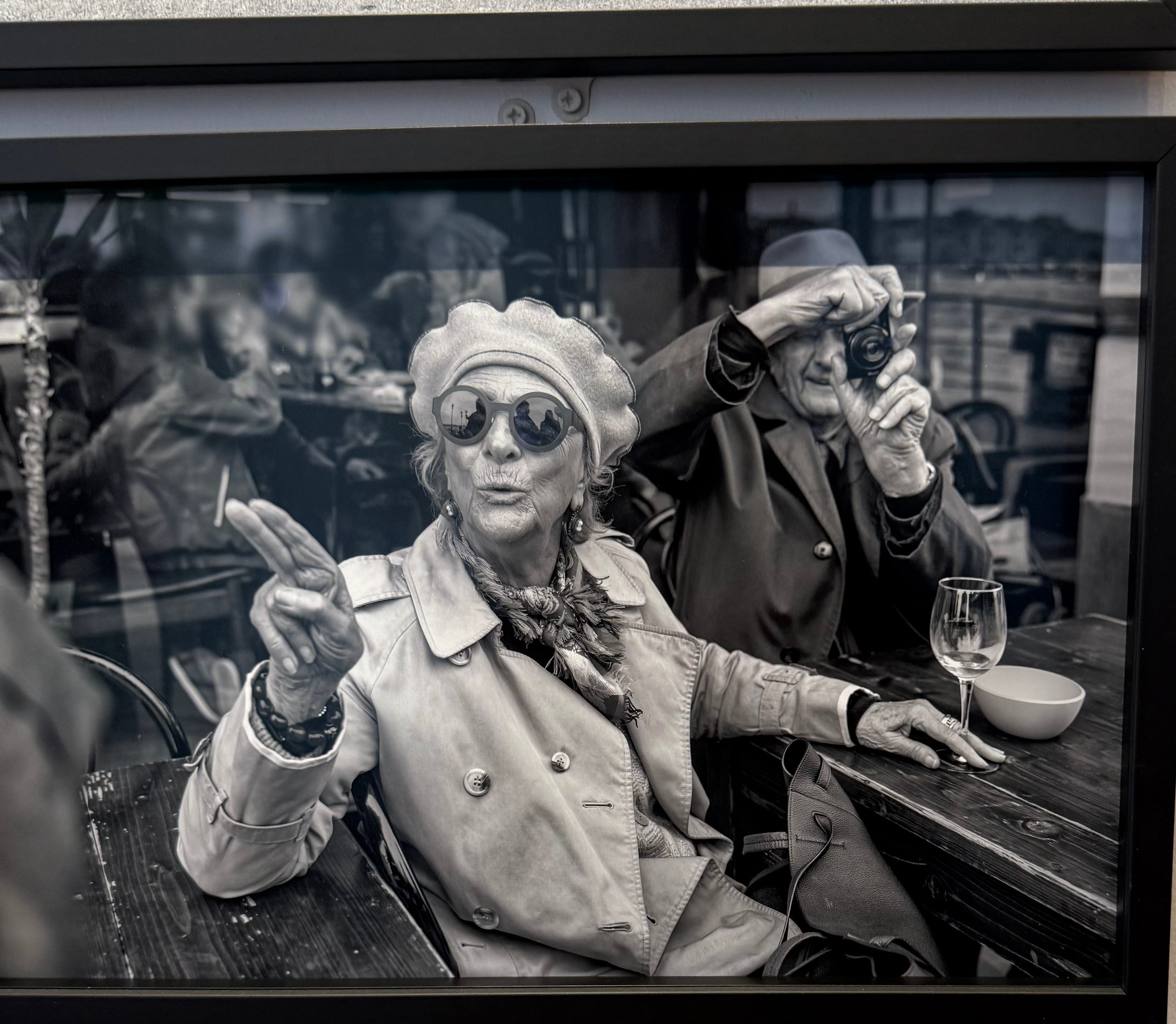
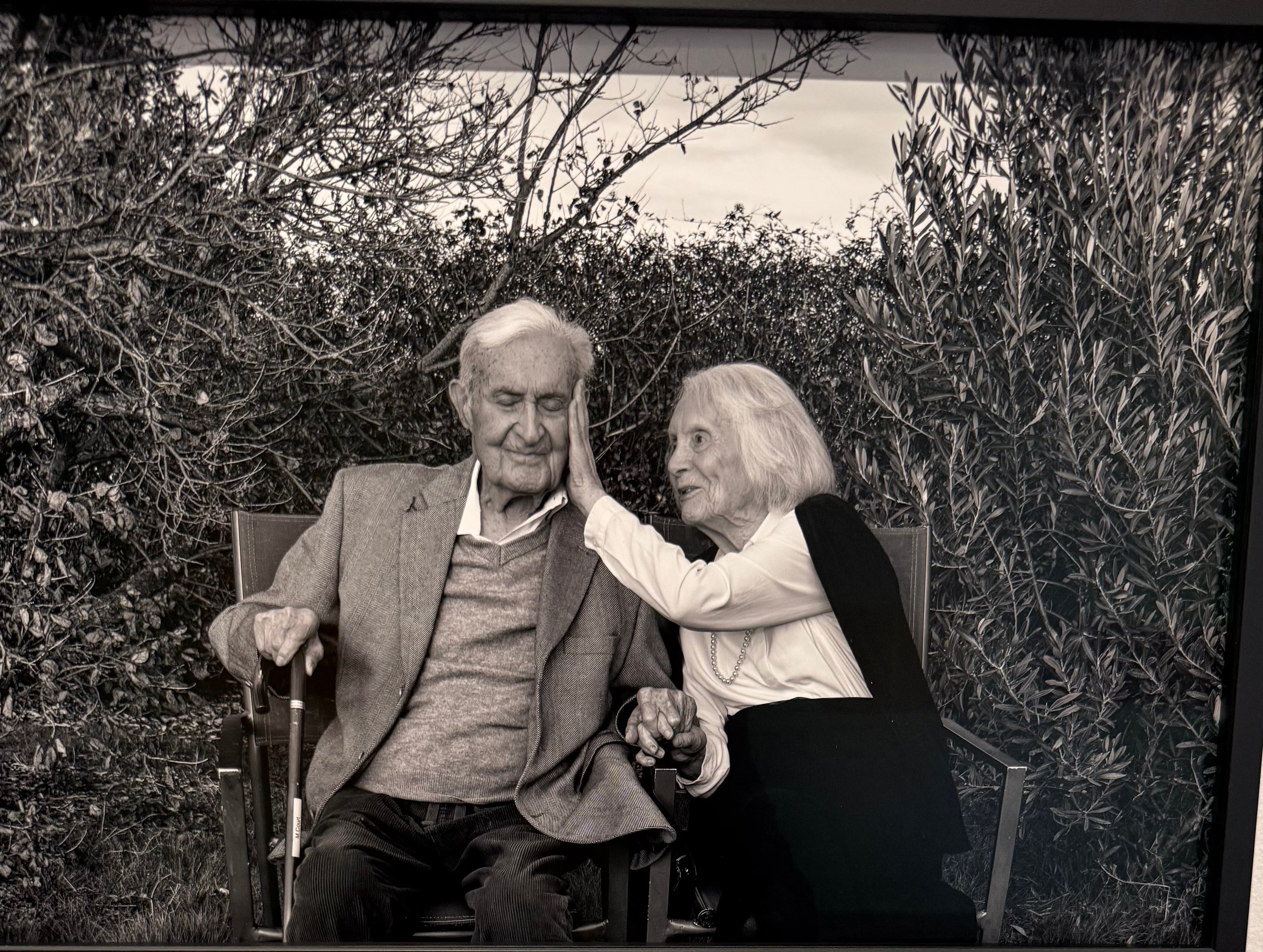
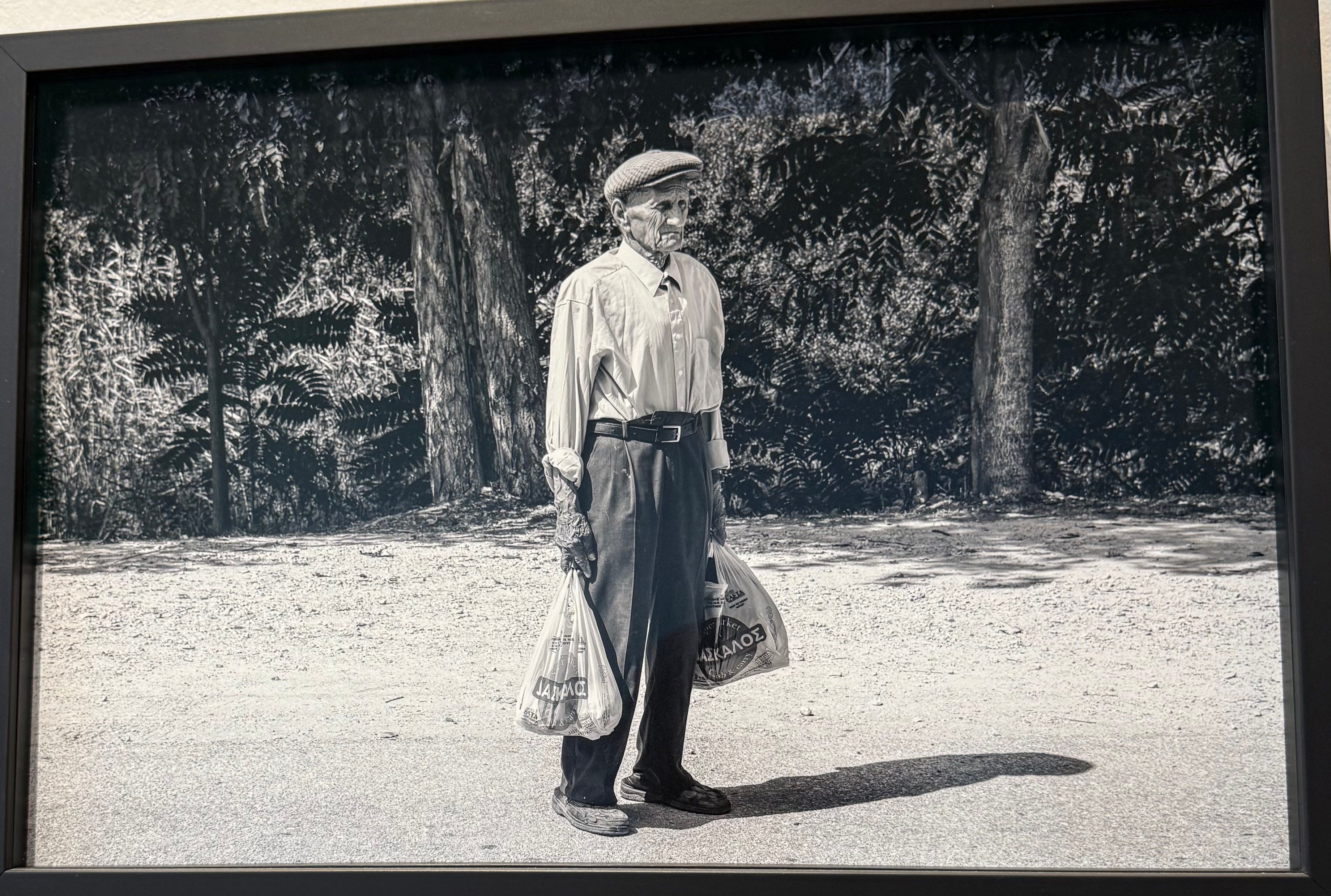
We were wandering through the Musée de l’Homme in Paris (thanks to the Musée for these cool images) when we came upon this amazing exhibition that stopped us.
It was about people growing old.
Really old.
People in their 80s, 90s and 100s, photographed not simply because they had survived for so many years, but because they were still living them.
There was an 85-year-old man still riding his horse.
Two elderly sisters whose closeness seemed almost palpable.
A couple, Michel and Simone, photographed at 103 and 98, who had spent more than 70 years together.
A man laughing so completely that you could almost hear him through the photograph.
Hands reaching for other hands.
People working, loving, laughing, caring for one another and continuing to participate in the lives they had built.
I found myself thinking about my father. He lived to 100. My grandmother to 95.
And suddenly a question I have been asking about retirement seemed much too small.
What if the real question isn’t, “What am I going to do when I retire?”
What if the question is, “How do I want to live if I have another 20 or 30 years?”
That is a very different question.
We spend enormous amounts of time preparing financially for retirement. We calculate what we will need. We think about where we will live. We make plans for travel. We worry about healthcare.
All important.
But standing in front of these photographs, I was struck by something else.
The people seemed to be showing us that a long life isn’t necessarily built by inventing an entirely new one.
Sometimes it is built by continuing to do the things that have always made you feel alive.
Ride the horse.
Make the pottery.
Read the newspaper.
Grow the garden.
Prepare the food.
Laugh.
Touch someone you love.
Stay interested.
Stay connected.
Keep doing something that gives you a reason to get up tomorrow morning.
And perhaps most importantly, don’t grow old alone.
Again and again, these photographs showed people in relationship with other people: sisters, spouses, children, friends, neighbors, fellow workers.
It reminded me that longevity isn’t simply about adding years to life. It is about adding life to those years.
As an anthropologist, I couldn’t help looking for the patterns.
And I saw several.
Continuity. Keep doing what has always given your life meaning.
Community. Stay close to people who provide companionship, comfort and belonging.
Purpose. Have something—or someone—that needs you tomorrow.
Curiosity. Remain interested in the world around you.
Joy. Don’t treat it as frivolous. It may be one of the essential ingredients of a long life.
None of us knows whether we will live to 85, 95 or 105.
But increasing numbers of us are going to live much longer than generations before us ever imagined.
Which makes me wonder whether we are preparing for the wrong thing.
Maybe we shouldn’t be preparing simply for retirement.
Maybe we should be preparing for longevity, or some new word that captures this new stage. After that retirement stage.
For decades of living after the career that once organized our days has ended.
For friendships that will need nurturing.
For new rituals and old passions.
For ways to remain useful.
For people to love and people who will love us.
For mornings when there is still a reason to get up and see what happens next.
My father made it to 100.
Will I?
I have no idea.
But those wonderful faces on the walls of a museum in Paris reminded me of something I don’t want to forget:
Don’t wait until you’re old to figure out how you want to grow old.
Start living that way now.
No posts
Comments
Nothing yet. Say the first thing.
Sign in to join the conversation.