

I have watched the same mistake play out twice in a decade. Traditional media spent years fighting social media, framing it as a threat to real journalism. Now it is lining up to fight AI, and the reasoning sounds familiar.
But the fight was always about the wrong thing.

When social media started carrying news, traditional outlets positioned themselves as the guard against fake news. For a while, that held. Google prioritized long-standing outlets as the source, and readers followed.
Then the perception shifted. Readers started to see political leanings, smear coverage, and advertisers sitting comfortably on the same pages that claimed neutrality. The gap between what these traditional news outlets said and what readers observed kept widening.
Trust moved. It moved toward independent platforms, niche bloggers, social media news, and expert commentators that readers feel they could rely on.
In a recent study, WPP Media's "This Year, Next Year,” in June 2025, a mid-year global advertising forecast, found for the first time more than half of content-driven advertising revenue would come from user-generated platforms (TikTok, YouTube, Instagram Reels) rather than professionally produced content from traditional studios, TV, print, and cinema.
Separately, WPP calculated that revenue flowing directly to individual creators (via brand deals, sponsorships, and platform revenue-sharing like YouTube's) would hit approximately $184.9 billion in 2025, up 20% year-over-year, and is forecast to more than double to $376.6 billion by 2030.
About 60% of that creator-specific revenue comes from brand and sponsorship deals, with the remainder from platform ad-revenue splits.

I run RetailBoss, an independent news outlet for fashion and beauty for an audience that mostly finds us on social platforms first. Over the years, I have seen legacy media many times our size in readership and budget, struggle to translate long-form into short-form content.
As a publication that thinks social first, over the last 10 years we understand the way people want to discover news. Our daily reporting averages ~50 million views every month, with random posts surpassing that in just one day; all with the same rigour as traditional media.
While independent media just years ago may have been seen as irrelevant, the tables have completely changed, and I have spoken to journalists who blame readers, and outlets who blame the gap in their reach as someone else’s fault.
I’ve seen the same deflection before, when online shopping started to surpass physical retail sales in certain product categories. E-commerce opened the field to anyone with an internet connection to start their own brand and sell products online.
The legacy brands had billions in capital, customer lists, and the cultural weight to move first. They saw it and largely ignored it.
When they started to close stores, they blamed Amazon. They blamed the economy. They blamed consumers for changing.
The same is thing is happening in traditional media.

A recent independent news survey in May 2026, found 31% of Canadians who consume news from independent creators, and 42 % of the study participants who said yes were 18–34 years old versus the older generation that said no. They are much more likely to describe themselves as "hyper" news consumers.
Overall, regardless of age, those who follow independent news creators say:
70% agree they represent the future of news and journalism,
66% say creators are more authentic than traditional media,
65% see them as less influenced by corporate or political interests
64 % get news from independent creators on social media each day,
54% use general social media for news.
While only:
37% use news websites or apps from traditional outlets,
31% listen to traditional radio news,
23% use traditional podcasts.
The study defines “independent news creators” as individuals or small teams producing news or current-affairs content outside traditional media organizations.

The study identifies four Canadian news-consumer groups across the general public and people who follow independent creators:
Hyper news consumers check news constantly and use many sources. They represent 19% of Canadians overall, rising to 30% among independent-creator followers.
Moderate news consumers check news several times daily and rely on a smaller mix of sources. They are the largest group: 45% of Canadians and 46% of independent-creator followers.
Casual news consumers check news occasionally from a few familiar sources. They account for 26% of Canadians overall, but 18% of independent-creator followers.
Non-news consumers only engage when a major or personally relevant story breaks. They make up 10% of Canadians overall and 5% of independent-creator followers.
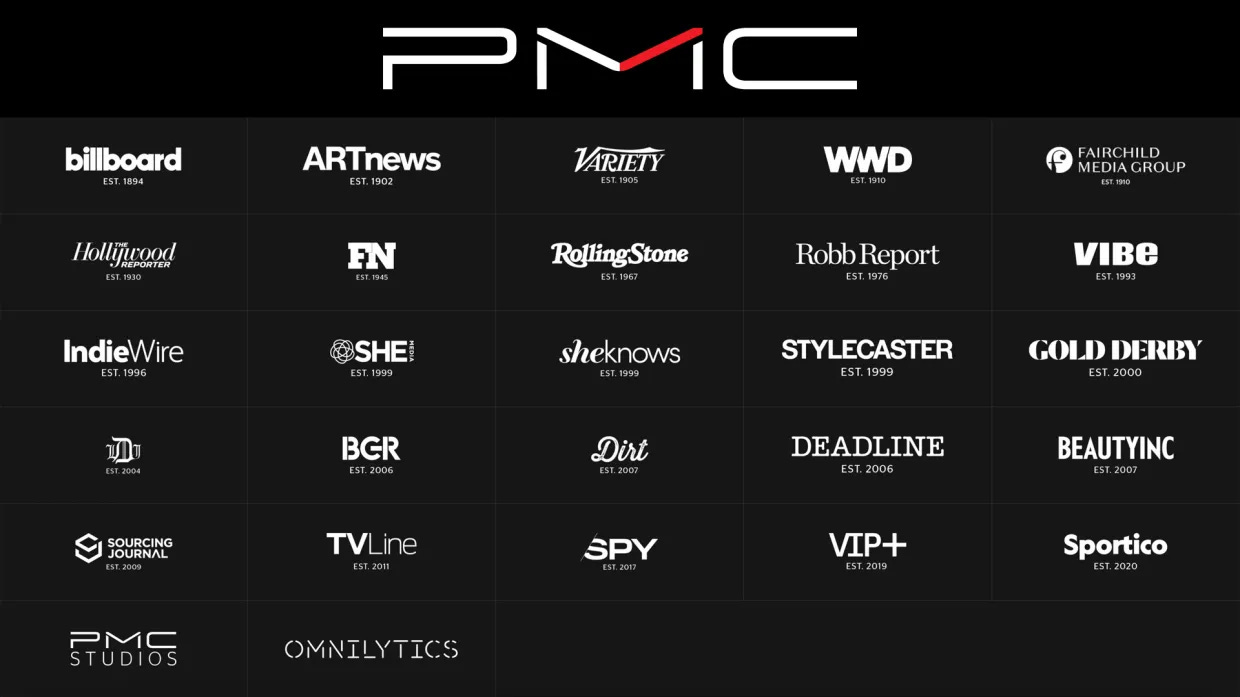
Legacy media like TV networks, major publications, local newspapers, and film studios operate as top-down gatekeepers that push content one-way to mass audiences.
The owners of Penske Media, whose media portfolio includes Rolling Stones, Variety, WWD, Billboard, Hollywood Reporter, and more, are currently being sued for alleged fraud, including fixing the Golden Globes and attempting to create an entertainment industry monopoly.
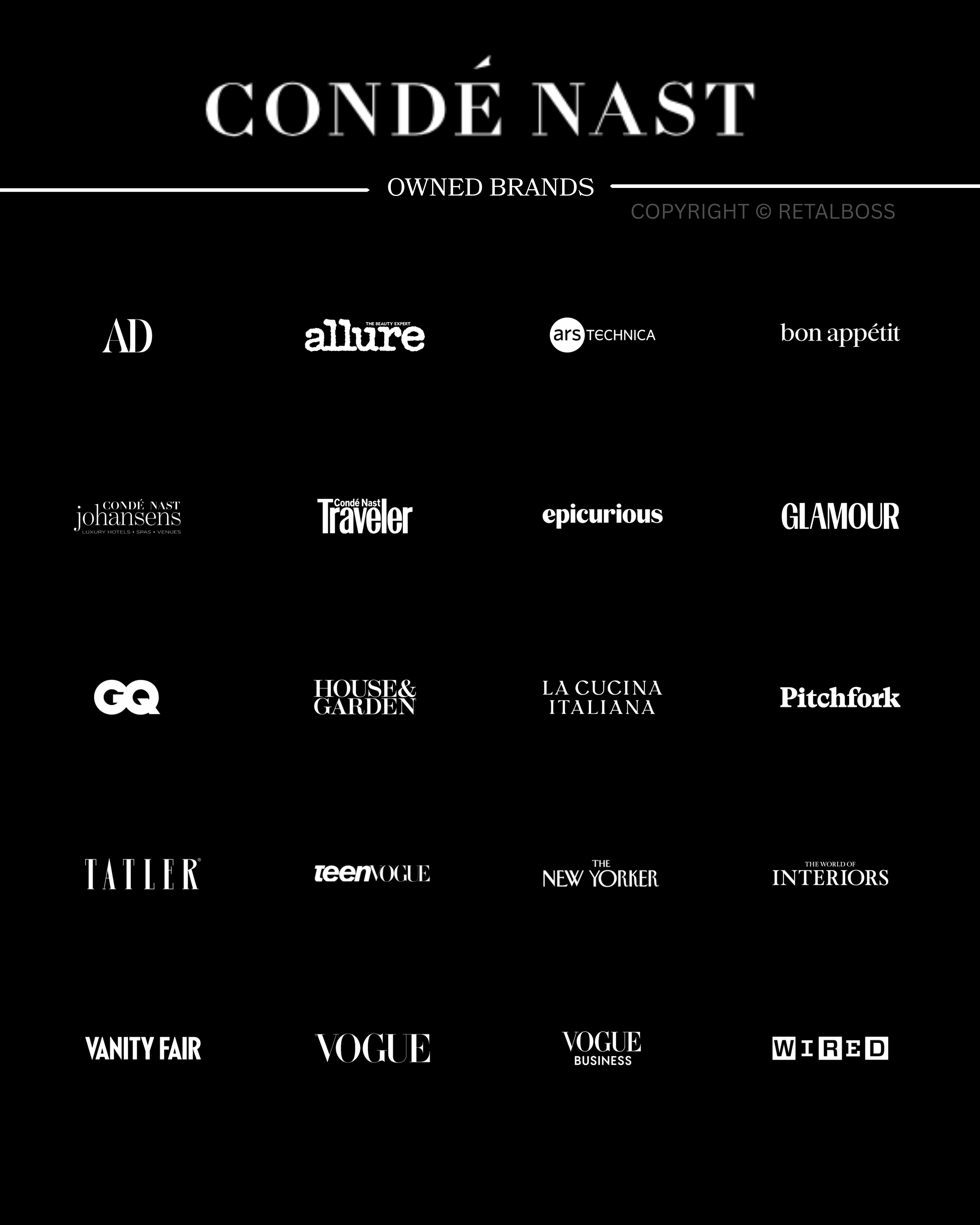
The owners of Condè Nast, whose portfolio includes Vogue, Wired, Glamour, Vanity Fair, Tatler, GQ and more, faced criticism over journalist layoffs. Condé Nast’s decision to fold Teen Vogue into Vogue.com, cutting roughly 70% of its team, including politics and identity coverage and laying off staff whom the union said were disproportionately BIPOC women and trans employees.
Separately, Anna Wintour drew criticism for the Met Gala’s billionaire ties with Jeff Bezos and Lauren Sánchez Bezos as major sponsors/honorary figures, viewed by critics as an uncomfortable consolidation of billionaire influence in fashion.
That scrutiny intensified this week after the announcement that the 2027 Costume Institute exhibition, and its accompanying Met Gala, will centre on John Galliano.
The Met insists that John Galliano: Horizons will confront, rather than obscure, the rupture caused by the designer’s antisemitic, racist and anti-Asian conduct in 2010 and 2011, which resulted in his dismissal from Dior and his namesake label, as well as a conviction in Paris.

The traditional media is undergoing a massive shift from all sides, signalling a future toward decentralized independent media.
But let’s be clear about what is actually changing.
Journalism is not dead. Reporting, commentary, industry analysis, and investigative work are more important than ever before in the age of AI.
What is collapsing is the institutionalized gatekeeper model, the idea that credibility and distribution were things a small group of legacy outlets controlled and dispensed.
That model is gone, and it will not return.
Readers did not abandon journalism. They abandoned news outlets they stopped trusting. That distinction matters, because traditional media has spent years framing this as a crisis of misinformation, platform algorithms, and AI overviews when the more accurate read is that they lost the audience’s confidence.
The gatekeeper position only holds if people see value behind it. At some point, enough readers decided they are tired of the ad-first, reader-second traditional model.

They could have built direct audience relationships before independent creators; even Reddit figured out what readers want before legacy media.
They could have used their existing credibility to own those channels early. Most of them treated social media as a syndication tool, a place to push links back to their website, rather than a medium worth actually showing up for.
Independent voices treated it as the primary channel to their audience. That choice, made over years and years of deliberately showing up. Traditional media did not get disrupted from the outside. It was surrendered from within.
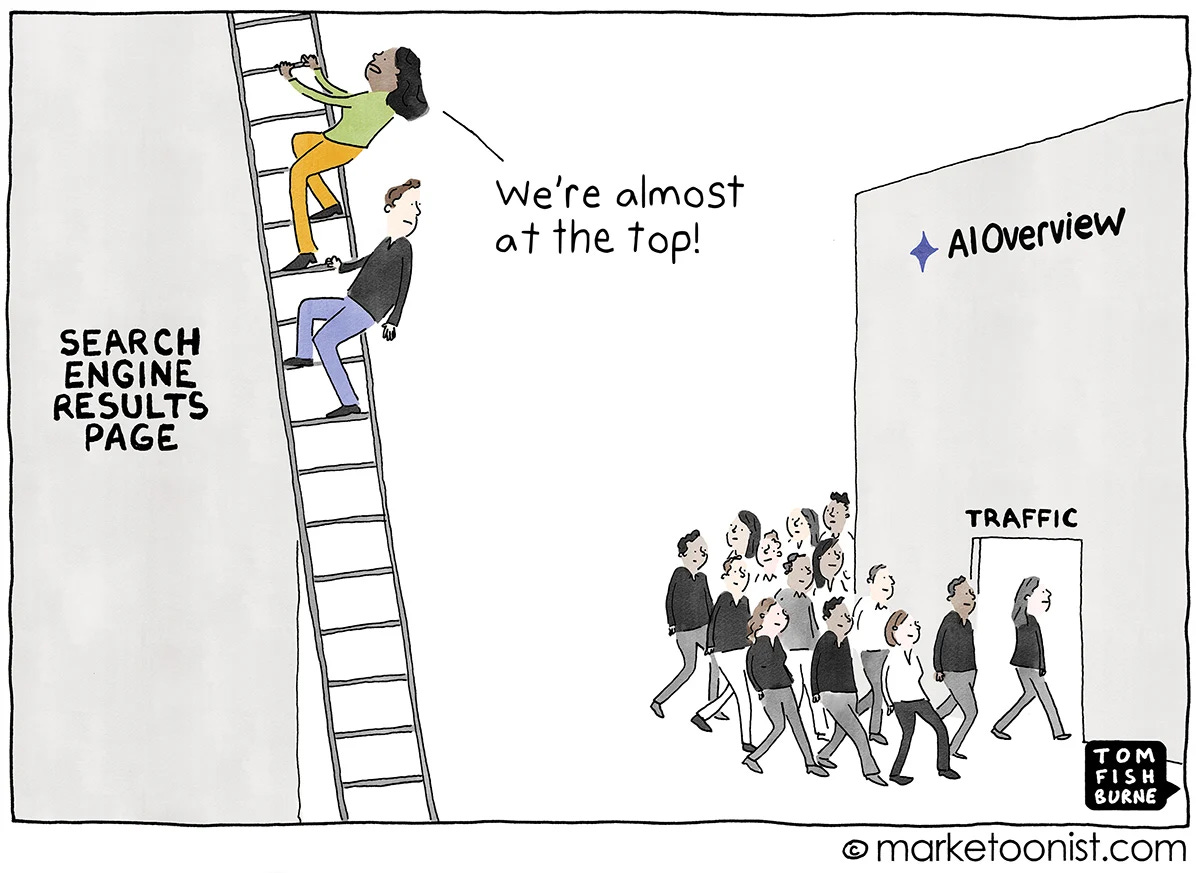
Now the concern is AI. News snippets and overviews answer the reader before the reader clicks through, so traffic drops. Publishers have been attempting to sue Google over it. The traffic drop is real, and the financial pressure behind it is understandable. But Google does not owe any outlet consistent traffic or a click.
It never did.
Google’s search is Google’s product. The rules change when the product changes, and they changed for everyone. Social media platforms shifted their algorithms on a weekly basis. Search is doing the same thing now.
Fighting that in court is the same instinct as the last fight, the belief that the terms of distribution should stay fixed indefinitely.
Here is the part worth examining more honestly. If reach is the actual goal, AI overviews may be delivering more of it than before.
Millions of readers are seeing headline-level summaries pulled from credible sources across the web. The outlet’s name, its reporting, its voice can surface in that overview without the reader ever needing to click.
That is reach.
Whether it converts to revenue the same way is a separate and legitimate business problem, but conflating a revenue model problem with a reach problem is not an honest reading of what AI is doing.
Which raises a harder question.
Is this fight actually about serving readers, or is it about protecting the position at the top?
The position that legacy outlets built over decades, argued for, and in many cases earned through real journalism.
With AI in the picture and Google’s acknowledgment and inclusion of independent voices (like RETAILBOSS) that position is no longer theirs alone.
The AI system now pulls from the most recent and most credible voices across all platforms, not just the ones with the longest institutional history.
An independent outlet, a subject matter expert, a two-year-old publication with tight sourcing and dedicated readers can surface alongside or above a legacy name.
They can try to fight it.
But more independent voices and credible niche outlets will continue filling the space that AI overviews open up, because those voices are focused on serving the reader not the bottom line.
Traditional media spent years focused on protecting its position rather than serving the reader. Readers noticed first. Google adjusted second. AI is just the final reflection of a verdict that was already in.

If you are an independent voice, a new outlet, a subject-matter expert who has been watching this from the outside wondering when the door opens, this is it. The door is wide open. AI overviews are making it possible, right now.
Google has not abandoned its standards. It has expanded who can meet them. Credibility, accuracy, and fair reporting are still the king.
What changed is that a legacy masthead is no longer a shortcut to clearing that bar. A trusted social media account with tight sourcing, a consistent point of view, and a reader base that trusts it can surface in AI overviews right alongside outlets that have been operating for decades.
That is not a glitch in the system. That is the system working the way readers always wanted it to. No gatekeepers.
What that means practically: show up with a clear, specific voice. Cover your lane with real depth. Report fairly even when the story does not go in the direction your audience may prefer it goes.
Build the kind of track record that holds up when someone looks for sources to confirm what you report.
The audiences that legacy media is losing are actively looking for somewhere to go.
Size was never the real advantage. Access to readers was.
Social media opened that access years ago, and most traditional outlets treated it as a problem child.
AI is just opening it further, and the same choice is in front of everyone again.
The ones focused on serving the consumer will fill the space. They always do.
Next Up: I Attended Paris Haute Couture Week Front Row. Here’s What I Learnt.
If you want to work with an independent news outlet, contact us at media@retailboss.co, we cover daily news for the retail industry. Follow us on @retailboss everywhere, and read full articles here.
No posts
Comments
Nothing yet. Say the first thing.
Sign in to join the conversation.