
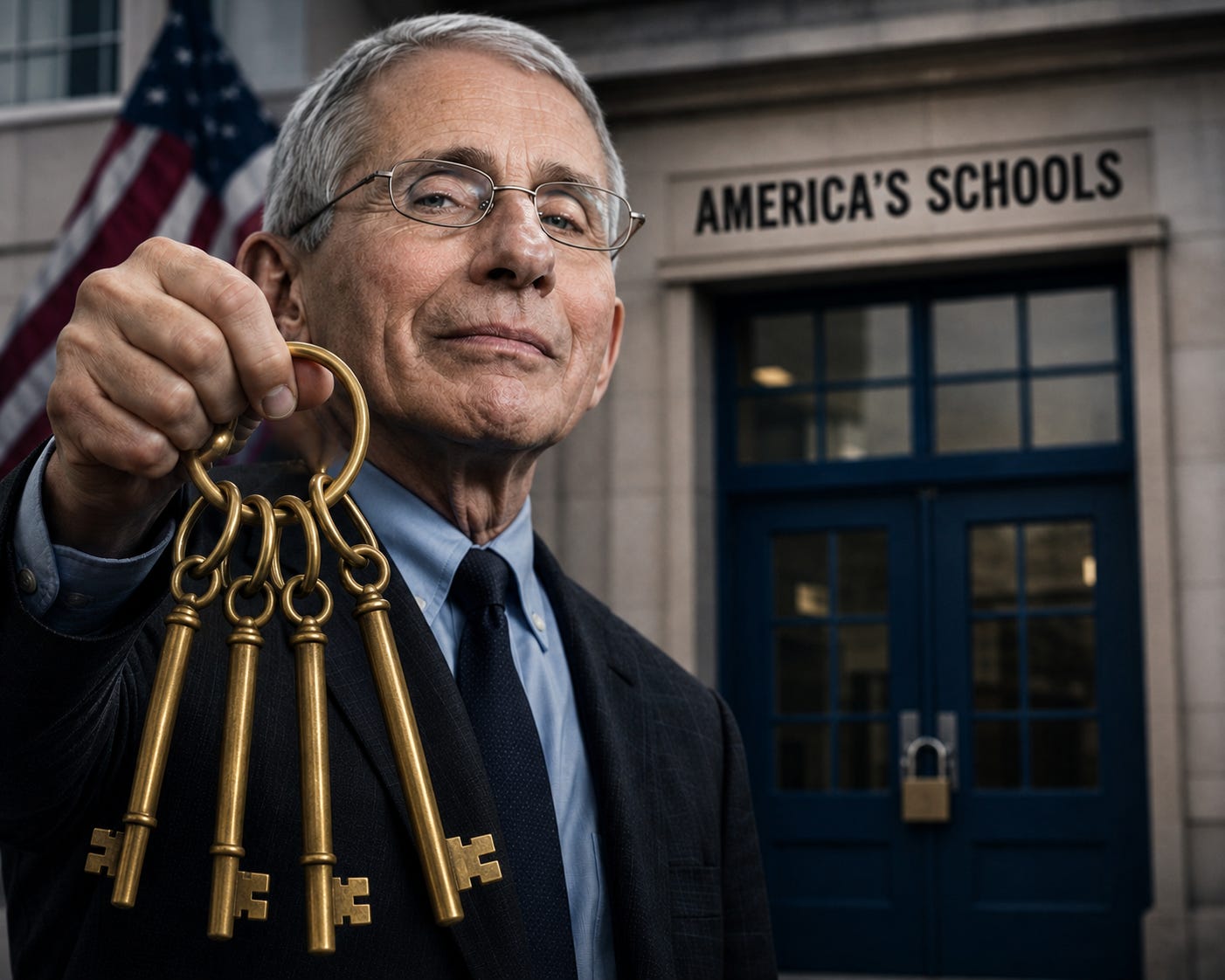
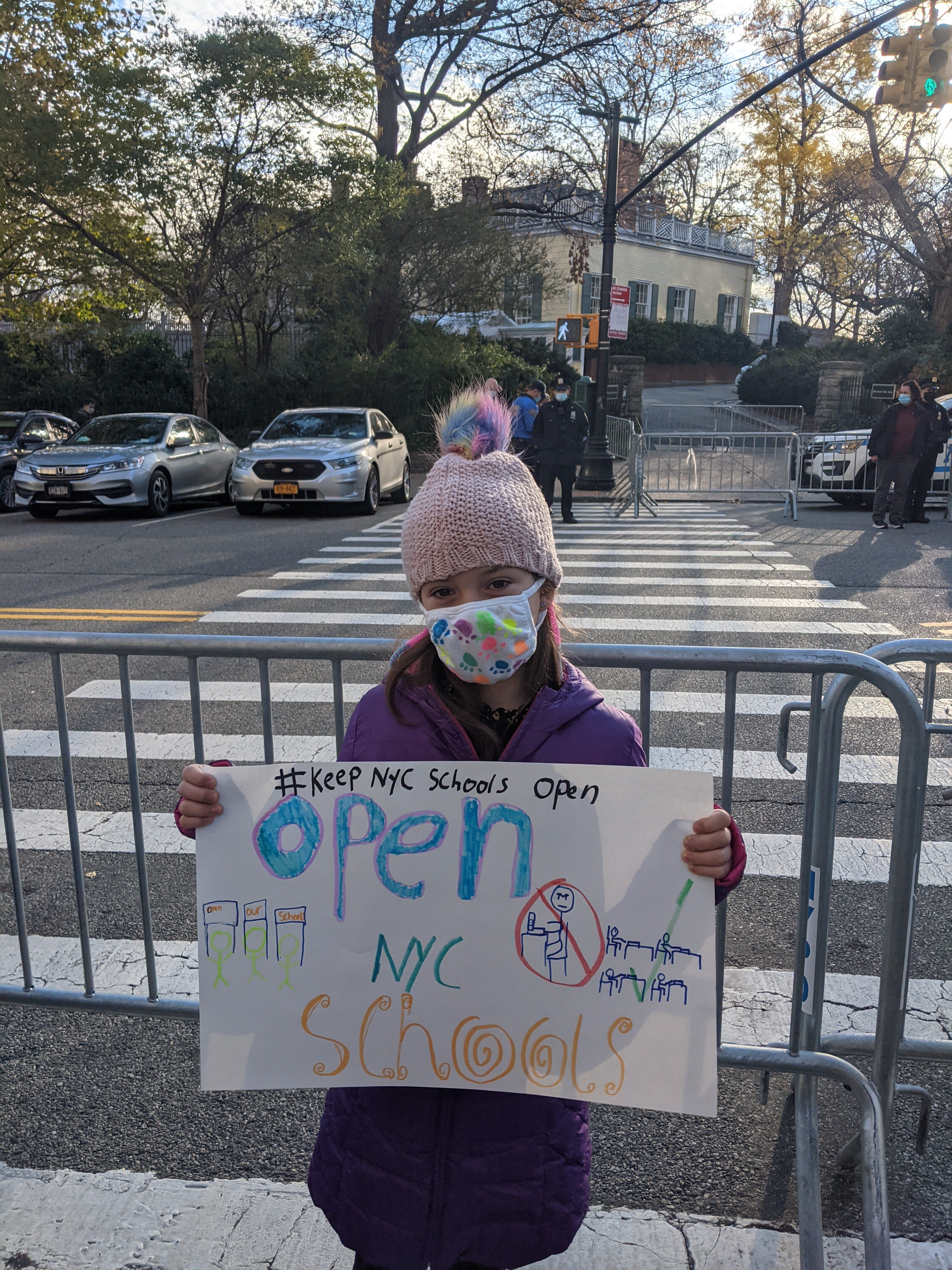
There was a lavender backpack hanging on a hook by our door.
It hung there for months.
My younger daughter, the one whose backpack was hanging on the hook was in kindergarten at the time. My older daughter was in third grade. Neither of them was going anywhere. They should have been with their friends. Instead they were inside a nine-hundred-square-foot apartment in Manhattan, staring at the walls, asking me what had happened to their world.
My daughters wanted to know who closed the schools and why. At the time, I couldn’t really answer.
Last Saturday things became clearer.
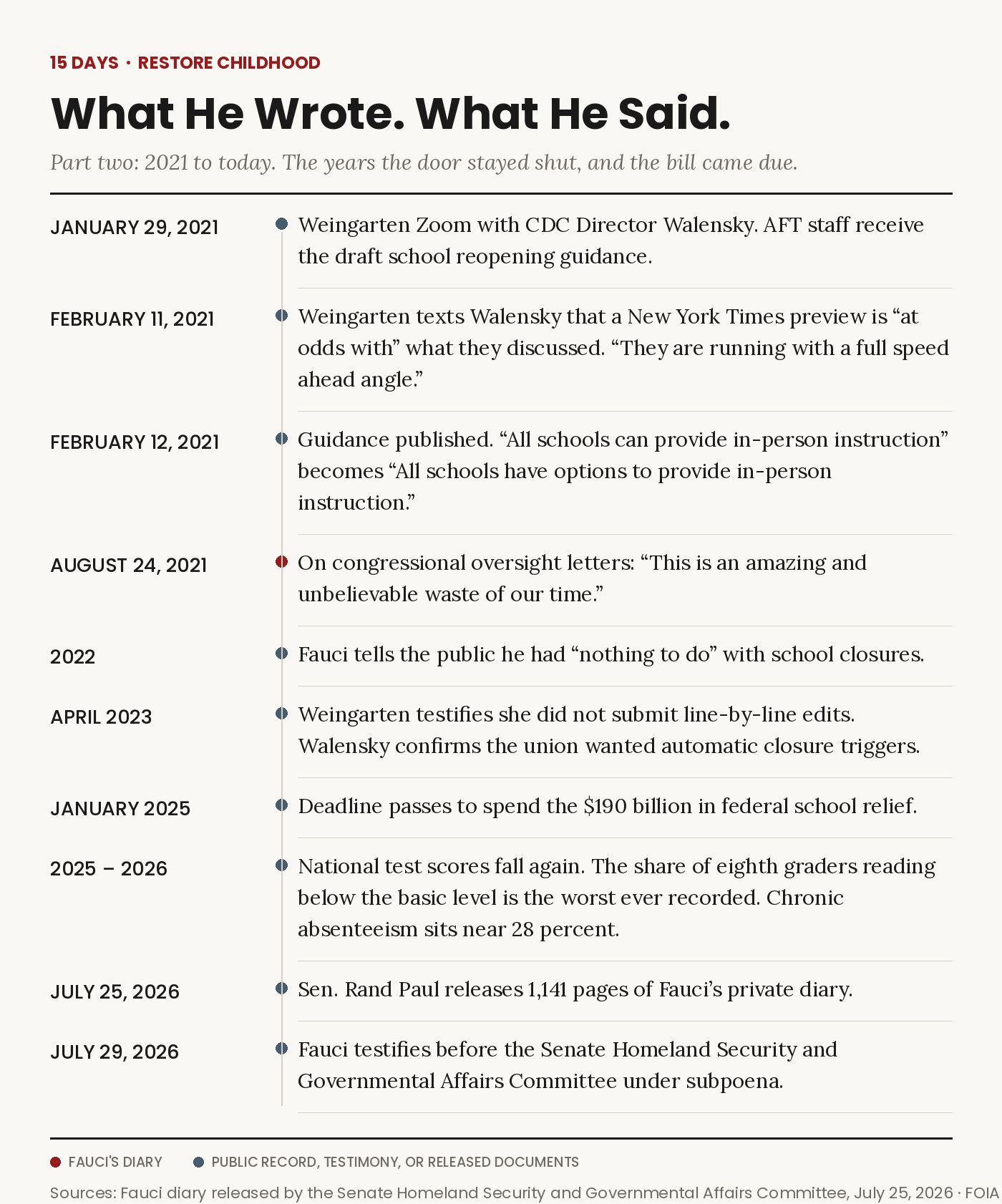
Sen. Rand Paul released 1,141 pages of Anthony Fauci’s diary on his committee’s document archive, The Reading Room. Health Secretary Robert F. Kennedy Jr. said publicly that it took his department about eight months to find the entries, which were sitting on eleven different servers. Fauci testifies before the Senate Homeland Security and Governmental Affairs Committee on Wednesday morning at 8:30, under subpoena.
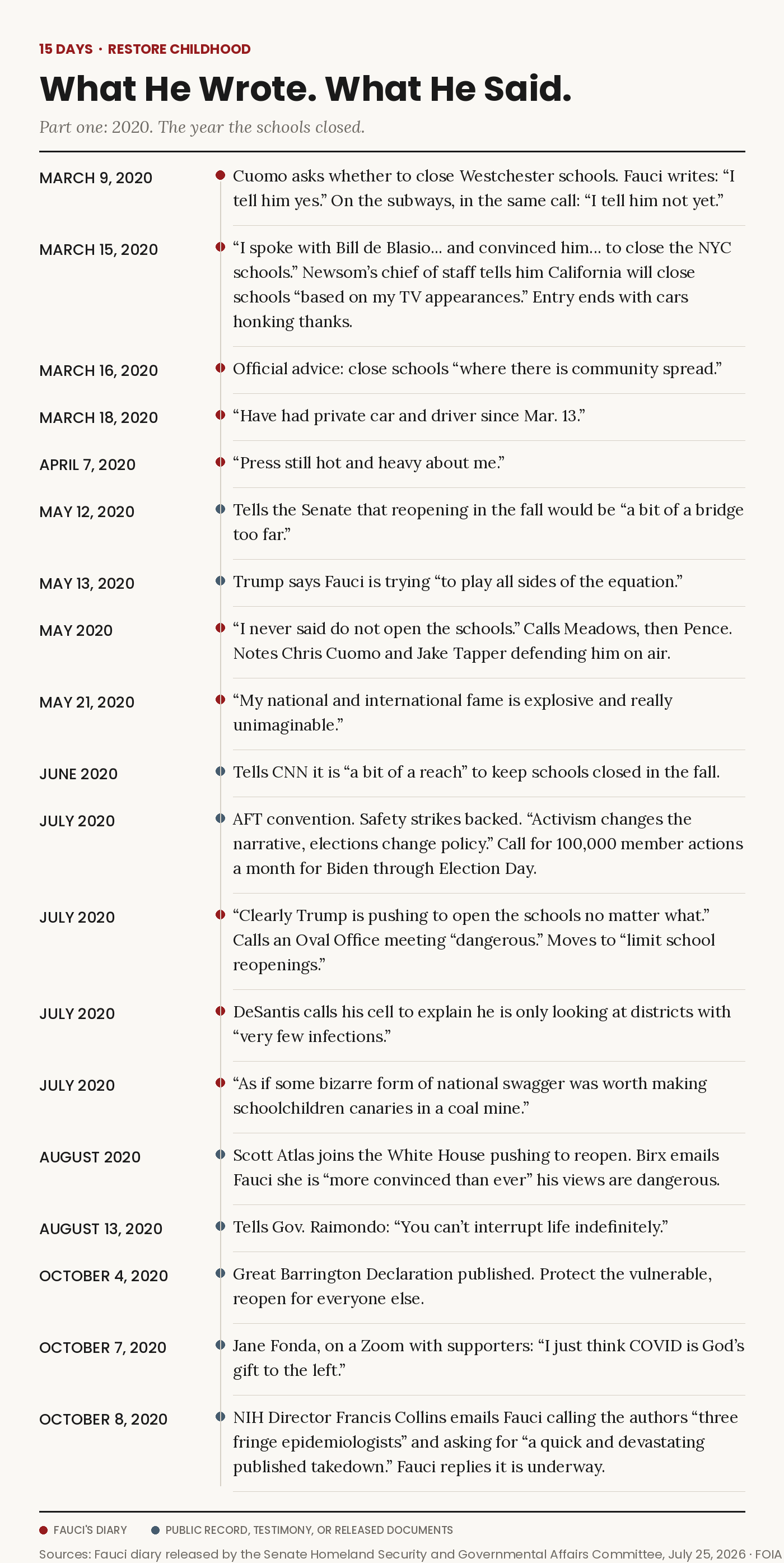
In an entry dated March 15, 2020, Fauci writes that he called the mayor of New York City and convinced him to close the schools. Six days before that, he writes that the governor of New York asked him whether to close schools in Westchester, and that he said yes.

The Post Millennial@TPostMillennial
Fauci says he had “nothing to do” with school closures.
8:44 PM · Oct 16, 2022
29 Replies · 36 Reposts · 101 Likes
In 2022, on ABC’s This Week, Anthony Fauci said this: They always come back and say, Fauci was responsible for closing schools. I had nothing to do. I mean, let’s get down to the facts. The clip has been set against the diary entries since Saturday.
I have spent years chasing that contradiction. Here is what the diary says.
One note on sourcing before we start. I have not been able to review all 1,141 pages myself, and neither has anyone else who has published on them since Saturday. The diary passages below come from outlets that have worked through the release, and every one of them is linked. The full PDF is on Rand Paul’s Reading Room if you want to go to the original. Where the source is something other than the diary, I name it and link it where it appears.
We finished 15 DAYS thinking we already knew most of this. Years of work, dozens of interviews. The closures did not come from a thousand local officials all reaching the same call on their own. They came from a small number of people. They stayed in place because a powerful group had a direct line to the agencies writing the rules. The kids who paid for it were never in the room.
We could show all of that. What we could not do was show it in the handwriting of the man who made the call.
Now we have the handwriting.
There is a full timeline further down, with dates and sources, so you can follow the sequence yourself and check anything you want to check.
March 9, 2020. Six days before the backpack came off the hook for the last time. This entry was transcribed by The Post Millennial and by the Gateway Pundit.
Gov. Cuomo calls me up and asks my advice on whether to close schools in the orthodox Jewish section of Westchester where they have 90 cases.
Fauci’s answer, in the next sentence: I tell him yes.
Cuomo asked about the subways on the same call. On the subways, Fauci wrote, I tell him not yet, but let us stay tuned.
One adviser. One phone call. Two questions, both brand new, no data behind them. On the trains that packed adults together, wait.
On the buildings that held children, close.
Six days later. This entry has been transcribed identically by the Daily Signal, Blaze Media, Townhall, the Federalist, and CNSNews:
I spoke with Bill de Blasio (Mayor – NYC) and convinced him... to close the NYC schools.
Convinced him. That is Fauci’s own word, about the biggest school district in the country. About my daughters’ school.
The same entry admits the mayor had already decided based on what I was saying on TV. Then Fauci goes past what he was asked: I went on to tell him he should close the bars and restaurants in NYC. De Blasio, he writes, said that he would base this on my recommendation.
Then a second call that night, to California:
I had a similar call with Ann O’Leary, the COS of Gov. Gavin Newsom of California.
Her answer, as Fauci wrote it down: based on my TV appearances today and yesterday, the Governor has decided to close the schools in California.
Two of the biggest school systems in America. One evening. One phone.
Here is how Fauci ends the March 15 entry. He leaves the White House and crosses Pennsylvania Avenue at 17th Street:
several cars honked their horns and shouted “thank you” out the window.
That is the last thing Fauci wrote on the day he closed two states’ schools.
I named the film 15 DAYS because that is what they told us - fifteen days to slow the spread.
Here is what Fauci wrote in his diary on March 16, 2020, as transcribed by Townhall:
Came out with the guidelines that reflected my pushing for a more aggressive mitigation 15 day strategy... if a community has spread, CLOSE the bars, restaurants and places of congregation, close schools where there is community spread.
The same entry ends with this: Press conference after was highly attended. Stock market dropped by 3000 points, the biggest percentage drop in history.
He is not describing something that happened to him. He is describing something he pushed for and got. Six years later, the title of our film turns out to be his phrase.
Within weeks of that entry, almost every district in America went dark.
The standard defense of March 2020 is the fog of war. Nobody knew anything, everyone was guessing, and the people making the calls did the best they could. I heard some version of that from nearly everyone I interviewed who had a hand in it. I do not accept it.
The picture on children was already forming before the schools closed. Writing in the Journal of Korean Medical Science in mid-March 2020, researchers reviewing the case for closing schools noted that the data available at that point suggested children were less susceptible to this virus and less ill when infected. That was not a summer discovery.
The evidence for closing schools was thin, and the federal government knew it was thin. In February 2020, weeks before the closures, the CDC’s own journal Emerging Infectious Diseases published a systematic review of social distancing measures for pandemic flu. It found the evidence for school closures came largely from observational studies and simulation models, and it concluded that the more drastic measures might be reserved for severe pandemics. The CDC and HHS pre-pandemic planning guidance, first issued in 2007 and updated in 2017, treated school closures the same way, as a measure tied to a severity index rather than a default.
Then there is the March 9 call. Fauci told Cuomo to close the schools and to keep the subways running, in the same conversation, minutes apart. Uncertainty does not produce that answer. Uncertainty produces caution in both directions or in neither.
What came after was worse, and the diary shows it.
July 2020: Clearly Trump is pushing to open the schools no matter what.
Fauci describes a meeting in the Oval Office that he calls dangerous. Against the idea that Schools can open and should open everywhere, he writes that he countered that this would cause a new round of community spread and eventually lead to new hospitalizations and deaths. He writes that he plans to work the states directly, to limit school reopenings where there is uncontrolled community spread.
The president wants schools open. Fauci moves to keep them closed. Fauci clearly sees Trump as an oponent.
Then Florida. Fauci went after Gov. Ron DeSantis from the White House podium. The diary records what happened next:
That afternoon DeSantis called my cell and explained that he was evaluating the situation on a week by week basis.
DeSantis told him he was only looking at districts with very few infections. Fauci wrote that down, and then went on to the next day.
Eight days later, on Mehmet Oz and Sean Hannity saying kids belonged in classrooms:
As if some bizarre form of national swagger was worth making schoolchildren canaries in a coal mine.
The kids in the coal mine were the ones at home.
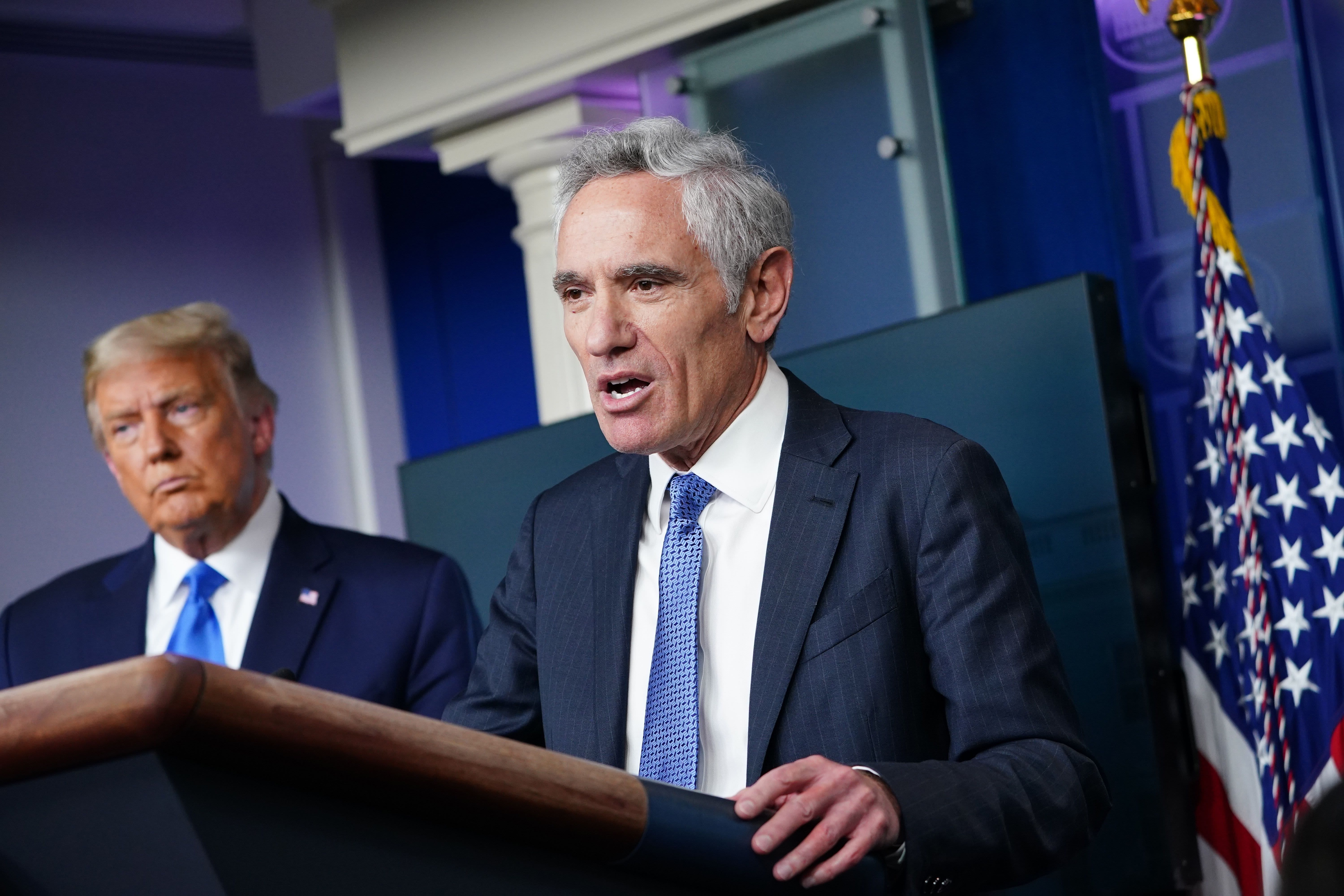
Dr. Scott Atlas came to the White House in August 2020 from Stanford. He was clear the risk to kids was very low, closing schools was doing serious damage, and schools should open.
His main point is now the mainstream view.
He did not get a fair hearing. In an August 2020 email obtained through public records requests and reported at the time, Deborah Birx, who ran the White House virus response, told Fauci and other officials she was more convinced than ever that Atlas’s views were “dangerous.” Atlas has said in his own published account that Vice President Pence and the political staff were afraid of Fauci and Birx because both polled so well, and that this fear let the two of them write the guidance.
Two months later came the email that shows the debate was not going to happen.
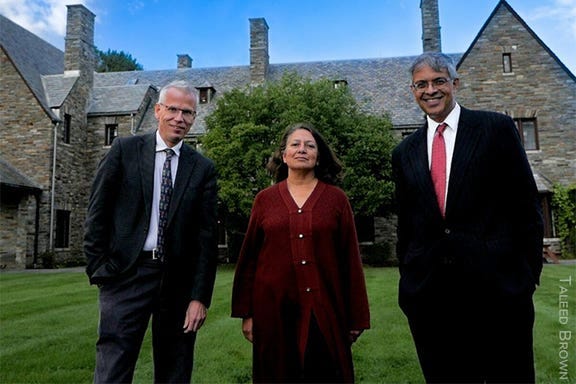
On October 4, 2020, three epidemiologists from Harvard, Oxford, and Stanford published the Great Barrington Declaration. Their argument was simple: protect the people at real risk, mostly the elderly and the sick, and let everyone else go back to normal life.
Four days later, the head of the National Institutes of Health, Francis Collins, emailed Fauci. The email came out through a Freedom of Information Act request filed by the American Institute for Economic Research, was also released by a House subcommittee in December 2021, and Collins has confirmed writing it in a television interview since. He called the authors three fringe epidemiologists. Then he wrote:
There needs to be a quick and devastating published takedown of its premises.
Fauci’s reply was to paste in an article from Wired attacking the declaration. He followed it with a piece from The Nation doing the same. Neither was a study.
That was October 2020, the month districts were deciding what to do about the spring semester. The two most senior scientists in the federal government answered a competing idea from three major universities with a press campaign rather than a study.
One of those three fringe epidemiologists was Dr. Jay Bhattacharya. We interviewed him at Stanford in December 2022 for 15 DAYS.
He now runs the National Institutes of Health (NIH).
Everything above explains March 2020. It does not explain 2021.
By that spring the federal government had backed off, teachers were getting vaccinated, and most of the developed world had kids back at desks. American buildings stayed closed anyway. To understand that you need the part of the story 15 DAYS spends most of its time on, and it is not about Anthony Fauci.
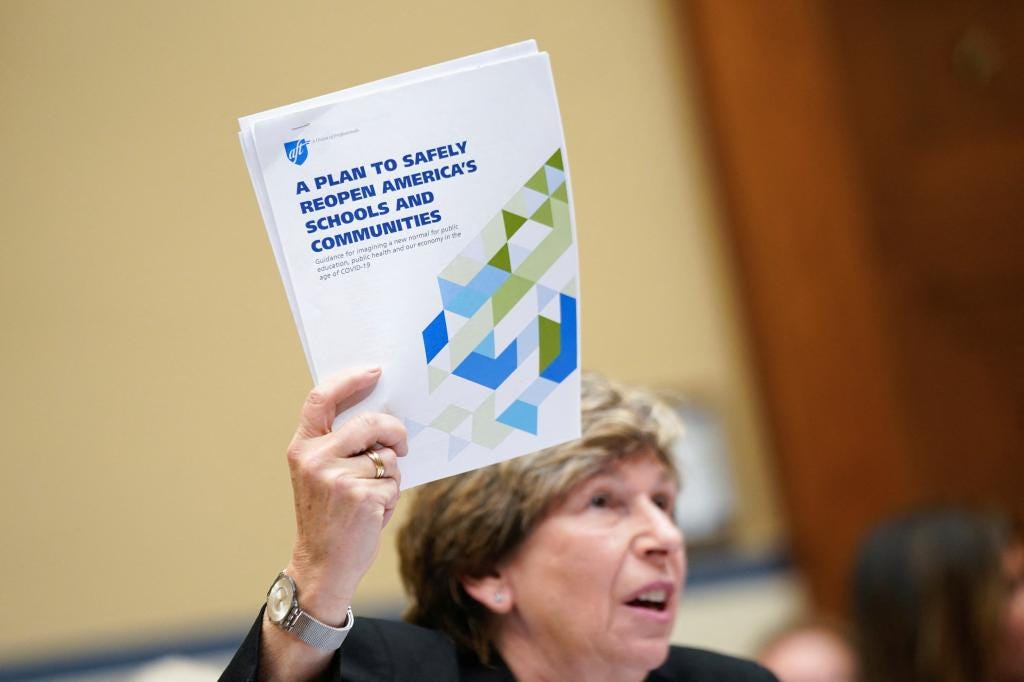
Watch Randi Weingarten talk to teachers and parents. She is warm and reasonable. She talks about ventilation and testing. She talks about teachers who are scared, about the classroom aide whose husband has a weak immune system. She says, correctly, that kids learn best in person. She makes the union sound like the last thing standing between frightened staff and a government willing to use them up.
Then look at what she said to her own members that summer. The quotes below are from her July 2020 convention address, published by the AFT on its own website, where they remain. The full speech is here.
The AFT held its convention in July 2020, with the fall semester coming. Weingarten backed what the union called safety strikes if districts reopened without meeting union conditions. In the same speech she laid out how the union would spend the fall:
Activism changes the narrative, elections change policy, and, together, they change lives.
She asked members for 100,000 actions a month to elect Joe Biden, running right through Election Day. She brought up Michigan, which Democrats lost by about 10,000 votes in 2016, and the members who had not voted. Changing outcomes like that, she said, is within our grasp.
She closed the speech this way:
Together, we have the power to defeat Donald Trump and elect Joe Biden.
Read the two versions next to each other. To teachers and parents, the question was whether a building was safe. To her own convention, the answer to the crisis was an election.
Three months after that convention, on an October 2020 video call with supporters, the actress Jane Fonda said it without any hedging at all. The video is public and Snopes checked it and found it authentic. It is featured in our film:
I just think COVID is God’s gift to the left.
She laughed, then caught herself. That’s a terrible thing to say, she added, before going on about what a great opportunity the moment was and how lucky they were to have it.
Fonda held no office and set no policy. That is why the clip matters. She had nothing to lose by saying it out loud.
Then February 2021.
The following comes from emails and text messages released under public records requests and from a House Oversight Committee interim report.
The CDC gave the AFT an early copy of its school reopening guidance, which broke the agency’s own rule about keeping drafts private. AFT staff asked CDC Director Rochelle Walensky to add a trigger, meaning a rule that would shut schools automatically once local case rates hit a certain number. Walensky wrote that the union’s suggestions were going in with just a few small tweaks.
On February 11, the day before the guidance came out, Weingarten texted Walensky to complain about a New York Times story previewing it. The reporting was at odds with what they had discussed, she wrote. Her problem with it: They are running with a full speed ahead angle.
The draft had said that at any level of spread, all schools can provide in-person instruction. The published version said all schools have options to provide in-person instruction.
The first sentence opens schools. The second one lets a district stay closed and still say it is following the CDC.
Over that same stretch, parents got one thirty-minute meeting with the CDC director. The unions had her on the phone.
Asked about it under oath in 2023, Weingarten said she did not submit line-by-line edits, and that the union offered suggestions, two of which were used. Walensky, testifying separately, confirmed the union wanted the automatic closure trigger.
Put the two records side by side and you can see how it worked.
Fauci gave it authority. When a mayor or governor closed a school system in March 2020, he was not acting on a study he had read. He was acting on a phone call, or a TV appearance, from the most trusted man in the country. Fauci knew that at the time and wrote it down.
The unions made it neverending. Authority alone would have worn off by the fall of 2020 as the data came in. What kept buildings closed through 2021, and in some districts into 2022, was a powerful group with a direct line to the agency writing the rules and a federal government handpicked by Randi, herself.
Kids cannot strike. They cannot pull an endorsement or run 100,000 actions a month or call a cell phone at the White House. In March 2020 they lost the one adult institution whose job was to pay attention to them, and then they were told to wait while the people who closed it argued about when to open it.
We have gone through everything published about these 1,141 pages looking for the entry where a six-year-old shows up the way the Washington Post profile shows up, or the honking cars, or the Barbra Streisand phone call he wrote down as a great call.
We haven’t found it. Neither has any reporter who has published since Saturday.
What did turn up right away was a man following his own press while the country’s classrooms sat empty. April 7, 2020: Press still hot and heavy about me. May 21, with his typos left in: The situation with my national and international fame is explosive and really unimaginable.
By August 2021, on the oversight letters coming in from Congress: This is an amazing and unbelievable waste of our time.
The numbers are in.
The Nation’s Report Card, the national test run by the federal National Center for Education Statistics, shows reading scores for fourth and eighth graders falling again, on top of the drop between 2019 and 2022. The share of eighth graders reading below the test’s basic level is the worst in the history of the assessment.
Peggy Carr, who runs the federal office behind that test, said the obvious thing out loud: If students aren’t in school, they can’t learn, and that is what these data underscore.
The Education Recovery Scorecard, a joint project of researchers at Harvard and Stanford, found that as of spring 2024 the average American student was close to half a grade level behind pre-pandemic achievement, and further behind in reading than in 2022. Stanford’s Sean Reardon said who paid for it: scores declined far more in America’s middle- and low-income communities than in its wealthy ones.
About 28 percent of students are now chronically absent, meaning they miss at least ten percent of the school year. That is well above 2019. A generation of families learned that showing up was optional, because for a year or more the government told them it was.
Roughly $190 billion in federal emergency money went to school districts. The deadline to spend it passed in January 2025.
None of that is in a diary entry. All of it came out of phone calls that are.
Fauci goes before the Senate Homeland Security and Governmental Affairs Committee Wednesday at 8:30 a.m. He has not answered press questions about the diary. President Biden gave him a full and unconditional pardon covering January 2014 through January 2025, which means he cannot be charged for anything in that window no matter what he says. The statute of limitations on the separate perjury question ran out in May.
Senators will spend the morning on the lab leak question, on virus research funding, on deleted records.
I am watching for one thing. I want a senator to hand him the March 15 entry, ask him to read it out loud, and then ask what he meant in 2022 by “nothing to do.”
He has answers ready. He was writing down conversations, not giving orders. Private notes scribbled at the end of a long day are not a policy record. Neither answer survives the word he picked, which was convinced. Neither one survives March 9, when a governor asked a question and got an answer.
I tell him yes.
We made 15 DAYS because the people who closed the schools were already writing the first draft of their own history, and children were not in it. Three years. Nearly sixty interviews. Parents, teachers, pediatricians, superintendents, and kids who lost years nobody is giving back.
Next week the entire film goes up here on Substack, and every paid subscriber gets it permanently. Not a rental or a 48-hour window. The film will stay in your library for as long as you subscribe, alongside everything else we publish.
Restore Childhood is a 501(c)(3). We take no advertising and no money from the industries we cover. This post is free and will stay free, like almost everything we publish. A paid subscription does not buy you access. It funds the interviews, the archive work, and the next film.
No one is coming to save our kids but us.
Comments
Nothing yet. Say the first thing.
Sign in to join the conversation.