

I couldn’t be happier with my first round of Pluvicto. I experienced none of the side effects (nausea, fatigue, diarrhea) I’d been warned about. A little dry mouth, which I’m told doesn’t go away. I suppose I’ll drool less when I sleep.
I had expected the doctors to wheel in something like this:
This is what they actually wheeled in:
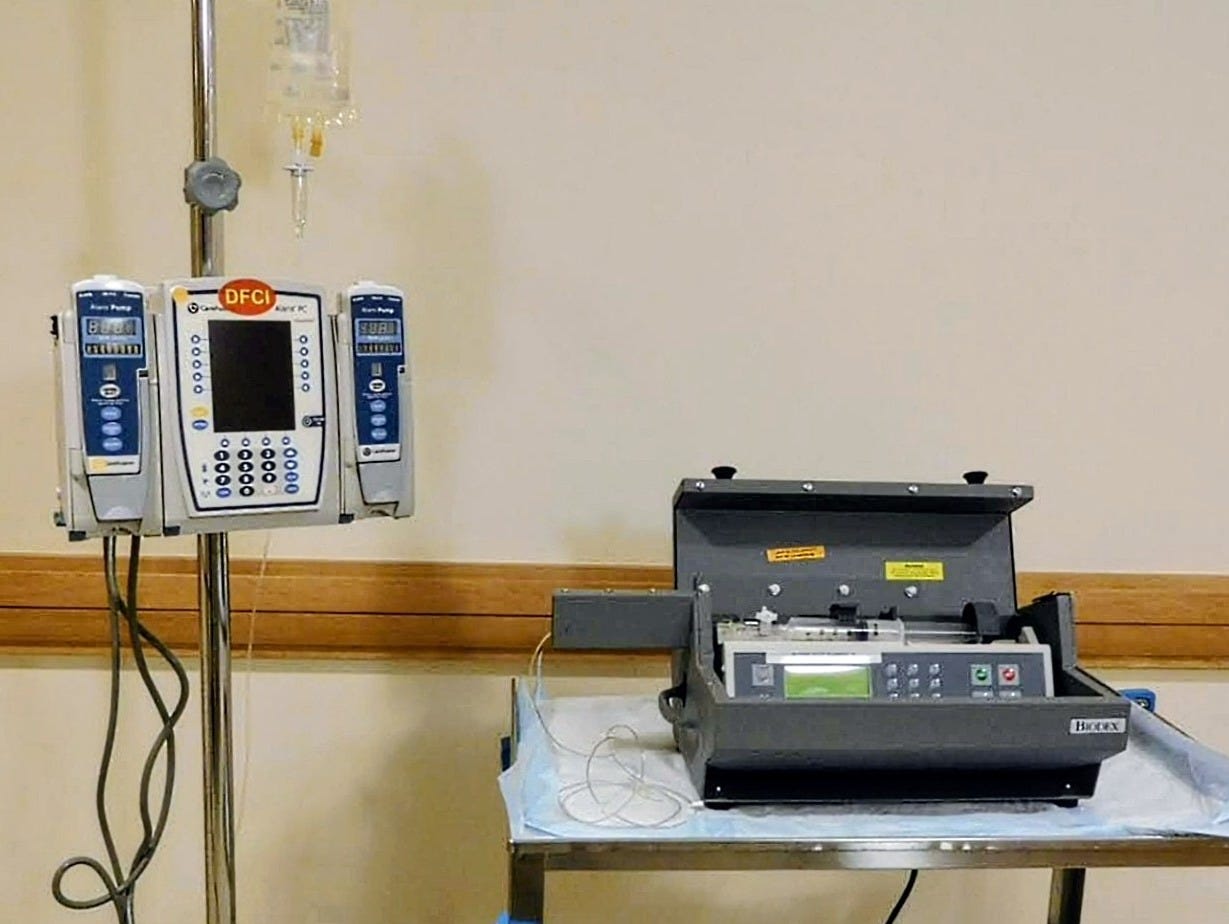
On the cart is a lead-shielded infusion pump that holds a syringe of Pluvicto, which you can see atop the pump; the hinged shield will be lowered during the infusion. On the IV pole at left are infusion pumps to administer an antinausea drug whose impressively long name I didn’t catch, plus dexamethasone and a lot of saline. Both my arms were hooked up—Pluvicto in my left and the saline in my right. The Pluvicto infusion took about 10 minutes, and the saline took a couple of hours.
Afterward, a doctor held a meter like this to different parts of my body. She had a yardstick and took one measurement from precisely 1 meter away.
I was hoping to hear clicks getting faster as she brought it toward me, like in the movies. Every patient asks about the clicks, she said. It doesn’t click.
Then I was brought downstairs to a SPECT-CT scanner.
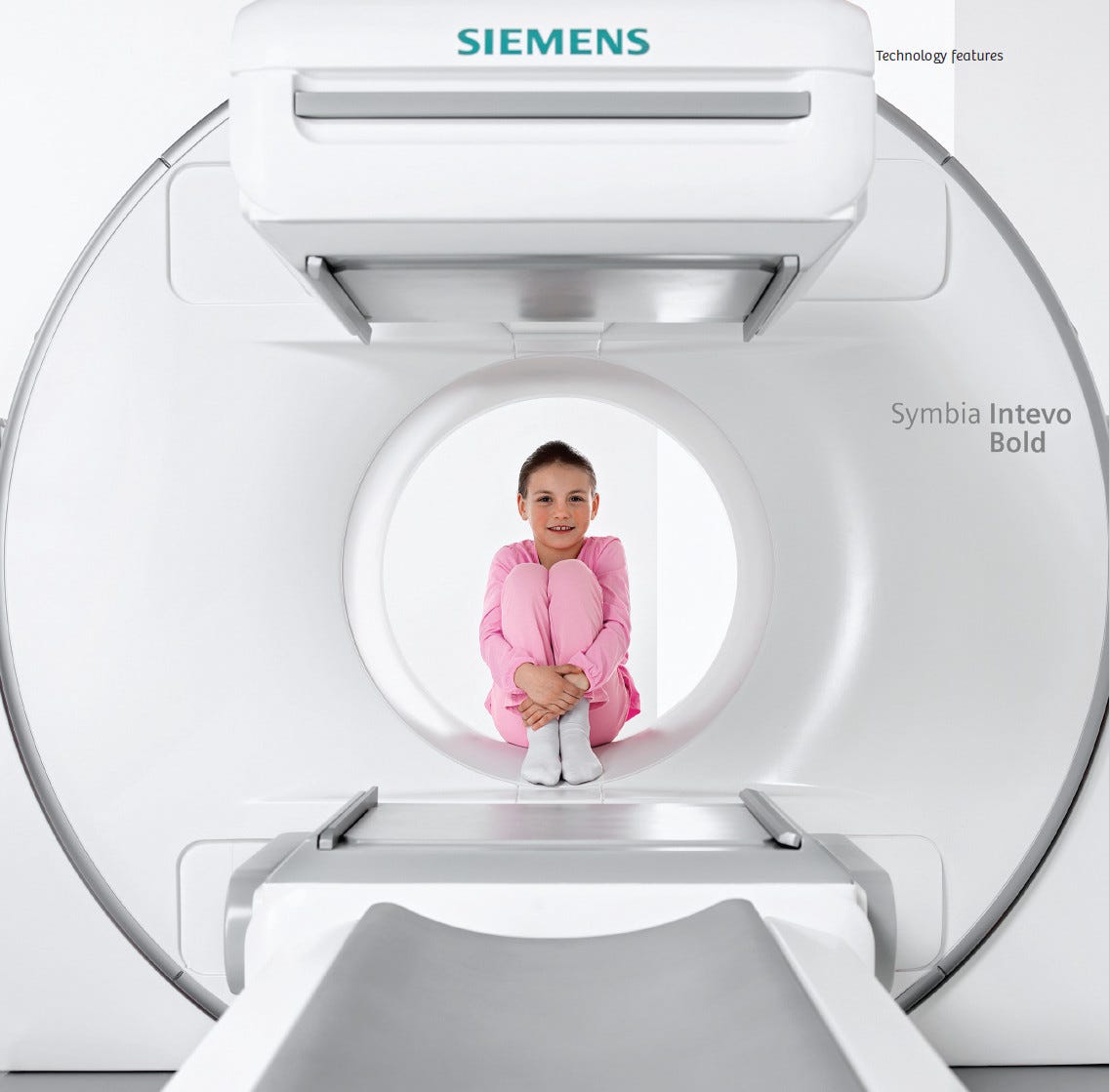
This scan verifies that the drug has gotten where it was intended to. It’s too early (and this kind of scanner is too low-res) to assess the effect of treatment.
Infusions are scheduled every six weeks, for up to six infusions. I emerge from each infusion radioactive. Kathy needs to sleep in a separate bed for 4 days. I need to keep away from children and pregnant women for 11 days. Till then, I’m obliged to stay off public transit.
The drug is excreted through urine, so this is a particular point of fastidiousness. In the ward, bathrooms marked for patients are outfitted like this:
We don’t have to line our bathrooms at home, but drips need to be dealt with. The nuclear safety doctor suggested I sit rather than stand to urinate. For two weeks after treatment, I have to keep my diapers out of the regular trash. I put them in backyard trashcans for two months till the radiation wears off.
Pluvicto can damage bone marrow, so every two weeks I’ll head back to MSK for a blood test.
We’ll learn whether the treatment is working on December 29—three weeks after my second infusion—when I’ll get a PSMA PET1. I’ll post an update.
The ad at the top promises PLUVICTORY. Here’s what that can look like.
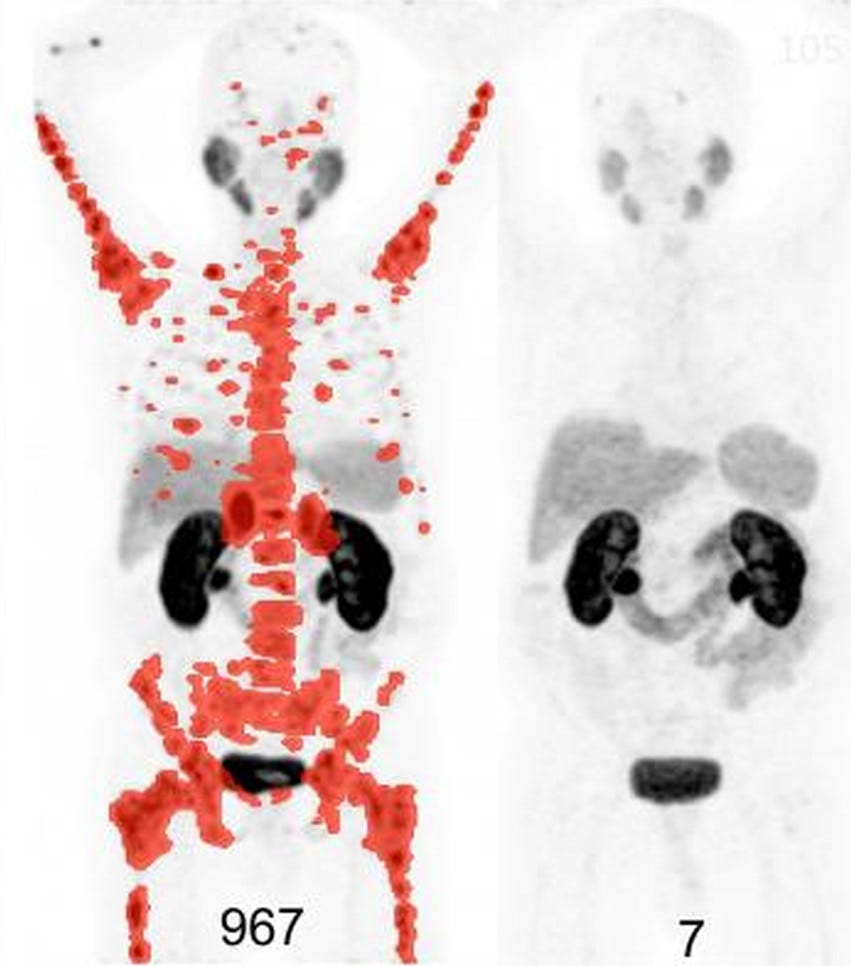
These are two PSMA PET scans; the red marks are tumors. The left scan shows the patient before he started treatment. The right scan shows him after being treated with the drug that became Pluvicto.
The cancer comes back — even in cases like this. We’re hoping not soon.
PET scans use a different donut-hole machine that costs two or three times as much as the SPECT-CT and is more sensitive and precise. This scan is scheduled later in the treatment to give the drug time to act.
No posts
Comments
Nothing yet. Say the first thing.
Sign in to join the conversation.