
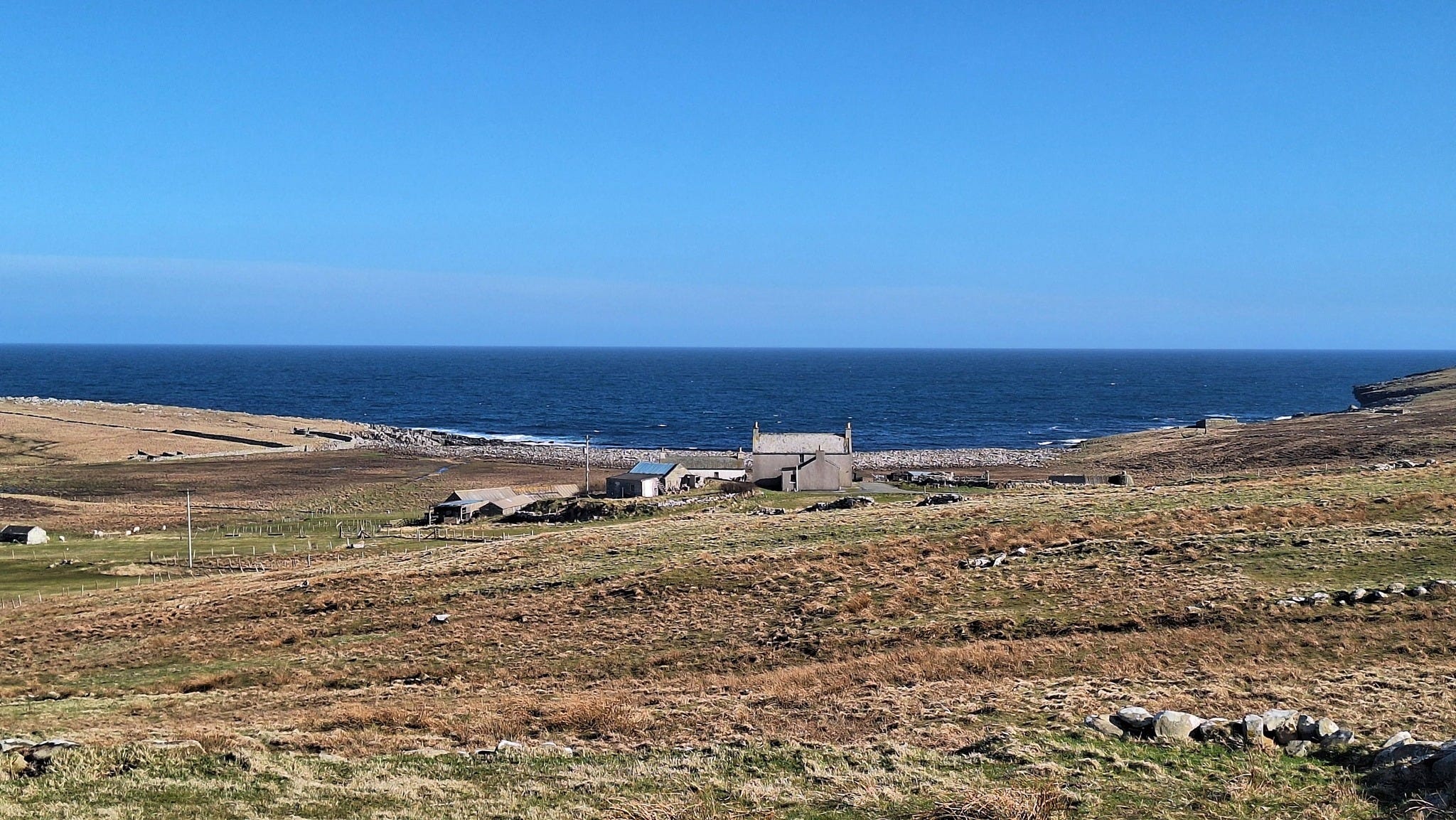
The Shetland Islands sit closer to Bergen than to Edinburgh. On a clear day, one can almost imagine one sees the silhouettes of the oil platforms on the horizon reminding us that these 100-odd islands floating in the North Atlantic are not merely topographical eye-candy — they are an economic powerhouse whose relationship with the mainland has been at times uneasy, contested, and shot through with questions of sovereignty that most people never imagine applying to a corner of Scotland, if indeed that’s what they are!
Is this relationship coming to a head? With a Scottish Parliament election scheduled for 7 May 2026, and an official audit warning of a £134.3 million projected budget gap by 2029/30, some in the islands are once again demanding to know why, after five centuries of contributing natural wealth to distant governments, they cannot govern themselves.
This piece traces the full arc of the Shetland autonomy story — from a medieval dowry pledge to a 21st-century fiscal reckoning — and asks what it might mean for the future of territorial politics in Britain.
Part One: The Pledge That Never Expired
Most constitutional stories begin with a battle or a treaty. Shetland’s begins with a wedding debt.
In 1468 and 1469, King Christian I of Denmark and Norway was short of cash. His daughter Margaret was to marry James III of Scotland, but the agreed dowry — 60,000 Rhenish florins — was beyond his immediate means. As security, he pledged the islands of Orkney and Shetland to the Scottish Crown. Critically, the marriage treaties explicitly preserved the right of redemption: the Norwegian Crown could, in theory, reclaim the islands by repaying the debt.
Scotland never gave them the chance. In 1472, the Scottish Parliament passed an Act of Annexation, formally incorporating both archipelagos into the kingdom. But the Danish-Norwegian Crown maintained for two centuries that the pledge remained redeemable — a claim Scotland consistently rejected.
The constitutional complexities here are more than antiquarian. Recent scholarship by historian Atina Nihtinen has highlighted that under Norwegian constitutional practice, the monarch likely lacked the authority to alienate territory without the consent of the Norwegian Council of the Realm — a fact that renders the pledge constitutionally questionable from the outset (Nihtinen, Ambivalent Self-Understanding?, 2011). The annexation, in the eyes of some legal historians, was never fully legitimate. It is just a very long time ago…
Udal Law and the Seeds of Difference
For centuries after 1472, Shetland retained vestiges of its Norse legal heritage. Most significant was Udal law, a system of land tenure fundamentally different from the feudal structures of the Scottish mainland. Under Udal law, land was held absolutely by the occupier, free from the superiority of the Crown — a system that fostered a sense of independent peasant-proprietorship and, over time, a distinct civic culture (Nihtinen, 2015).
This wasn’t mere legal technicality. It was the seed of a lasting political attitude: that Shetlanders held their land and their affairs on their own terms, not as subjects of a distant sovereign.
The islands’ historical distinctiveness was formalised in practice even by the London government. When county councils were established under the Local Government Act of 1889, Shetland was given a separate council — unlike the Western Isles, which were absorbed into a larger mainland structure. The implication was recognised even then: Shetland was different (Nihtinen, 2015).
The Udal League and Victorian Identity Politics
In the late 19th century, this historical consciousness crystallised into organised political action. The Udal League (originally the Reform League for Orkney and Shetland), founded in 1886 and led by Alfred W. Johnston, sought to uphold the rights of smallholders against Scottish landlords and centralising reforms. Nihtinen (2011) argues that these movements were primarily exercises in “cultural reconstruction of the past,” deploying a Norn identity as counter-culture to Scottish influence. They did not seek full independence, but they established an enduring pattern: using Shetland’s unique history as a bargaining chip in political negotiations.
Historical Marker
Date
Constitutional Significance
Treaty of Perth 1266 Ceded Western Isles to Scotland; specifically reserved Orkney and Shetland for Norway
Marriage Treaty 1468 Shetland pledged as security for dowry; redemption rights maintained
Act of Annexation 1472 Scottish Parliament asserts control; Norwegian Council disputes legitimacy
Local Government Act 1889 Separate county council created for Shetland
Zetland County Council Act 1974 Granted unique powers to manage oil revenues and control development
Part Two: Black Gold and “Lilliputian Federalism”
The discovery of North Sea oil in the early 1970s transformed everything. Shetland was suddenly sitting on top of one of the most valuable energy corridors in the world, and the islanders knew that if they were not careful, all the disruption and environmental risk of industrialisation would land on their shores while the profits flowed to Edinburgh and London.
The response was a masterclass in what political economists Baldacchino and Milne (2000) call the “resourcefulness of jurisdiction” — the ability to use legal and political powers as an economic lever.
The Zetland County Council Act 1974
Through determined lobbying of Westminster, the local government secured the Zetland County Council Act 1974, a piece of legislation unique in British local government. It granted the council powers including compulsory purchase of development sites and, crucially, the right to establish a harbour account for community benefit. The council used these powers to negotiate with the oil multinationals from a position of unusual strength, extracting agreements that channelled significant revenues into local reserves. Baldacchino and Milne (2000) describe this as the council having “hornswoggled” the multinationals — deploying “governing wits” to manufacture development on the community’s own terms.
This was jurisdiction as a resource in its purest form: a small community using law to control global economic forces.
The Shetland Movement and the 1980 Constitution
Despite the 1974 Act’s success, anxiety about the future persisted. In 1977, a group of Lerwick residents formed the Shetland Group, which evolved in 1978 into the Shetland Movement — the islands’ first political organisation established independently of the main UK parties.
In February 1980, the Movement published a formal Constitution for an Autonomous Shetland, modelled partly on the Faroe Islands’ system of home rule. It called for tax-raising powers and legislative independence. The Movement enjoyed real electoral success in local council contests, forcing the Shetland Islands Council to adopt a more proactive stance on autonomy. But as the oil boom stabilised and the immediate threat of Scottish devolution receded through the 1980s, the Movement lost momentum. The idea of “special status,” however, never went away.
Part Three: Our Islands Our Future — Jurisdiction as a Campaign
The approach of the 2014 referendum prompted the first coordinated multi-island political campaign in modern Scottish history. In June 2013, Shetland, Orkney, and the Western Isles launched “Our Islands Our Future” (OIOF), demanding a stronger constitutional and economic settlement regardless of how Scotland voted. Its goals included the transfer of Crown Estate revenues to island communities and a legal requirement for “island-proofing” government policy.
The campaign’s most tangible legacy is the Islands (Scotland) Act 2018, which mandated the creation of a National Islands Plan and introduced a statutory duty for public bodies to consider island communities when making policy. The Act also included a framework through which island councils can formally request additional powers.
By 2026, however, many in Shetland regard the Act as a missed opportunity. Critics argue that the Shetland Islands Council has been too “timid” in using its “extra powers request” provisions — securing a framework but never really filling it with substance.
Wir Shetland: The Radical Fringe
In 2015, a more impatient strand of opinion coalesced into Wir Shetland (roughly: Our Shetland). This group went further than OIOF, calling for Shetland to leave Scotland entirely and become a Crown Dependency or British Overseas Territory, similar to the Isle of Man or Jersey. The argument was blunt: the Scottish Government was centralising services, providing inadequate ferry subsidies, and treating the islands as a colonial asset. Wir Shetland’s founding principles included opposition to Scottish independence and membership of the EU, along with demands for a 200-mile exclusive economic zone around the archipelago.
The group never achieved mainstream electoral success, but it gave voice to a genuine grievance and helped shift the terms of the local debate.
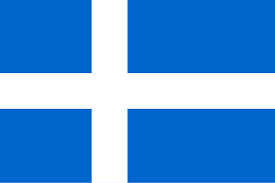
Part Four: The Historic Vote of 2020
On 9 September 2020, the Shetland Islands Council voted 18 to 2 in favour of a motion to explore options for “financial and political self-determination.” It was a watershed moment — the first formal resolution by an elected body in the islands to move decisively toward greater autonomy, rather than simply react to threats from elsewhere.
The vote sparked a ‘national’ conversation and prompted formal investigations into the Faroese model of home rule and the Crown Dependency option. But political conversations are slow, and the financial challenges, it turned out, are faster.
Part Five: The £134 Million Reckoning
In March 2026, the Accounts Commission — Scotland’s local government watchdog — published its Best Value report on Shetland Islands Council. The findings were stark. The council faces a projected cumulative budget gap of £134.3 million by 2029/30. Its current budget includes a deficit of approximately £43.9 million for 2025/26, funded from reserves — a draw nearly £21 million above what the council itself considers sustainable. While the total value of the SIC’s investment reserves remains substantial (around £400 million at the end of 2025), the rate of drawdown is unsustainable and, if not arrested, will exhaust the buffer within years.
The Accounts Commission’s deputy chair Andrew Burns called for the council to “urgently increase the pace of its change programme.” Council leader Emma Macdonald acknowledged the crisis but pointed to a central structural problem: the grant from the Scottish Government has not kept pace with rising costs. The gap between what Shetland is expected to deliver and what it receives to deliver it is, in her words, “significant — and unsustainable.”
This is the analytical crux. The political economist Baldacchino and Milne (2000) argued that the “economics of jurisdiction” require small islands to use legal and political powers as economic tools. For over fifty years, Shetland has done exactly this — first with oil, now seeking to do so with renewables and seabed rights. But without greater autonomy over its most valuable natural assets, the islands remain structurally dependent on a Scottish Government whose funding calculations were not really designed with remote archipelagos in mind, leading to the need to use Shetland’s nest egg.
Part Six: The 2026 Election — New Visions for Shetland
The May 2026 Scottish Parliament election has crystallised these long-running tensions into concrete competing proposals. Two of the candidates standing in Shetland are arguing for more autonomy and a third is not against it.
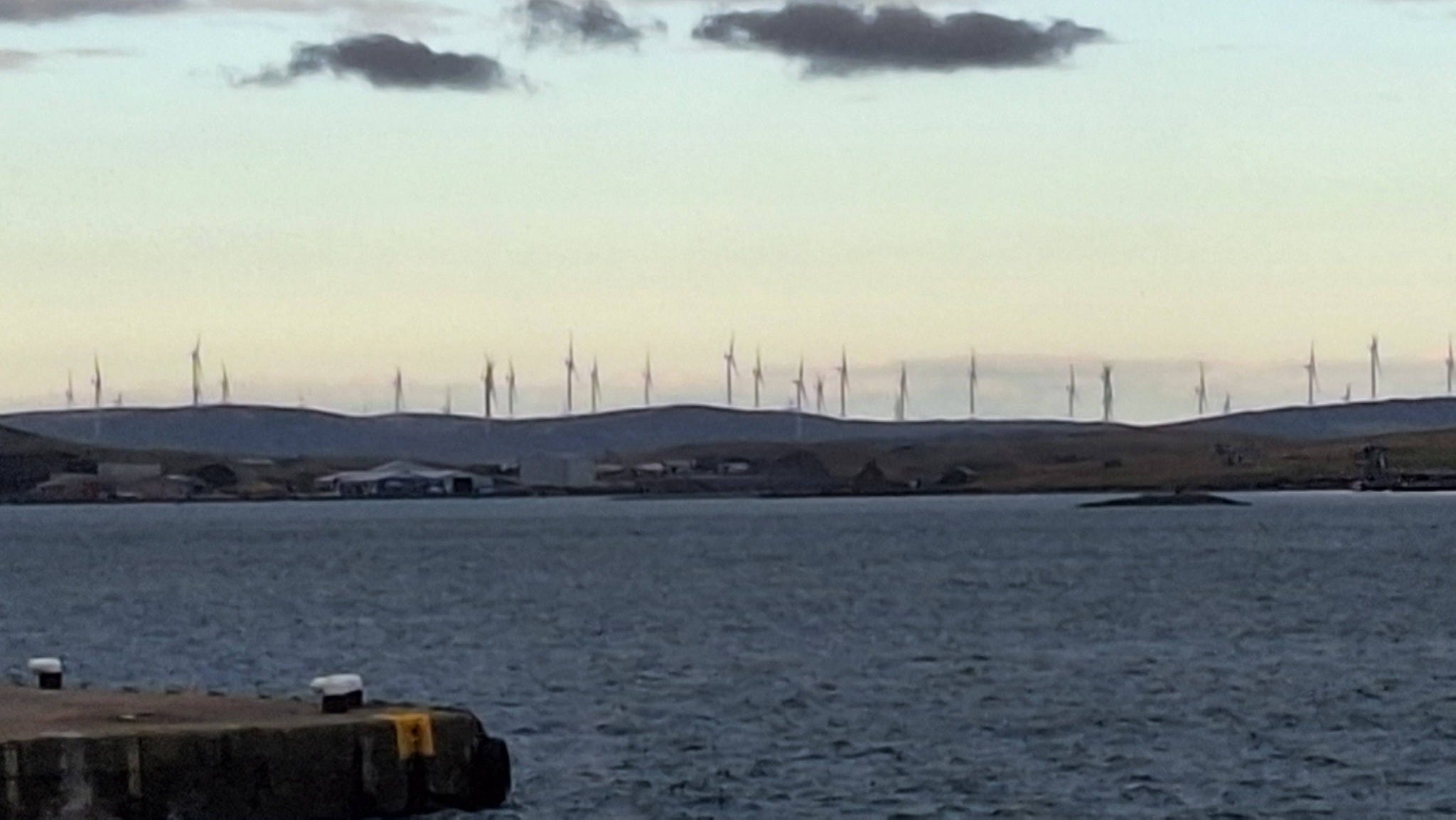
Hannah Mary Goodlad (SNP) — The Faroese Vision
Goodlad has called for a “bold, hopeful vision” that places Shetland at the heart of Scotland’s story rather than on its periphery. She advocates for immediately using the Islands (Scotland) Act 2018 to take control of more powers locally, like the Crown Estate and expanding the remit of the Shetland Islands Regulated Fishery (Scotland) Order 2012, and devolving planning. She also wants more air links and community ownership of renewable energy infrastructure, and argues that under an SNP government the “door to more local powers is open” — but that islanders must push through it. She sees something like Faroese home rule as an ultimate destination.
Alex Armitage (Scottish Greens) — Use the Tools You Have
Armitage also takes a practical line, and indeed has a very similar perspective on powers. Rather than waiting for a new constitutional settlement, he also argues that the Islands Act already provides the mechanism for meaningful change — but that the SIC has failed to use it. He is calling for an immediate “extra powers request” under the Act, focused on community ownership of renewable energy and the ability to regulate the scale of industrial wind farm development. His critique of the council’s leadership — that it has been “timid” in pursuing more powers — is pointed.
Emma Macdonald (Liberal Democrats) — Fairness Over Autonomy
The current Council Leader has framed her campaign around a pragmatic proposition: autonomy without resources is meaningless. However, Macdonald does support greater local control in principle, but takes a softly, softly approach, warning that autonomy might trigger the loss of Scottish Government subsidies for essential services like lifeline ferry routes — putting the islands in a “dangerous” position. Her priority is negotiating a fairer funding settlement and securing Scottish Government investment in fixed transport links (undersea road tunnels), which she argues are the precondition for sustainable economic development.
Candidate
Party
Core Position on Autonomy
Emma Macdonald Liberal Democrats; Fairness deal; resources must follow any new powers
Hannah Mary Goodlad SNP; Immediate use of Islands Act for extra powers; high ambition
Alex Armitage Scottish Greens; Immediate use of Islands Act for extra powers; high ambition
Part Seven: The Models — Crown Dependency or Faroese Home Rule?
For those who want autonomy, the debate seems to circle around two potential models.
Crown Dependencies — the Isle of Man, Jersey, and Guernsey — are self-governing possessions of the British Crown with wide powers of self-government, including the ability to set their own tax rates and run their own legal systems. They are, in effect, miniature states. But the transition to Crown Dependency status would require a fundamental and negotiated break with Scotland and the UK, the renegotiation of multiple international treaties, and — critically — the likely loss of Scottish Government subsidies for essential services including ferry and air links. For an archipelago already facing a £134 million funding gap, that is a substantial risk.
The Faroese Model offers a different path. The Faroe Islands are an autonomous territory within the Kingdom of Denmark, with extensive control over fisheries, natural resources, and domestic legislation. Unlike Shetland, the Faroes have stayed outside the EU while maintaining a thriving, export-driven economy. This model has growing appeal precisely because it demonstrates that a small island community can achieve meaningful economic independence while retaining the security of a larger state relationship.
The Faroese comparison is instructive in another way. The Faroes’ success has been built on control of their most valuable resource: fish. A resource which Shetland has in spades. It also has another resource, offshore renewable energy. If Shetland could secure control of these resources and the revenues they generate, the fiscal argument for autonomy would cease to be theoretical.
If you live in Shetland and have an interest in autonomy, which model appeasl to you? Personally, I like the Faroese one. They have a great deal of autonomy, but are still represented in the Danish parliament by 2 MPs. Perhaps, we could have 2 MSPs?
Conclusion: The Miner’s Canary
The argument for Shetland autonomy has run for over a century, but it has never felt more coherent than now. The £134 million budget warning from the Accounts Commission is not merely a financial problem — it is, in political terms, the consequence of structural dependency: of being a place with immense natural wealth whose revenues have historically flowed elsewhere, and which must now fund the gap with its own reserves.
Political scientists use the phrase “lilliputian federalism” to describe the creative governance arrangements that small island communities devise to punch above their constitutional weight (Hepburn, 2010). Shetland pioneered exactly this kind of creativity with the Zetland County Council Act in 1974. The question for the 2026 election is whether a new generation of islanders and politicians can do the same again.
The broader pattern, mapped across island communities from the Faroes to the Åland Islands to Jersey, is consistent: islands that control their own resources develop confidence, infrastructure, and resilience. Islands that don’t tend to export both their wealth and their people. Autonomy itself is a resource!
In this sense, Shetland functions as what Baldacchino and Milne (2000) memorably called a “miner’s canary” for territorial politics — a small, sensitive indicator of larger forces. The islands are demonstrating that globalisation and centralisation intensify the case for local control. Perhaps now is the time for a form of autonomy to be realised, either through the pragmatic dealmaking of a Liberal Democrat council leader, or the bold ambitions of the SNP and Greens.
The pledge of 1468 was never properly redeemed. Perhaps 2026 is the moment Shetland starts writing the terms of its own. How brave is Shetland? We will soon find out!
Bibliography
Accounts Commission (2026). Best Value: Shetland Islands Council. Audit Scotland. Published 5 March 2026. Available at: https://audit.scot/publications/best-value-shetland-islands-council
Baldacchino, G. and Milne, D. (2000). Lessons from the Political Economy of Small Islands: The Resourcefulness of Jurisdiction. Basingstoke: Macmillan.
Goodlad, H. M. (2026). Shetland SNP: Our Seat at the Table. SNP candidate campaign materials.
Hepburn, E. (2010). A Comparative Analysis of Island Region Autonomy. Paper presented at the Annual Meeting of the Canadian Political Science Association (CPSA), Montreal. Available at: https://www.cpsa-acsp.ca/papers-2010/Hepburn.pdf
Macdonald, E. (2025). Fairness and Connectivity: A Vision for Shetland. Shetland Liberal Democrats.
Nihtinen, A. (2011). Ambivalent Self-Understanding? Change, Language and Boundaries in the Shetland Islands (1970–present). Åbo: Åbo Akademi University Press.
Nihtinen, A. (2015). “Political Change and Cultural Reconstruction of the Past in Shetland (1970–present).” Northern Studies: The Journal of the Scottish Society for Northern Studies, Vol. 47, pp. 131–152.
Scottish Government (2026). National Islands Plan 2. Cabinet Secretary for Rural Affairs, Land Reform and Islands.
Shetland Islands Council (2020). Motion on Financial and Political Self-Determination. Council meeting, 9 September 2020.
Shetland News (2025). “Autonomy Survey: Majority in favour of more powers.” Shetland News.
Shetland Times (2026). “Accounts Commission urges Shetland Islands Council to urgently increase pace of change programme to narrow £134m budget deficit.” Published 5 March 2026. Available at: https://www.shetlandtimes.co.uk/news/council-warned-to-take-urgent-action-to-address-134m-fina-428914/
No posts
Comments
Nothing yet. Say the first thing.
Sign in to join the conversation.