
1. Beginning with the paradox
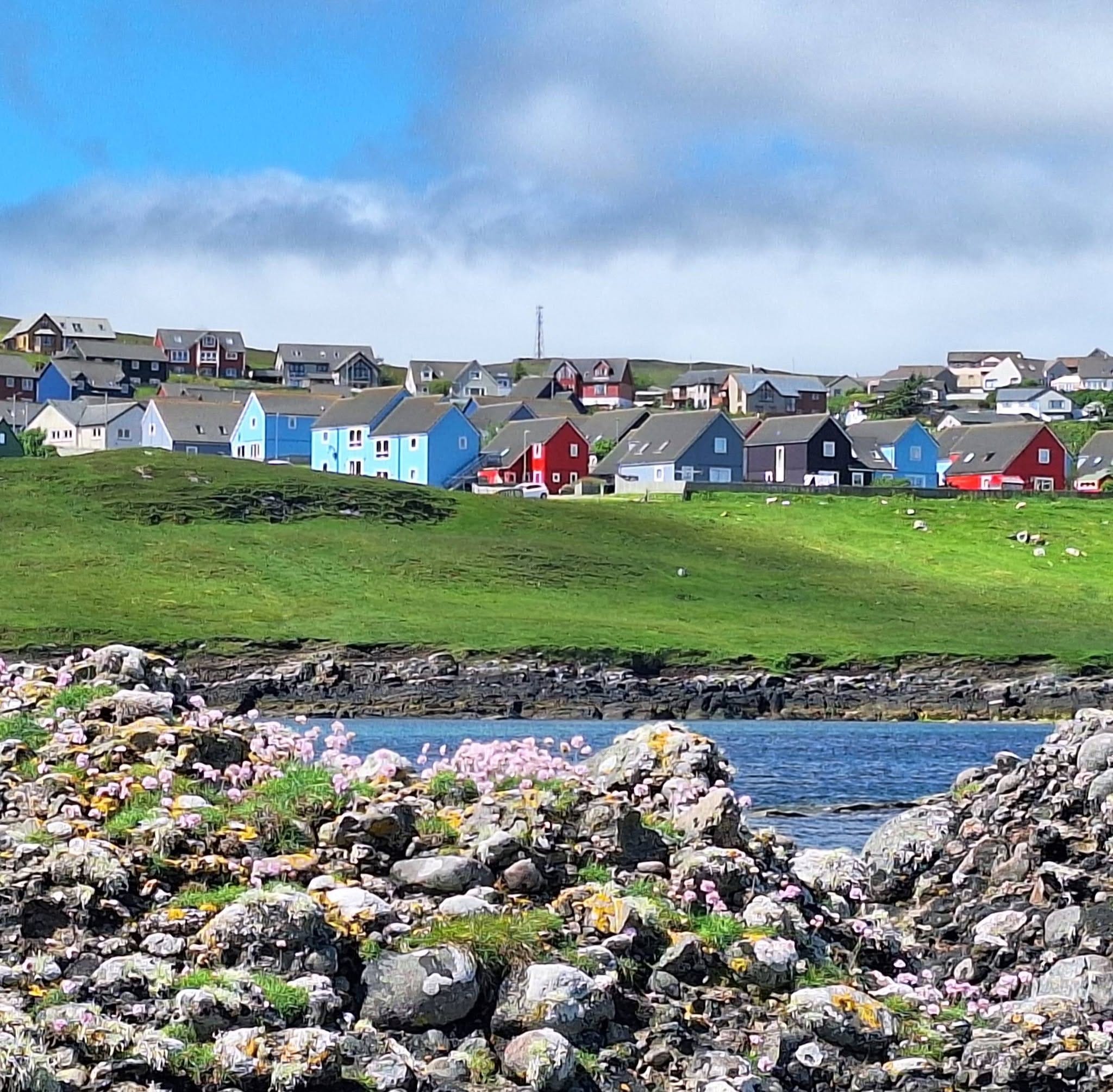
Probably the most fruitful way to approach Shetland is not to begin with a list of distinctive institutions, customs and survivals, but as a multiply-bounded island community. Shetland is among the most sharply bounded places in contemporary Scotland, yet many of the boundaries that make it distinctive point away from Scotland as much as towards it. Its political life is formally integrated into Scotland and the United Kingdom, but its historical imagination remains deeply marked by Scandinavia. It has its own local authority, its own territorial health board, its own protected Scottish parliamentary constituency, its own powerful charitable and heritage institutions, and a legal memory that reaches back beyond feudal Scotland into the Norse world. At the same time, its music, dialect, place-names, maritime history and self-description repeatedly pull it north and east across the sea.
This makes Shetland a particularly rich case for thinking about island boundedness. The sea gives the archipelago an obvious physical edge, but Shetland is bounded in many other ways: legally through udal law; administratively through the Shetland Islands Council and NHS Shetland; economically through fisheries, oil, aquaculture and wool; culturally through Up Helly Aa, fiddle music, dialect and knitting; and symbolically through the recurrent sense that Shetland is neither simply Scottish nor simply Nordic, but a place whose identity has been made in the tension between both. The island boundary is therefore not a line drawn once around a piece of land. It is a set of overlapping limits, claims and thresholds, some old and some recent, some institutional and some imaginative.
The island-studies vocabulary of boundary, edge, membrane and connection is especially helpful here. Godfrey Baldacchino’s insistence that islands are defined by a contradiction between openness and closure, and Pete Hay’s account of the island edge as both limit and invitation, give a theoretical language for what Shetland demonstrates in practice. The sea separates Shetland from the Scottish mainland, but it also carried Norse settlers, Hanseatic traders, fishermen, wartime agents, oil infrastructure, salmon capital, cruise ships, knitwear tourists, digital networks and cultural memory. Shetland is bounded because it is surrounded; it is connected because it is surrounded. The same edge that makes it seem discrete also makes it relational.
2. The hard edge: water, distance and the visible boundary
Every discussion of Shetland should begin, of course, with geography. The archipelago lies around 60 degrees north, closer, as is continually noted, to Bergen than to Edinburgh, and the journey to and from Shetland remains a practical reminder that the island boundary is not metaphorical. Ferries, flights, freight costs, medical transfers, weather disruption and the ordinary logistics of island life keep distance present. Even in an age of digital communication, Shetland’s remoteness is lived physically and institutionally.
The physical form of the islands intensifies this sense of edge. Shetland consists of around a hundred islands, only a minority of them inhabited, stretching in a long north-south chain from Sumburgh to Muckle Flugga. Mainland Shetland is itself deeply indented by voes, sounds, ayres, skerries and tidal margins. The coast is never far away. This produces a landscape in which the boundary between land and sea is not a distant perimeter but an everyday presence. From my house I can see the sea in four distinct directions. The coastline fold itself into settlement, work, memory and language: voe, wick, ness, ayre, geo and sound are not just topographical terms, they are part of the geographical grammar through which Shetland knows itself.
What of the phrase phrase “Mainland”? To outsiders, Mainland usually means mainland Scotland or Britain. To Shetlanders, “Mainland” commonly means the largest island of Shetland itself. This local usage quietly re-centres the map. It does not deny the existence of larger mainland powers, but it refuses to make them the automatic point of reference. The island world has its own centre and its own internal geography. In that sense, Shetland’s boundedness begins not only at the coastline but in the naming of the land.
3. Ecological and genetic boundedness
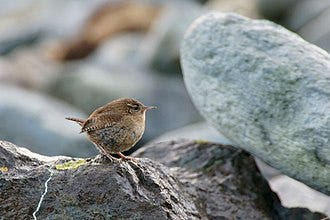
Shetland’s physical separation has also produced ecological and genetic distinctiveness. The archipelago is associated with a suite of hardy, diminutive and highly recognisable breeds: the Shetland pony, Shetland sheep, Shetland kye, and the Shetland sheepdog, and once upon a time the Shetland grice! Shetland also has an example of island gigantism in the Shetland wren, don’t get too excited, it’s still pretty small to be honest! These creatures are products of climatic exposure, limited grazing, small-scale husbandry and long adaptation to Shetland’s environment. The Shetland pony, in particular, has become a global icon of the islands, while Shetland sheep remain central to the cultural and economic identity of Shetland’s wool.
[This image was taken from the Geograph project collection. See this photograph’s page on the Geograph website for the photographer’s contact details. The copyright on this image is owned by Mike Pennington and is licensed for reuse under the Creative Commons Attribution-ShareAlike 2.0 license.]
This ecological boundedness should not be romanticised as isolation. Island breeds are shaped both by confinement and by movement. Animals, like people, arrived from across the sea; they were selected by environmental constraint; they were then exported, bred, commodified and have now turned into symbols. The Shetland sheep is bounded by island origin, but its wool circulates internationally. The Shetland pony is an island animal, but now it’s a global breed. Thus even the apparently “natural” boundary of ecological distinctiveness proves to be relational. It depends on an island environment, but it is recognised and reproduced through wider networks of trade, tourism and heritage.
The same applies to Shetland’s wildlife and seascapes. Seabird colonies, marine mammals and offshore fisheries all reinforce the idea of Shetland as a distinctive ecological region. We have the highest density and concentration of Eurasian otters (Lutra lutra, or draatsi in the local dialect) in Europe. But ecological boundaries are porous and unstable. Climate change, fisheries policy, avian diseases, aquaculture, shipping and offshore energy all pass through the same boundary that gives the islands their identity. Shetland’s ecology is therefore not a sealed local system; it is a textbook example of how island environments are exposed to global processes.
4. Historical boundedness: Norse Shetland and the unfinished transfer
Shetland’s historical boundary is unusually charged because it is not experienced simply as a completed transition from Norway to Scotland. The islands were part of the Norse and then Norwegian world until the later fifteenth century. Their movement into Scottish sovereignty followed the well-known pledging of Orkney and Shetland by Christian I of Denmark-Norway as security for the dowry of his daughter Margaret on her marriage to James III of Scotland. The crucial point for Shetlandic memory is that this was a pledge, not a straightforward sale. Although this doesn’t really have any practical constitutional consequences today, despite what some might say, it has had great symbolic power. It permits Shetland to imagine its Scottishness as layered, late and in some sense incomplete.
The phrase “not sold, but pawned” is more than antiquarian detail. It functions as a boundary story: a way of saying that Shetland’s incorporation into Scotland was contingent, negotiated and never quite absorbed into the ordinary narrative of Scottish territorial consolidation. This does not mean that modern Shetland can be treated as constitutionally Norwegian, nor that popular claims about redemption should be repeated uncritically. It does mean that the historical imagination of Shetland contains a productive ambiguity. The islands are Scottish by state formation, but Norse by a powerful strand of memory, law, names and cultural orientation.
This historical boundedness was renewed rather than erased by modern events. The Shetland Bus in the Second World War gave the old North Sea connection a new moral and emotional intensity. The clandestine crossings between Shetland and occupied Norway made the sea a wartime corridor rather than a barrier. Commemoration of those operations, particularly in Scalloway, keeps alive the idea of Shetland as a North Atlantic hinge: a place within Britain, yet oriented towards Norway through kinship, gratitude, danger and shared maritime experience. The boundary here is not a wall but a route.
5. Legal boundedness: udal law and the foreshore
One of the most striking survivals from the Norse world is udal law. In broad terms, udal tenure differs from the feudal assumptions that shaped much of Scottish landholding. Its survival in Orkney and Shetland is more than a technical legal curiosity, because it gives Shetland’s boundary with the sea a distinctive juridical character. In particular, the udal conception of ownership extending to the lowest ebb has made the foreshore a contested and meaningful zone. The edge between land and sea is not merely scenic; it is legal.
This matters because so much of modern Shetland’s economy has depended precisely on the foreshore and the sea beyond it. Oil pipelines, aquaculture sites, harbours, cables, piers and coastal infrastructure all encounter the question of who owns, regulates or benefits from the boundary zone. The survival of udal law therefore makes the coastline a place where deep history and contemporary development meet. It also complicates any simple model in which Shetland is merely governed from elsewhere. The islands retain a legal memory that can interrupt or qualify external assumptions about ownership and authority.
The significance of udal law is also symbolic. It allows Shetland to articulate a form of difference that is not merely cultural or sentimental but juridical. It says, in effect, that even the legal grammar of land and sea is not quite the same here. Yet this too is a porous boundary. Udal law now operates within the broader legal systems of Scotland and the United Kingdom. It survives not as a wholly separate legal order, but as a distinctive strand within a larger framework. That makes it an excellent example of Shetland’s multiply bounded condition: separate enough to matter, integrated enough to be continually negotiated.
6. Administrative and political boundedness
Modern Shetland is also bounded by a dense set of administrative institutions. Shetland Islands Council is one of Scotland’s unitary island authorities. It survived the 1996 reorganisation of Scottish local government without being absorbed into a larger mainland authority, and it continues to represent a territorial unit whose boundaries coincide with a strong local identity. NHS Shetland similarly gives the islands their own territorial health board, making health administration another way in which Shetland is treated as a coherent island jurisdiction. The Shetland Islands constituency in the Scottish Parliament gives this boundedness electoral form.
This institutional boundedness is also visible in the deliberately uneven arithmetic of representation. By ordinary mainland standards, Shetland is small: a council area of roughly twenty-three thousand people, corresponding in this respect with Orkney and the Western Isles as one of Scotland’s small island authorities. Yet this smallness has not yet led to absorption into a larger mainland unit. The same principle appears in parliamentary representation. The Shetland Islands constituency is much smaller than most mainland Scottish Parliament constituencies, but it is protected, like Orkney and the Western Isles, because geographical separation is treated as a democratic fact in its own right. The normal mainland logic of numerical equalisation therefore gives way to the realities of distance, sea-crossing and coherent island community. This is boundedness made constitutional: the island edge is translated into council boundaries, health administration and electoral representation.
These arrangements matter because they make Shetland visible within the state as a unit. Many rural districts are administratively submerged within larger counties or regions. Shetland, by contrast, is repeatedly named as a whole: a council area, a health board, a Scottish parliamentary constituency, a planning environment, a harbour authority, a heritage region and a statistical unit. The result is a strong institutional ecology in which “Shetland” is not just a cultural identity but a practical administrative category.
The oil era intensified this administrative boundedness. The Zetland County Council Act 1974 gave local government in Shetland unusual powers in relation to harbour development and the management of oil-related infrastructure around Sullom Voe. The subsequent development of the Sullom Voe Terminal, first receiving oil in 1978 and formally opened in 1981, also gave Shetland a level of economic leverage rarely available to a small island authority. The Shetland Charitable Trust, created in the oil era, became another locally bounded institution with long-term consequences for welfare, development, culture, sport and community life. The value of the Shetland Charitable Trust’s investments stood at £478 million at the start of June 2026.
This is why Shetland is a useful example of what Baldacchino calls a subnational island jurisdiction: a non-sovereign island territory that does not possess full statehood but nevertheless has unusual scope for local self-organisation. Shetland has not become another Faroe Islands yet, but the Faroese comparison recurs because it gives a nearby model of how a North Atlantic island society might secure greater control over fisheries, energy, taxation and cultural policy while remaining linked to a larger state. The Shetland Islands Council vote in September 2020 to explore greater financial and political self-determination should be read in this longer context. It was not an isolated gesture, but another expression of a recurring island question: how much authority should remain within the boundary of the islands?
Current politics have added a further twist. The 2026 Scottish Parliament election saw the SNP take the Shetland Islands seat from the Liberal Democrats, ending the pattern that had held since the creation of the devolved parliament in 1999. This does not dissolve Shetland’s distinctiveness into party politics; rather, it shows that the island boundary remains politically active. Shetland’s electorate can be invoked as local, islanded, Scottish, North Atlantic, energy-producing, fisheries-dependent and strategically peripheral all at once. Each of these identities makes a different claim on the centre.
7. Linguistic boundedness: Norn, dialect and the voice of place
Language is one of the most emotionally powerful forms of Shetlandic boundedness. Norn, the North Germanic language descended from Old Norse, survived in Shetland long after the islands passed into Scottish rule, though its precise chronology of decline remains debated. However, it probably did not survive beyond 1800. Its disappearance did not erase the Norse linguistic layer. Place-names, sea terms, agricultural vocabulary and everyday dialect preserve a dense substrate of Norse-derived forms. Jakob Jakobsen’s great work on the Norn language in Shetland remains foundational because it recorded not only lexical survivals but the memory of a linguistic world that had become fragmentary.
The current Shetland language or dialect, called Shaetlan, should therefore be understood not simply as a local variety of Scots but as the product of sustained contact: Norse, Scots, maritime English and local usage meeting over generations. Its distinctiveness is not as a fossil of Norn, nor is it reducible to Scots. It is a living boundary language, marking belonging while also carrying evidence of historical contact. To speak, write or perform in dialect is to locate oneself within an island community whose boundaries are audible.
At the same time, linguistic boundedness is particularly vulnerable. Shaetlan can be celebrated in literature, music, comedy, school projects and public signage, yet be weakened by standard education, media, mobility and stigma. The linguistic boundary is therefore a fading gradient rather than a hard line. It gives Shetland a distinctive voice, but that voice is constantly negotiating with wider Scottish and English-speaking worlds.
8. Cultural boundedness: fiddle, fire and wool
Shetland’s cultural boundaries are especially visible in music, festival and textiles. The Shetland fiddle tradition is not merely a local variant of mainland Scottish fiddling. Its repertoire, style and historical memory include Scandinavian affinities, maritime circulation and local dance forms. The work of Dr Tom Anderson in recording, teaching and institutionalising the tradition was crucial in ensuring that fiddle music did not become only an elderly survival. Through Anderson, Aly Bain, Catriona Macdonald and many others, Shetland fiddle has become both a local inheritance and an internationally recognisable sound.
Up Helly Aa is another powerful example, but it needs careful handling. It should not be presented as an ancient Viking rite. Its modern form developed out of nineteenth-century Lerwick festivity, temperance reform, civic organisation, antiquarian enthusiasm and the deliberate creation of a Norse-themed public spectacle. Precisely because it is invented, however, it is analytically useful. It shows how a community can manufacture a boundary symbol that becomes real through repetition, participation and emotional investment. The galley, guizers, Jarl squad and fire festival do not preserve an unbroken Viking past; they dramatise a modern Shetlandic desire to mark the islands as culturally distinct.
The recent debates around gender inclusion and racialised performance practices demonstrate that cultural boundaries are never neutral. They define who may represent the community, who may participate, and what forms of inheritance are acceptable. When a tradition changes, the boundary does not disappear; it is renegotiated. Up Helly Aa therefore reveals both the strength and instability of island identity. It is local, spectacular, exportable, contested and deeply meaningful.
Wool and knitting offer a quieter but equally significant boundary. “Native Shetland Wool” has formal protected status, tying a product to a place, a breed and a chain of local production. Fair Isle knitting is even more complex. It is rooted in a tiny island community, yet “Fair Isle” has become a global design term used far beyond Fair Isle itself. This produces a familiar island tension: geographical specificity generates value, but global circulation loosens control. The question “where else can Fair Isle come from, but Fair Isle?” is rhetorically powerful precisely because the answer, in commercial practice, is “almost anywhere.”
9. Economic boundedness and global exposure
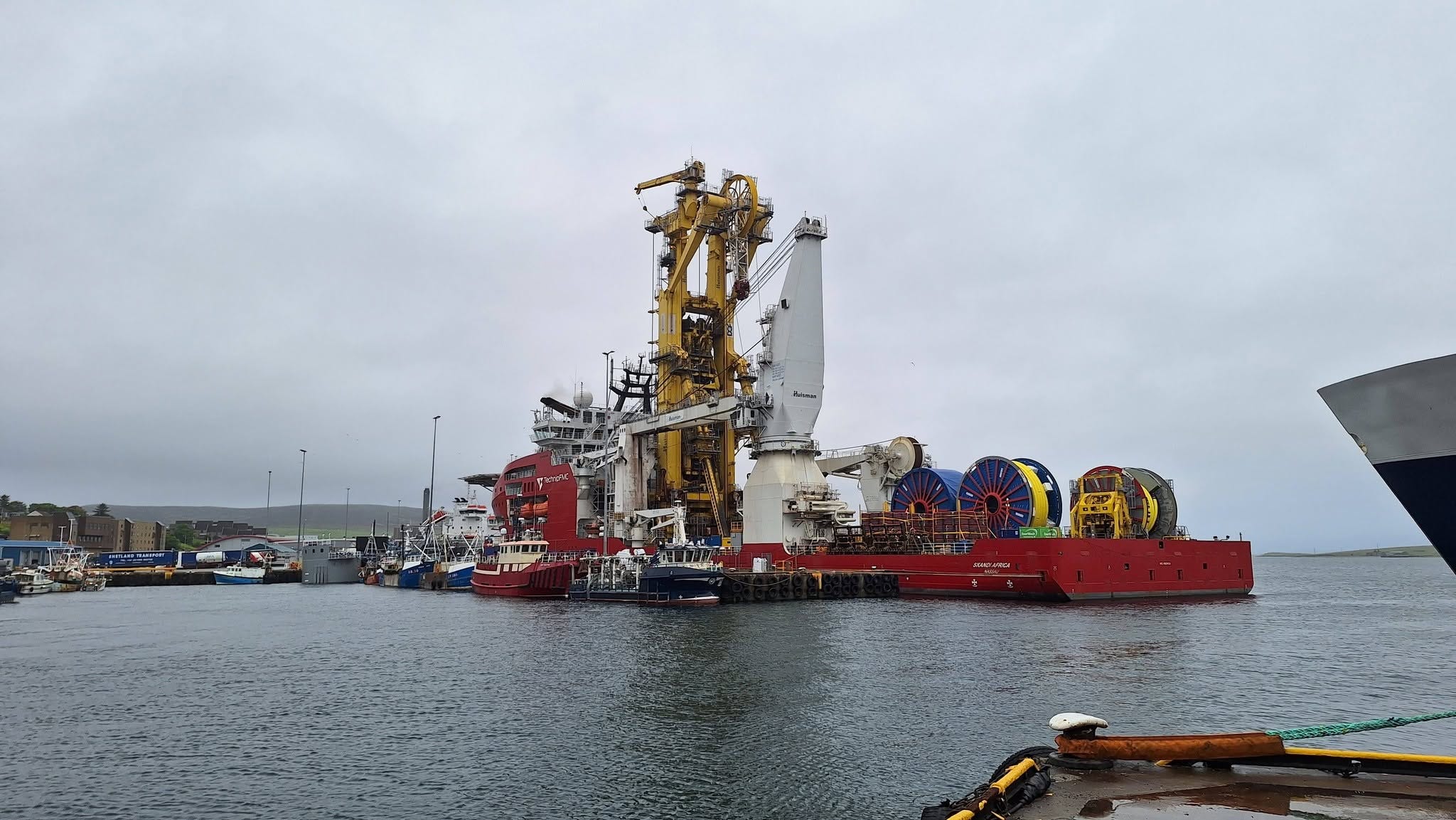
Shetland’s economy provides perhaps the clearest evidence that island boundedness does not mean closed off. Fisheries remain central to Shetland’s material and symbolic life. The scale of landings through Shetland is striking by UK standards, and fishing politics repeatedly frames Shetland as a place whose maritime resources are locally grounded but externally regulated, much to fishermens’ annoyance. Quota, export markets, labour, fuel prices and post-Brexit trade arrangements all extend beyond the island boundary. The fish may be landed in Shetland, but their value is made across international supply chains.
Oil produced a different kind of boundedness. Sullom Voe made Shetland strategically important to the United Kingdom’s energy economy, but local government used the opportunity to create a more protected island settlement with industry. The harbour powers, planning controls, disturbance payments, environmental monitoring and charitable funds associated with the oil era gave Shetland a form of local capacity that was not simply granted by the centre. Oil therefore both globalised Shetland and strengthened its internal institutions. It connected the islands to multinational capital while funding a distinctive local civic infrastructure.
Aquaculture now shows the more ambiguous side of this relationship. Salmon farming has made Shetland one of Scotland’s major producing regions, but the ownership structures are often multinational, and debates around environmental impact, fish mortality, seabed damage, employment and displacement of other fisheries expose the limits of local benefit. The island boundary can brand the product and host the risk without necessarily retaining the profit. In this sense, aquaculture demonstrates how bounded identity may be absorbed into global capital: Shetland becomes a place of production, a mark of provenance and a site of environmental exposure.
Tourism, cruise travel, knitwear markets and heritage branding operate in similar ways. They depend upon Shetland being recognisably different, but they also package that difference for outside consumption. Boundedness becomes a marketable asset. This does not make it false, but it does make it vulnerable to simplification. Shetland’s Norse past, dialect, ponies, knitting, cliffs, seabirds and fire festivals can all be turned into consumable signs. The task for a serious account of island boundedness is to show both the reality of these signs and the pressures placed upon them by wider circulation.
10. The institutional boundary: heritage, amenity and custodianship
Shetland’s boundedness is also actively maintained by institutions. I’ve mentioned the Shetland Charitable Trust already. There is also the Shetland Amenity Trust which is especially important because it connects heritage, landscape, archaeology, ecology, education and community action. Its work around the archaeological site of Old Scatness, Sumburgh Head lighthouse and Geopark Shetland helps produce Shetland as an intelligible cultural and natural unit. Such institutions don’t merely preserve identity after the fact; they help shape the categories through which islanders and visitors understand the islands.
Da Voar Redd Up is a particularly revealing practice. A community litter-pick may seem modest beside constitutional history or oil politics, but it is a ritual of bounded custodianship. Volunteers collectively clean the island edge, especially beaches and coastal spaces where external debris arrives. The act acknowledges both boundary and porosity. Rubbish washes in from elsewhere; islanders gather to reclaim the shore. I once picked up a plastic float from western Greenland! The dialect name reinforces the local character of the practice, while the activity itself makes the coastline a shared moral responsibility.
This is one of the places where Shetland most clearly demonstrates the relationship between edge and care. A bounded island is not only a space defended against the outside; it is a space for which people feel answerable. The boundary produces obligation. To clear the shore, maintain archaeological sites, teach dialect, protect wool provenance or sustain fiddle tuition is to participate in the ongoing making of Shetland as a bounded community.
11. Shetland as locus and focus
Owe Rönström’s distinction between island as locus and island as focus is useful here. Shetland is a locus: a real place with roads, ferries, schools, hospitals, fish markets, care homes, crofts, council meetings, housing pressures and weather delays. But it is also a focus: a screen onto which outsiders project ideas of remoteness, Norse survival, hardiness, authenticity and edge-of-the-map romance. Much writing about Shetland risks confusing these two. It treats the islands as a picturesque focus while neglecting the ordinary complexity of the locus.
A strong account of Shetlandic boundedness needs both. Without the locus, the essay becomes romantic and decorative. Without the focus, it misses the symbolic power that makes Shetland so compelling. The islands are administratively real and imaginatively charged. They are governed, funded, inhabited and contested; they are also dreamed through stories about Vikings, lighthouses, and storms, through dialect poems, fiddle tunes, knitwear patterns and North Sea crossings. Their boundedness is both practical and mythic.
Epeli Hau‘ofa’s famous distinction between “islands in a far sea” and “a sea of islands” can also be adapted to Shetland. Seen from Edinburgh or London, Shetland may appear peripheral: a remote group of islands at the edge of the map. Seen from the North Atlantic and Nordic sea-world, however, Shetland becomes a node in a wider maritime region linking Norway, Faroe, Iceland, Orkney, Scotland and beyond. The change of perspective matters. Shetland is not merely far away; it is differently centred.

A view of the sunset from my garden.
12. Conclusion: the multiply bounded island
So don’t reduce Shetland’s boundedness to geography, although geography underlies it. Yes the islands are bounded by sea, but they are also bounded by law, administration, political representation, health governance, institutional heritage, dialect, music, wool, fisheries, oil and memory. These boundaries overlap without aligning perfectly. Some separate Shetland from Scotland; others bind the islands to Scotland. Some point towards Norway and the wider Nordic world; others tie it to the British state, the Scottish Parliament, global energy markets or international aquaculture. The result is not a single boundary line but a boundary zone.
This is why Shetland is such a valuable case for island studies. It shows that islands are neither closed worlds, nor open nodes in global networks. They are places where closure and openness are produced together. The sea both separates and connects; the law both preserves and adapts; heritage both protects and invents; economic distinctiveness both enriches and exposes; local institutions both defend autonomy and depend on wider systems. Shetland’s boundary is therefore best understood as a membrane: visible, meaningful, protective and permeable.
I think the phrase “multiply-bounded island” captures this condition. It allows us to see Shetland not as an anomaly at the edge of Scotland, but as a concentrated example of how island societies make themselves legible. Shetland is bounded enough to sustain a strong sense of itself, but porous enough to have been shaped by every crossing that reached it: Norse migration, Scottish ministers, wartime routes, oil pipelines, fishing markets, salmon capital, tourists, scholarship, music and memory. Its boundedness is real, but its boundedness is not hermetically sealed.
Further reading
Baldacchino, G. (2004) ‘The coming of age of island studies’, Tijdschrift voor Economische en Sociale Geografie, 95(3), pp. 272–283. Available at: https://doi.org/10.1111/j.1467-9663.2004.00307.x
Baldacchino, G. (ed.) (2007) A World of Islands: An Island Studies Reader. Charlottetown and Malta: Institute of Island Studies and Agenda Academic. Available at: https://www.academia.edu/84093022/A_World_of_Islands_An_Island_Studies_Reader
Baldacchino, G. (2010) Island Enclaves: Offshoring Strategies, Creative Governance, and Subnational Island Jurisdictions. Montreal and Kingston: McGill-Queen’s University Press. Available at: https://www.jstor.org/stable/j.ctt7zq30
Boundaries Scotland (2025) Second Review of Scottish Parliament Boundaries: Final Recommendations. Available at: https://www.boundaries.scot/reviews/reviews-historical-reviews/scottish-parliament-boundaries__trashed/reviews-second-review-scottish-parliament-boundaries/
European Commission (2011) Commission Implementing Regulation (EU) No 1119/2011 of 31 October 2011 entering a name in the register of protected designations of origin and protected geographical indications: Native Shetland Wool (PDO). Available at: https://ec.europa.eu/agriculture/eambrosia/geographical-indications-register/details/EUGI00000013936
Hay, P. (2006) ‘A phenomenology of islands’, Island Studies Journal, 1(1), pp. 19–42. Available at: https://islandstudiesjournal.org/article/81157-a-phenomenology-of-islands
Hau‘ofa, E. (1994) ‘Our sea of islands’, The Contemporary Pacific, 6(1), pp. 148–161. Available at: https://www.jstor.org/stable/23701593
Jakobsen, J. (1928–1932) An Etymological Dictionary of the Norn Language in Shetland. 2 vols. London and Copenhagen: David Nutt and Vilhelm Prior. Available at: https://archive.org/details/anetymodictofthenornlanginshet/01%20An%20Etymological%20Dictionary%20of%20the%20Norn%20Language%20in%20Shetland%20Part%20I/
Jones, M.R.H. (1996) ‘Perceptions of udal law in Orkney and Shetland’, in Waugh, D.J. (ed.) Shetland’s Northern Links: Language & History. Edinburgh: Scottish Society for Northern Studies, pp. 186–204. Available at: https://www.ssns.org.uk/wp-content/uploads/2019/10/14_Jones_ShetlandNL_1996_pp_186-204.pdf
Napier, I. (2022) Shetland Fisheries Statistics 2021. Scalloway: UHI Shetland. Available at: https://www.shetland.uhi.ac.uk/t4-media/one-web/uhi-shetland-images-and-documents/research/statistics/shetland-fisheries-statistics/Shetland-Fisheries-Statistics-2021.pdf
National Records of Scotland (2024) Scotland’s Census 2022. Available at:
https://www.scotlandscensus.gov.uk/
Rönström, O. (2021) ‘Remoteness, islands and islandness’, Island Studies Journal, 16(2), pp. 270–297. Available at: https://islandstudiesjournal.org/article/84726-remoteness-islands-and-islandness
Shetland Amenity Trust (n.d.) Shetland Amenity Trust. Available at:
https://www.shetlandamenity.org/
Shetland Islands Council (1974) Zetland County Council Act 1974. Available at: https://www.legislation.gov.uk/ukla/1974/8/contents/enacted
Velupillai, V. and Mullay, R. (2025) Shaetlan: A young language wi aald røts. Lerwick: I Hear Dee / Kalafine Skrits.
No posts
Comments
Nothing yet. Say the first thing.
Sign in to join the conversation.