
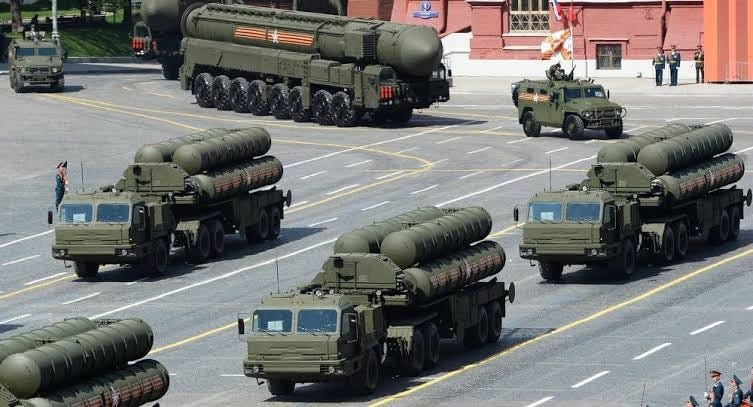
Russia has again begun using missiles associated with the S-300PM and S-400 air-defense systems against ground targets in Ukraine. Ukrainian Air Force reporting often groups these weapons with Iskander-M ballistic missiles, which prevents a reliable count of S-400 launches. The pattern is still clear. S-400-family munitions are appearing repeatedly inside large ballistic strike packages.[1]
This is an unusual choice for a military that continues to face Ukrainian long-range drone attacks across its own territory.
The S-400 was designed as a strategic air-defense system. Its primary 48N6 missile carries a 143-kilogram high-explosive fragmentation warhead intended to destroy aircraft or missiles by throwing fragments through the target’s flight path.[2] An Iskander-M carries a payload of roughly 480 to 700 kilograms and was designed to strike fixed ground targets with purpose-built guidance and warhead options.[3]
Readers searching for high-quality information - such as yourself - might prefer to support my work with a one time contribution vs a subscription. https://buymeacoffee.com/researchukraine
The difference is substantial. An Iskander can attack a compact military target, hardened facility or critical piece of infrastructure with a reasonable expectation of destructive effect. An S-400 missile fired ballistically has a smaller warhead and far less dependable accuracy against a ground aimpoint. It can kill people and damage exposed structures. It is poorly suited to destroying a priority target of any kind.[6]
Russia understands this.
The value of the S-400 in ground-attack mode comes from…
Comments
Nothing yet. Say the first thing.
Sign in to join the conversation.