A myasthenia gravis diagnosis often takes years, even though the disease is treatable. See how patient community insights and registry data reveal the delay and how to close it.
For World Sjögren's Day, we're looking at what the 2025 Sjögren's Foundation patient survey reveals. We also compared it to clinical data and listened to what our patient community had to say about it. Each source added texture and expanded our understanding of what it means to live with Sjögren's disease.
Does "palliative care" mean the end? For many people it's the first fear, but that's often not the case. Stanford physician Dr. Grant Smith joined our community to explain what palliative care is, who qualifies, and how to ask for it.
July is Sarcoma Awareness Month. Sarcoma is a rare cancer that forms in the body’s connective tissues. We asked three leaders working across sarcoma research, patient support, and pediatric osteosarcoma what they most want you to know.
World Brain Day is a global reminder to talk about brain health before problems start rather than after. This piece shares the experiences of patients and caregivers as they notice changes in memory and thinking, and struggle to talk about it.
Uterine (endometrial) cancer is now the most common gynecologic cancer, and cases are still rising. Yet no Pap smear or routine screening test can catch it. Learn more from Dr. Ebony Hoskins about the one warning sign every woman should know, typical symptoms, and what to do next.
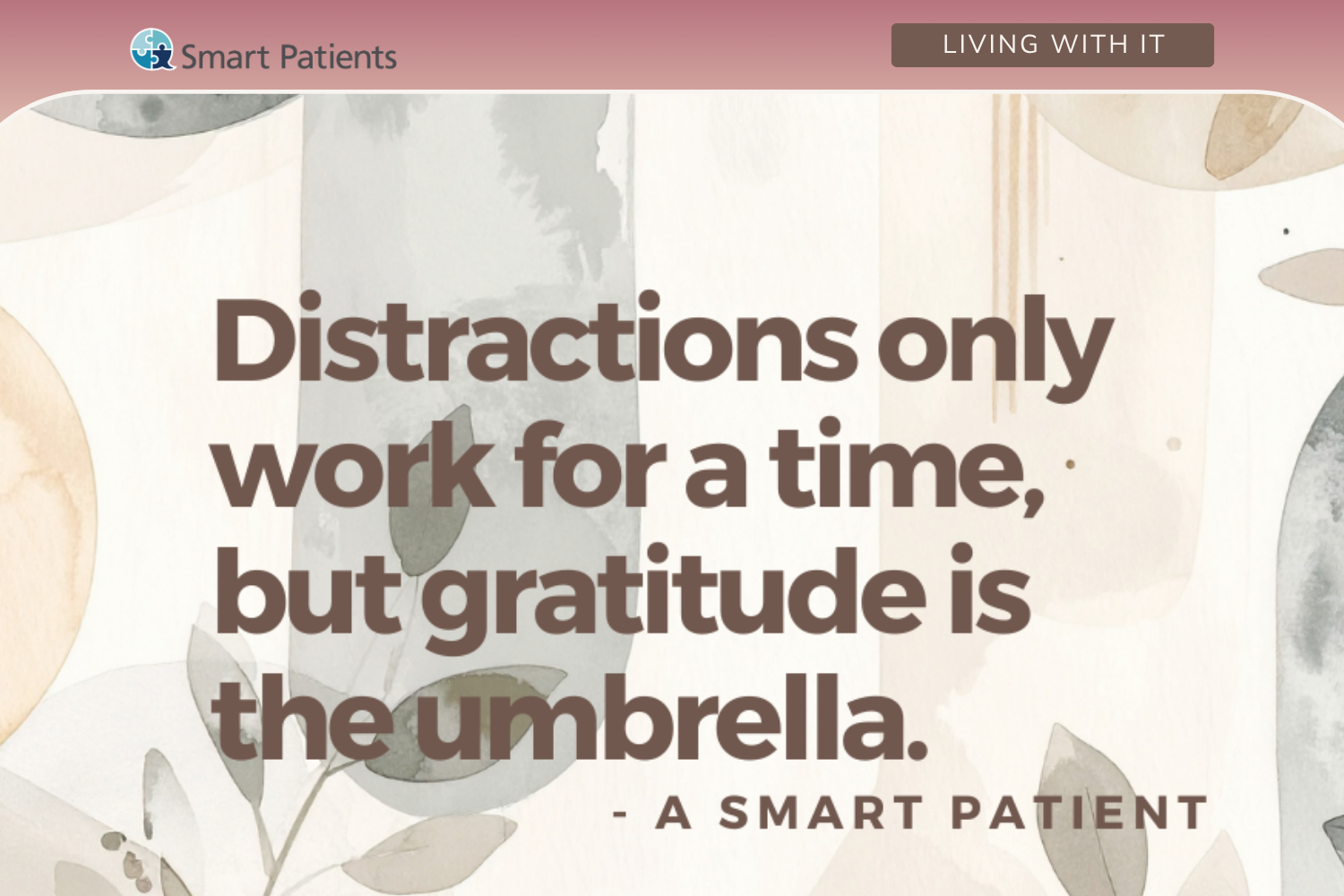
One of the quietest, most exhausting parts of living with serious illness is the uncertainty or the waiting, the what-ifs, the future you can't quite plan for. In this Living With It conversation, members and social worker KrisAnn Talarico explored what it takes to keep going when the future feels unsettled.
For Men's Health Month and World Kidney Cancer Day, a Smart Patient kidney cancer survivor shares how he has managed more than twelve years with metastatic renal cell carcinoma . He shares his practical advice on self-advocacy, specialists, and hope.
Sudden confusion, agitation, or aggression in someone with dementia doesn't always mean the disease is progressing. For Alzheimer’s and Brain Awareness Month, caregivers in the Smart Patients community share how an infection, a new medication, or unspoken pain can trigger a sharp behavior change, and why it's worth checking before you accept it as the "new normal."
For Migraine & Headache Awareness Month, we’re sharing how members of our community describe what migraine means to them . Their answers make one thing clear: a migraine is far more than "just a headache." These are their words describing the pain, the long road to a diagnosis, and the determination to keep going.