
Congestion. A sore throat. A cough and possible loss of smell. Covid has returned as more nuisance than menace.
Most of us already know that. Most stopped lining up for boosters. Many developed a healthy perspective on covid that starts with immune-boosting Vitamin D (far more than the recommended 600 IU), supplements like turmeric, and, when traveling or among crowds, nasal spray and ivermectin.
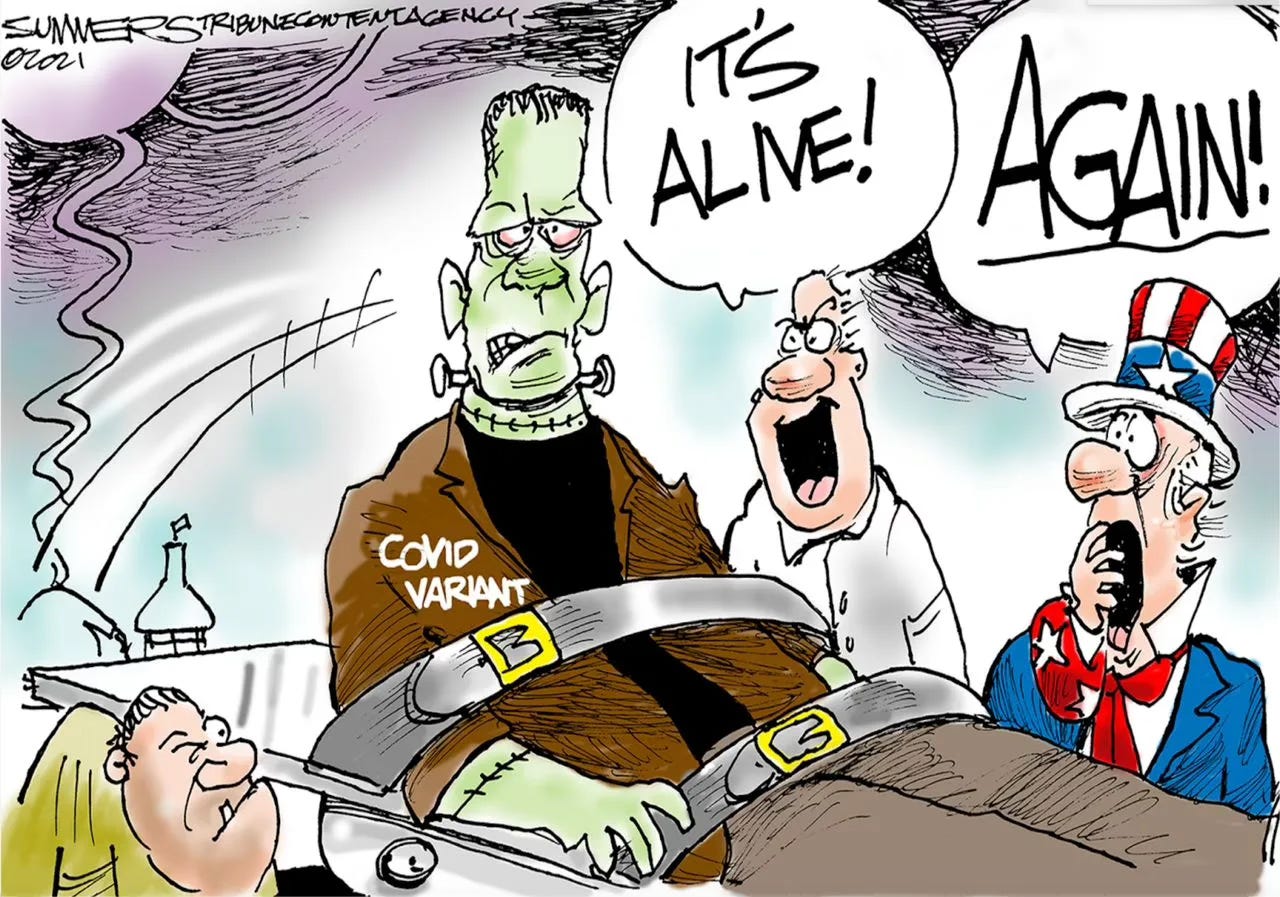
The shorthand “Frankenstein” is a nod to the dominant variant’s mishmash of previous covid incarnations. Far different from the fearsome Alpha or Delta waves, however, the Stratus strain is avoidable, manageable, and without the implications of its ancestors.
“I don’t see it as a big concern,” said Laura Bevis, a doctor of nursing practice and advanced practice registered nurse who started treating covid on her porch in Kansas in 2020. Bevis has treated Stratus with ivermectin, hydroxychloroquine, and nitazoxanide. Patients recover, and, significantly, post-treatment long-haul cases are almost non-existent, she said.
As with a cold, people can treat themselves. Bevis recommends starting early, referring patients to the Independent Medical Alliance protocols, which include over-the-counter remedies like quercetin.
The World Health Organization calls Stratus a variant under monitoring, as opposed to the more-ominous “variant of concern.” The Centers for Disease Control had a similar assessment in its most recent update: “The amount of acute respiratory illness causing people to seek health care is at low or very low levels . . . COVID-19 is declining in most states.”
Still, covid clickbait is common and likely to continue through the winter months.
A few examples:
India: “Cases spike worldwide.”
United Kingdom: “Strains spread across UK.”
United States: “Inside the cough New Yorkers can’t seem to shake.”
Paris: “Pharmacies run out of covid tests as cases soar.”
Dr. Hélène Banoun, a leading French researcher on respiratory illness and a covid vaccine critic, told me that hospitalization rates for all respiratory illness in France are extremely low—0.8 percent among general practitioners, of which covid is less than a third.
“This craze for covid testing,” she wrote, referring to the run on pharmacies, “is undoubtedly due to the name given to the new variant: XFG=Frankenstein, to scare people and encourage them to get vaccinated!”
Indeed, media reports almost inevitably include the obligatory nod to needles.
Public health officials, as stated in London’s Daily Mail, “are urging millions to come forward for covid and flu vaccines . . . Pregnant women and children are also invited for vaccination, and toddlers can this year get a flu spray at community pharmacies.”
The experts I spoke with said the hype is not warranted, and, because of their concerns with covid vaccine safety, nor is the drumbeat for shots.
Alex Boller, a physician assistant in Tennessee, sees too much covid vaccine injury in his practice to suggest a patient get the inoculation. “The way I see it,” he told me in a conversation on the current wave’s severity, “covid, on a scale of one to ten, was a one or two. The vaccine was a twelve.”
He expressed frustration that colleagues are unwilling to consider the role of covid vaccines in differential diagnoses, including in cases of arrhythmia, stroke, embolism, fatigue, brain fog, anxiety, and cancer. All are rising, he has observed, likely as a result of vaccination.
Kristin Reihman, a Pennsylvania-based Lyme disease specialist, has seen similar bad outcomes.
“I’ve been seeing a lot of patients who were well after completing treatment for Lyme and co-infections, only to see those infections stirred up and essentially reactivated by the shot,” she said. “It’s almost as if the spike protein [functioned] to unearth old, walled off infections.”
She concluded, “In healthy people—and especially in healthy children—the risk of a COVID shot often outweighs the risk of the actual disease itself.”
Bevis, the nurse practitioner, agreed. “We don’t recommend vaccination for anyone,” she said. For one, “We don’t know what’s in the vaccines,” she said, referring to so-called “hot lots” associated with serious injury. Moreover, she said patients should avoid more exposure to the spike protein, the inflammatory component of the coronavirus that is produced by the mRNA shot.
Another doctor who treated covid with ivermectin, and asked not to be named, wrote me in an email: “The vaccine is always one step behind the virus, so it is not very effective and carries significant risks of side effects. In short, the risk-benefit ratio is poor.”
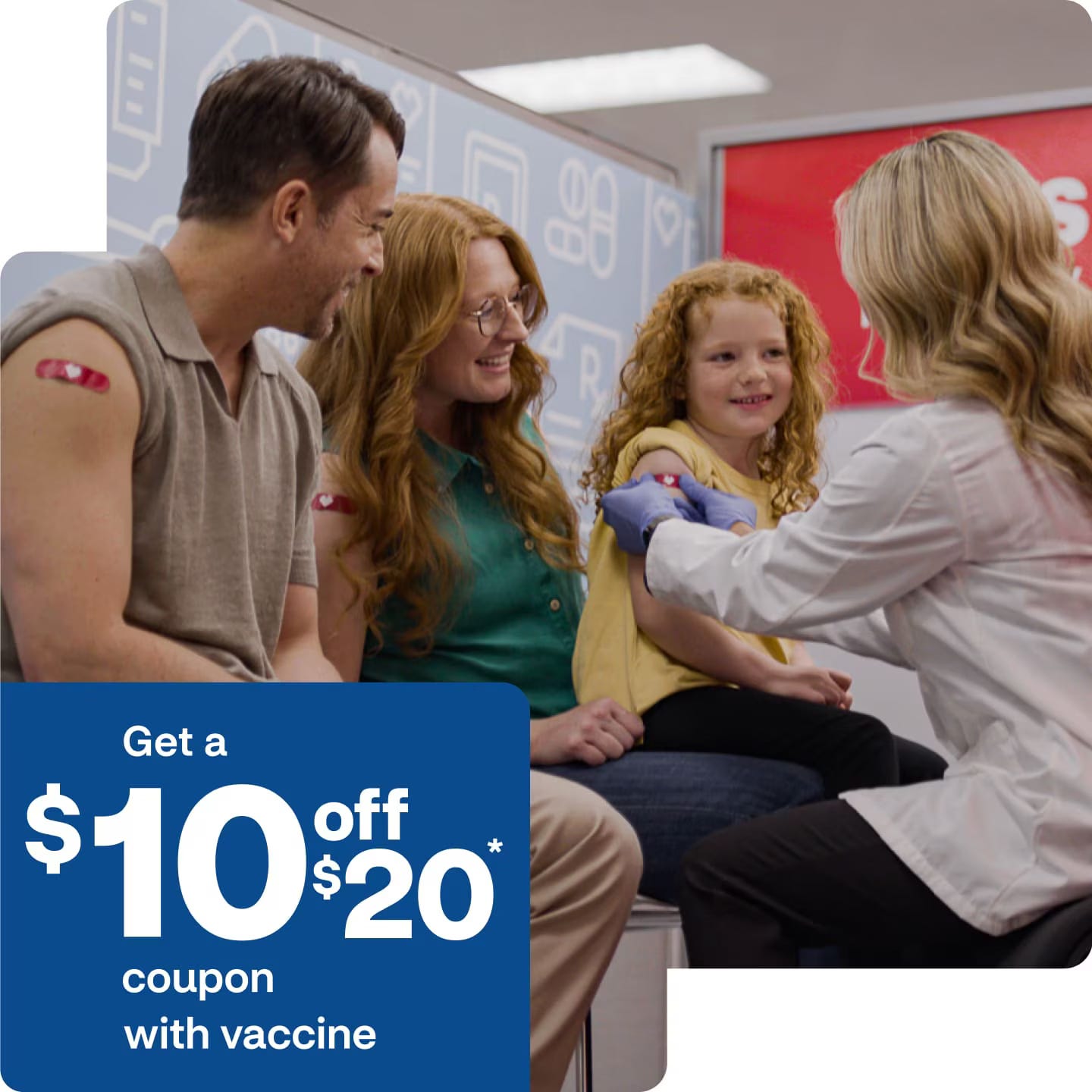
CVS customers get a far different message: Get vaccinated, they are told, and they can get a $10 off coupon.
The message is sold with a photo of parents—heart-adorned band-aids on their arms—smiling at their cherubic young daughter, her sleeve rolled up as she gets her very own red ❤️ band-aid.
Dr. Mary Talley Bowden, who has faced persecution for using ivermectin for covid, received a CVS text, addressed to “parents/guardians” and advertising the promotion.
“Imagine the outrage,” Bowden tweeted on X, “if I texted my patients a similar message, offering a coupon in exchange for injecting them with pharmaceutical product. Why is @cvspharmacy allowed to do this?”
I asked the CVS media office about the ethics of enticing people who may need money to get a vaccine they or their children might not need. Amy Thibault, director of corporate communications, did not address my question directly, saying only that patients who “choose to receive any CDC-recommended vaccine . . . will also get a $10 off $20 to use on in-store purchases.”
I once told a pharmacist I know of a friend who was, simultaneously, given covid and flu shots when they were weeks from death from cancer—and looked every bit the part. The friend became feverish, fell on stairs, and was hospitalized. “It shouldn’t have happened,” the pharmacist said. “All they want us to do is to vaccinate.”
The risk of the shots aside, the campaign to make people get them seems to have little connection with the threat of illness. Media reports acknowledge most cases are “mild.”
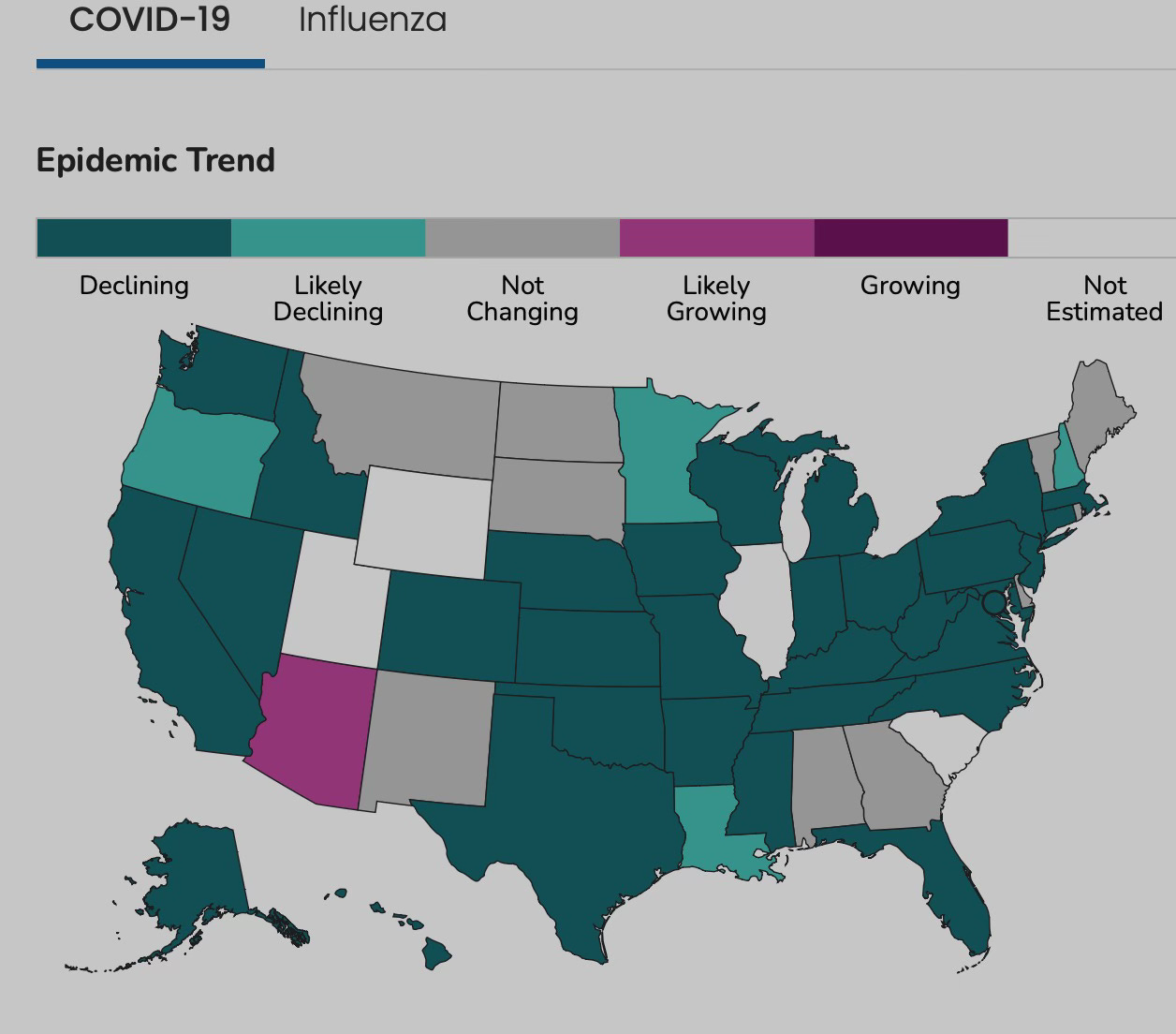
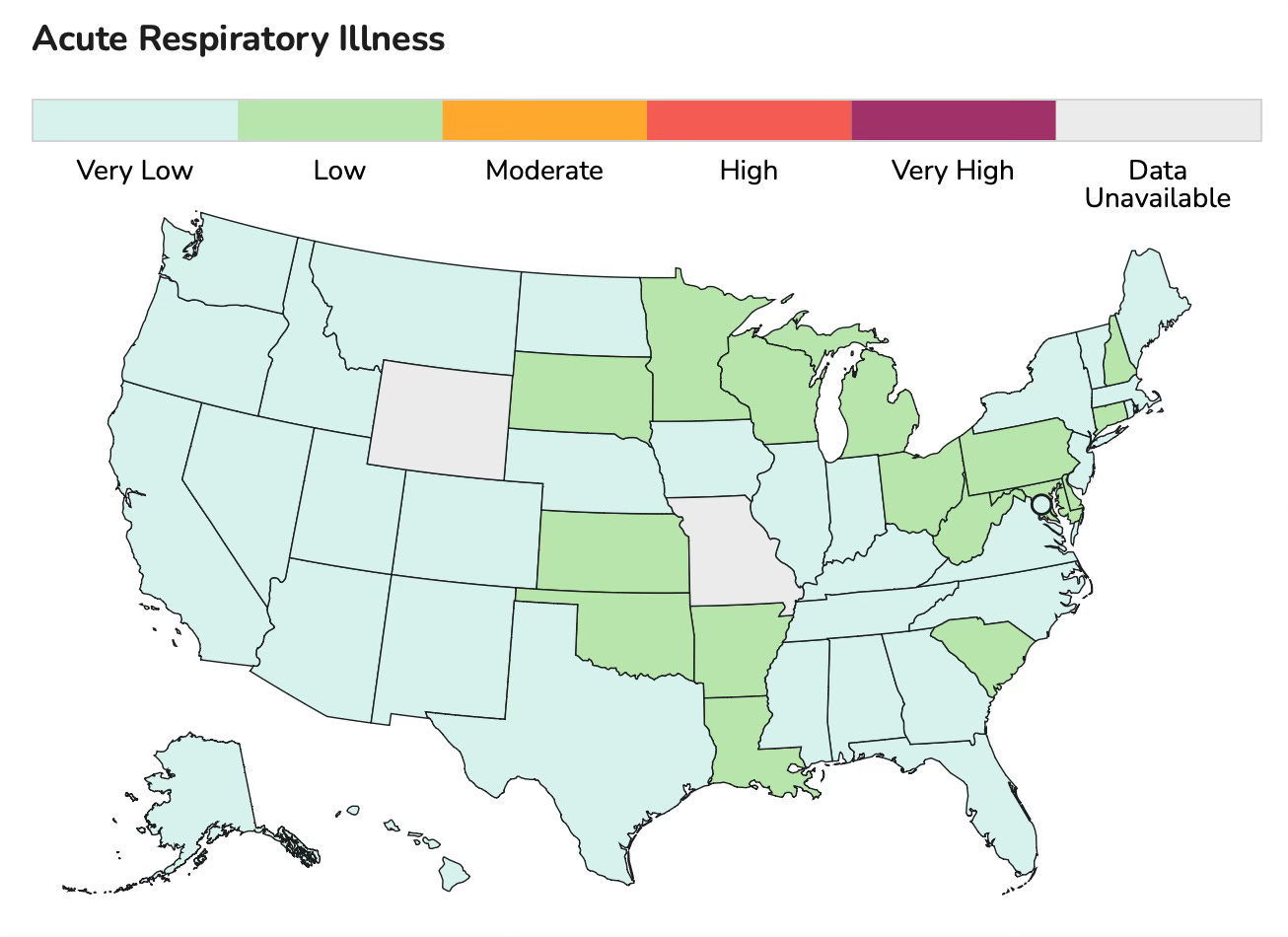
A CDC map shows covid “likely growing” in just one state, Arizona. The risk of respiratory illness, which could change, is low or very low nationwide.
The disconnect between covid illness and covid shots is a testament to the excesses of a pharma-dominated culture. What risk, for example, does a newborn have of Hepatitis B—acquired mainly through drugs and sex—that merits a shot in the first 24 hours of life? Yes, it can be passed during childbirth, which surely could be mitigated by the diligent practice of medicine. Instead, we highjack the immune system in the first hours of life.
The latest recommendation in our more-is-better vaccine culture is to give children under 9 two flu shots rather than one. At what point do we let immune systems work as intended, especially when flu shots are notoriously ineffective and, in a large adult study at Cleveland Clinic, actually increased flu risk?
As of late August, 1.7 million covid vaccine injuries—including nearly 39,000 deaths—have been reported to the online Vaccine Adverse Injury Reporting System. Strokes, heart attacks, miscarriage, blood clots, some undoubtedly coincidental, some not.
Nonetheless, the Centers for Disease Control’s latest vaccine injury update lists only myocarditis as an acknowledged vaccine injury; 65 other conditions were investigated and dismissed as unrelated or unproven.
Post-mRNA vaccine deaths, the agency said, were no greater than background population rates. This is part of a CDC posture that has minimized VAERS reports as “incomplete, inaccurate, coincidental, or unverifiable.”
On the contrary, VAERS is likely the tip of an iceberg. One study found that 99 percent of vaccine injuries go unreported to the system—by doctors who have been convinced not to connect symptoms to shots and citizens who cannot navigate the system’s digital demands. Similarly, a 94 percent underreporting rate was found in a United Kingdom review of 27 studies of drug harm.
As important is the censorship of covid researchers who did not fit the pharma-medico mold. Studies that asserted serious harm from the mRNA vaccines were retracted by respected publications like Cureus (two) and Vaccines, the latter prompting the resignation of two editorial board members. These retractions sent chilling signals to other journals and researchers. Doctors and scientists who tried to publish found their papers rejected or placed them on pre-print servers.
While legitimate scientific discourse on covid vaccines has been squelched, there is a notable exception.
Claims have been made that the vaccines saved multitudes, with a Lancet estimate of 14.4 million to 19.8 million spared in just the first year of the jab campaign (reported widely as 20 million).
Last July, a Stanford study in JAMA Health Forum found a far smaller global benefit with 2.5 million lives saved by vaccines in a far bigger time period, from 2020 to September of 2024. Differences in conclusions and approach are the bedrock of scientific debate.
These and other studies assert that the vaccines had more effect during the early years of covid, when variants were more virulent. Maybe so. But I will trust those conclusions only when we have a legitimate debate about the safety of covid vaccines. We aren’t there yet.
It’s worth noting that the original, 20-million-lives-saved Lancet paper was not retracted.
In the meantime, avoid covid—and exposure to the spike protein—by following prevention protocols, available from the Independent Medical Alliance, (formerly FLCCC). Vitamin D is essential. Other components: mouthwash, melatonin, zinc, Vitamin D, resveratrol, elderberry, and, if available, ivermectin.
When traveling, Bevis uses nasal spray to kill viruses that generally gain entry through the nose, recommending recommends Xlear and Enovid. She also takes an ivermectin on the day a trip begins and then every three days while traveling.
No posts
Comments
Nothing yet. Say the first thing.
Sign in to join the conversation.