
Listen to the conversation:
0:00
-44:56
Read the synthesis:
🌿 Field Dialogue #2 — A Nourishing Toolkit to the More-Than-Human (Ariel Sim)
What would it look like for the more-than-human world to actively participate in design, and for human minds and systems to take the multispecies approach more seriously?
In this second Field Dialogue, we sat down with Ariel Sim - a design anthropologist working at the edges of human-centred design and ecological thinking. We spoke as part of the Co-Creation with the More-Than-Human sandbox, exploring how designers can meaningfully co-create and listen with the living world in ways that shape decisions and outcomes that echo across the worlds of city planning, community research, digital product/service, and policy-making.
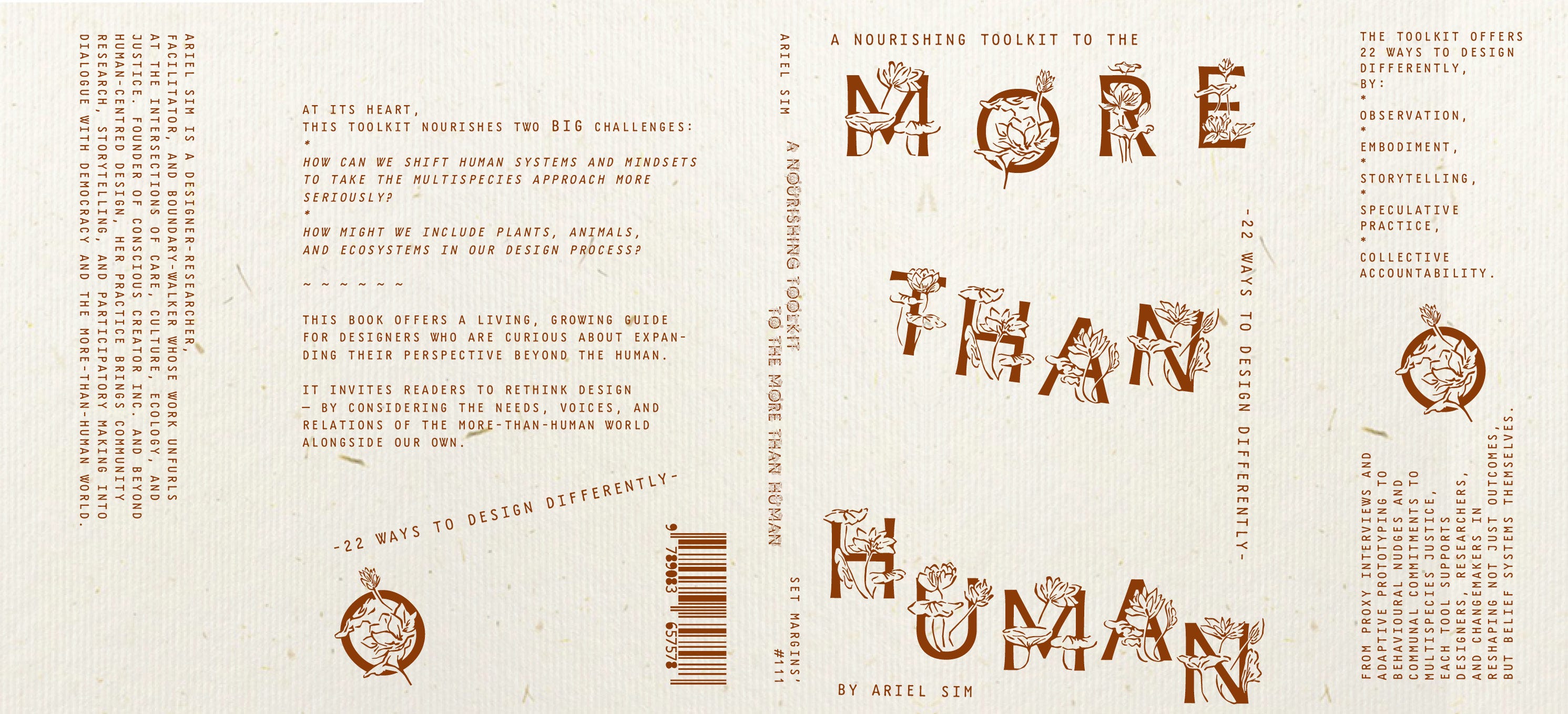
The conversation unfolded around Ariel’s upcoming book, A Nourishing Toolkit to the More-Than-Human: 22 Ways to Design Differently - a project which invites readers to step sideways, shifting from human-centred design into a more entangled way of designing with the full web of life. Moving through theory, reflection, and practice, the book traces the limits of traditional design approaches, and explores behavioural and multispecies design tactics that gently unsettle the idea that humans are the sole authors of change. Introducing more-than-human design as both mindset and method, the toolkit questions designers’ inherited habits and offers a living catalogue of traditional and emerging design methods that shift our ways of noticing toward interdependence.
In our Field Dialogues, we move through questions of practice, perception, and possibility, where this work is already taking root, and where it meets resistance. The following summary does not retrace the conversation step by step. Instead, it draws out the key insights and tensions that surfaced, and considers what begins to take root if our more-than-human kin are more meaningfully asked to ‘hold the pen’ across pluriversal design worlds.
“A Nourishing Toolkit to the More-Than-Human” does not read like a resolved framework, but more like a moment of personal consolidation within a longer trajectory of learning. It’s positioned as an open bookmark within a long arc of practice, sharing the author’s evolving learnings, methods, and curiosities.
A compilation of reflections and theoretical framings accompany a practical collection of 22 tools for both designers and “my grandmother” (the general public). The toolkit portion of the book explores how to adapt popular design practices toward meaningful collaboration with the more-than-human world, while gently shifting human behaviours and systems to embrace the multispecies mindset. The underlying invitation is not “this is how it works,” but rather “this is what I have been trying, this is what I’ve witnessed, this is what I’ve seen made possible so far… and here is what feels unresolved.”
The book embraces that more-than-human design is deeply intertwined across ancient and emerging technologies, cross-cultural communities of practice, Indigenous & Western sciences, socio-ecologies – items almost impossibly stabilised into a clean framework.
There is also a shift in authorship and authority embedded in the more-than-human design approach. From revenue sharing with more-than-human collaborators (termed “sharing fruits”), to repositioning the designer as apprentice and facilitator–documenting attempts, uncertainties, partial understandings, humblings and limits.
The book is organised around two guiding questions:
How might we include plants, animals, and ecosystems in our design process?
How can we shift human systems and mindsets to take this multispecies approach more seriously?
At first glance, one reads as a methodological challenge and the other as a systemic one. On revision, they collapse into a single tension, two arteries at the heart of the same relational turn.
On one plane sits more-than-human design craft. Methods, tools, and practices that extend design beyond human participation. Grounding into place, collaborating with proxies throughout the design process, multispecies ethnographies, adaptive multispecies prototyping. Intentional adaptations of widely practiced human-centred design techniques, informed by multispecies design, community-based participatory action research, pluriversalism, Indigenous and Western sciences.
On the other plane sits behavioural transformation. The slow work of reshaping our identities, preconceptions, social norms, habits, institutional routines, so we might become more receptive to these new tools. Applying behavioural design to loosen calcified agreements, to reset our social compass away from human-first worldviews and toward the more-than-human.
One of the more grounded insights in the conversation is that the barrier to more-than-human design is not primarily informational. We already have extensive knowledge about ecological harm and interdependence.
The difficulty is that this knowledge does not reliably translate into different behaviour. We have been presented with decades of evidence and language mapping environmental degradation, proving planetary interdependence. Our collective failure seems more our inability to act on the knowledge in a consistent way. To become different enough – individually and collectively.
More-than-human futures falter from our collective inertia, while thriving in our collective imagination. We can introduce new tools and still find that nothing fundamentally changes. We can run a multispecies workshop and default back to human priorities when decisions are made. We can agree with a premise and still reproduce the same patterns in practice.
To understand why, it becomes necessary to look at how behaviour is shaped in practice. For example by:
identity, how people see themselves
preconceptions & norms, what is expected in a given context
assessment, how an idea is presented
feedback loops, how we internalize and reflect on experience
These factors are not abstract. They show up in everyday structures. The toolkit draws on behavioural design to engage with this layer more directly. Rather than focusing only on changing ideas, it considers how patterns of action can be shifted over time.
This reframes the challenge. It is not only about making a compelling argument, but about creating conditions in which different behaviours can take hold and be sustained.
An excerpt from our dialogue:
“Ariel: Behavioural tools are already at play in the world we live in, so can we look at that behavioural science and think about how we can actually use that same information to break out of it, or to repattern towards a more-than-human perspective–an appreciation of the multispecies lens.
I was working at a group called Doblin, which was a human-centred design group, for a number of years and they developed a toolkit called Behavioural Design by Doblin. The second part of the book (A Nourishing Toolkit to the More-Than-Human) really looks at a lot of the ideas in that toolkit. There is a framework that says that all of our behaviours are based on this loop of feedback:
We start with our identity–which is “Who am I? How do I see myself in the world?” Then, what are my preconceptions? I see an idea–maybe the “more-than-human” idea–and based on everything I’ve experienced in my life, based on everything I’ve been told, all the community norms that I subscribe to based on either where I work, or who are my friends, or my family, I might have a preconception about what that is and how I feel about it. And then a new idea might be presented to me, and as I move into it, I’m going to assess it. Depending on how you present something to someone, you can create more or less connection with it. And after I go through an experience, I’m making a mental log (reflection) of everything that felt good, everything that didn’t feel good, everything that resonated with me versus not. And I might be really surprised by something.
Every once in a while an experience might actually shift your identity. And I’ve had those experiences in my own life, where something was just so touching, whether it was a product I used, or a conversation I had with an individual, or a place I visited in the world, and it touches you so profoundly.
Renilde: It created an opening. It maybe didn’t align with the patterns, because we all have these IDs, programs, patterns, etc., and we’re not always necessarily willing to shift out of that, but sometimes certain things create an opening and that opening is like “Oh, maybe there’s a different truth. Maybe there’s a different way of looking at this and I think I’m actually willing to change my mind on this.”
Ariel: Absolutely. And so, our identities aren’t fixed. They are constantly either in tiny tiny tiny ways, or bigger ways (depending on what’s happening in your life) being shifted by everything you’re experiencing in your life. And so, it may seem kind of obvious, but I don’t know if we always take the time to step back and really think about that – which is, you know – how can we look at behaviour and make this invitation … to try to be better relations? To try to design better and listen better with the more-than-human?
How can we look at this as a human behaviour problem, and throw compassion at the problem?
Renilde: Yes, you said that the book moves through theory, reflection, practice. I guess that’s a really important reason why you have that reflection layer, as it can do certain things that the other two cannot.
Ariel: Absolutely. One of the tools in the second part of the book (how do we change ourselves and our systems to appreciate the multispecies framework), one of the first tools is a Mirror Interview, where you sit with yourself and consider your own perspectives. (Do I have a relationship to the more-than-human? And what does that look like?) And I think even someone who might hear the word “more-than-human” and think “ah, that’s not for me.” If you really investigate your deeper thoughts, I think almost everyone has at least an entrypoint into that connection. It’s a great universal truth.
We also have in that part of the book tools about creating maps and processing that just remove the uncertainty out of this difficult thing. I think one of the biggest obstacles we see when we bring this to organizations is just how different it can feel. And so how do we create those maps? In the same way that human-centred design came up in the latter half of the 1900s and people poured effort into building these frameworks, these repeatable frameworks that people could rely on and hold so it felt material. It took the uncertainty out of trying to design with people.
Right, because it used to be a strange idea to design with people. There was this great designer who had wonderful ideas, and they held the pen. And the proposition of human-centred design–that we should design with people. It needed its whole own change management process in the field. And so I think “more-than-human” is just at that place now. We need to make those tools to make it tangible. So people have something to hold onto.
Renilde: Yeah, it’s also often too you see that somebody comes in with a concept that gives a frame and words that people can sort of align their logic around, because they may understand that this is something they want to act on or need to act on, but not have sort of the logical frame, the mental frame, for “Where do I put this? Where are the hooks?” And someone can come with a frame and suddenly feel “Ah. Yes, this is it. This is a way that I can actually relate to it.” And now it makes more sense.
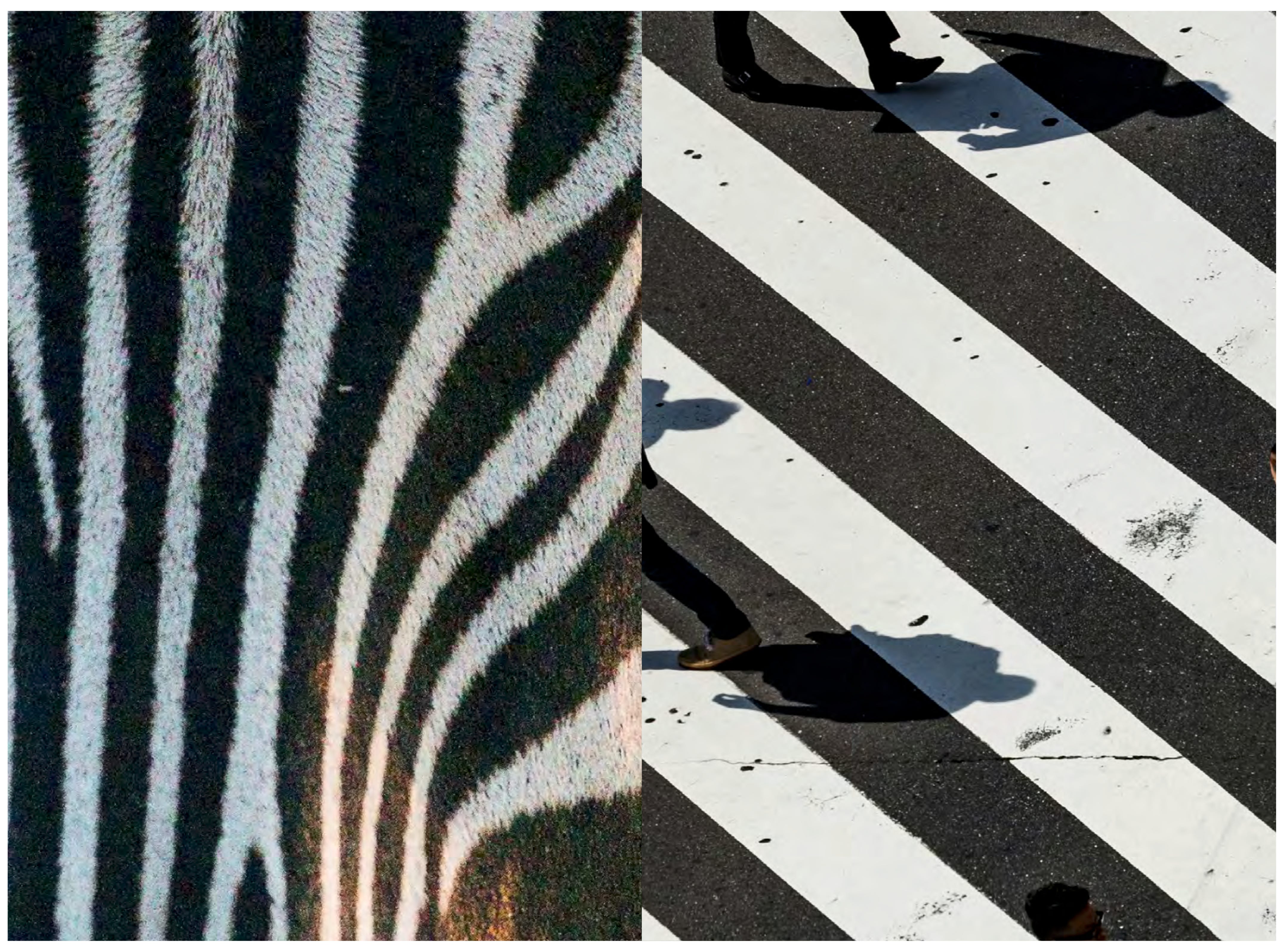
The book explores complementary calls to action – stepping back and stepping sideways. Stepping back often asks practitioners to withdraw, opening space for nontraditional voices to be heard. Stepping sideways is less about full withdrawal and more about repositioning among a broader web of design contributors, moving in relation, in humility, walking together.
This raises more complex questions. How might we reshape the design room itself, the agenda, and what is recognised as valid input? How might we learn to work alongside other forms of life, rather than organising processes around human priorities from the outset? How might we increasingly centre Indigenous communities as design leaders and decision-makers?
Ariel explains her passion for relentless incrementalism, and her love for the number 22. Breaking down an overarching framework into 22 smaller tools reduces the barrier to entry, and invites more play. It lowers the threshold for engagement and makes it possible to begin without committing to a complete overhaul of existing practices.
Transformation is fragile. Large, coherent systems often trigger resistance, not necessarily because people disagree, but because the shift feels too total and too immediate. It demands new language, new practices, and new ways of evaluating success all at once.
Breaking the work into small tools creates many points of entry. A single tool can be introduced into an existing workflow, tried out, and adapted. Over time, these small shifts can accumulate and begin to affect how decisions are made.
We do not become a more-than-human designer in one move. We begin by changing how we pay attention, and then follow where that change leads.
Among the different tools, multispecies noticing stands out in how consistently it emotionally affects people who try it. Building on familiar practices such as ethnographic observation or empathy research, extending our field of focus to more-than-human community members who are participating in space alongside humans. The exercise quickly reveals how selective and conditioned perception actually is.
When people attempt to notice the more-than-human world in a structured way, it leads to a series of realisations. For example, that perception is shaped by training and habit. That human language is biased in how we describe what we observe. And that what feels like a neutral perspective is in fact deeply human-centred.
Using tools like the iceberg model or empathy mapping, we have many methods to help to surface our limits and bias when we research with people. Extending that curiosity to explore how our bias impacts how we perceive our more-than-human kin is fascinating.
The result is not a sense of mastery, but a shift in posture. Certainty gives way to attentiveness, and control gives way to a more humble form of engagement.
From there, a different question emerges: If we cannot fully communicate with or understand the full web of life we are engaging with, how do we still act responsibly in relation to it?
An excerpt:
“Ariel: I think just the act of taking some of the social science we know – for any of the social scientists listening to this, maybe the iceberg model or the empathy map (“think/say/feel/do”). You know, we’re given all these maps on how to think about our own bias as a researcher, and how to name it, and how to try to limit the impact of our bias when we are working with communities of people.
And when we extend that to the multispecies perspective, and ask people to say, “Okay, try this tool, but instead of stopping at the human community that we’re noticing, or instead of stopping and acknowledging the bias that you have and how it impacts what you see and how you describe what you see, can you extend that to say that, ‘I am biased not only based on who I am as a human, but the fact that I am a human biases me.’”
In that as I try to notice all of the kin around me – whether that’s the trees, or all of the minerals in the buildings that surround me, whether it’s the birdsong I hear, or the vibration of soil under my feet, or the insects I’m noticing – you know this cornucopia, just thousands of voices that envelop human life – how do I name my human bias and how do I – with love and compassion – say, “I know that there is so much language and communication happening around me that I don’t have the skills yet to reach into. But I want to listen.”
And that, that activity, is deeply unlocking for a lot of the practitioners that I’ve had the joy of working with over the last decade or so in this work, and really drives the most interesting conversations. If we know that our human language is limited, if we know that our human ears and listening are limited, what interesting and unlimited library of tools can we unlock and add in here to become better listeners? To become better researchers? It really becomes an invitation to become a biologist. I will never be a biologist, I don’t have that training, but I can walk through the rest of my career in admiration of wanting to learn as much as I can. And to bringing other people in where I know my limits are.”
The approach is place-based, so resonates quickly in contexts where the more-than-human is materially present. Fields such as urban design, architecture, and place-based policy already deal with land, water, and ecosystems in tangible ways. This makes it easier to identify who or what is affected, and to consider how those entities might be engaged.
The approach is still finding its way with digital product & service design, which can often feel ‘placeless.’ We might “ground into place” through the location of team members, through the lands connected to supply chains and means of production. But it can easily become unanchored, superficial, diffuse. Given the scale and invisibility of impact, this may precisely be where more-than-human tending may be most needed.
Describing the book as living reflects the nature of the work rather than a stylistic choice.
Engaging with the more-than-human repeatedly brings one up against the limits of what can be known or fully understood. The boundaries of your own knowledge, and the need to be in continuous learning with teachers.
Writing, in this context, becomes a way of articulating a position within an ongoing process. That it is possible to begin without having resolved, as long as the process remains open and responsive.
If the more-than-human is treated as a genuine participant in design, then something has to shift at a fundamental level. Ariel suggests that, in the end, it asks us to consider “what are we willing to give up?” … And in return, “what will we receive?”
This shift is not only methodological, but material. And it is not only about loss. It acknowledges that – in surrendering human space, human noise, human agency to others – we receive something truly tremendous in return.
Excerpt:
Ariel: We talked about taking a step back, and we talked about taking a step to the side. I think, at the end of the day, if we are to do this really well, we have to give something up. You know, the human world has to give something up, whether it’s convenience, whether it’s a hoard of resources that we’re sitting on that need to be redistributed, whether it’s the permission to speak loudly all the time such that other voices can’t be heard, going silent because the human voice has become so loud.
So I think, what are we willing to give up? It’s a really personal question, that we can each investigate at our own level. What am I, Ariel, willing to give up – materially, emotionally, to cede space, to listen better, to receive better?
And then collectively, whether it’s a small organization or a national government, or an international organization, what are we willing to give up and how do we live?
In Canada, we have a culture of Truth, Reconciliation and Reparation that guides a lot of our community of practice’s work in righting the wrongs of a lot of the colonial history of Canada’s settlement and giving land back to Indigenous populations. The more-than-human question I think asks a really similar question, which is what active role, active motions can I engage in to reconcile and repair?”
Renilde: I mean, at the same time, even, we may not be very conscious of it, it is a very common thing that, to participate as a citizen in society or to be a neighbour, a friend, etc., in a way we always have to give something up to be able to enable the relationship.
Ariel: And then it gives so much back to you.
Renilde: And then it gives so much back to you.
Ariel: It’s not a zero-sum game.
Renilde: We understand that we give something up in order to get something back. To be able to participate in that relationship.
[...]
Ariel: We have to be ready to give something up to get back the thriving of the planet, to get back the joyful, neighbourly communication that we’ve lost with the more-than-human world.
Our more-than-human kin are already present, responding, speaking, shaping, co-designing our world. The question is whether humans are willing to become quiet, humble, and curious enough to evolve into better collaborators.
“A Nourishing Toolkit to the More-Than-Human: 22 Ways to Design Differently” is expected to be released later this year (2026), published by Set Margins (Netherlands), with distribution in North America. You can join the release list at arielsim.com.
The Co-creation with the More-than-Human sandbox is a collaboration between The Repatterning Collective and Kincentric Leadership.
If you’d like to receive announcements of our popular monthly online learning sessions, which use live dialogue & discussion to explore different approaches and praxes for meaningful co-creation with the more-than-human (natural) world, then register here for the sandbox’s mailing list.
To receive syntheses of Learning Sessions and Field Dialogues in your inbox, subscribe below.
We donate our time and energy to this sandbox. If you value this space, consider co-funding this work by leaving us a tip.
Comments
Nothing yet. Say the first thing.
Sign in to join the conversation.