
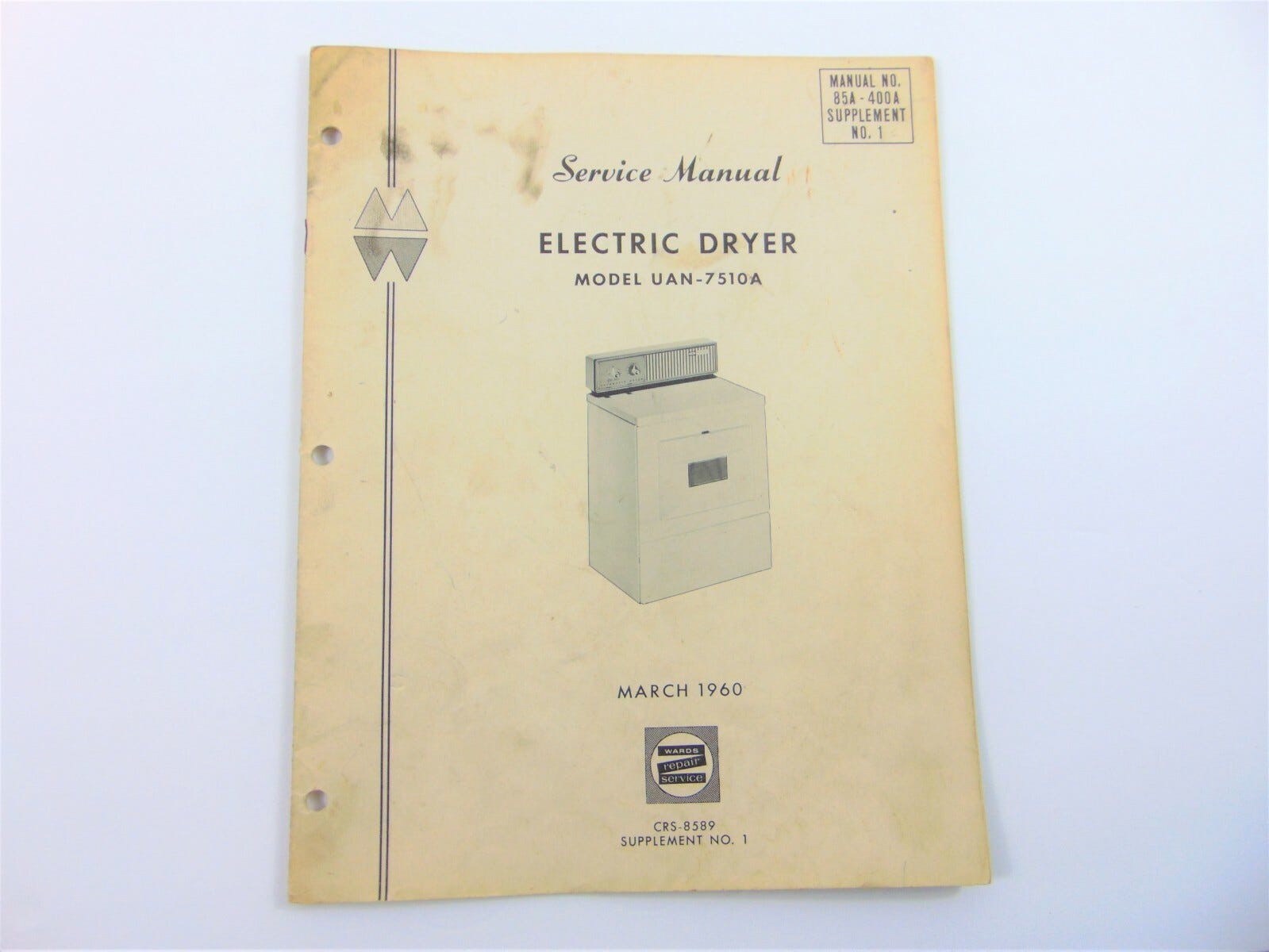
Twenty years ago, when I used to help my dad fix things around the house, we’d open the back of a washer or air conditioner and see a clear, if dusty, schematic. There, in black and white (or yellow), was a list of parts and how they interconnected. All of that was great when HVAC systems consisted of ten ironclad parts that never failed, and we could follow the traces and wires to figure out just what was broken.
Fast forward to today, and those schematics are long gone. If you can find them, they cost an arm and a leg to access, and most manufacturers don’t offer them. Why spend money on public schematics when you can just charge for a new system?
But we still need to be able to repair things on the fly, and customers don’t want to drop a few thousand on a new system when the old ones can be repaired. Further, if you do find a new manual, it’s often 300 pages of unreadable PDF or, worse, a video in endless monotone.
Here’s the real problem: service information is locked inside documents that were written for people, not computers. They were often written a long time ago or designed by factory workers for whom the end product was an afterthought. In fact, nearly everything about new repair documentation is wrong.
But we still have to work from service manuals, wiring diagrams, schematics, technical bulletins, and installation guides that stand between us and a job well done. These documents contain everything needed to diagnose a problem, but the information is trapped in PDFs and images. Wiring diagrams look like overhead maps of major cities, and schematics are full of inconsistent symbols and labels. Even the best AI models can only read the text of those documents instead of understanding the whole.
We think there is a better way.
That is why we filed a provisional patent for a system that converts technical documentation into a machine-readable repair graph.
A repair graph is a digital representation of how a piece of equipment actually works. Instead of seeing a wiring diagram as a picture, the AI understands that power flows from one component to another, that sensors control relays, that motors depend on switches, and that every part has relationships with the rest of the system.
Once the documentation has been converted into this structure, AI can begin reasoning about failures instead of simply searching for keywords.
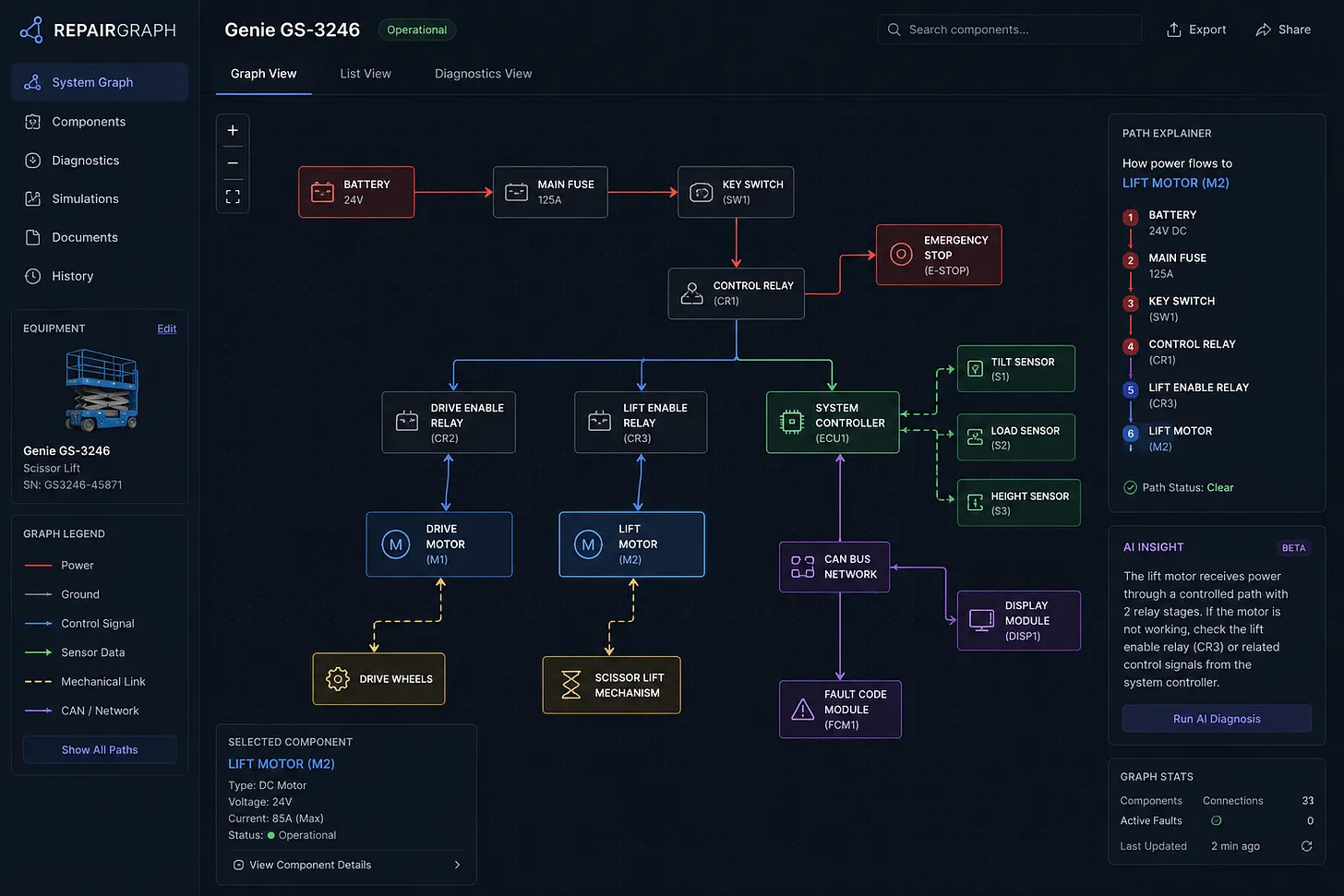
Rather than asking a technician to work through a long troubleshooting chart, the system can create a diagnostic workflow based on the equipment and the symptoms. It can recommend the next measurement to take, explain why that measurement matters, and adjust its recommendations as new information becomes available.
The system can also combine information from multiple sources. A customer complaint, a photograph, electrical measurements, sensor readings, temperatures, pressures, and service history can all become part of the diagnostic process. Instead of treating each piece of information separately, the AI evaluates them together.
We also believe repair systems should improve over time. Every completed repair, warranty claim, technician note, and equipment history can make the repair graph more accurate. The goal is not just to solve today’s problem, but to help solve tomorrow’s problems faster.
This approach has applications far beyond residential service. The same technology can be used for HVAC equipment, appliances, refrigeration systems, industrial machinery, security systems, vehicles, robotics, medical equipment, and many other complex systems.
Our vision has always been to build AI that helps technicians make better decisions, not replace them. The people doing the work still bring the experience and judgment. Our job is to give them better tools. Decades ago, the tools we had were sufficient. No longer. Instead, we have to build new systems that work better than anything my dad and I could have ever imagined.
No posts
Comments
Nothing yet. Say the first thing.
Sign in to join the conversation.