
This story (and it’s a long one) starts with a YouTube video.
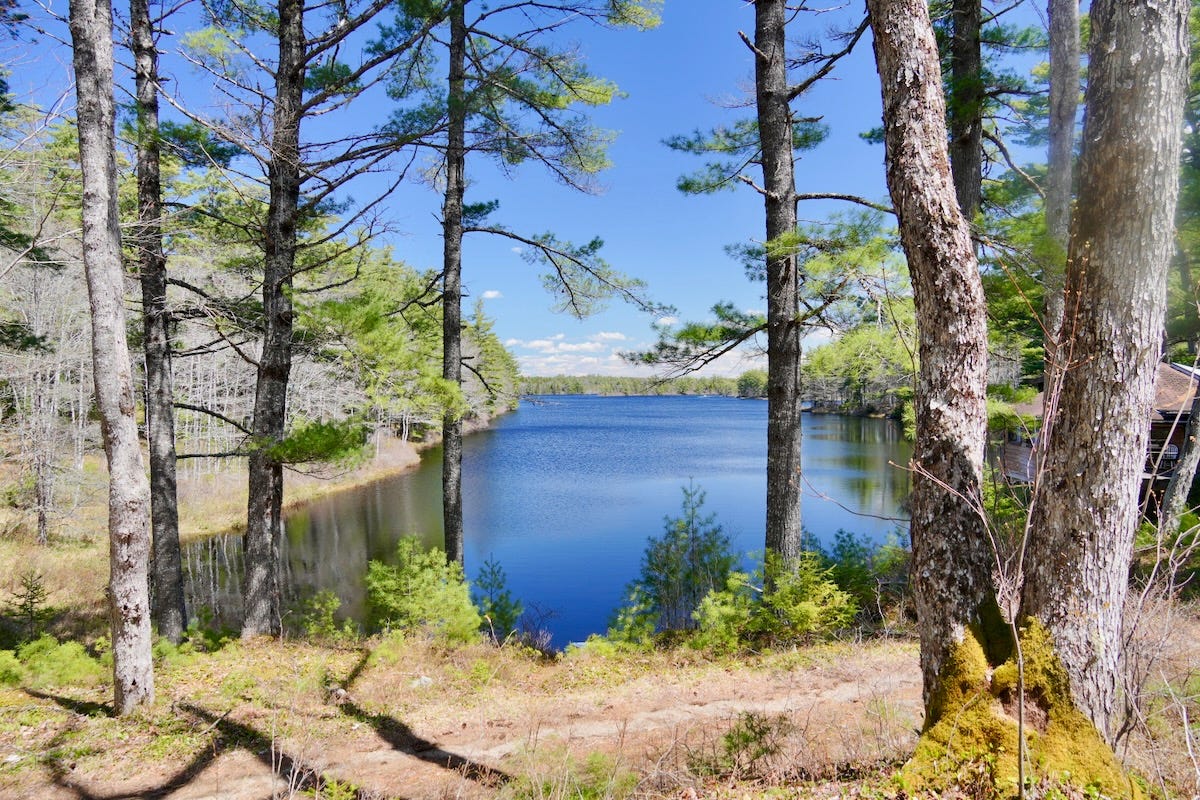
One of my favourite YouTube channels is Northern Scavenger. Noah, the primary content creator for the channel does incredible backcountry Canadian adventures. Mostly paddling. Mostly East Coast. Most of it at a difficulty level well out of my reach. (For new readers I have experience with long distance backpacking but I haven’t done that for a few years and I’m getting soft.)
Northern Scavenger videos are beautiful, inspiring, and educational as Noah is a geologist and teaches some geology in most of the videos, though lately he’s also been teaching history and historical context for the places he travels and explores. It’s one of my current favourite channels.
Back in early January I watched Noah’s video about visiting the cabins at Birchdale. The off-grid retreat was once a monastery but it was originally established in the early 19th century as a private hunting and fishing camp hosting mostly Americans. (There are a lot of places like this in the East Coast and Quebec woods.)
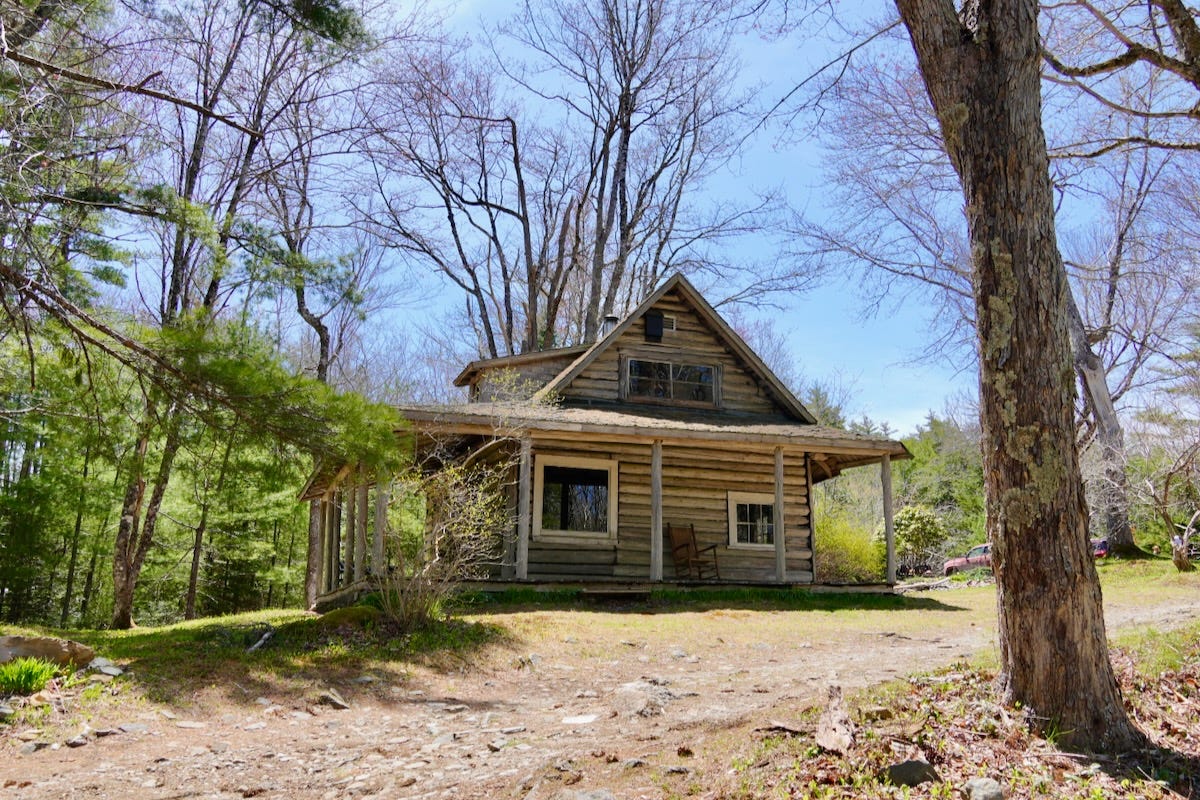
Birchdale has an interesting history and is in a beautiful, difficult-to-access location, which has preserved its specialness. It is accessible by vehicle, but it’s definitely off the beaten path.
After watching the video I immediately checked out their website and contacted them about possible winter “camping” in their cabins and snowshoeing in the area. I used to do that when we lived in Quebec. I’d ski or snowshoe, either by myself or with my Montreal bestie Kim, to rustic, off-grid cabins. Stay for a couple nights before returning to my city life.
Living on the East Coast, I miss having those opportunities. Mainland Nova Scotia just doesn’t get the snow required for this kind of adventuring, nor does it have the infrastructure—the trails and cabins (probably because there’s not enough snow).
Since moving here I closed the chapter of my life where I could easily and regularly do winter backcountry adventures within a couple hours’ drive from home.
But I am always on the lookout for similar opportunities, year-round destinations you can only paddle or hike into, with put-ins or trailheads within easy reach.
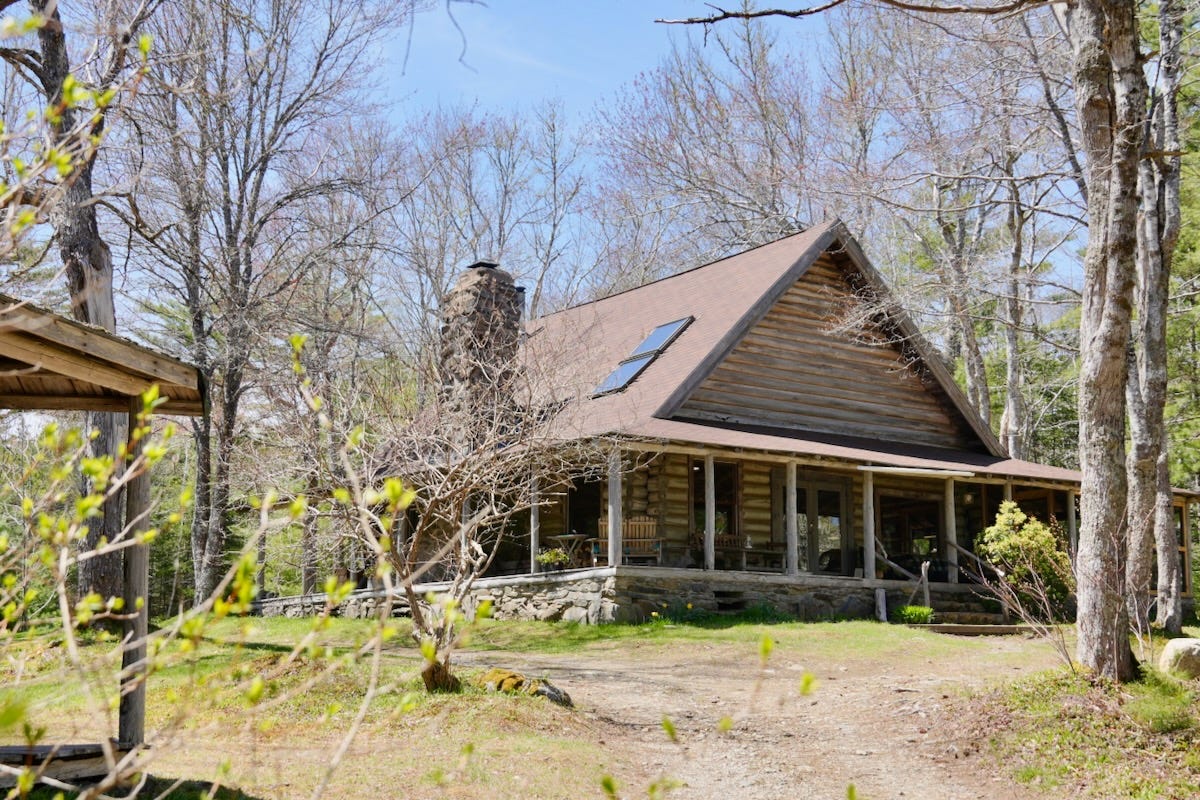
The possibilities for this kind of activity around and out of Birchdale was what first piqued my interest in the site. So back in winter, immediately after watching Noah’s video I signed up for their mailing list and didn’t think much more about finding winter backcountry opportunities as preparing for my first sugaring season became my free-time, outdoor activity priority.
But as the title suggests, this is a story about chainsaws. So I let’s back up a bit.
Last spring we bought a side by side (SxS), a type of ATV. As these things go, when you buy a big toy/tool like this, adjacent tools inevitably accompany the purchase. (In other words, the final cost of things is always more than the original sticker price.)
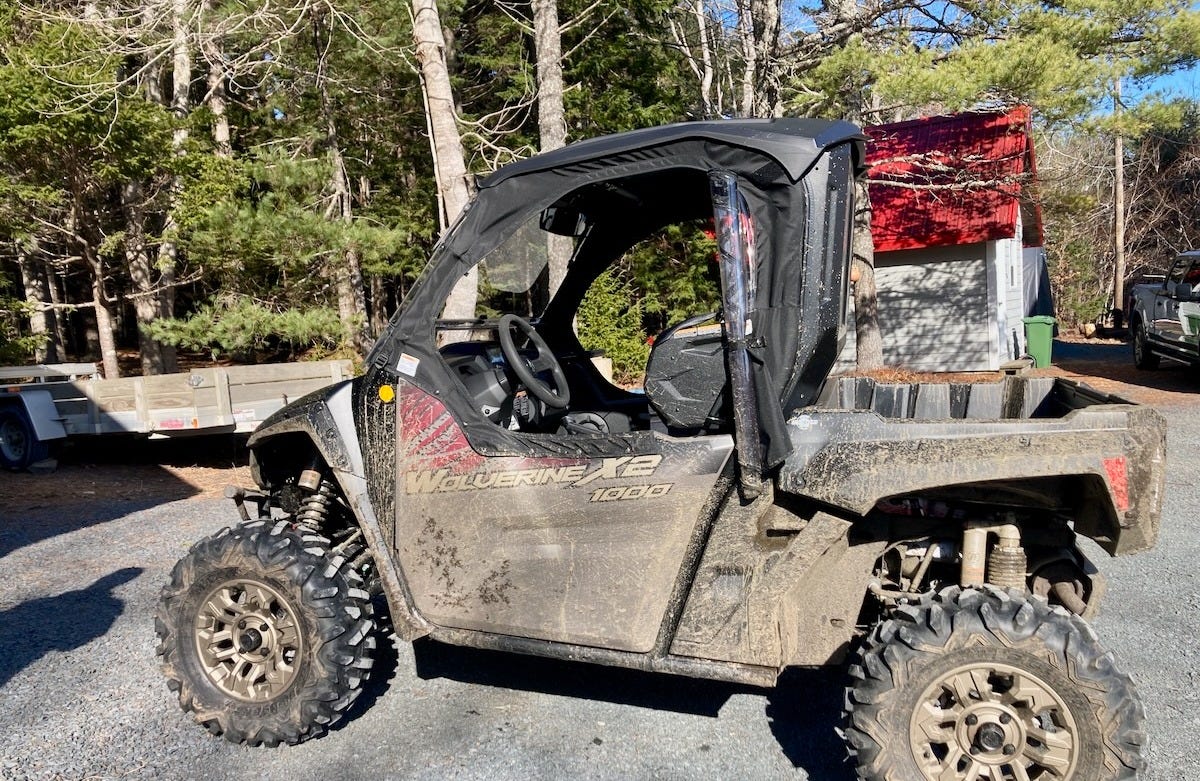
We bought the SxS to explore Nova Scotia’s woods and backcountry and also for property maintenance and projects, such as sugaring.
When you’re driving ATV trails in the woods, you often come across blowdowns, especially in areas like ours with frequent windstorms, shallow soils over bedrock, and terrain that leaves trees vulnerable to being knocked over. You need some kind of saw to cut those trees. And that’s how we came into possession of our first ever chainsaw. We needed it for the ATV.
Dad has a gas-powered Stihl that he uses occasionally around the house and on his job sites. We’re welcome to use it, as we are all of his extensive tool collection. (So grateful.)
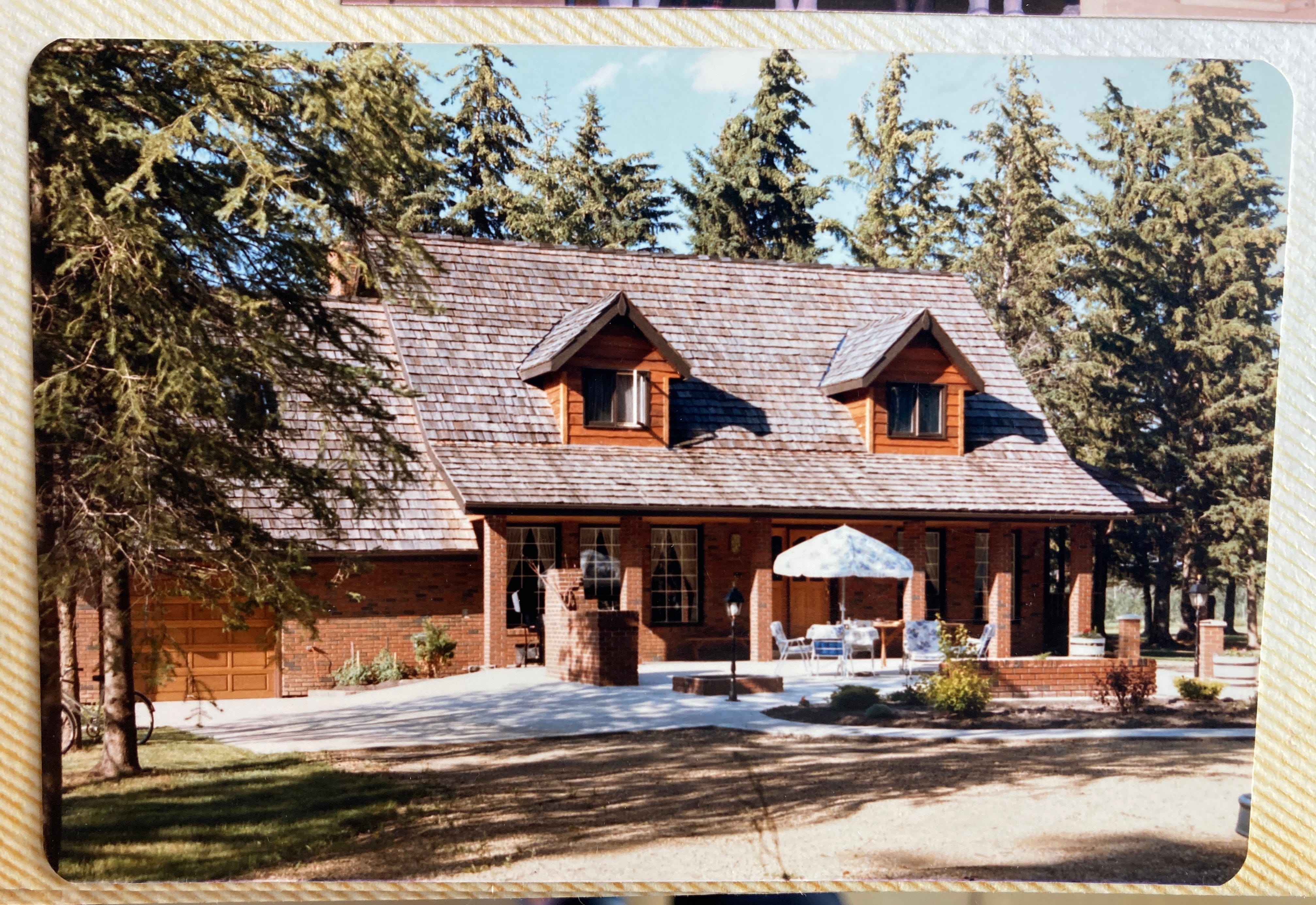
He recently reminded me that when I was a kid, and my parents were building their first dream home in the countryside of central Alberta (they’ve had a few dream homes, and I now own one of them), he did the clearing of all the big spruce on the property. Lots of chainsawing.
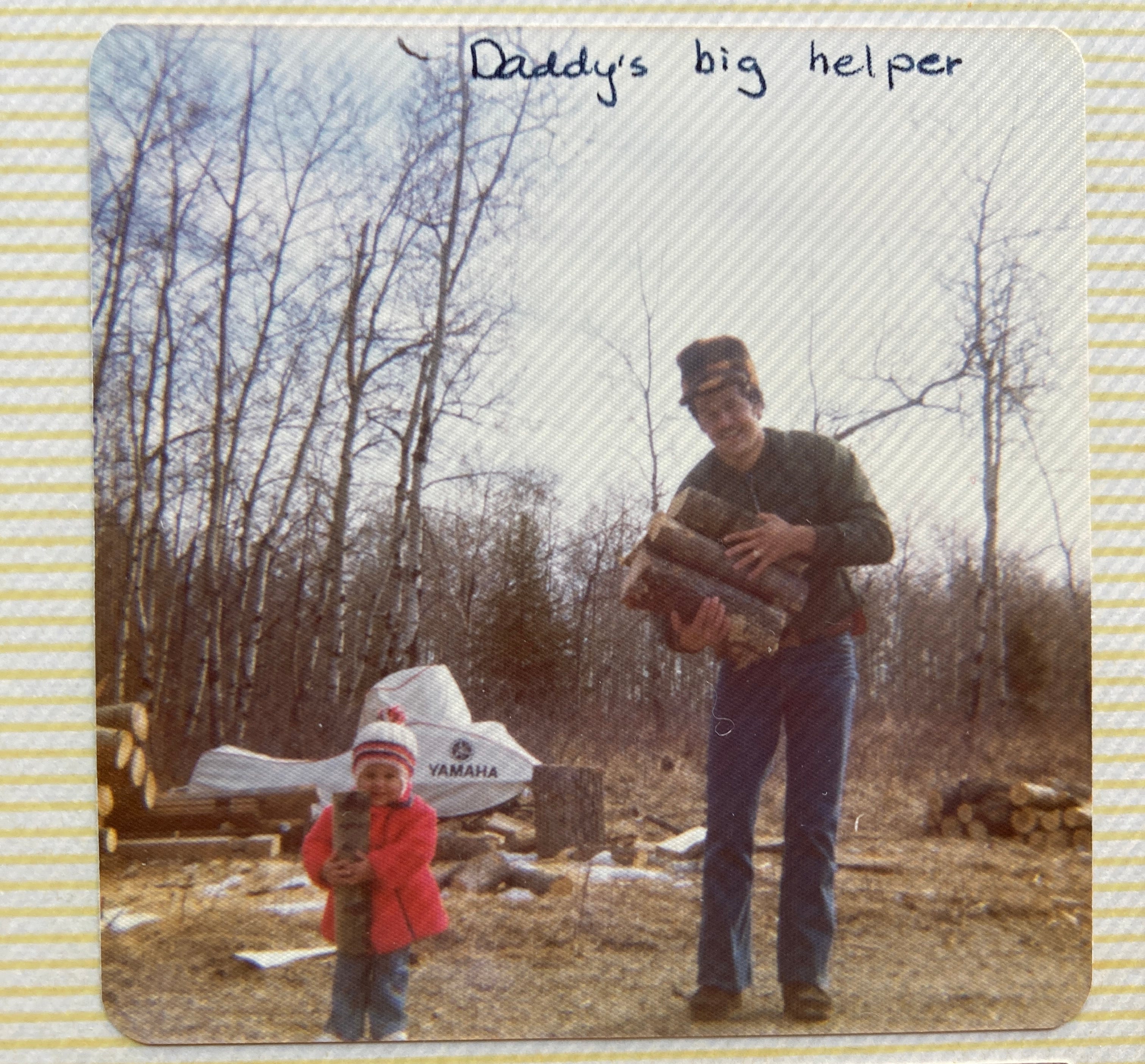
I combed through my parents’ photo albums but I can’t find any photos of Dad cutting down trees, etc... but here are a couple of young me doing woodsy stuff. First as a toddler, “helping” my (very young) dad carry wood on my parents’ first country property.
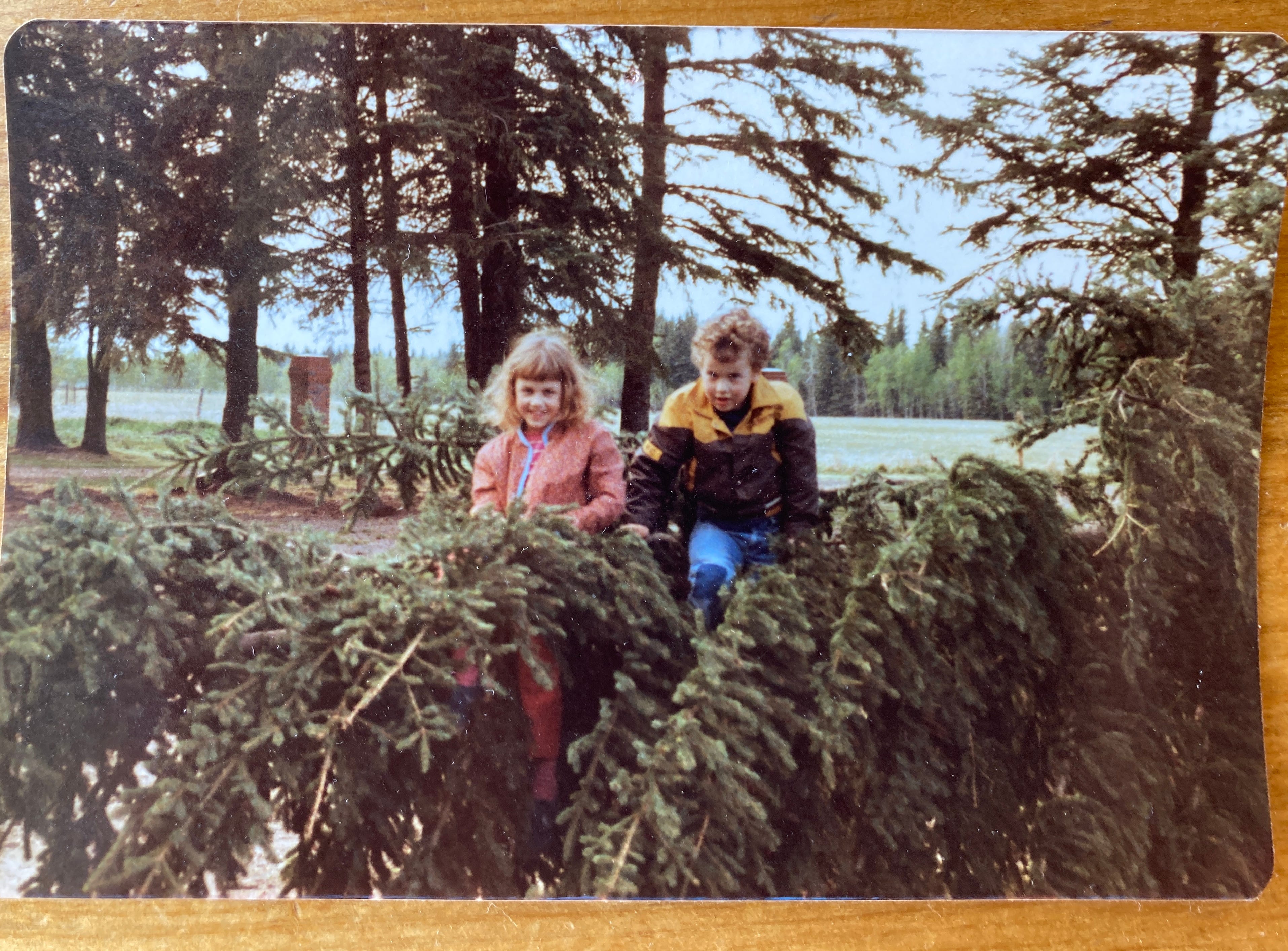
And then a few years later with my brother (we’re probably 6 & 4) in one of the aforementioned felled spruce on my parents’ second country property.
I love the smell and sound of a gas chainsaw. Maybe because it is reminiscent of those years and my good memories of country-life childhood, before we moved to town when I was ten years old. (I had a wonderful childhood all around, in the country and in town.)
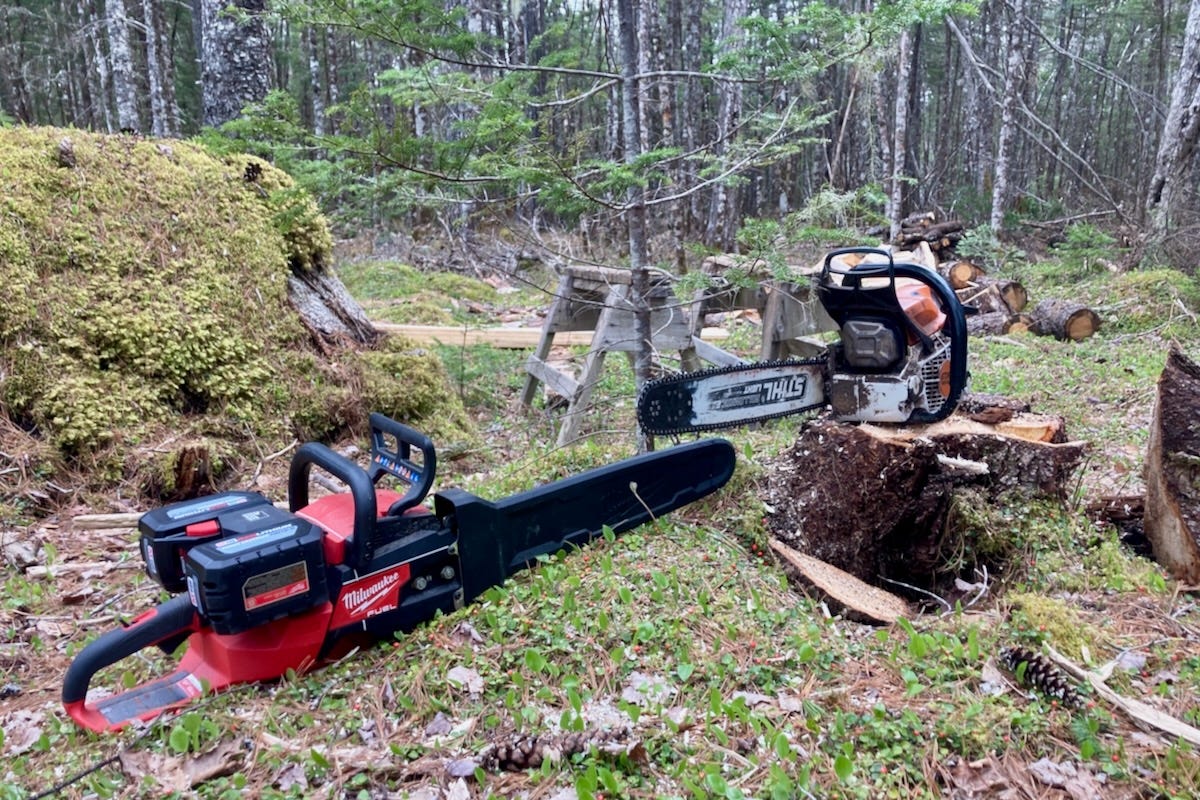
Back to our SxS story, we weren’t going to pack along Dad’s large gas-operated Stihl to clear blowdowns, so we bought a smaller battery operated DeWalt. (Who is this person talking about power tool brands?!)
Although it was the ATV purchase that motivated the chainsaw purchase, we could also see its utility around the house and on the property.
Again, Dad’s chainsaw is available. But having a smaller chainsaw would be handy. Somewhere in the purchasing discussion we probably talked about it being small enough for me to manage. But I didn’t have big expectations at the time. I guess I just assumed Damien would be the one mostly using it.
Despite having little experience with one, Damien is more confident using a chainsaw.
We both had the childhood experience of watching our dads’ clear land. Damien probably internalized the idea that he too had what it takes to do such work, by virtue of his sex and gender. Whereas I grew up thinking that it was mostly men that did that stuff, because I only saw men doing that work.
Additionally, as an anxious person I have a heightened safety awareness and chainsaws are dangerous tools. I would never pick up a chainsaw lightly.
But as I’m getting more settled into our land and property and looking beyond the borders of the garden and lawn I’ve noticed a world of work waiting to be done, namely cleaning up the woods behind and around our house and garage.
Trees and so many branches come down every year in storms or heavy snow. The woods haven’t been stewarded or managed really at all for a long time and so the trees aren’t as healthy as they could be. Unhealthy tress are a general safety risk but of increasing importance, unmanaged woods are a wild fire risk. Which is a concern where we live.
Last summer we started to work out our fire safe plan for the property and it necessitates a lot of brush clearing and some tree felling. It’s a big job. And I have a high motivation to get it done because the safety of our property is a big priority to me.
I can’t wait around for Damien to do all this work. I need and want to do it.
Then this winter, during my first time tapping maple trees, the necessity of cutting down trees presented itself again as I was trying to clear paths to the maples and clear scrappy little softwood growing too close to maple stands.
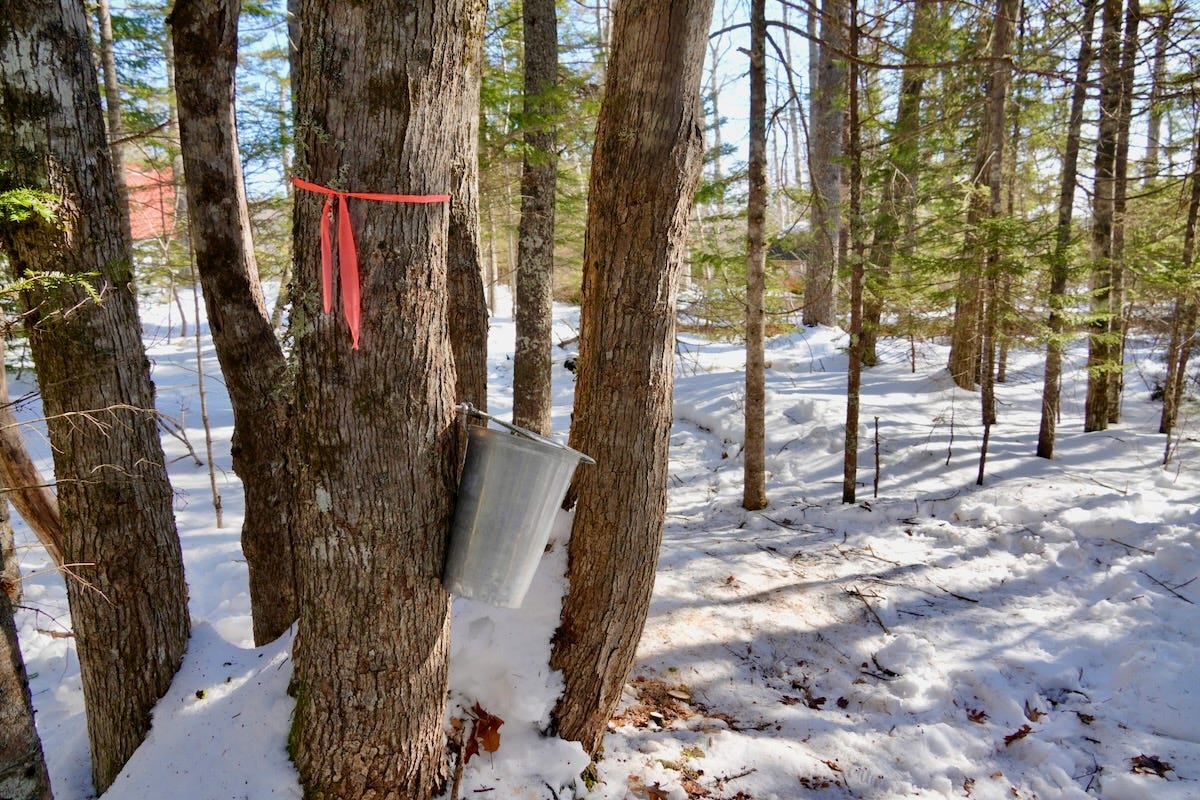
Sugaring is my project, not Damien’s. And if I wanted those trees cleared in a timely manner I was going to have to do it myself.
So I read the manual and watched YouTube instructions on basic chainsaw use. And proceeded to terrify myself further.
If you’ve ever read a chainsaw manual you know what I’m talking about. According to the manual, no one, except a qualified professional should use a chainsaw. But of course that’s not my life philosophy (that we rely on experts for everything), nor is it practical.
These are skills that can be learned and practiced, by a regular person.
So I pushed past the fear, used all the safety equipment at my disposal (namely, a helmet), and cut and limbed some small trees as part of the tree tapping part of my first sugaring.
And I thought to myself at that time, in early February, “What I need is a course because I want to work our woods. I don’t want to have to ask Damien and Dad to do all the tree cutting. I want to do this safely and with confidence.”
One week later I got the email newsletter from Birchdale advertising the Chainsaws for Chicks course.
I manifested myself a chainsaw course (ha!), for women only and at an off-grid retreat no less!
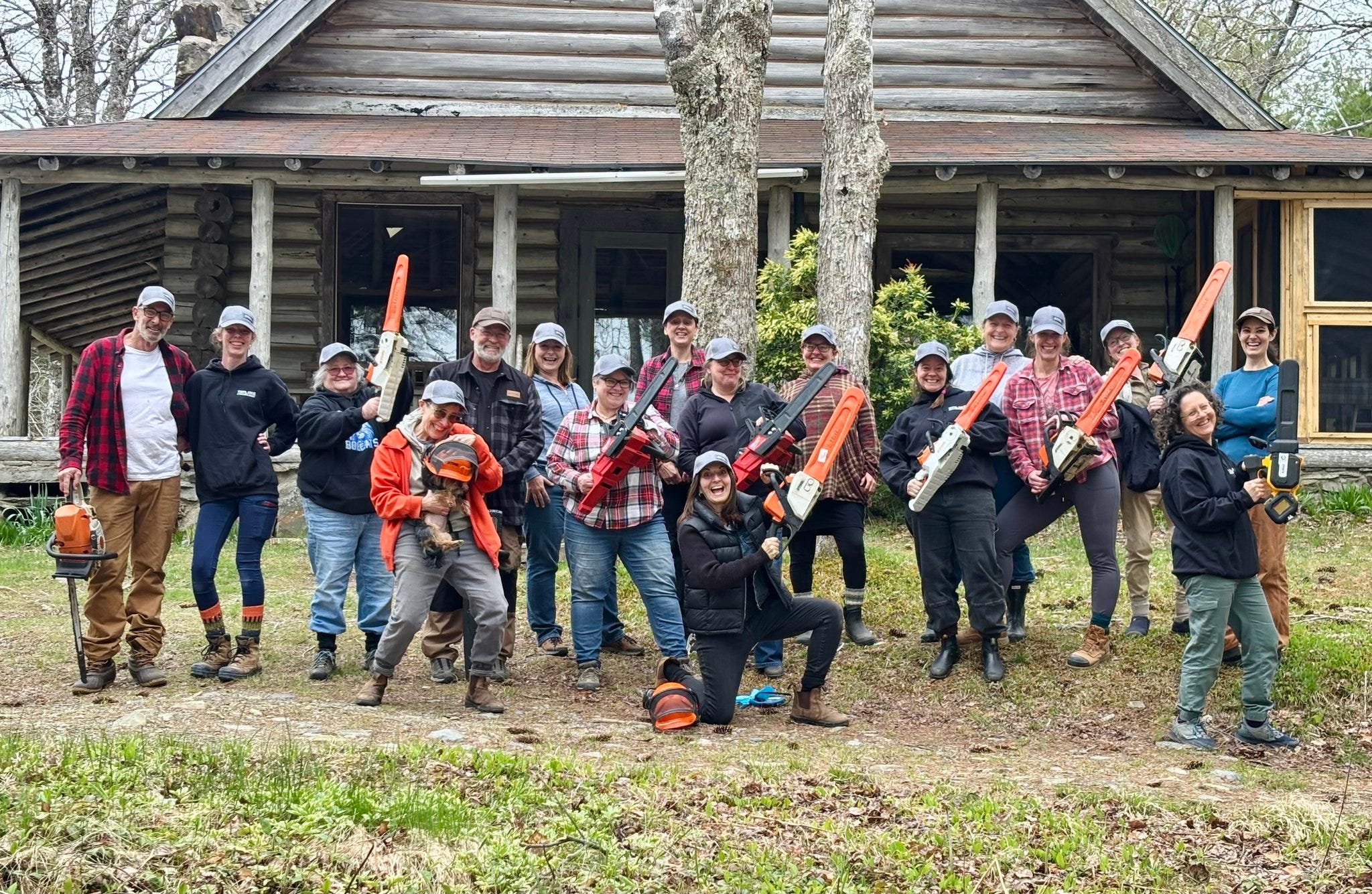
(See this Facebook post for the official Birchdale summary, if you’re interested.)
The course was spread over Saturday and Sunday morning. Lodging and meals were provided.
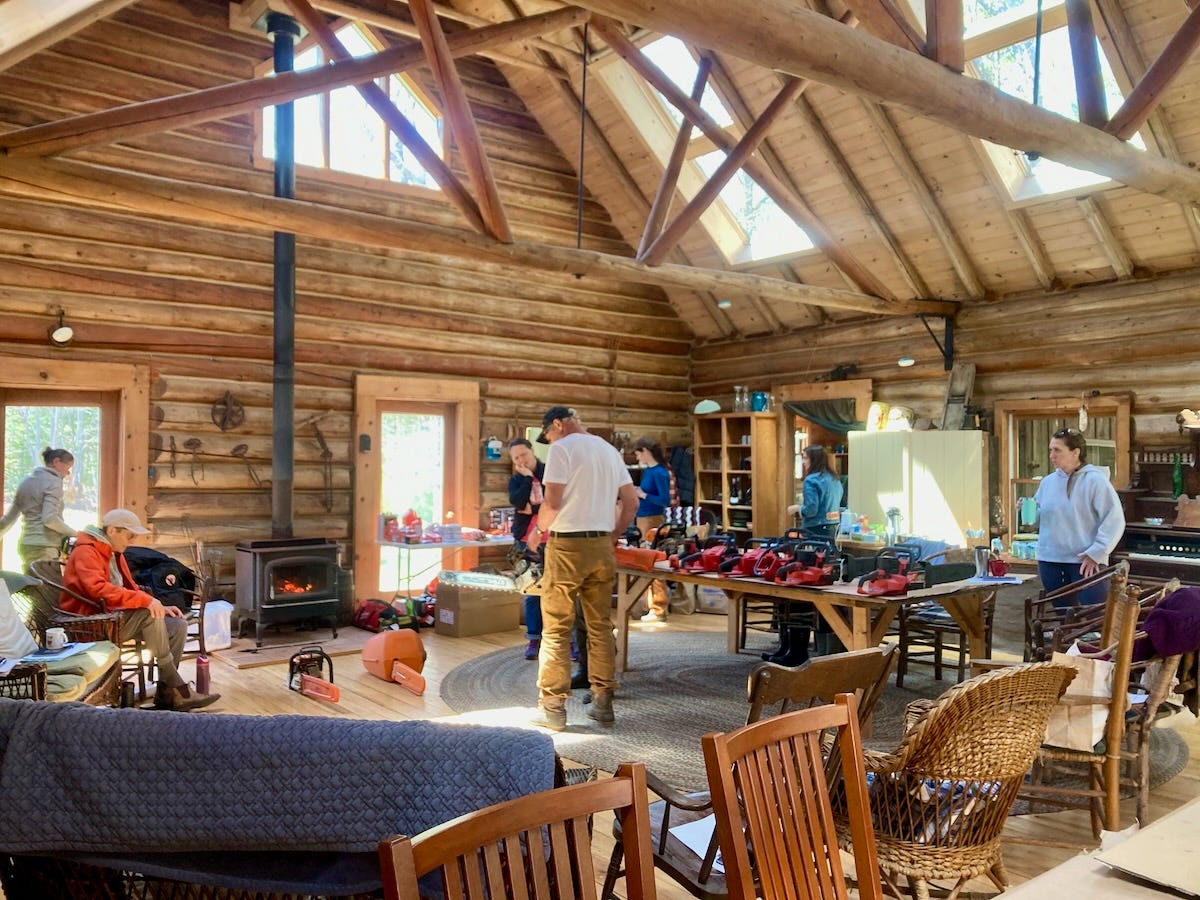
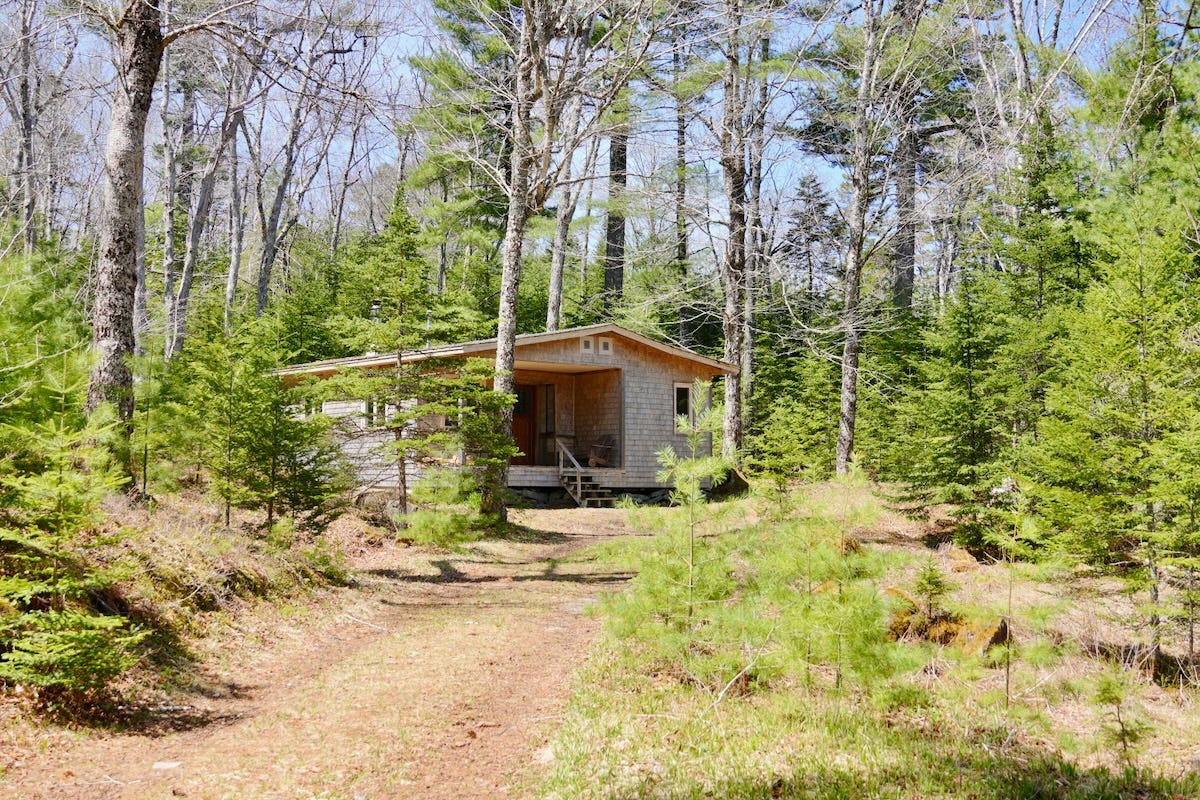
Although Birchdale is off-grid and the accommodations are rustic, they are practically bougie with running water and even propane-heated hot showers. As part of the course, three delicious meals were prepared for us and served in the main lodge.
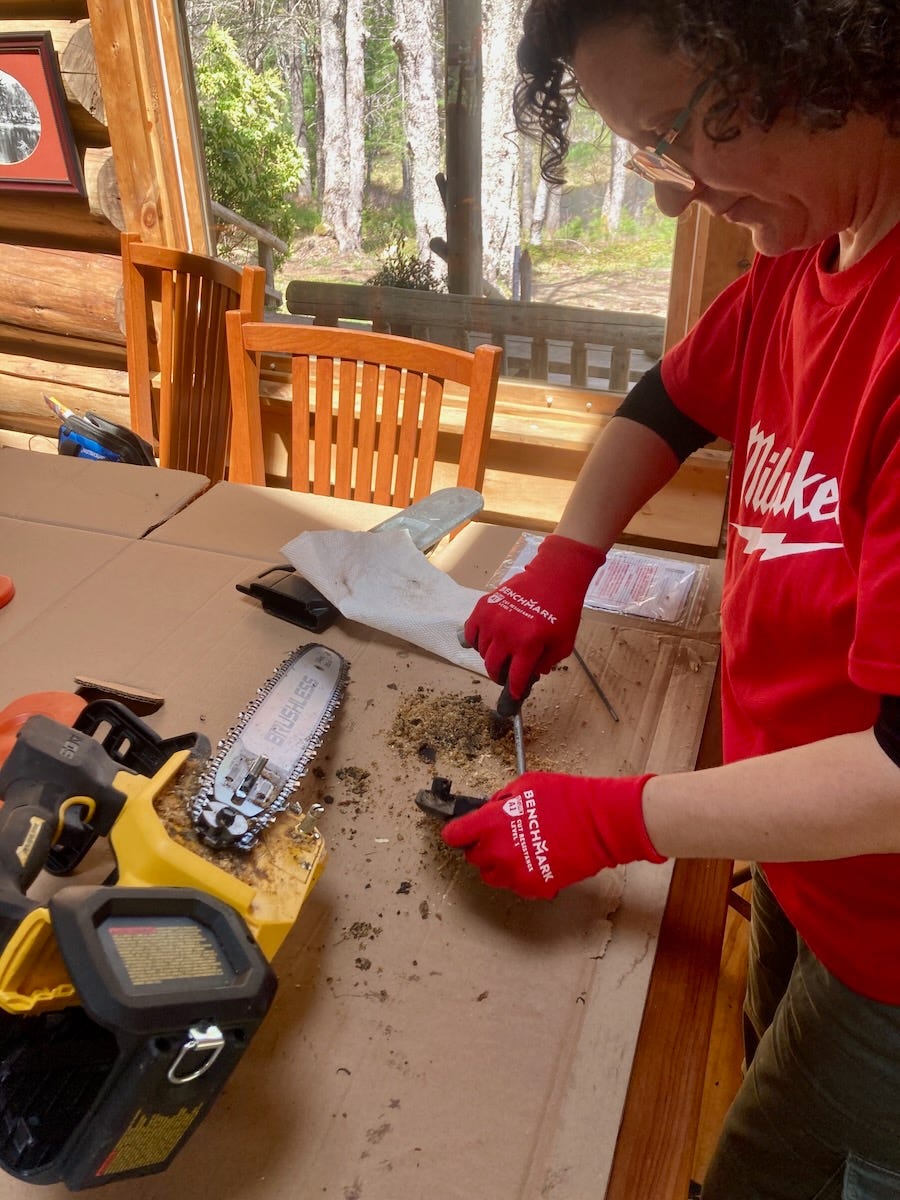
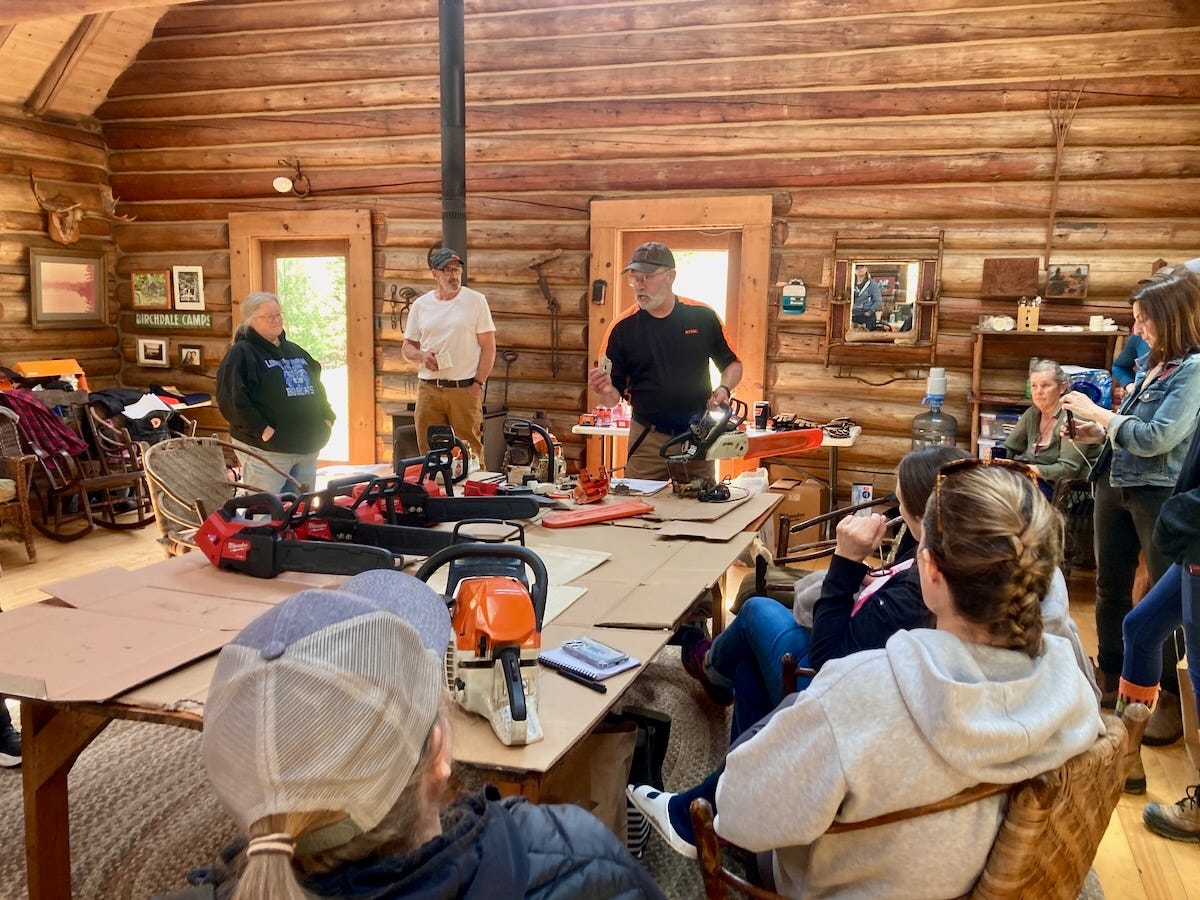
There were 3 components to the curriculum: chainsaw safety; know your machine; and cutting mechanics, hazards, and technique.
It was the best kind of learning for me. Theory and principles—direct instruction of what we needed to know—followed by hands-on, guided practice.
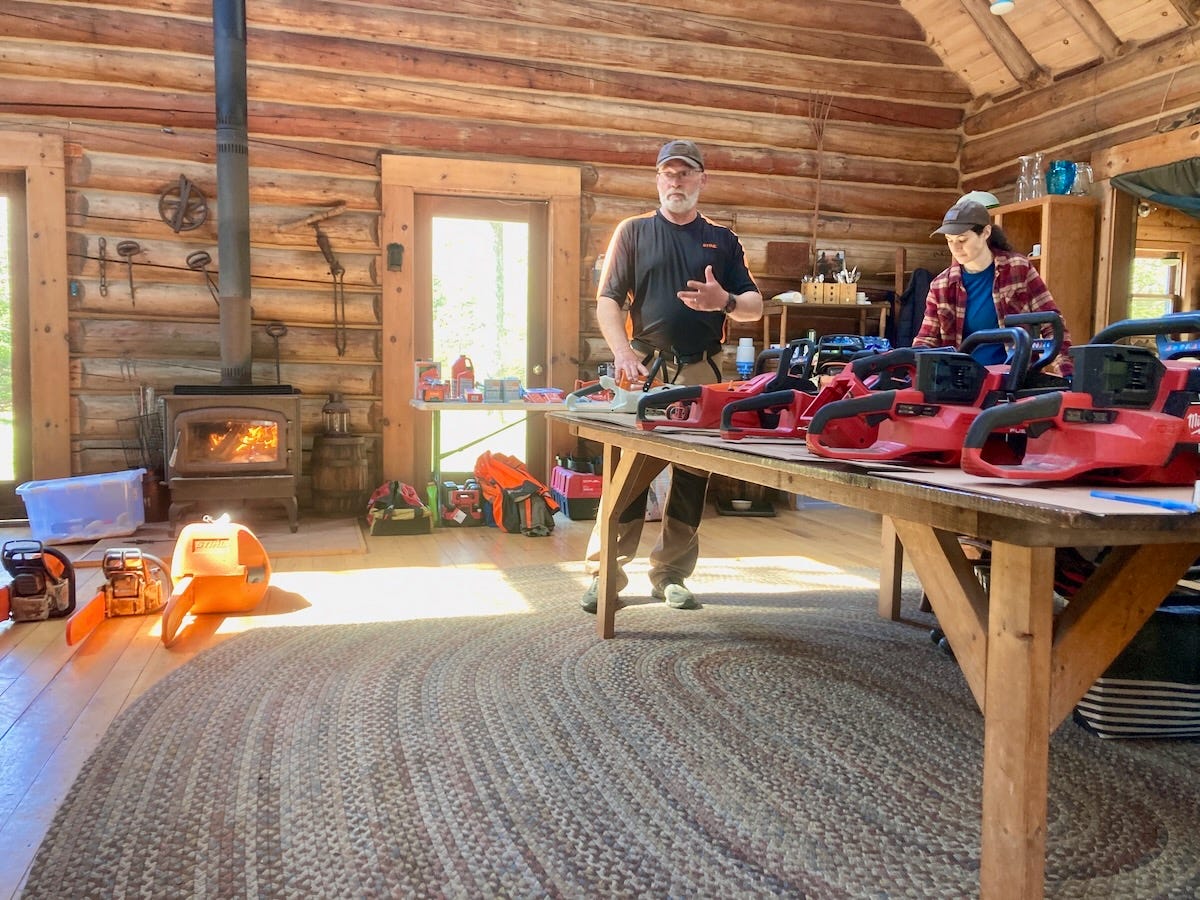
The course was sponsored by a local-to-Birchdale tool supply business, Topline Industrial in Yarmouth, and so there was equipment for everyone to use, including multiple sizes of saws, both gas and battery operated.
I took our DeWalt and used that but also practiced with the gas saw. I plan to stick with the ease of my battery operated machine but gosh, there is nothing like the power of wielding a combustion engine chain saw in your hands and slicing through a chunk of wood. What a rush of adrenaline.
Our instructors - one younger woman and two 60s something men - were amazing and brought a wealth of knowledge and experience. Our Cutting Mechanics, Hazards, and Technique instructor is local legend with 40 years of forestry experience. Watching him wield a machine is like watching the art of the chainsaw.
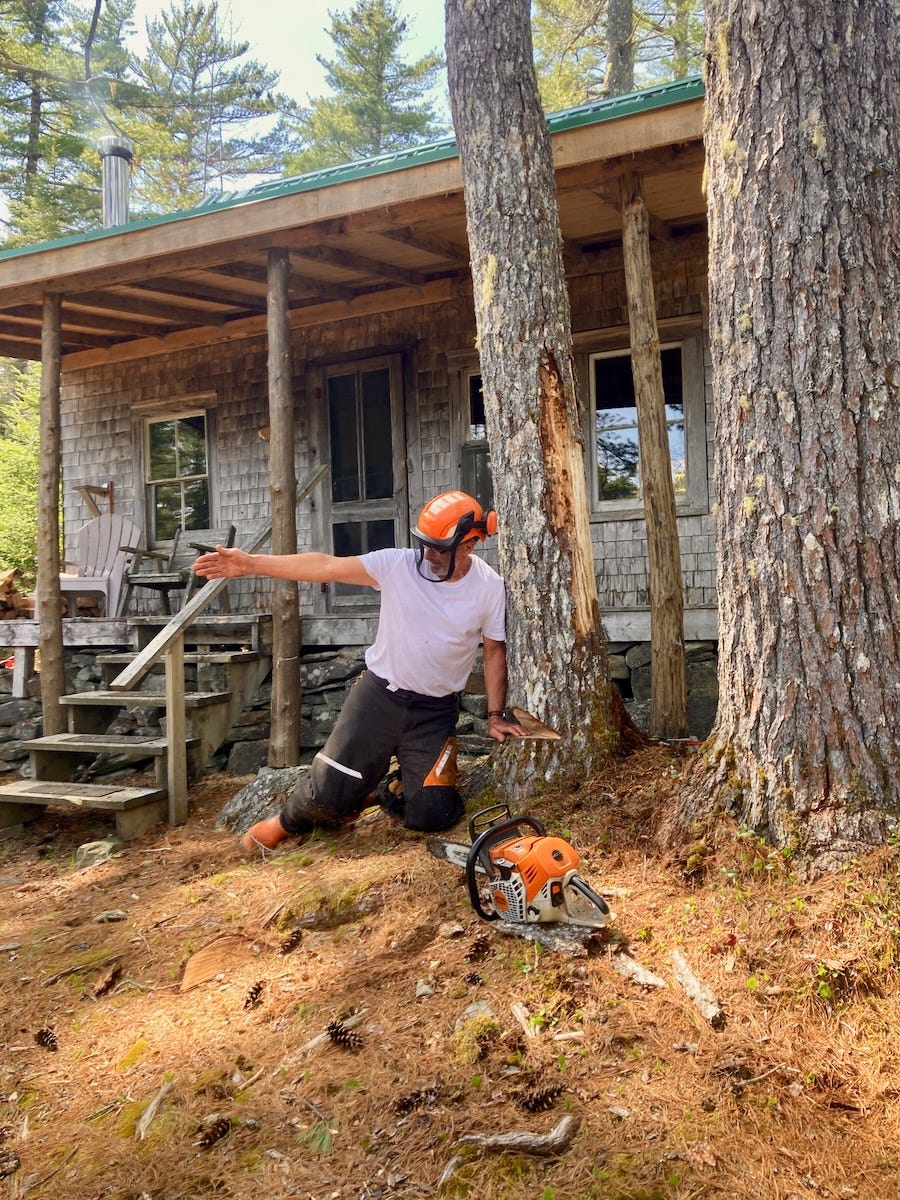
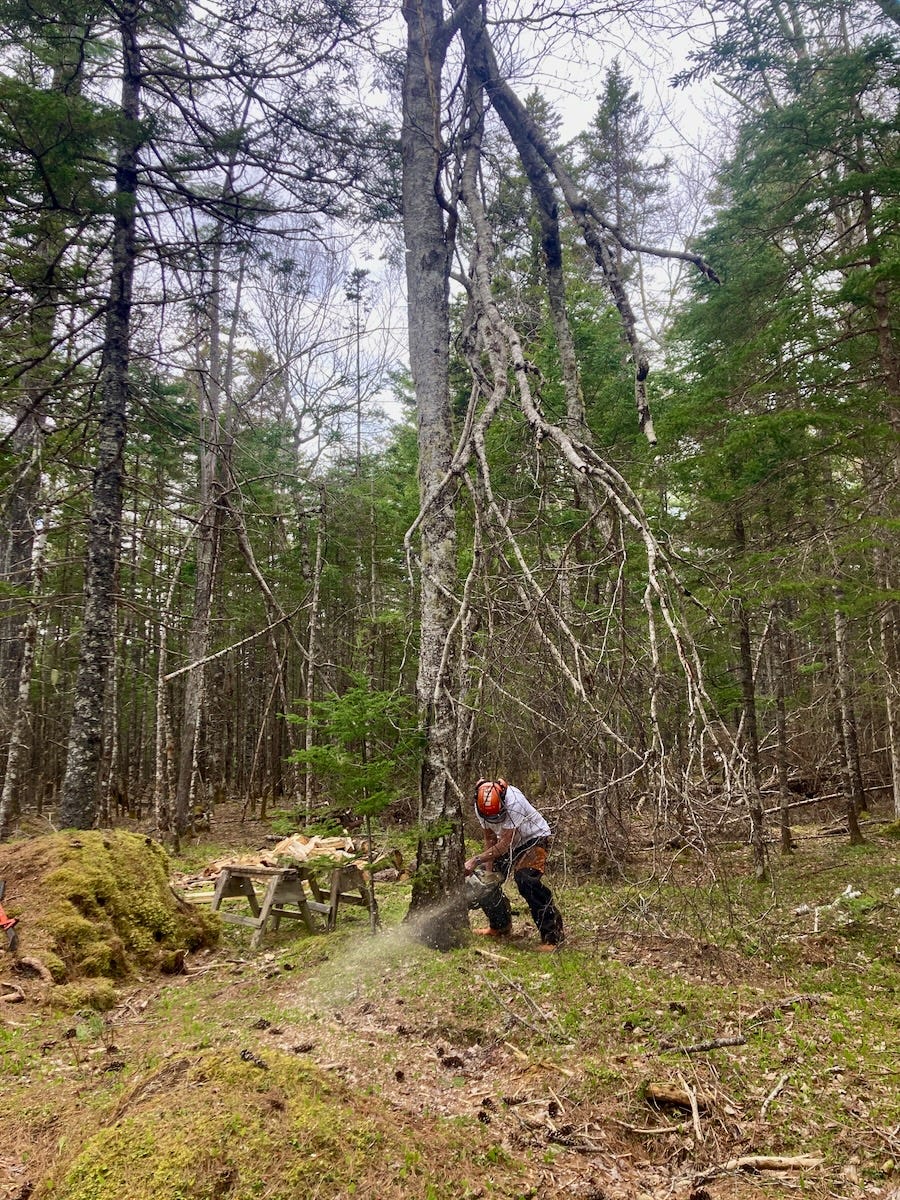
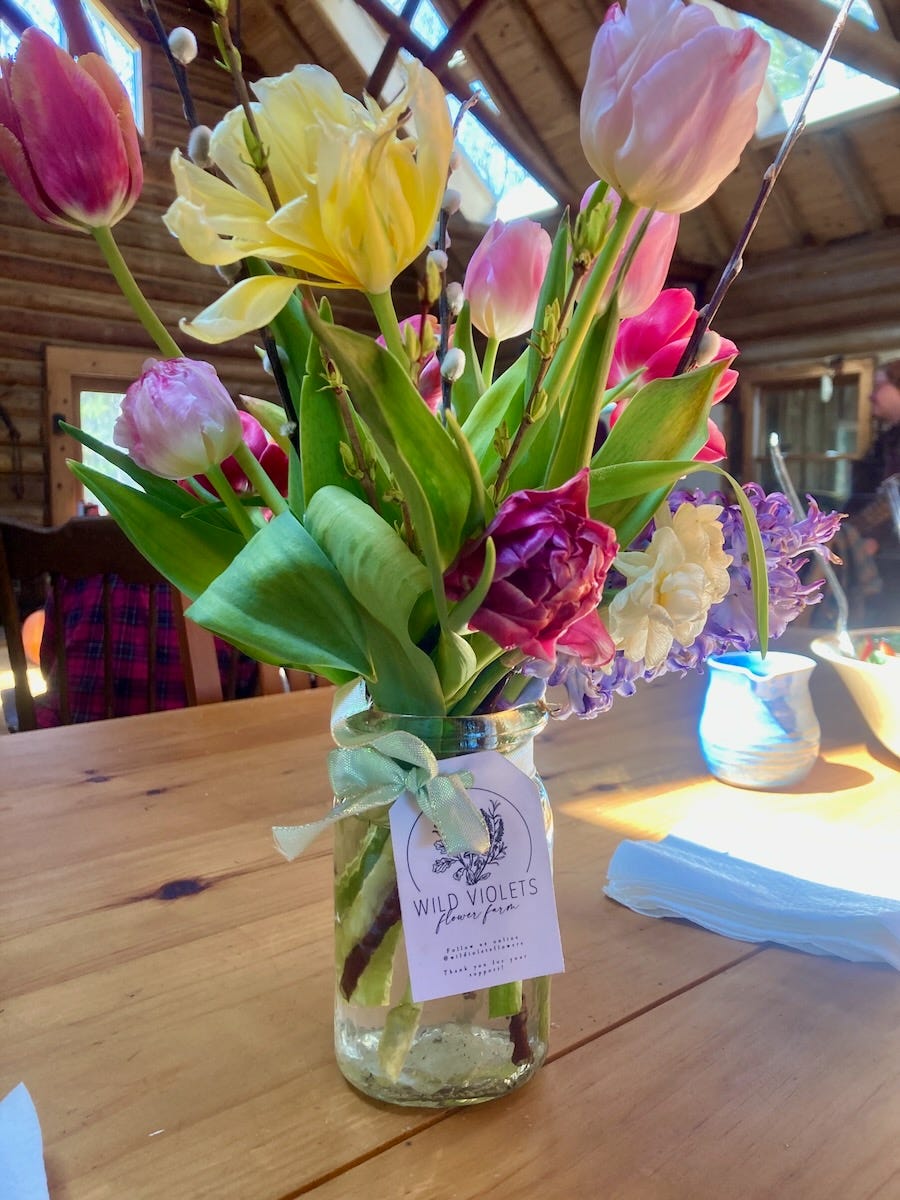
There was so much I appreciated about this weekend. The beauty, magic, and history of the place. The food and the thoughtful care that went into everything. The fun swag bag with goodies to help us dress the part of badass chainsaw chicks. The instructor’s enthusiasm for their craft.
But three things especially stuck out for me.
Our instructors’ love for the woods and sustainable resource management. These people love being in the woods and feel a responsibility to steward land well. I feel this also just in my own little woods.
The amazing women participants at this event. I hadn’t really been thinking about this part in advance. I was anticipating the skills I would learn but not the people I would meet. These are my people, kindred spirits. Homesteaders and urban gardeners; country, town, and city dwellers who love nature, land, outdoorsy stuff and experiences.
One woman came all the way from Toronto to join her sister for the course. So many interesting life stories, and varying kinds of experiences in the woods. Everyone was so supportive of each other and encouraging of each other’s cuts and tree felling. Cheering on as each of us, kitted out in supplied safety gear, practiced the techniques. It was so lovely.
The encouragement and belief of our instructors in our ability to do the work. I already mentioned I was rightly terrified of using my machine. It’s dangerous. But there’s a fine line here because you also need to build confidence in your ability and skills in order to use a tool safely. “You can do this” was the overarching message that I received from the weekend.
Oh, and one last thing: it’s incredibly fun and empowering to cut down, and cut up trees.
(I’m an education geek and so I observed the pedagogy of the event, as I observe and casually evaluate all educational and training contexts I find myself in, and I just felt so grateful to be on the receiving end of such good teaching.)
When I moved to Nova Scotia two years ago I was imagining my outdoor activities as gardening, hikes, and beach walks. The evolution to ATVing and woods management is wholly unexpected and is delightful for this unexpectedness for also for the actual joy of the activities themselves. It’s just so much fun to do these things.
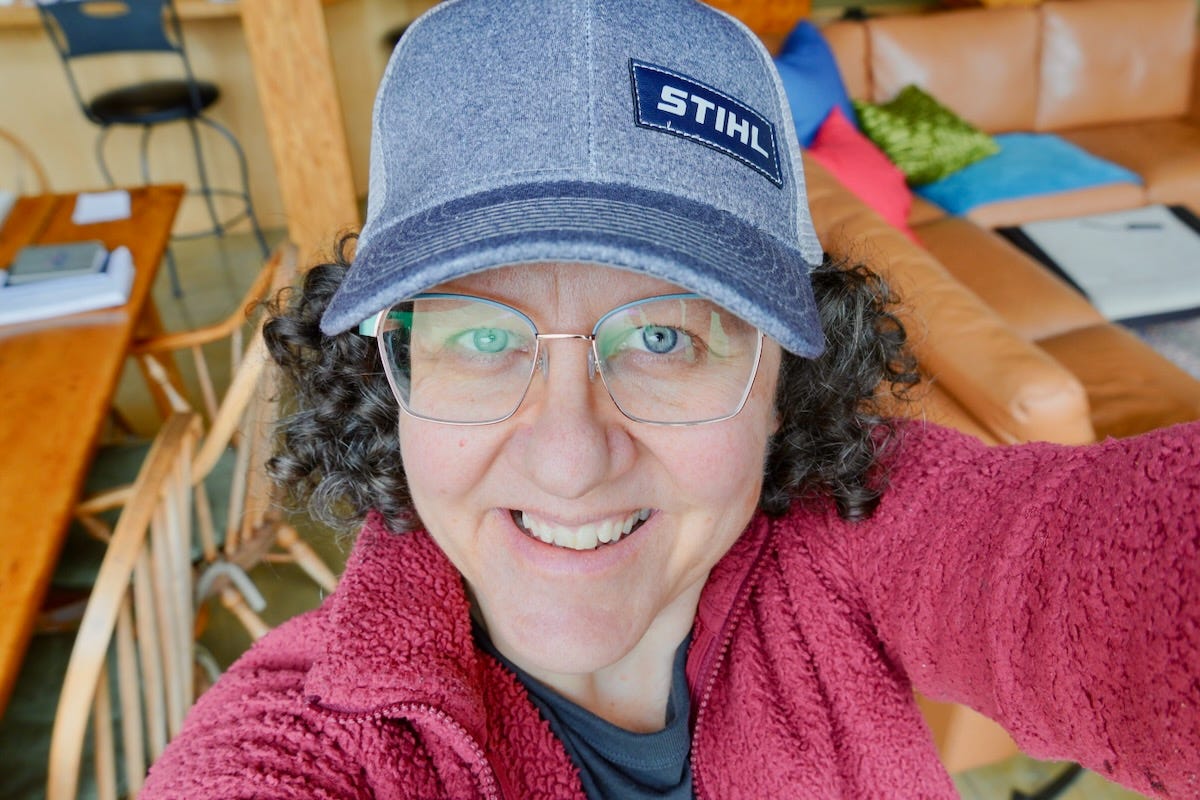
In my mid-forties as I was closing the chapter on homeschooling and raising children (still a parent, always a parent), I wondered where and how I would find as much meaning in my life as I had in homemaking and raising kids.
Doing a Master’s Degree was in part a response to these questions. I was thinking maybe I could build a career in education—in policy, research, and decision making tracks (not classroom teaching). And that the work, because it was based on my keen interest and love for educational philosophy and self-directed pedagogy, would provide a new kind of meaning in my life.
The quest for the holy grail—being paid for doing something you love and care about; and that you are gifted, experienced, skilled at doing. You’ve seen the Venn diagrams.
Upon moving here and going through the intellectual and soul searching “what next” process after finishing my degree, I chose to focus my meaning-seeking energies where my heart has always been—in my home, my relationships, my writing and life story telling. But for the first time in my adult life my home extends to a piece of land to care and steward, including gardens and woods. Home gives me a lot to work with.
There are now so many avenues and opportunities for meaning and fulfilment right outside my door. And new things to learn and experience about place and culture, and myself in those contexts.
This isn’t to say my paid work, or “career” if that’s what this is, isn’t meaningful to me. I get a lot of satisfaction in supporting my clients’ vision and helping them move the needle forward on their goals. But overall life meaning, right now at least, comes from the picture as a whole, and not from a career where I’m influencing education policy, which was my big hairy dream. And especially being able to realize the homestead-lite vision that I had set aside many years ago while living in Maine as not realistic in my marriage (wasn’t in my husband’s life plan) and family life stage (we were homeschooling, raising kids, and adventuring).
Now that my kids are grown I get to care for, steward, and nurture different relationships, living things and systems. Our move here opened the door to a new season—solidly midlife, empty-nest—but also opportunities for me to learn, practice, and grow skilled at new things.
My learner self delights in all this.
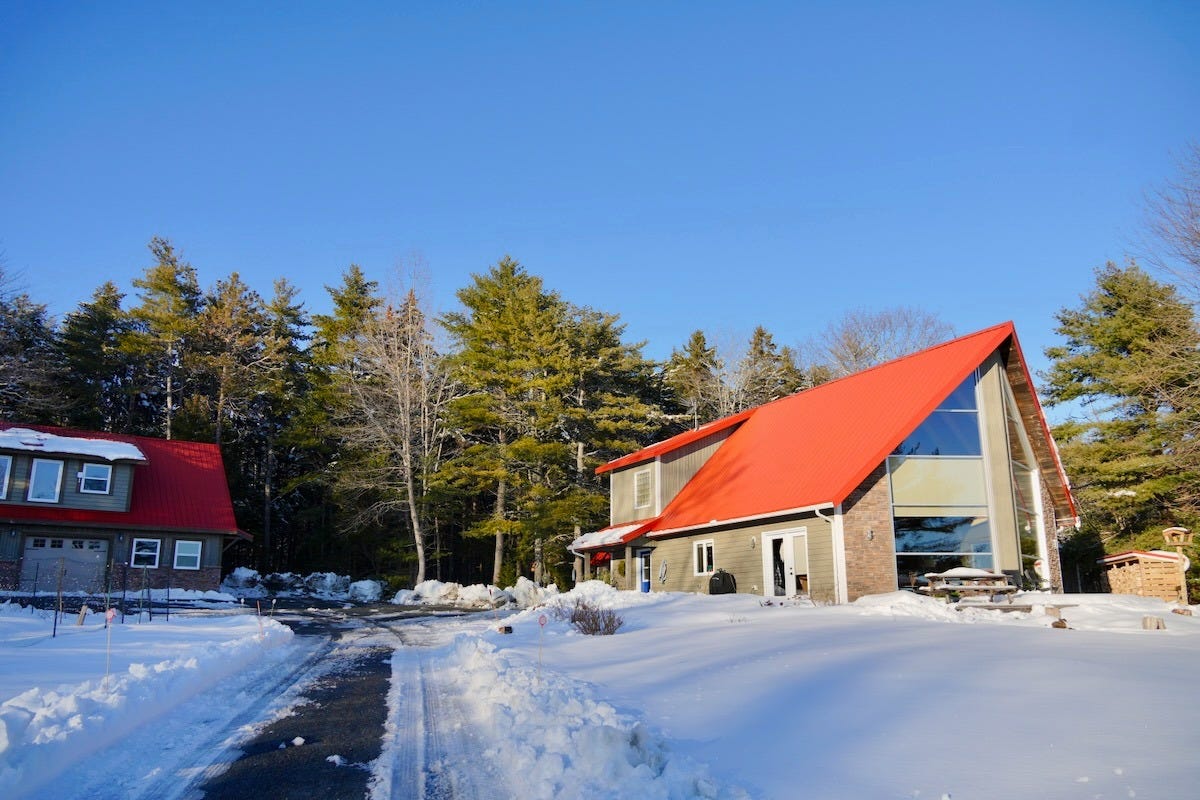
And the little girl who spent the early years of her life playing in the woods with her brother, living in a beautiful house built by her dad surrounded by a stand of tall Alberta spruce trees, feels completely at home 45 years later, in another house built by her dad, tucked into these East Coast mixed woods.
Only now, at this stage of life, both dad and daughter can work the chainsaws.
No posts
Comments
Nothing yet. Say the first thing.
Sign in to join the conversation.