
Few movement finishes are as ubiquitous as the humble perlage when it comes to modern watchmaking.
Surpassed only in fame by the legendary Côtes de Genève, or Geneva waves, perlage represents a beautifully repeating pattern, most often discreetly hidden beneath bridges and gears on the body of the mainplate itself. Small wispy circles, each overlapping one another, radiate outward from or inward towards a central point.
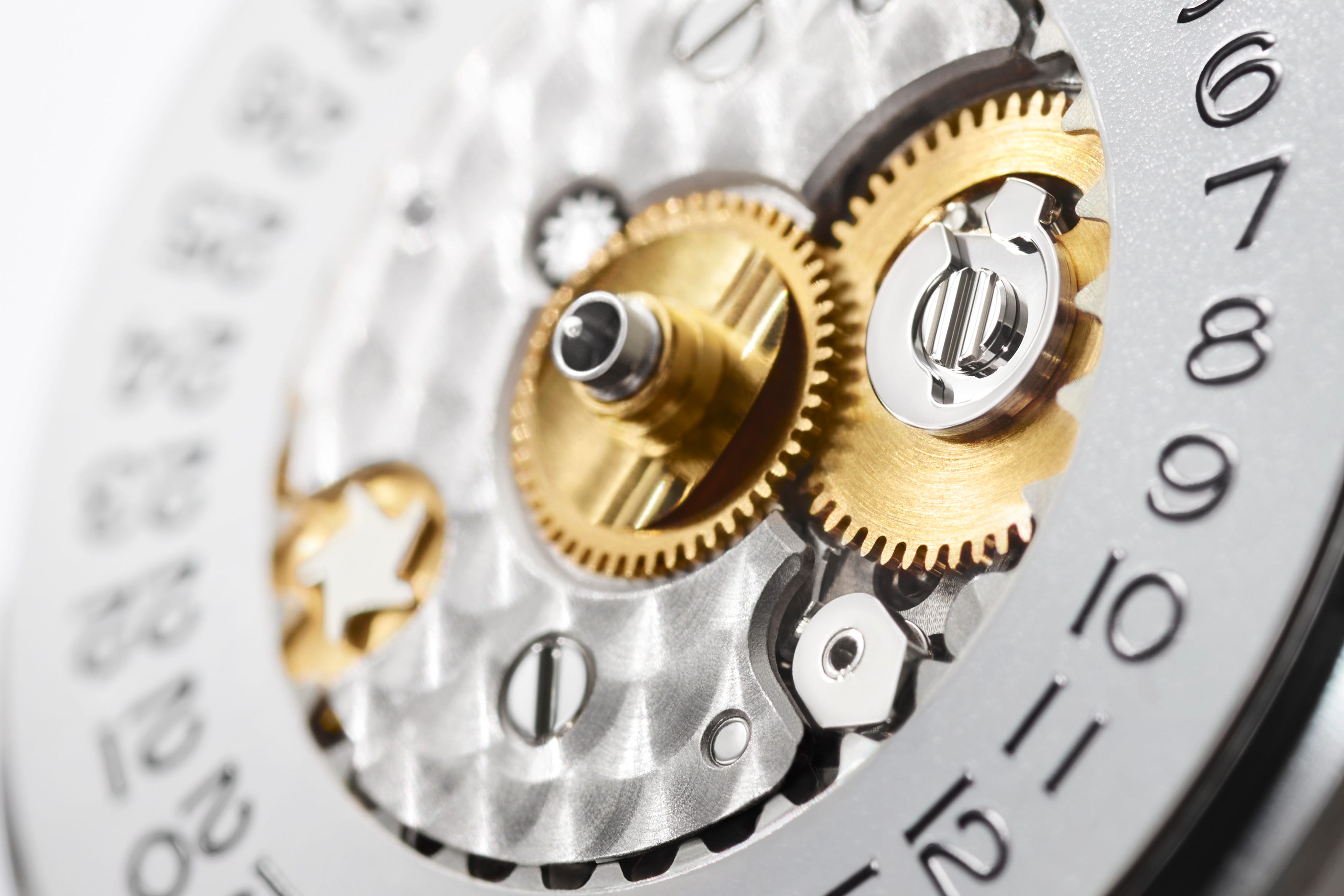
As instantly recognizable as this finish may be for seasoned watch collectors, it also holds its secrets: how it’s done, and what it demands from the watchmakers who seek to adorn their work with its textured spots. Thankfully, here at Remontoir, we’re ready to dive deep. So without further ado, let’s talk perlage.
Perlage likely appeared around the later half of the 1800s, alongside several other significant finishing techniques that endure today in watchmaking. This is largely due to the various schools of horology that have been dominant at different periods in time: the English and French, for example, were strong competitors with the Geneva-based Swiss établisseurs for many years, and it wasn’t until later that the Swiss school rose to sole power.
What that means, of course, is that different visual styles have reigned throughout time and space: antique English pocket watch movements are strikingly different from modern watches, which almost all adhere to the Swiss school of finishing regardless of their true origin today. An old English watch will most often have gilt brass bridges and a near-total absence of “standard” finishes, leaning instead heavily on engraving or a simpler matte frosted finishing.
The Swiss, however, were enamored of all things sparkly, and began to introduce new ways of improving the jewel-like aesthetic of their timepieces. Of course, many of these finishes also have practical advantages, like how the formation of anglage makes the edges of bridges harder and more resistant to corrosion.
As such, techniques that are now seen as traditional and even essential hallmarks of haute horlogerie across the world began to rise to prominence around this time—one of which, of course, was perlage.
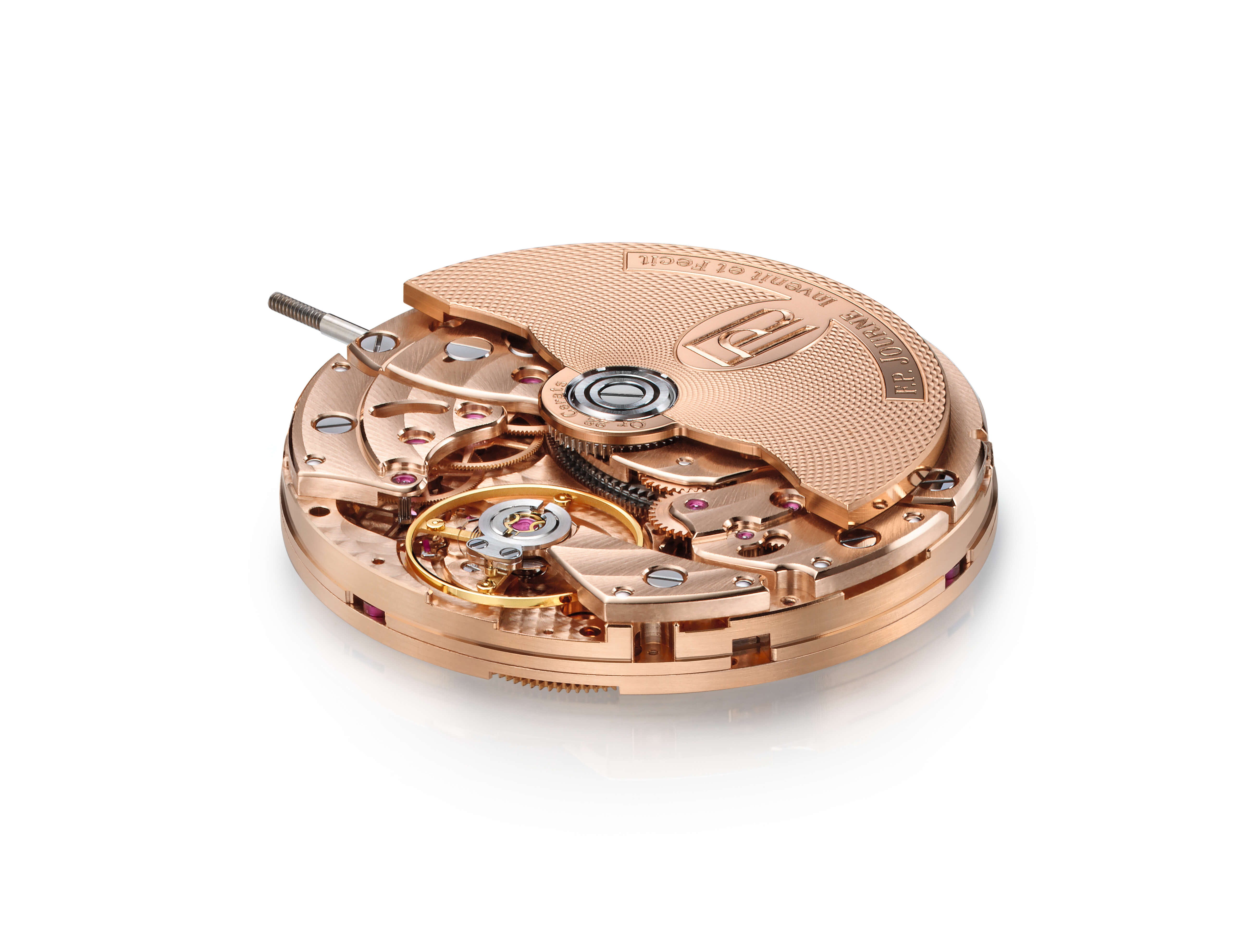
It’s oft-repeated that perlage primarily served the purpose of being able to catch dust as it entered old pocket watch cases, preventing it from falling into the gear train and otherwise generally mucking things up. I haven’t yet seen this claim substantiated myself, but it certainly makes sense: perlage can almost always be found on the inside of half-hunter pocket watch casebacks, and most of these watches are rather minimally water resistant. Or anything resistant, for that matter.
As I mentioned before, perlage has attained near-ubiquitous status in modern watches, and will be found on movements ranging from harsher industrial finishes to utterly spectacular displays of artisanal craft. It’s almost always tucked out of direct view, placed under bridges and gears so that it can only be seen, if at all, through other objects. While Côtes de Genève and anglage get the center stage, perlage is your quiet workhorse in the background.
Here’s how it’s done.
For starters, if you’re a visual learner, I’d highly recommend watching this lovely video produced by Horopedia where you can learn how exactly perlage is done from none other than Daniela Dufour.
In the meantime, I’ll do my best to provide you with an even more comprehensive verbal review.
As you might imagine, perlage requires a rotating circular abrasive to create its rounded pattern. Think of it as lightly scratching the metal in a circle, which as it turns on itself creates each iconic perle. This is done in one of two ways: either by using a polishing rod or a Cratex rubber bit.
The polishing rod is the method suggested by George Daniels in his foundational tome Watchmaking. Here, the work is coated with an abrasive powder—Daniels particularly recommends wet pumice powder paste1—while an ivory rod is set into a rotator such as a drill press. The drill press is lowered such that the spinning rod presses into the paste, thereby grinding the paste into the work and allowing it to mark it up to produce the classic perlage appearance.
On the other hand, the more common approach today is to use Cratex: small rubber bits that are impregnated with abrasive material. This makes them both flexible and easy to use with machinery, as well as functioning without any abrasive powder added. Otherwise, the principle is the same: no other material is coated onto the work, while the Cratex bit is set into a drill press and lowered to press a circle into the work below.
Okay, I lied a little bit. The typical machinery for creating perlage isn’t exactly a regular drill press—although you can absolutely do it with one. Most are custom perlage machines that have been optimized for the task at hand. This primarily means that the lowering lever has been made more responsive and easier to control—often with the foot—and that the work is held by an indexing table. This allows the watchmaker to notch the work over in discrete units when it must be moved, ensuring that each concentric circle of perles is placed where it needs to be without having to eyeball everything.
Now at this point, we’ve made one perle by simply raising and lowering our abrasive. From here, the work is typically set into a rotating clamp: it’s not able to move laterally except when notching the indexing table, but can spin freely around a central axis. The watchmaker, after producing one perle, simply turns the work slightly in its rotating clamp and produces the next in the same manner. The spacing is usually such that each perle is 1/3 to 1/2 overlapping with the previous one, to create a fluid appearance, rather like scales.
The process of creating perlage always begins either from a central point or from the outside of the circular area it’s meant to fill and will proceed by first completing a full ring and then notching the indexing table to exactly adjust the work to be positioned so the bit is above the next ring that needs to be done. From here, the process is the same.
Note as well that perlage is applied in varying sizes, from larger circles over bigger spaces like the body of a mainplate to smaller, tighter circles in spaces like recessed gear wells.
Sounds easy? You’re right. And you’re also wrong. Here’s why.
I’ve played around with perlage myself quite a few times after picking up a cheap drill press. Cratex is extremely affordable: you can pick up a few bits for a handful of bucks and they’re basically already in a great size for perlage right out of the box. You can also file them down to widen them, given the way they naturally taper. Here’s a snap of my setup:
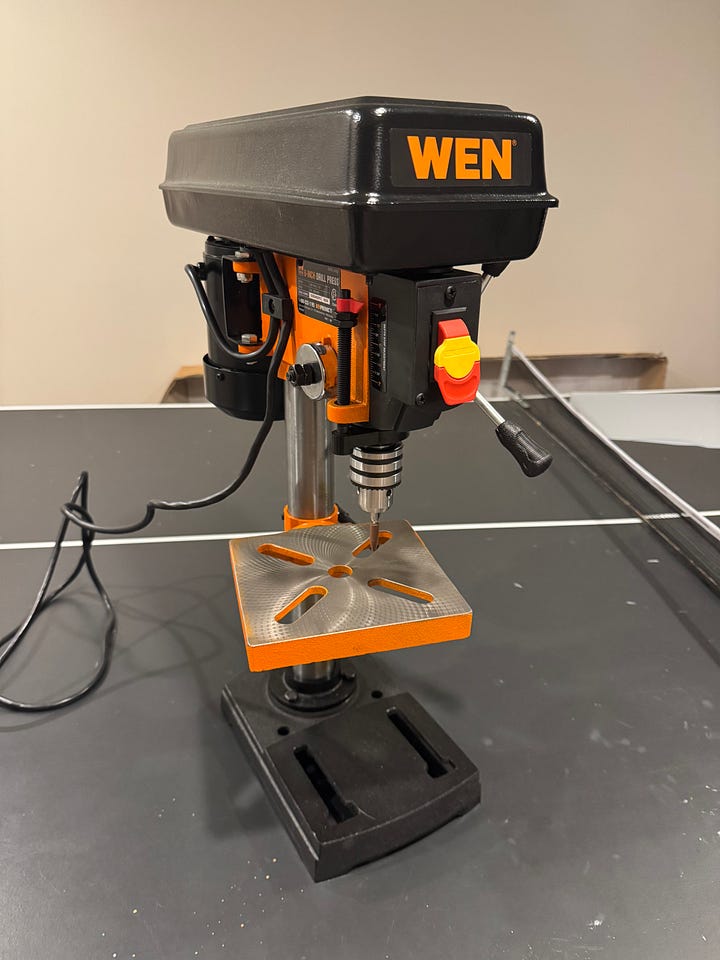
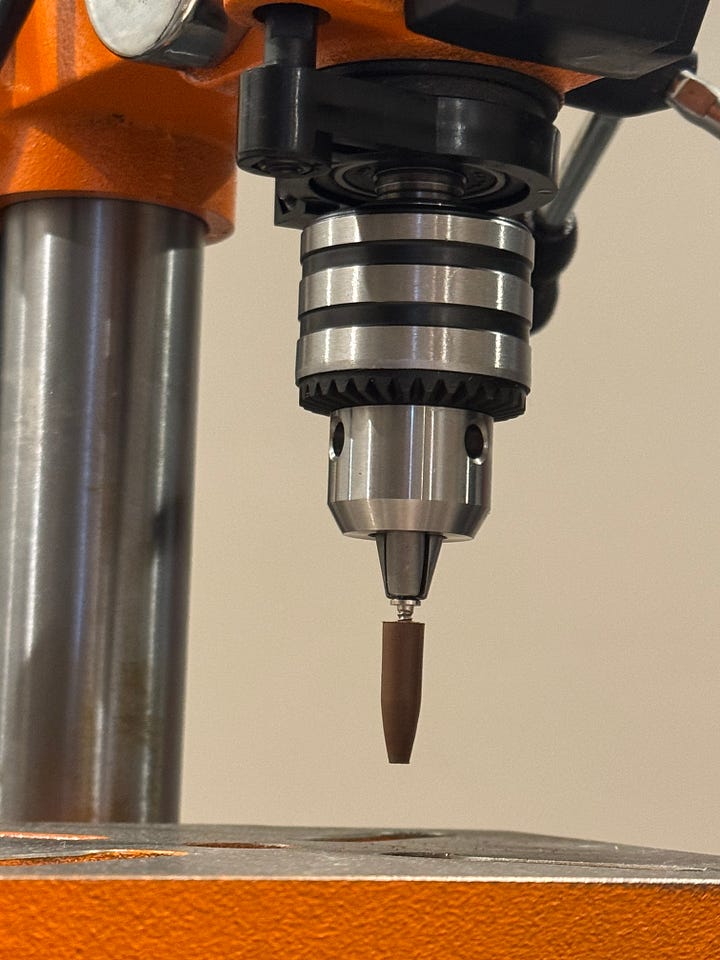
From here, I quickly ran into my first problem: truing the Cratex bit in the drill press. When I run it, it wobbles quite a lot along its axis, meaning I won’t get a clean, evenly placed perle upon pressing into the plate. I haven’t had much time to figure out how to get this right yet, so this is pretty much where I’m at right now. Here’s a sample of some of the fruits of my labors:
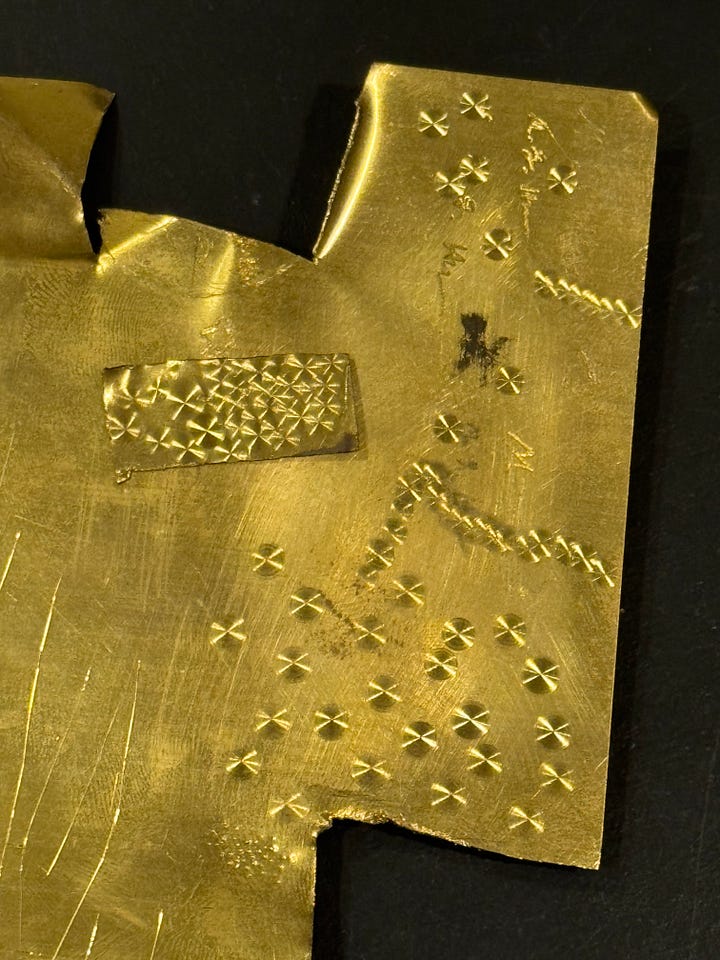
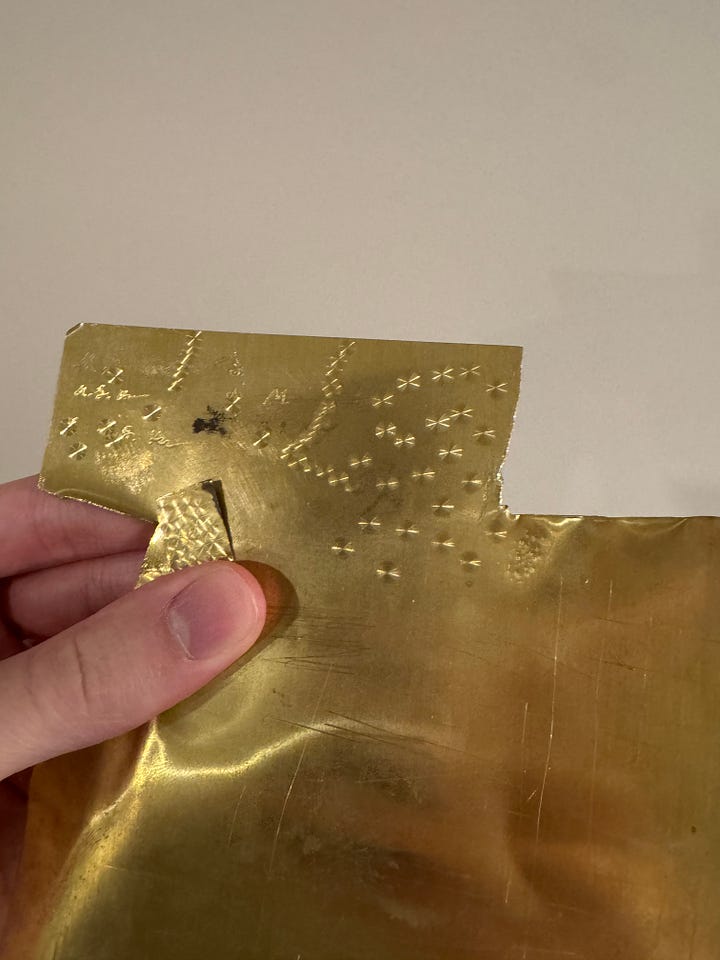
Even with this resolved, it only gets trickier. The size, shape, and intensity of each perle aren’t just controlled by basic factors like the speed of your machine or the coarseness of your abrasive. They’re also intensely dependent on the watchmaker’s touch: the length the bit is in contact with the work, the strength with which it’s pressed down, and the spacing from the next perle over are all completely guided by a human hand. If these details aren’t kept as perfectly consistent as possible, you’ll end up with a mismatched mosaic of spots that won’t look good at all.
That said, there’s also quite a bit of appeal in a faint degree of mismatching. Being able to see a hint of human error under magnification is a tremendously valued trait in haute horlogerie, because it proves that the finish was created by an artisan, rather than the spinning wheel of a CNC machine.
Indeed, one of the primary reasons perlage is so ubiquitous is its ease of mechanical reproducibility. Equipped with the right abrasive bit, a machine can effortlessly create evenly-spaced and -sized perlage over the surface of a movement that looks near-identical to the work done by a human.
Despite the difficulty in perfecting it, as I said, perlage is a finishing technique that you can actually quite feasibly attempt yourself. Don’t come in with high expectations, but it makes for a highly enjoyable evening to spend some time fooling around with a piece of sheet metal and a Cratex setup. And with practice comes perfection!
A few thoughts as we conclude our review of this fascinating technique. Humor me, if you will.
Of the Big Three finishes—perlage, Côtes de Genève, and anglage—quite a bit deal is made out of two of them. Anglage is the unquestioned king, of course: collectors obsess over interior angles and a good broad anglage to the point where it’s become a laughable stereotype. Côtes de Genève is a close second when it comes to artisanal watches. There’s a tremendous and easily recognizable difference between côtes done by a top-tier independent watchmaker and the typical industrial variant.
Perhaps it’s just me, but I’ve hardly heard the same conversation surrounding perlage. It’s difficult to tell the difference between artisanal and machine work, especially considering how often it’s tucked out of the way of direct view. So there’s not much room to discuss it when it’s very well done. Plus, because of its traditional position in the movement, it’s rarely shown off.
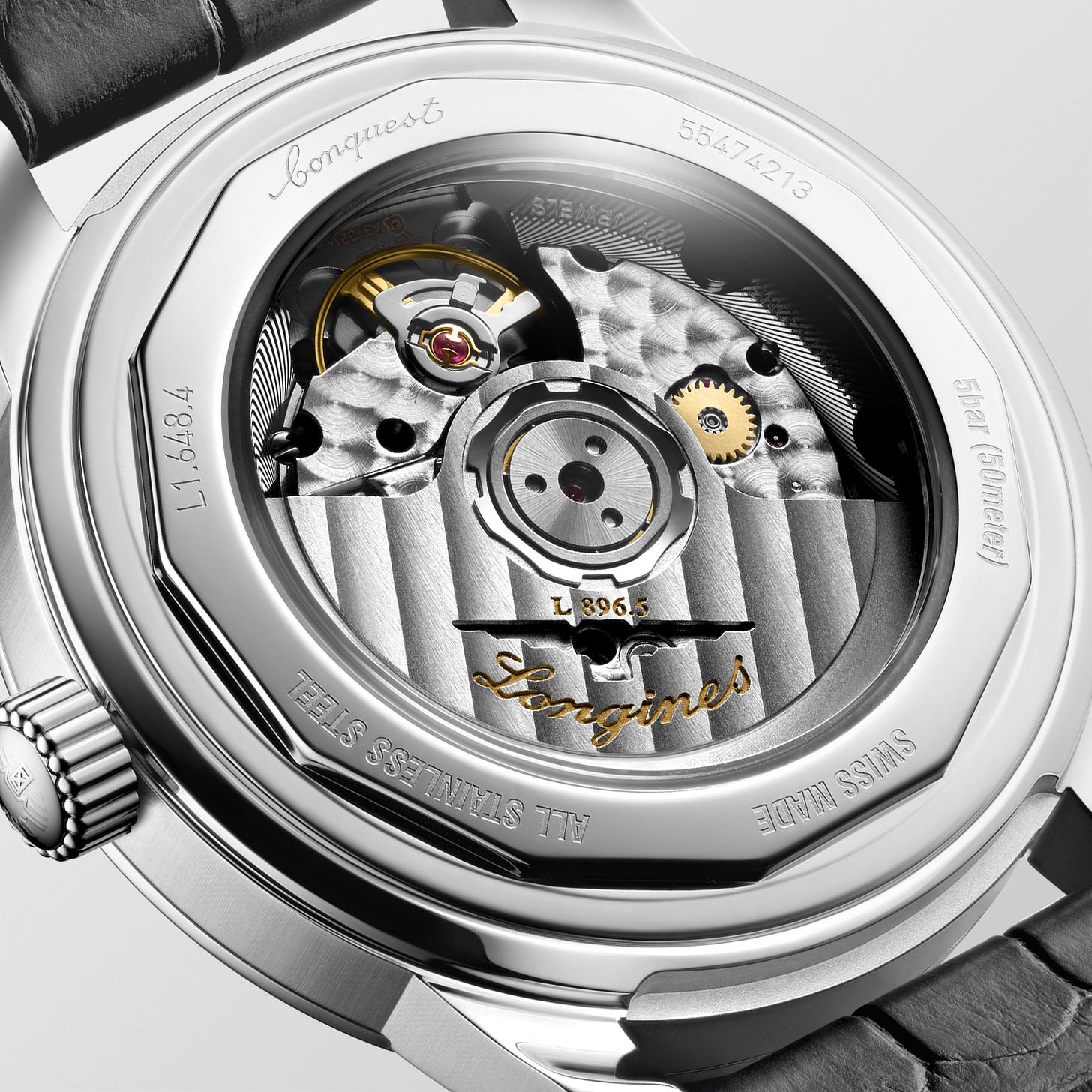
At first, that sounds rather lamentable. Why won’t we consider a finishing technique this important and near-ubiquitous with the same admiration as others? But after further thought, I realized that’s exactly how it’s meant to be.
Perlage is not the star of the show. It’s not meant to be the center of collector debates or watch comparisons the way anglage and Côtes de Genève are. You can only tell it from its industrial equivalent by very careful attention. And that’s okay.
Not every single finish should be placed on such a pedestal as to virtually fetishize it. Let’s keep this one just the way it is.
Of course, that doesn’t mean in the slightest that it’s not worthy of the same respect as its cousins. Perlage requires an intense concentration and a steady hand from its creator, just like anglage. It’s worth appreciating. Worth respecting. And worth trying yourself, even. This little background player still represents, in my humble opinion, all that is good about watches.
Try saying that three times fast
No posts
Comments
Nothing yet. Say the first thing.
Sign in to join the conversation.