
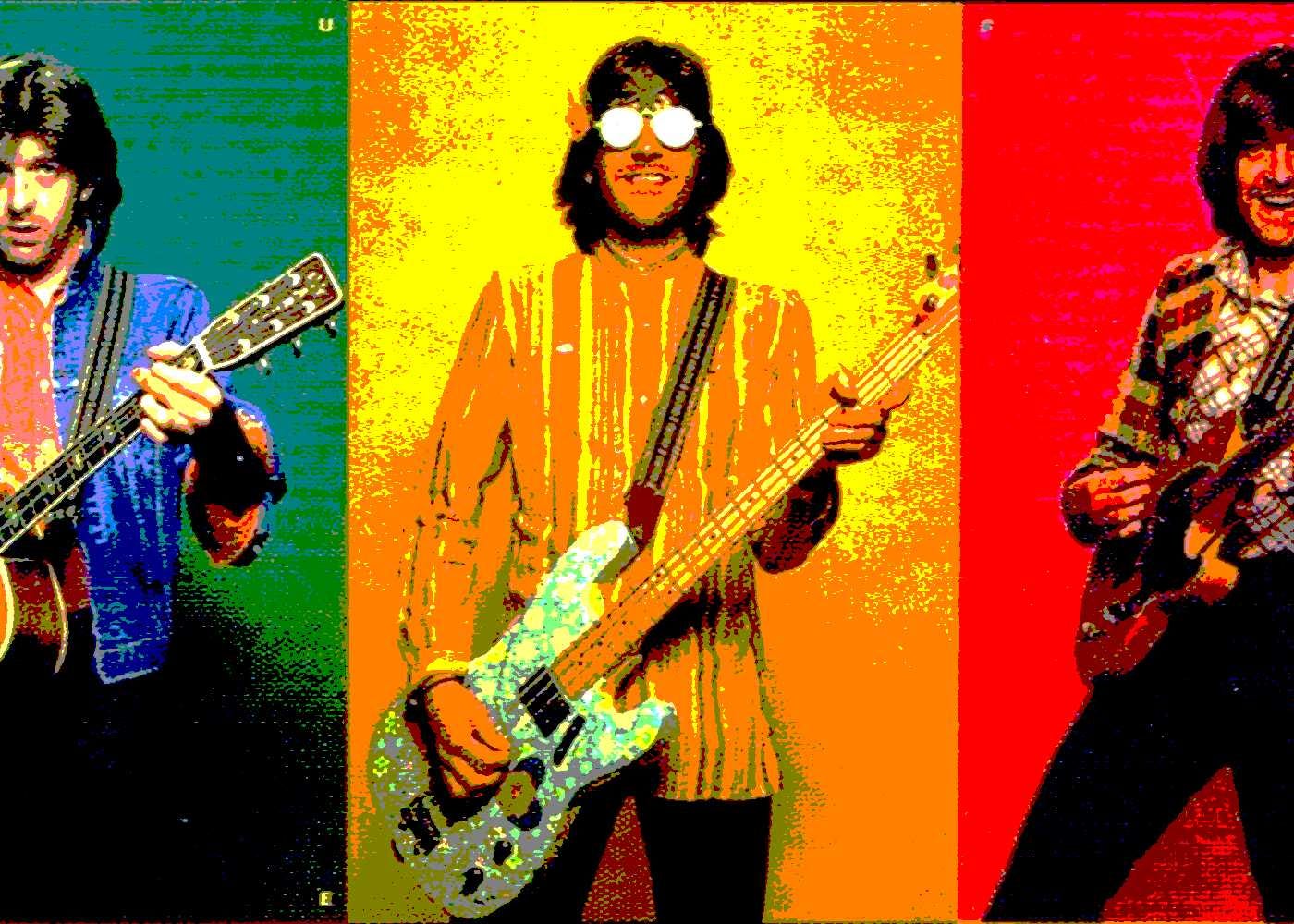
I first published this back in 2024. Last week marked the 50th anniversary of Nick Lowe’s debut single for Stiff Records, “So It Goes.” By chance, I also recently re-watched the excellent documentary Kurt Vonnegut: Unstuck In Time. There has been a lot of transition in my life over the past couple of years, so I’m resharing this essay here today.
Former bassist and vocalist for British pub rockers Brinsley Schwarz, Lowe was striking out on his own for the first time. “So It Goes” (b/w “Heart of the City”) was also the first release for Stiff Records, brainchild of Jake Riviera and Dave Robinson who were themselves transitioning from band management to indie label execs.
According to Lowe, the inspiration for “So It Goes” came while he was tour managing Graham Parker & The Rumour who were on the road supporting Thin Lizzy as that band’s single “The Boys Are Back in Town” climbed the charts.
“‘The Boys Are Back in Town’ had this little descending thing that just got under my skin and I started singing ‘and so it goes, so it goes, so it goes’ while I was walking around doing my tour manager duties,” Lowe has said.
“The song isn’t really about much. It’s a bunch of interesting words strung together.”
Security's so tight tonight
Oh, they're ready for a tussle
Gotta keep your backstage passes
Cause your promoter had the muscle
Despite Lowe’s claim that there is no deep underlying meaning to “So It Goes,” it’s hard to ignore the insinuated gravity of certain evocative phrases. The one that always catches my ear is, “He got fifty thousand watts, in a big acoustic tower,” which I tend to believe speaks to the enormous potential power every human being possesses.
And, of course, the song title itself which becomes a descending incantation in the repetitive, hypnotic choruses.
And so it goes
And so it goes
And so it goes
And so it goes
But where it's goin' no one knows
The semi-autobiographical anti-war tale centers around Billy Pilgrim, a WWII prisoner of war who experienced the firebombing of Dresden firsthand (just as Vonnegut had as a young soldier). The psychological impacts of his experiences cause Pilgrim to become “unstuck in time” as he suffers trauma-induced episodes of time travel—a near constant and uncontrollable state of transition.
Pilgrim gets married after the war and starts a family as he builds a successful optometry practice. On his daughter’s wedding night, he is abducted by space aliens and whisked away to the planet Tralfamadore where they place him in a zoo.
Pilgrim adopts the “so it goes” philosophy from his captors who see all of time simultaneously, rather than sequentially. It quickly became a popular Vonnegut catchphrase, one later used by musicians such as Lowe, Tom Waits, The Menzingers, and Taylor Swift (whether they were intentionally quoting Vonnegut or not).
“When a Tralfamadorian sees a corpse, all he thinks is that the dead person is in bad condition at that particular moment, but that the same person is just fine in plenty of other moments. Now, when I myself hear that somebody is dead, I simply shrug and say what the Tralfamadorians say about dead people, which is ‘So it goes,’” Vonnegut writes in Slaughterhouse-Five.
We transition into this world, live life second by second for however long it lasts, and then transition out of existence as we understand it. In between, life can be viewed as a series of transitions that are occasionally profound but mostly mundane.
As it specifically relates to creativity and the arts, I really like this quote from Nobel Prize-winning Spanish poet Juan Ramón Jiménez:
“Transition is a complete present which unites the past and the future in a momentary progressive ecstasy, a progressive eternity, a true eternity of eternities, eternal moments. Progressive ecstasy is above all dynamic; movement is what sustains life and true death is nothing but lack of movement, be the corpse upright or supine.”
Whether it’s a song that “really isn’t about much,” a book about events that “happened, more or less” (as Vonnegut writes at the start of Slaughterhouse-Five), or whatever we choose to do with our own “50,000 watts,” the point is to keep pushing forward in these “eternal moments” as we continuously transition into the future.
Or, as Vonnegut put it in his own inimitable way in the 1963 novel Cat’s Cradle:
We do, doodley do, doodley do, doodely do
What we must, muddily must, muddily must, muddily must;
Muddily do, muddily do, muddily do, muddily do,
Until we bust, bodily bust, bodily bust, bodily bust.
So it goes…but where it's going no one knows.
Comments
Nothing yet. Say the first thing.
Sign in to join the conversation.