
Hemp bill falters in House
Lingering impacts of “Big Beautiful Bill,” ACA cuts
2.1. SNAP cuts leave a gap for NC families
2.2. ACA subsidy cuts lead to more uninsured
Election law bill passes, Stein to veto
General Assembly to return after elections
The main event in the General Assembly this week was a contentious measure that would effectively eradicate the hemp industry in North Carolina. The industry currently generates more than $3 billion in revenue and employs more than 10,000 North Carolinians. Abruptly ending the industry would affect even more people, as thousands more indirectly work in hospitality and retail that benefit from the market.
The State Senate approved the measure earlier this summer, but its outcome was uncertain in the State House. The Republican House Caucus ultimately decided against moving forward with it due to internal divisions. Industry advocates filled the General Assembly to meet with lawmakers and make their case for commonsense regulation.
Bipartisan legislation on the topic has already been considered by both chambers of the General Assembly but no agreement was reached. That earlier legislation was more narrow and focused on age restriction; it would not have ended the industry.
Rep. Reives talked to Business NC about how the industry needs clear rules, something which they are advocating for themselves:
Business owners have an interest in stable rulesets, says Reives.
“You can’t tell people to start a business and then turn around and shut it down arbitrarily,” he says.
Reives, D-Chatham, also pointed out that the issue has impacts beyond the retail sector.
“I come from an agricultural county, and the very best thing you can do for a former tobacco farmer is allow them to grow hemp,” he says. “They’re already ready. Everything they need, they’ve already got. They can retrofit and get it going just like that. And a lot of farmers did that.”
NC House declines to advance hemp regulation bill amid dueling advocacy efforts (News & Observer, 8/4/26)
NC House delays vote on hemp ban until November as advocates pack hallways (NC Newsline, 8/4/26)
State bill delayed as North Carolina lawmakers send hemp legislation to study committee (WGHP, 8/4/26)
Washington Republicans passed President Trump’s Big Beautiful Bill last summer, marking the largest cuts to social safety net programs in history. Many of the impacts of the law will take years to be fully felt, but North Carolina is already experiencing some of the ramifications.
“We’re seeing a lot more people, and it’s getting increasingly more difficult to meet the need.”
North Carolina families are already struggling with higher costs at the grocery store and gas pump. North Carolina Health News has a report out with a look at the impacts in just one of our state’s 100 counties.
Food insecurity in Guilford County has risen dramatically, with demand rising 20% this year so far
Federal cuts and work requirements are pushing more people to food pantries
SNAP participation in NC has shrunk by more than 110,000 since September
1 in 4 Guilford County children don’t know where their next meal will come from
“More and more uninsured patients are showing up in hospital emergency rooms and clinics, having lost their coverage under the Affordable Care Act.” That is the takeaway from a New York Times article outlining how Republican cuts to health care subsidies are affecting people across the country.
“Since the beginning of the year, enrollment in Obamacare has dropped by about three million, or 13 percent, according to the latest government figures. Insurance companies expect even more people to drop their A.C.A. plans.”
Families in North Carolina and across the nation are struggling to make ends meet. Instead of being supported by lawmakers, working people are facing higher costs in every facet of life.
Some related coverage:
Senate Considering a Delay in SNAP Cost Shift to States (NOTUS, 7/30/26)
Medicaid’s work requirement crunch arrives (Axios, 8/3/26)
On the same week as the 61st anniversary of the Voting Rights Act’s passage, legislative Republicans passed a bill that would make significant changes to North Carolina’s elections. The bill contains a number of concerning provisions including: shortening the number of early voting days in primary elections, creating a longer period for campaigns to challenge and toss ballots, and giving more power to the Republican State Auditor’s office.
“I will veto House Bill 958 because it makes it harder for you to vote, introduces unnecessary chaos into our elections, and invites sore losers to try to overturn an election they lost,”
— Gov. Josh Stein
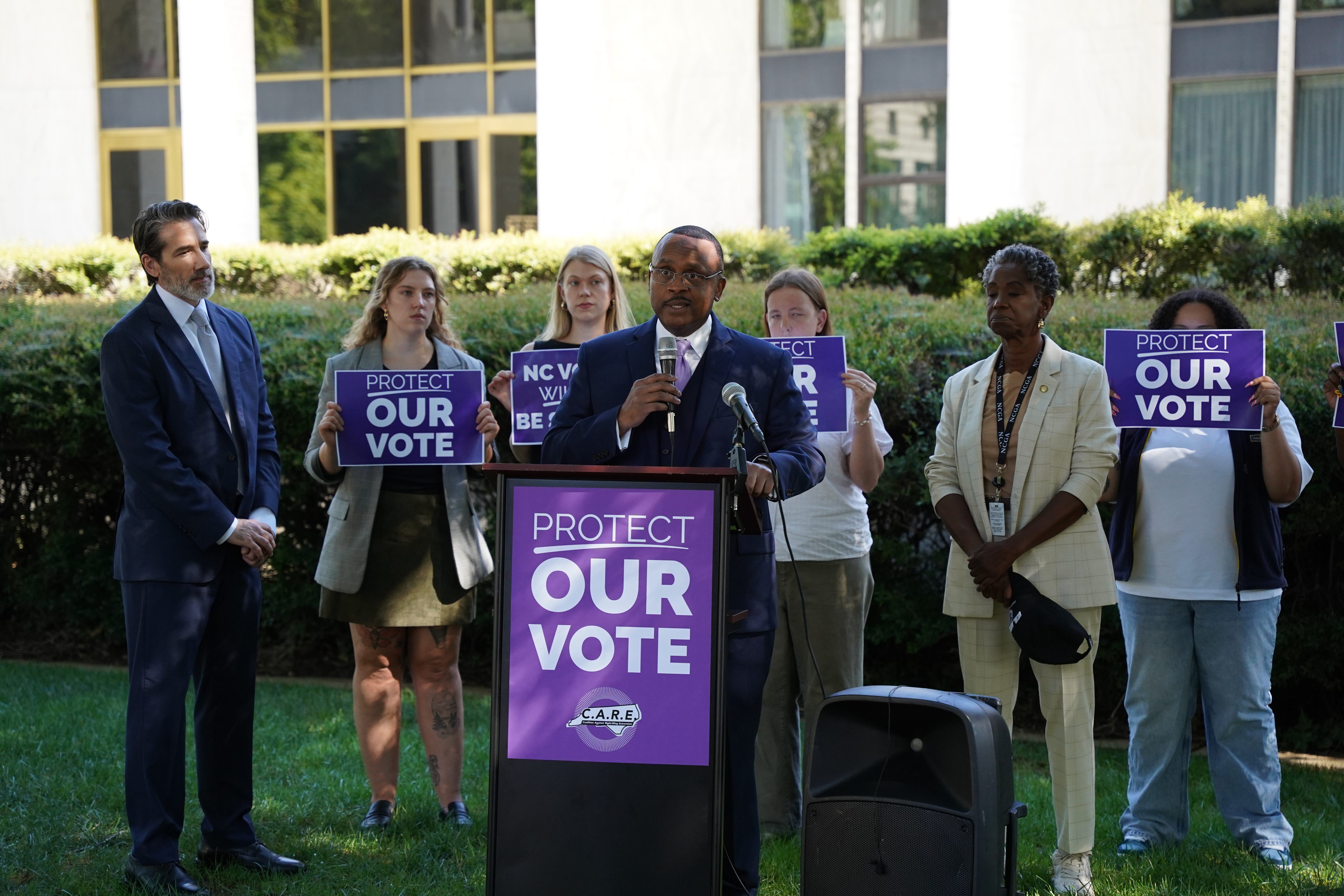
Advocates held a press conference Thursday where Leader Reives spoke in favor of protecting the right to vote instead of rolling it back. NC Newsline covered the event:
The North Carolina General Assembly went 1,003 days without passing a comprehensive budget, yet the Republican majorities were able to pass other laws Reives said were aimed at weakening the voting power of minority communities.
“At the president’s request, the Republican leaders in the state House and in the state Senate ran us back to session so that we could further gerrymander the most gerrymandered maps in the entire United States,” Reives said.
…
Reives also criticized his GOP colleagues for shifting control of the North Carolina Board of Elections to the state auditor — the only state auditor in the country with that power, he said.
Speaker Hall indicated that Republicans would not be likely to return to the General Assembly to consider override votes on the Governor’s veto of this bill and others before November. You can read more coverage of the elections bill below.
Democrats rally against NC election bill after passage; Stein pledges veto (WRAL, 8/6/26)
Controversial NC elections bill unlikely to become law before midterms (News & Observer, 8/6/26)
Gov. Stein says he’ll veto early voting reduction, election changes (WUNC, 8/5/26)
NC governor vows to veto one election bill approved Tuesday by House: Could trigger ‘chaos’ and ‘invites sore losers’ (WNCN, 8/5/26)
The General Assembly is slated to reconvene after the November elections. Leader Reives spoke to reporters after Wednesday’s legislative session and detailed why he has concerns about it:
“None of us wants to spend all of our November and December here. I’m not a fan of lame-duck sessions, and it’s not about who’s in power, who’s not in power,” Reives told The N&O as he talked with reporters after the House adjourned on Wednesday.
“But to me, in November, the electorate speaks — and so if you don’t like what the electorate is saying, then coming in November and December and thwarting what they’re trying to do — I just don’t agree with. I don’t think that’s good government. But that’s me, and obviously I don’t make any rules here,” Reives said.
No posts
Comments
Nothing yet. Say the first thing.
Sign in to join the conversation.