
Directed by Michael Arias
Japan, 2006
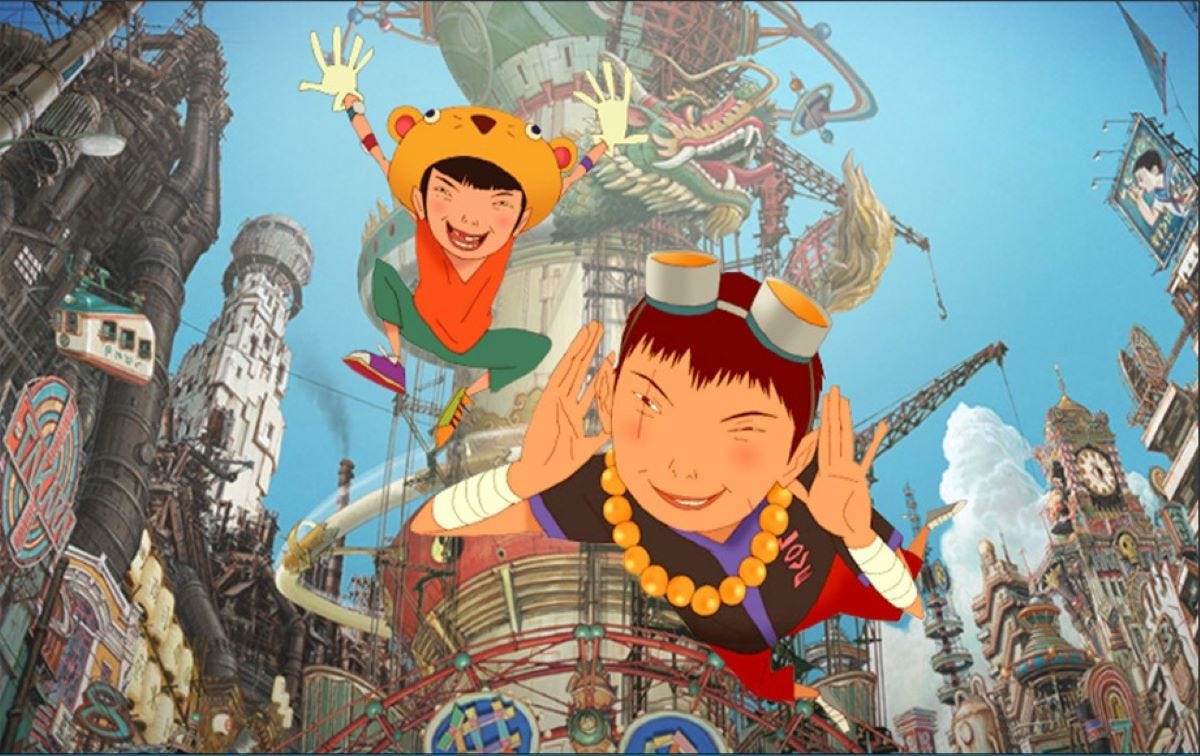
Black: This is my town
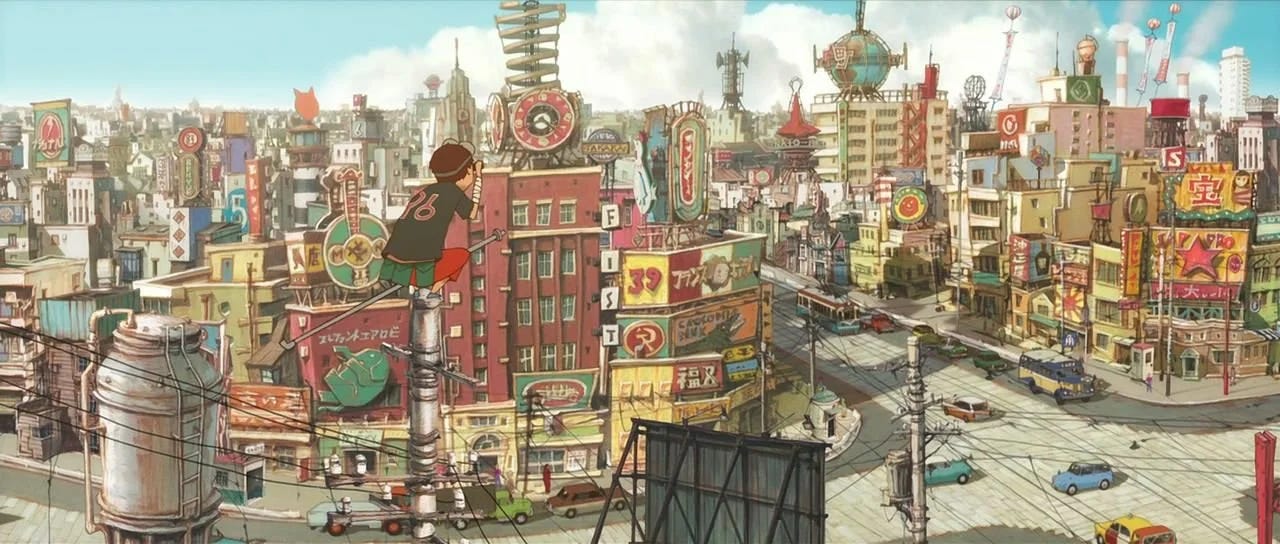
Tekkonkinkreet is, apparently, a mispronunciation of the Japanese word for reinforced concrete. To me, however, it resonates more loosely as ‘tech and concrete’ which kind of makes sense for the setting for this anime. That setting is the sprawling, unstable city known as Treasure Town. The film – unusually a Japanese feature with an American director, Michael Arias, at the helm – opens with a panoramic sweep of a city of striking, vibrant, hyper-saturated colour where the old sits very much cheek by jowl with the new. Broken-down apartment blocks shudder in the shadow of glistering high-rises emblazoned with advertising.
Concrete versus tech: like Treasure Town itself this is a film defined by dualities. Tekkonkinkreet tells the story of two orphaned street kids, Kuro and Shiro. They are members of a gang, The Cats, and we know nothing of their background. What happened to their parents? Did The Cats have any other members? Stripped not only of their past, but also of their names, the two are referred to by their tags: Black is the older – cynical, streetwise, handy with his fists and feet, and violently protective of White – innocent, intuitive, and with a perpetually dripping nose. Black and White, ying and yang, the actor and the dreamer, opposites but connected by a unique, near inseparable bond.
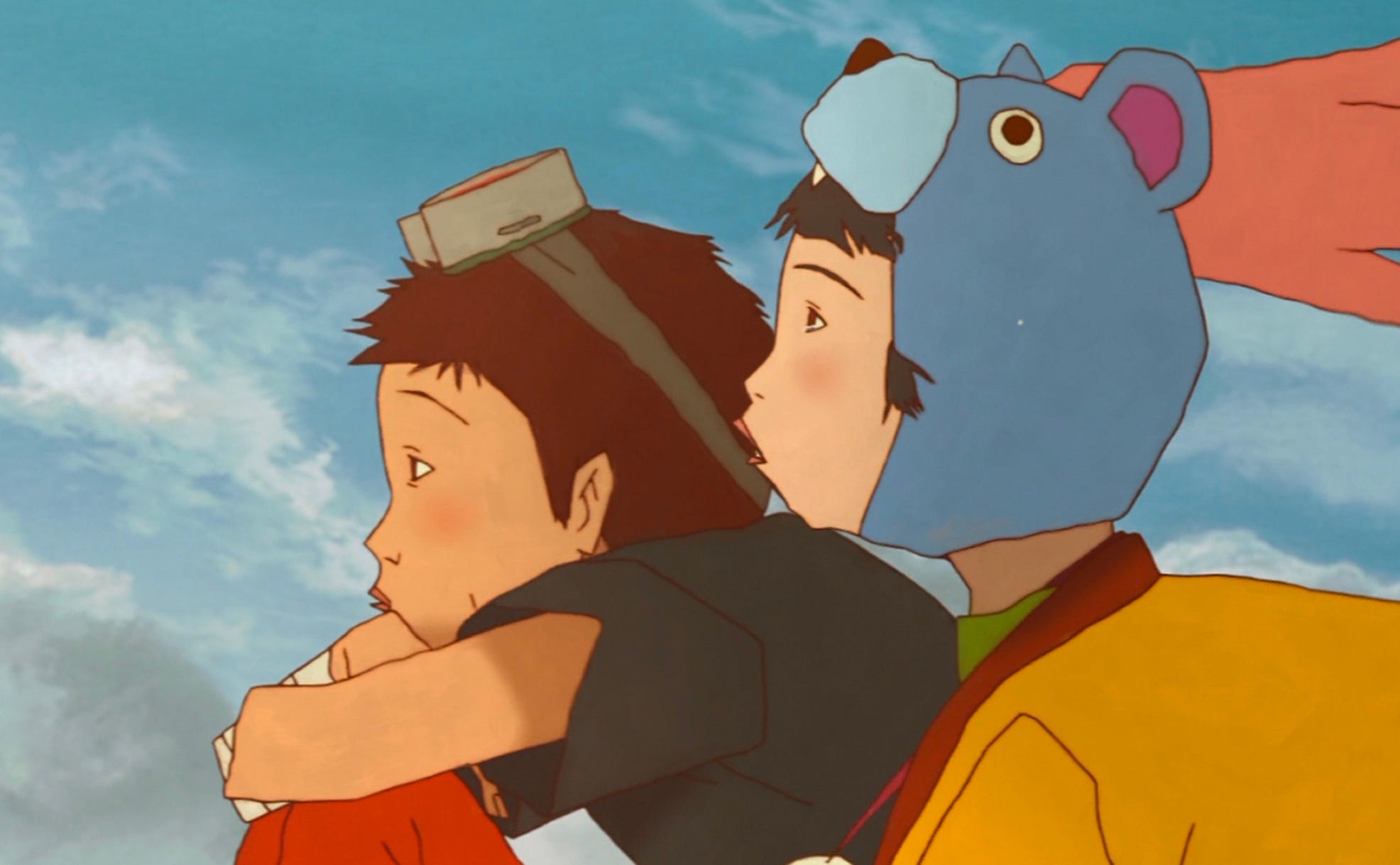
The two boys dominate the other street gangs, they own Treasure Town…
Strays. Orphans. Delinquents who rule Treasure Town. They live by the law of the jungle. The city is their playground. Underestimate them and you’ll kiss asphalt.
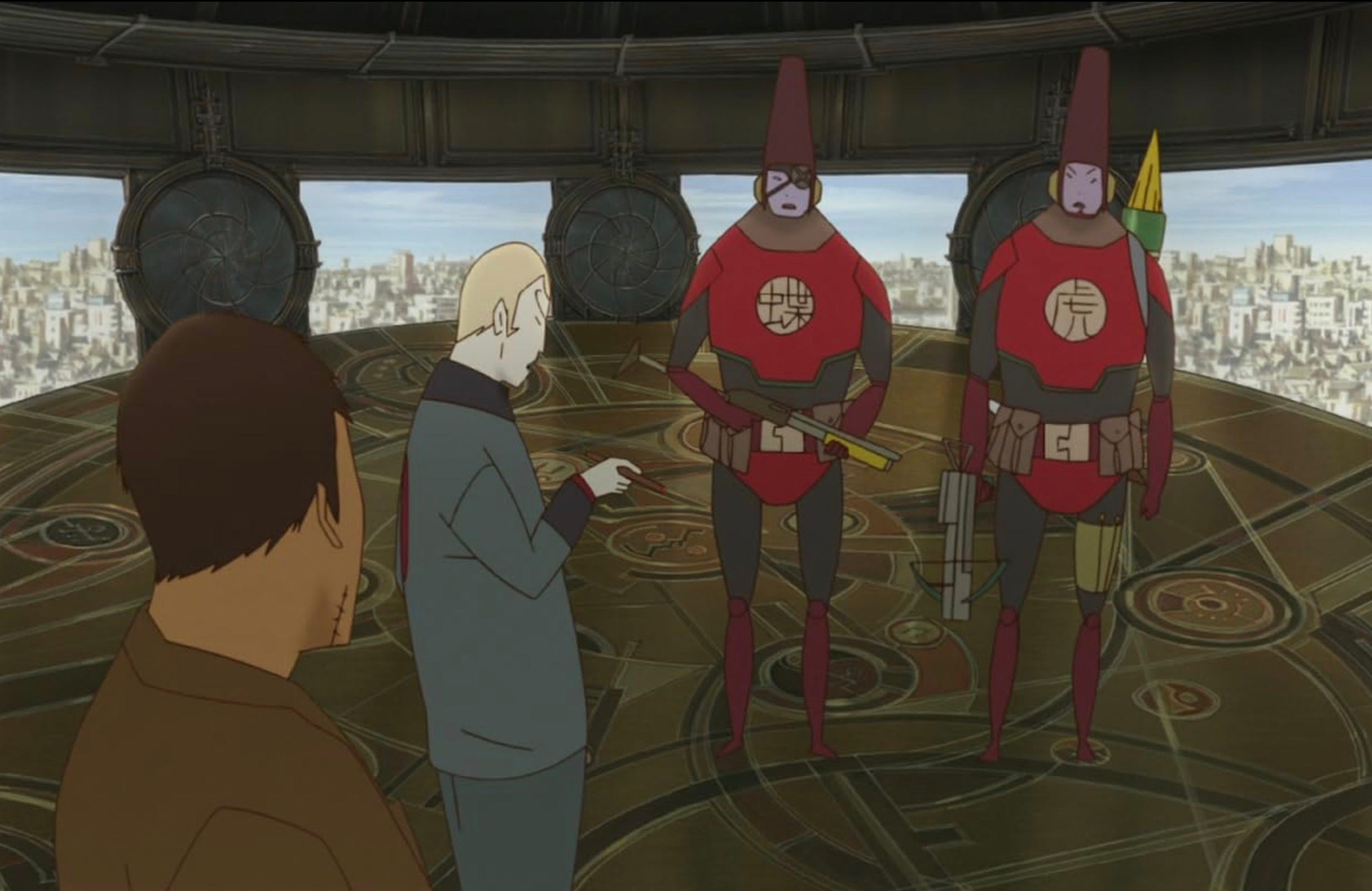
At least that is what they think. But their ownership claims collide with the local yakuza who have their own plans for Treasure Town: redevelopment. Much of the city is going to be razed to the ground to make way for a theme park. An irony not lost on a place that serves as an anarchic amusement park for lost boys. And that duality again: mirrored in the yakuza. On the one hand we have the old guard led by the aging Suzuki, aka Rat. Defiantly old school and rooted in the texture of the city, he has a long history with the Cats – a violent history – but bears them a grudging respect. Yet, in this modern world of gentrification there is no room for such sentiment and the Rat is ‘dispatched’ by the new man in town, the Snake. Reptile by name and reptile by nature, in his view tradition and memory are obstacles to be eliminated, and he brings in three seemingly indestructible assassins to eliminate the Cats.
So far, so Peter Pan-adventure but what sets Tekkonkinkreet apart is the richness of detail, not only in the plotlines and subtext, but in the creativity and imagination underlying the animation. There is a duality here too. The characters are hand-drawn sketches, simple and angular, expressive with memorable details such as the scar slashing through Black’s right eye. There is a rawness here, an urgency which contrasts markedly with the digitally layered cityscapes that possess a meticulous attention to detail. The graffiti-covered walls, the background characters going about their business, gives Treasure Town a real sense of place and space in time. The city is a character in its own right. But it is a city beset with tensions.
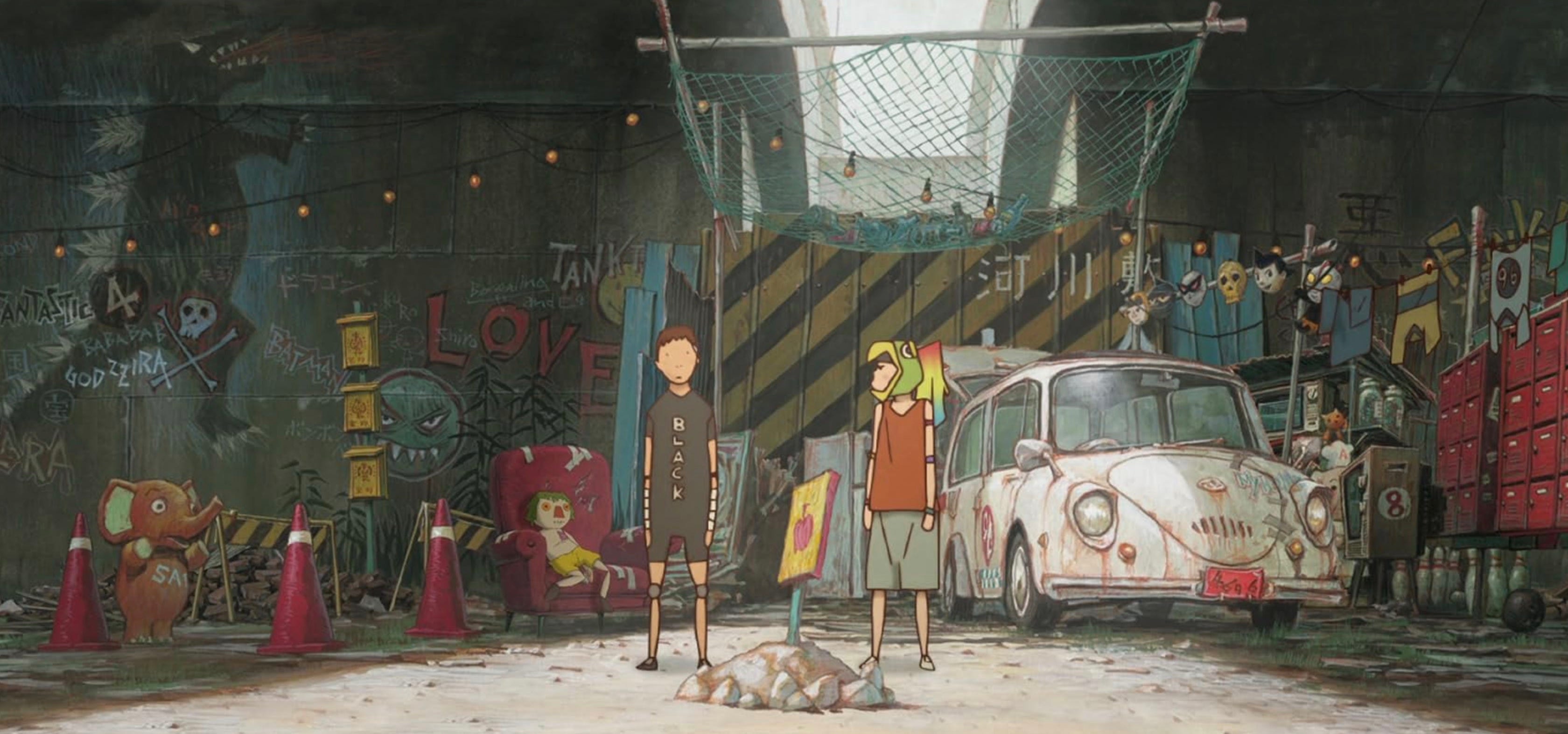
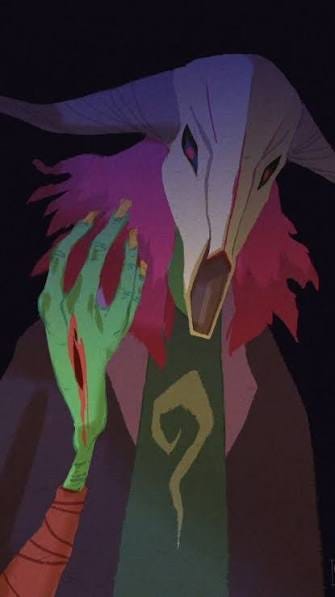
And the tension extends to the film’s narrative structure. When Black and White are separated – White is gravely injured and taken into protective custody – Tekkonkinkreet loses its earlier balance. The film becomes fragmented, and increasingly dark and surreal. Black gets caught up in a battle: a battle against Snake’s assassins, yes, but also a battle to save his soul. As his Id in the form of a minotaur-like force threatens to overwhelm him, only White – despite their physical separation – can save him. Perhaps they are a single consciousness divided across two bodies. Whether what we see unfold on-screen here is reality, dream, or emotional projection is left deliberately ambiguous. The result is perplexing but deeply affecting.
And Tekkonkinkreet is a perplexing yet deeply affecting film. With its remarkably ambitious aesthetic here is another example of why anime is arguably the most creatively vibrant medium in today’s cinema.
Reids’ Results (out of 100)
C - 77
T - 78
N - 82
S - 78
Thank you for reading Reids on Film. If you enjoyed our review please share with a friend and do leave a comment.
Coming next… Hidden Agenda(1990)

No posts
Comments
Nothing yet. Say the first thing.
Sign in to join the conversation.