
We’re living through the end of the world order as we knew it. But this is metamorphosis, not an apocalypse. The singular, linear story of progress that organized our parents’ world (American hegemony, dollar dominance, UN-centered diplomacy) is splintering into a thousand smaller experiments. We’re witnessing emergence of the new out of collapse of the old.
In November 2023, I was invited to attend events and meetings at COP28 in Dubai, the annual United Nations Climate Change conference. There, I interacted with U.S. leadership and former colleagues from my previous role in global food security, engaging with forward-looking, climate-focused representatives from the State Department, USDA, USAID, EPA, and other agencies on partnerships and science-driven solutions with our international partners and country alliances. The air was thick with the familiar rituals of American presence on the world stage, with conversations centering around U.S. leadership on climate matters. There was a sense, at least in the official halls, that history’s gravitational center was holding.
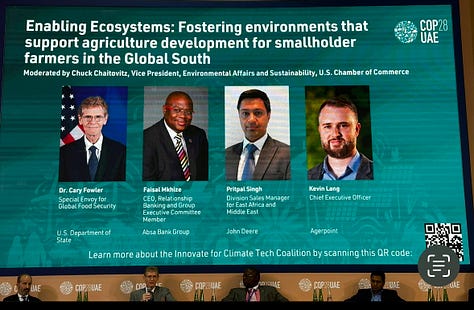
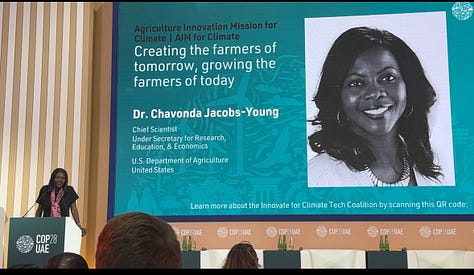
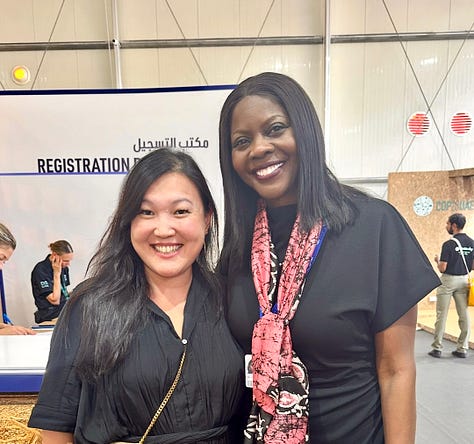
Now two years later, that familiar world feels like ancient history. This week, watching COP30 coverage begin from Brazil, the U.S. absence at the country-level is impossible to ignore. Former colleagues I reunited with at COP28 text me from the sidelines now. The infrastructure of American climate diplomacy and any momentum it gained in the past few years has evaporated into thin air. This, along with Elon’s February shutdown of USAID, and our withdrawal from the World Health Organization (WHO), have ceded U.S. soft leadership around the world, allowing other powers, especially China, to step into the void.
In its absence at this year’s COP30, the corridors and plenary sessions tell a different story. Delegates from Brazil, India, Nigeria, and a growing group of “middle powers” and civil society coalitions are filling the gap, forming alliances and making commitments in real-time. While the U.S. has no federal representatives, figures like California Governor Gavin Newsom still participated, demonstrating how the state, as the world’s fourth-largest economy, maintains a global presence and accelerates its own alliances without federal leadership.
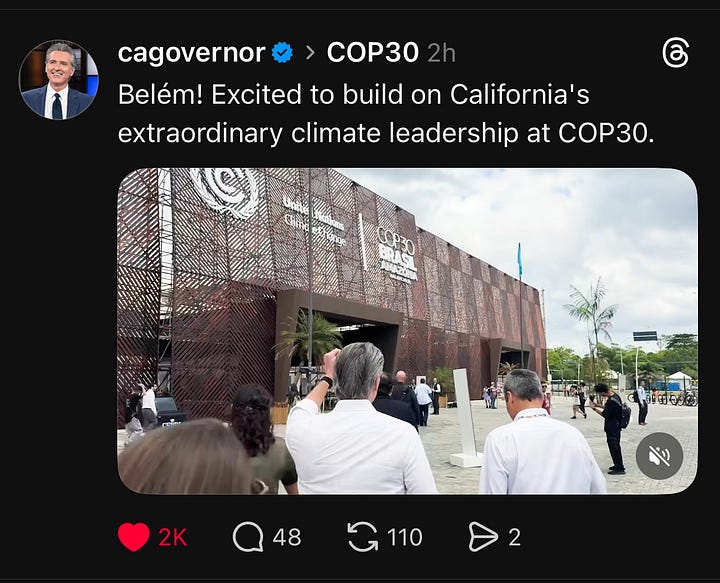
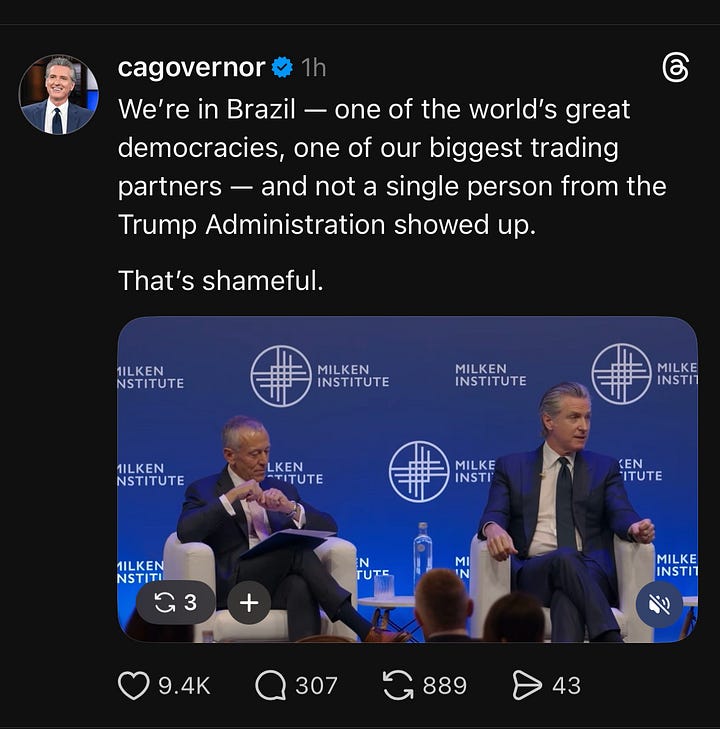
The U.S. absence speaks to something larger: a tectonic shift in how power moves through the world.
For much of modern history, the world has revolved around a single center of gravity. We had one dominant empire, one leading ideology, and one primary story of progress that’s erased many parallel narratives. We called it globalization, but what we really meant was a powerful gravitational pull that standardized our aspirations and economies.
Now, the world is departing from its familiar orbit. For many, this feels like a loss of order or the beginning of chaos. No matter where you are in the world, it’s likely you’ve also felt this shift. The frameworks we once referenced are splitting wide open at a rapid pace. I’ve previously written about navigating this increasingly VUCA world, which in its disorientation, lies an unexpected invitation.
History teaches us that societies have long sought to anchor themselves. For centuries, China saw itself as the “Middle Kingdom” (Zhōngguó), a center of harmony and relational balance. Today, as the old orbits dissolve, each power seeks recognition as a legitimate center among many, not merely dominance.
What if this moment is an invitation to find a new kind of normal? A chance to stand on our own feet and kindle our own light, rather than waiting for salvation from a distant center. It’s an opportunity to reshape our understanding of balance, agency, and belonging—both as citizens navigating uncertain politics and economies, and as nations navigating new world orders.
The world isn’t just becoming “multipolar” in the sense of rival poles; it’s evolving into a richer, more distributed network of multiple centers of agency. Power is no longer concentrated at the country level. it’s plural, networked, and shared. Cities, corporations, and digital communities are emerging as actors in their own right. This shift signals not just the an end of an era, but the rise of a new opportunity to collectively architect a regenerative future. It’s a call to ReCenter ourselves, our communities, and our societies on something deeper, more inclusive, and equitable, provided we navigate its complexities with intention.
Here’s how:
We often hear the world is becoming “multipolar,” suggesting rival poles. But what’s emerging is richer: a world of multiple centers of agency. Power is becoming distributed, plural, and networked. Cities, corporations, and digital communities are now actors in their own right.
1. Alliance Networks Replace Hegemonies: The BRICS+ coalition now represents 45% of humanity versus the G7’s 10%. With the U.S. sabotaging NATO and other commitments, new architectures emerge: the India-Middle East-Europe Economic Corridor bypassing Western trade routes, RCEP creating the world’s largest trading bloc without American participation, the African Continental Free Trade Area integrating 54 nations. Asian nations pioneer models that leapfrog Western development—Singapore’s digital governance, India’s UPI payment system being adopted by multiple countries. Investors hedge across currency zones; entrepreneurs build supply chains spanning three continents. Power flows through webs, not hierarchies.
2. Flashpoints Multiply as Power Vacuums Meet Chaos Agents: New volatility epicenters are emerging from the South China Sea to Ukraine, the Sahel to the Arctic. Climate will drive further resource wars, while far-right extremism triggers defensive realignments. These aren’t isolated conflicts but symptoms of systemic realignment where the U.S. simultaneously abandons its traditional stabilizing role (withdrawing from COP, WHO, dismantling USAID, etc.) while actively destabilizing others (antagonizing NATO, unpredictable tariff wars). China fills some voids, the EU tries to hold certain lines, but no single power commands enough legitimacy to set global rules. Each regional dispute becomes a testing ground for new power dynamics. Yet cooperation becomes survival: climate change, pandemics, and financial contagion force collaboration even between strategic rivals.
3. Cities and Networks Bypass Nations: The C40 Cities network coordinates climate action for 700 million people without waiting for national agreements. The U.S. Climate Alliance unites 24 governors representing 55% of the American economy. WhatsApp coordinates climate strikes, Discord governs youth movements, Telegram moves billions in aid—all bypassing diplomatic machinery. Local decisions echo globally: community climate compacts spark international innovation, subnational actors become primary change agents.
4. Cultural Power Redistributes and Regenerates: Korean soft power shapes American teen culture more than Hollywood influences Seoul, as we’ve recently seen by the viral popularity of K-Pop Demon Hunters as it took over popular culture discourse, music charts, and became Netflix’s most-watched film ever. Indigenous fire management practices are now being adopted by Western governments. By 2030, 60% of global middle-class consumption will be in Asia, a historic reordering that redefines progress and modernity itself. Each cultural expression offers different solutions to shared challenges, creating resilience through diversity.
5. South-South Solidarity Rewrites the Rules: The most transformative alliances emerge between Global South nations themselves, bypassing historical colonial intermediaries entirely. West Africa’s monetary sovereignty movement sees Mali, Burkina Faso, and Niger actively pursuing alternatives to the CFA franc, which has kept 14 African nations tethered to French monetary policy for decades, with France holding 50% of their foreign reserves. Meanwhile, the Caribbean’s CARICOM nations coordinate joint negotiations on climate finance, wielding collective leverage they lack individually. Indonesia and Brazil share rainforest management strategies directly, no longer waiting for Western-led conservation frameworks.
When Pacific Island nations form unified blocs for ocean rights negotiations, when Latin American countries create regional pharmaceutical production chains independent of Western patents, when African nations establish their own credit rating agencies to escape arbitrary Western assessments, they’re fundamentally rewriting how power moves through the world. And we’re seeing this generational shift from vertical dependencies to horizontal solidarities the world over.
These shifts aren’t just happening in boardrooms and diplomatic conferences. They’re erupting from the classrooms and streets, driven by a new generation that isn’t waiting for permission to reclaim and redesign their futures.
Thank you for supporting my work. If you’re able, consider upgrading to a paid subscription if you’re able (for a cup of coffee a month). It helps keep me going!
In September, we all saw the riveting videos coming out of Kathmandu. Nepalese youth poured into the streets, set fire to Parliament, and demanded accountability, dignity, and a future free from the broken status quo. This morphed quickly from protest into an irreversible reclamation of possibility. A small, landlocked nation, long overlooked, had sparked a movement whose resonance traveled far beyond its borders.
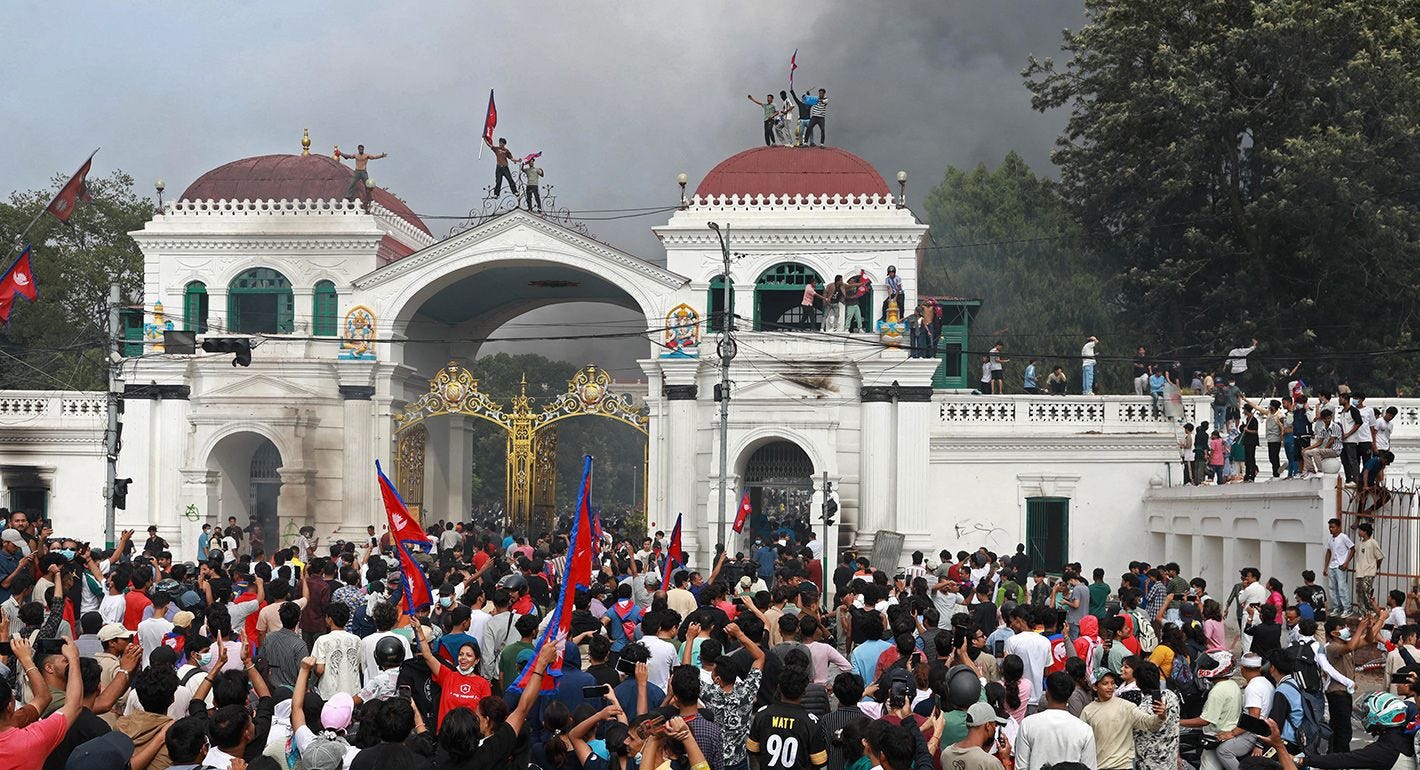
The existing order had ceded legitimacy—not by decree but by default. Corruption, nepotism, and unresponsive governance had broken the social contract. When institutions meant to protect citizens no longer honor their obligations, societies confront a question as old as time: How much injustice and dysfunction will a people tolerate before they reclaim agency? What will it take to restore balance?
Nepal’s youth answered decisively. They crafted a civic language rooted in local frustrations yet alive to global aspirations. They organized debates and votes on Discord, engaging thousands in real-time discussions about governance. Beyond protest, they demonstrated civic responsibility: cleaning streets, monitoring local initiatives, taking concrete steps to restore trust. Their efforts contributed to the appointment of Sushila Karki as Nepal’s first female Prime Minister, signaling a seismic shift in the political landscape.
The wave didn’t stop at Nepal. Climate strikers in Seoul, Free Palestine strikers in Italy, student activists in Jakarta, and tech-savvy organizers in Lagos and São Paulo are asking: If our old systems are fracturing, why not rebuild something better from the ground up?
This generation seeks coherence, not alignment with a single power, ideology, or economic hub. They are defining participation in a multipolar world as active co-authors rather than spectators. Nepal shows that the fracture of old systems can be an opening. When young people take both agency and responsibility, they illustrate a blueprint for regenerative leadership: act decisively, rebuild collaboratively, and orient toward a future that belongs to all.
These examples reflect the practice of ReCentering in a multipolar world. As global power shifts from rigid hierarchies to adaptive networks, countries and communities are redesigning systems to thrive in a world where no single power dominates.
Whether it’s students in Nepal or farmers in South Asia leveraging local knowledge and global tools or nations working together to stabilize energy systems, the strategies for ReCentering mirror each other at every scale, whether you’re a country or citizen of one. Those who embrace this shift are leading the way toward a more balanced and thriving future.
In a multipolar world, as you’ve heard me say often, resilience is no longer enough. Resilience asks: How many times do we get back up after getting punched in a system that requires us to get punched? Regeneration asks: “Why do we need to put up with getting punched? Why can’t we create something better so we don’t get punched? Essentially, “How do we redesign a better system for shared thriving at all levels of society?”
Here’s how:
1. Build Networks, Not Bunkers: Power now flows through webs of alliances rather than singular hierarchies and traditional powers, as countries realize they can create adaptive coalitions across conventional divides. Vietnam simultaneously deepens ties with both the U.S. and China, refusing zero-sum choices. Turkish drone technology connects conflicts from Ukraine to Ethiopia, creating new defense networks outside traditional NATO suppliers. Saudi Arabia joins BRICS while maintaining petrodollar arrangements. Your move: diversify every critical dependency and turn competitors into selective collaborators.
2. Start Local to Reshape Global: Community initiatives now create planetary butterfly effects. The Indian state of Kerala’s local 100% literacy campaigns became UNESCO’s global education model. Barcelona’s “superblocks” urban design spreads to cities worldwide. Rwanda’s monthly community cleaning (Umuganda) inspires similar programs across Africa. Your move: Explore and apply regional solutions with universal applications. Local and subnational actors are becoming primary change agents.
3. Design Flexible, Parallel Systems: Innovation thrives when new ideas test alongside existing structures. Brazil’s PIX payment system, launched in 2020, now handles more transactions than credit cards. Singapore tests digital currency while maintaining traditional banking. The Serum Institute of India creates parallel vaccine supply chains for the Global South. Your move: Create backup systems before primary ones fail, whether that’s local currencies, community mutual aid networks, or new supply chains.
4. Choose Solidarity Over Dependency: Transform vertical dependencies into horizontal partnerships. The Mekong River Commission unites former enemies in water management. Caribbean nations jointly negotiate pharmaceutical prices, achieving discounts no single island could secure alone. East African communities share mobile banking innovations that bypass Western financial infrastructure entirely. Your move: Identify who shares your challenges laterally rather than who offers unilateral solutions from high above. Build coalitions with peers facing similar constraints, as their innovations often translate better than top-down prescriptions.
5. Move from Resilience to Regeneration: Resilience asks “How do we endure and survive a broken system?” Regeneration asks “How do we thrive?” New Zealand’s Wellbeing Budget prioritizes long-term societal health over GDP growth. Costa Rica reversed deforestation while doubling its economy, proving growth and regeneration can align. Amsterdam’s doughnut economics offers alternative roadmaps for cities to thrive within planetary boundaries while ensuring no one falls below social foundations. China’s “sponge cities” manage floods AND harvest water to regenerate urban ecosystems. AI and algorithmic governance can either entrench old hierarchies or enable new forms of collective intelligence. Barcelona’s Decidim platform uses digital democracy to let citizens directly shape city budgets. We must persistently, relentlessly advance and advocate for systems that create participatory abundance, not exclusionary scarcity.
The question isn’t whether the world order is changing—that ship has already sailed from DC to Beijing, from Berlin to Brazil. The question is whether we’ll use this moment to perpetuate old patterns with new players, or regenerate something genuinely different.
The answer is being written in real-time, from Kathmandu’s streets to Brazil’s plenary halls, from Discord governance to lithium cooperatives. Every network we build, every parallel system we launch, every solidarity we choose over dependency: these aren’t just personal choices. They’re civilizational design decisions in this hinge moment in history.
As we navigate our own positions in this shifting landscape, we need to be asking the right questions. Ask yourself:
Which institutions still deserve your trust, and which are you ready to rebuild better?
How might your profession transform as power becomes decentralized rather than concentrated?
Where do you already see regenerative leadership emerging in your context?
How can you become one yourself?
The ultimate question is whether we can muster the humility and imagination to navigate this transition together. Not just survive it. Not just adapt to it. But use it to turn humanity’s great fragmentation into our great reweaving. We get to choose. Actually, we MUST choose — before they choose for us.
Thank you for choosing to join me,
Bian “B” Li
Next week in Part II: The Many Sovereignties explores how sovereignty itself is being reimagined across land, data, culture, and consciousness
Thank you for reading! If this piece resonated, provided insight, or fueled your fire, consider upgrading to a paid subscription if you’re able (for a cup of coffee a month). It keeps this work going.
Grateful for your support as we resist, reimagine and co-create a regenerative future together!
This post is public so feel free to share it!
Comments
Nothing yet. Say the first thing.
Sign in to join the conversation.