
Here goes! My digest on the new AI startup playbook..
As some of you know, I work on the ground as a fractional CPO and product advisor for startups and funds across the AI space.
On the one hand, I bring my expertise and knowhow to recognize patterns of what will and won’t work when it comes to launching and scaling new products (the old samey stuff).
On the other hand, I also notice the new ways of developing that wouldn’t have worked before (The new stuff // self-disruption!).
Startup building has changed (again) and this is what I want to talk about in this article.
The general ease of building software and the extensive capabilities of it have massively exploded since the pandemic. (for better or worse)
This is due to three technological reasons:
The mainstream rise of LLMs
The explosion of no-code tools and workflows
The explosion in levels of societal digitization caused by the pandemic
There are also societal structural changes that are caused or correlated to the rise of these technologies
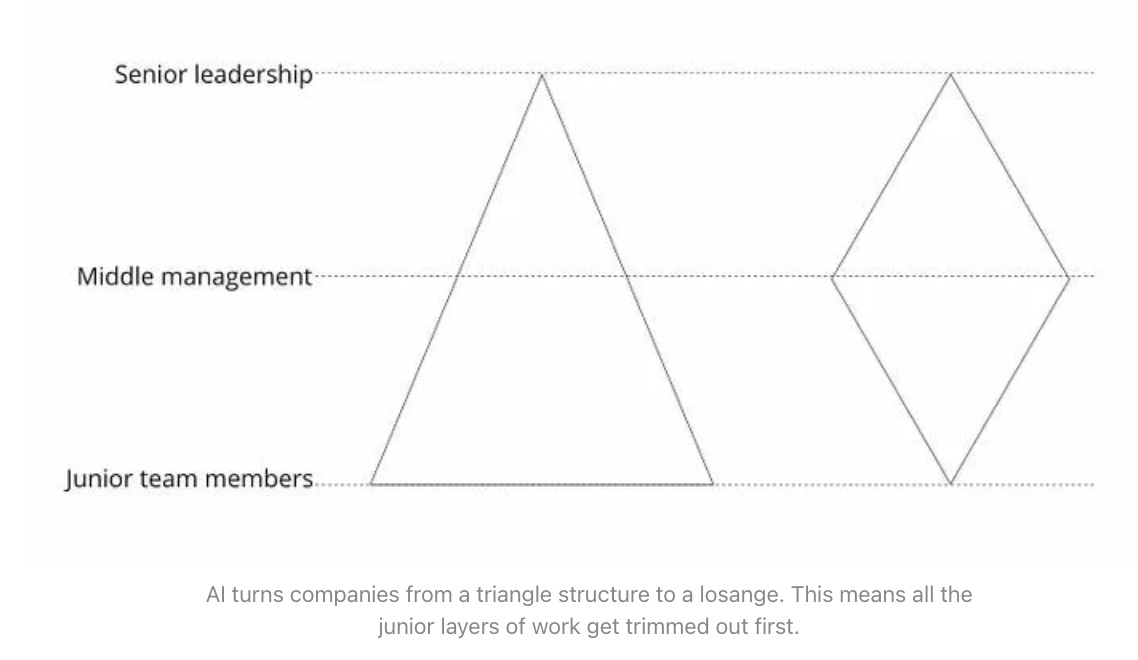
The (upcoming) sliming down of corporations, and massive layoffs due to automation
The replacement of public services with private (or at least) digital ones, since the public sector cannot keep up with most shifts from services to products
The geopolitical uncertainty of the moment, which paralyzes a lot of large corporations as long-term bets are harder to safely make
Peak disillusion with big tech, which makes people look for alternatives
The era of the monolithic internet is over.
Not just at the geopolitical level but also at the application level.
The lower barrier of entry to building software means that the market will be flooded with alternatives. Even though you cannot replace Facebook overnight, you can chip away at small niches one company at a time (Think of artisanal coffeeshops eating away at Starbucks market share).
People will want to use products that are closer geographically to them, more “vibe-aligned” and from people they trust. This leads onto the next point.
One result of this fragmentation is that brand trust becomes ever more important to stand out in a more crowded market. Especially in an era where digital products are perceived as predatory and untrustworthy.
As AIs become more intimately intertwined in their lives, people will seek to source products from people and teams they trust.
Think of it more as the way people source organic food from the local market or a car rather than some generic one-size fits all IKEA product.
As AI tools make content, copy, and branding easier than ever, your team’s personality becomes your edge.
The best products today feel human. Founders are visible. Messaging is authentic. No slick, corporate mask.
The more our lives are shaped by AIs, the more we’ll crave real, relatable products. If you cut the human touch, people will feel it, just like when a restaurant starts using cheaper ingredients.
In fast-changing markets, teams need autonomy not rigid tasks.
That means: share the goals, the why, the assumptions, and let teams figure out the how. They’re closer to the ground, and the "how" will keep changing anyway.
💡 Want a practical template for this? DM me, happy to share.
I’ve seen teams automate the wrong things.
You should not automate:
Customer conversations
Key parts of your conversion funnel
Messaging and brand-building
You should automate:
Internal processes
Repetitive workflows
Post-purchase experiences
Think: AI as your operations intern, not your strategist, PM, marketing manager or community lead.
Want to be AI-assisted? Then leave a trail.
Save your decisions, meeting notes, Slack threads, Miro boards. These are your fuel for future AI support.
Want help setting Q3 goals? Give your AI the Q2 retro notes.
Want to auto-fill your roadmap? Feed it your brainstorm sessions.
Traceability → better suggestions → smarter workflows.
Thanks for reading! I hope this was insightful, are there any other changes you have noticed I have not mentioned? DM me or post it in the comments! 💬
Thanks for reading Regenerative Products! This post is public so feel free to share it.
If you want to know more about how AI is changing society, subscribe to the Responsible AI Podcast link below:
No posts
Comments
Nothing yet. Say the first thing.
Sign in to join the conversation.