
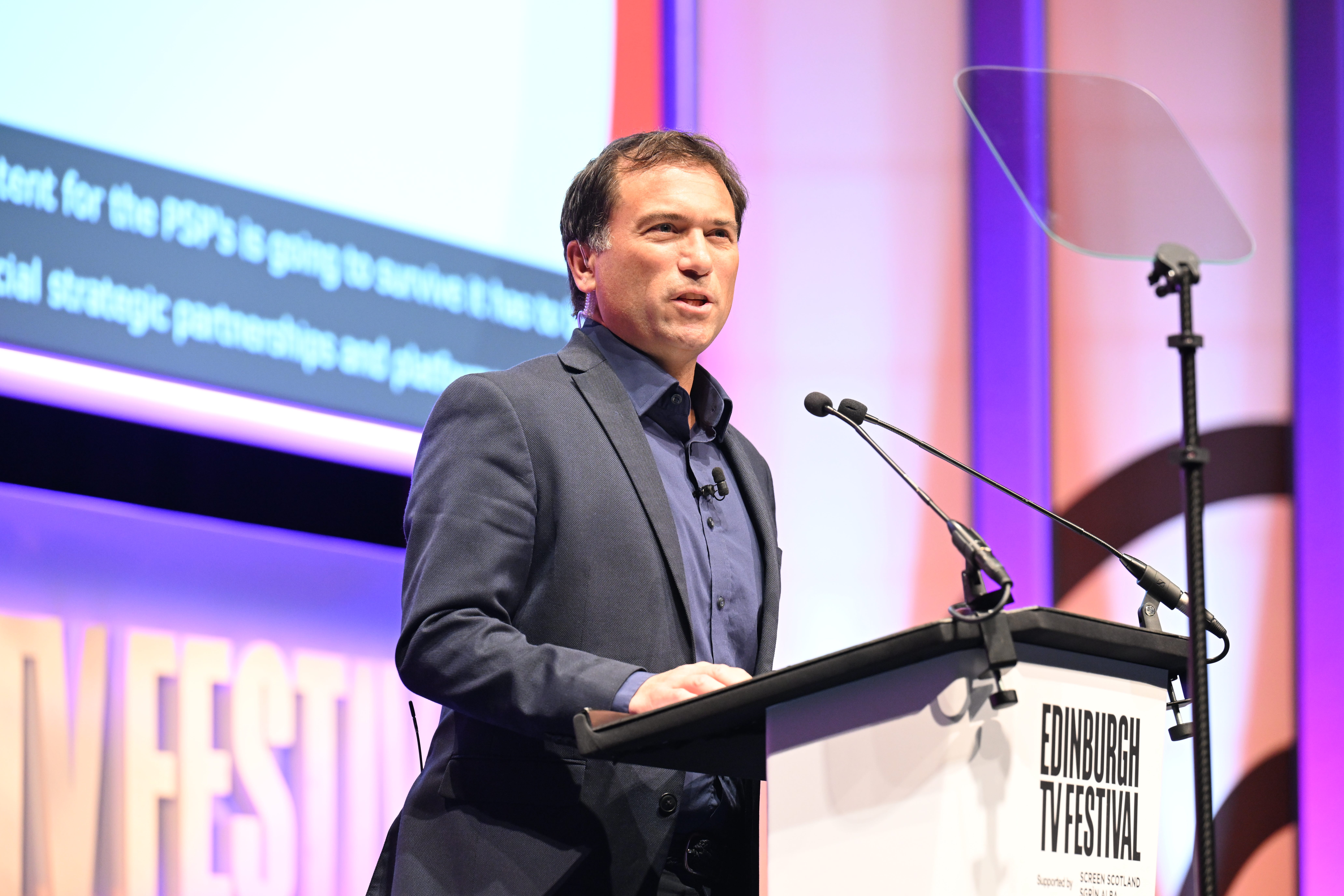
Spoken at the Opening Session, The Future is Now – TV’s Place in the New World Order. Thank you to session partner, Broadcast. You can find a full, cited transcript here.
Hello. Welcome to the opening debate of the Edinburgh TV Festival - thank you to Broadcast for supporting this session. It’s titled: The Future is Now – TV’s Place in the New World Order. And the Festival’s asked me to do a couple of things before we meet our panel.
First - to check in on what I said about the industry last year. A bit like marking your homework in front of a room of expert markers. I’ve taken that on. Then second - I’ve been asked to identify some key moments since we last gathered. And I’ve got, I think, 12 minutes to do this. Let’s see what I can do.
This time last year, I highlighted four factors.
1. The first was a shift in consumption. What people watch, and where they watch, was fundamentally changing.
It still is.
For example - in 2024, YouTube overtook ITV and became the second most-watched service in UK homes - after the BBC.
The BBC is on 19%,
YouTube on 14%,
ITV on 12%...
Among 16 to 34 years old - YouTube was the most-watched service overall.
And Ofcom sees a clear direction of travel.
It says: “If content from PSBs is going to survive, it has to be discoverable. That means forging commercial and strategic partnerships with platforms – and not treating them like the enemy.”
The shift in consumption continues at pace.
2. The second shift was the globalisation of British TV.
The next factor was the globalisation of British TV.
And look at this for 2024. Here are the top six global TV content providers: Netflix, Disney, Comcast, Google, Warner Bros. Discovery, and Paramount - for the first time they alone account for over half of the total global content spend. That has consequences in the UK.
In 2023, inward investment in High End TV made in the UK was 72% of the overall spend.
Last year it was 82%. That’s an increase of 750 million pounds.
In many different ways, UK TV is ever more directly affected by the global industry.
The third shift was advertising’s digital transformation. This is only going one way.
Last year, Linear TV ad spend fell 2%.
Video on Demand advertising rose 26% year-on-year in the first half of 2024.
Here are ITV’s half year results for 2025 - digital advertising revenue is up by 12% - by £26 million.
Advertising revenue overall was down 7% - by £65 million.
Digital revenue continues to go up - but it’s struggling to counter the fall in linear revenue.
My fourth factor was the centrality of technology. Especially to distribution.
This year, the BBC is spending £88 million, that’s $118 million on online & TV development. That’s a significant increase.
In 2024, Netflix put $2.9 billion into R&D - including new search and recommendations technology. That’s almost 10% up on the year before.
Broadcasters are still very much committed to their own VoD platforms. But there’s fierce competition.
And they are having to decide how much of their content to put on platforms such Tiktok and, in particular, YouTube.
The best technology is ever more vital to getting your content to audiences. That’s still exerting significant strategic pressure.
These four factors - Still crucial to understanding this industry. But what about the last year? You’ll have your own thoughts on the most important moments. I’ve chosen five.
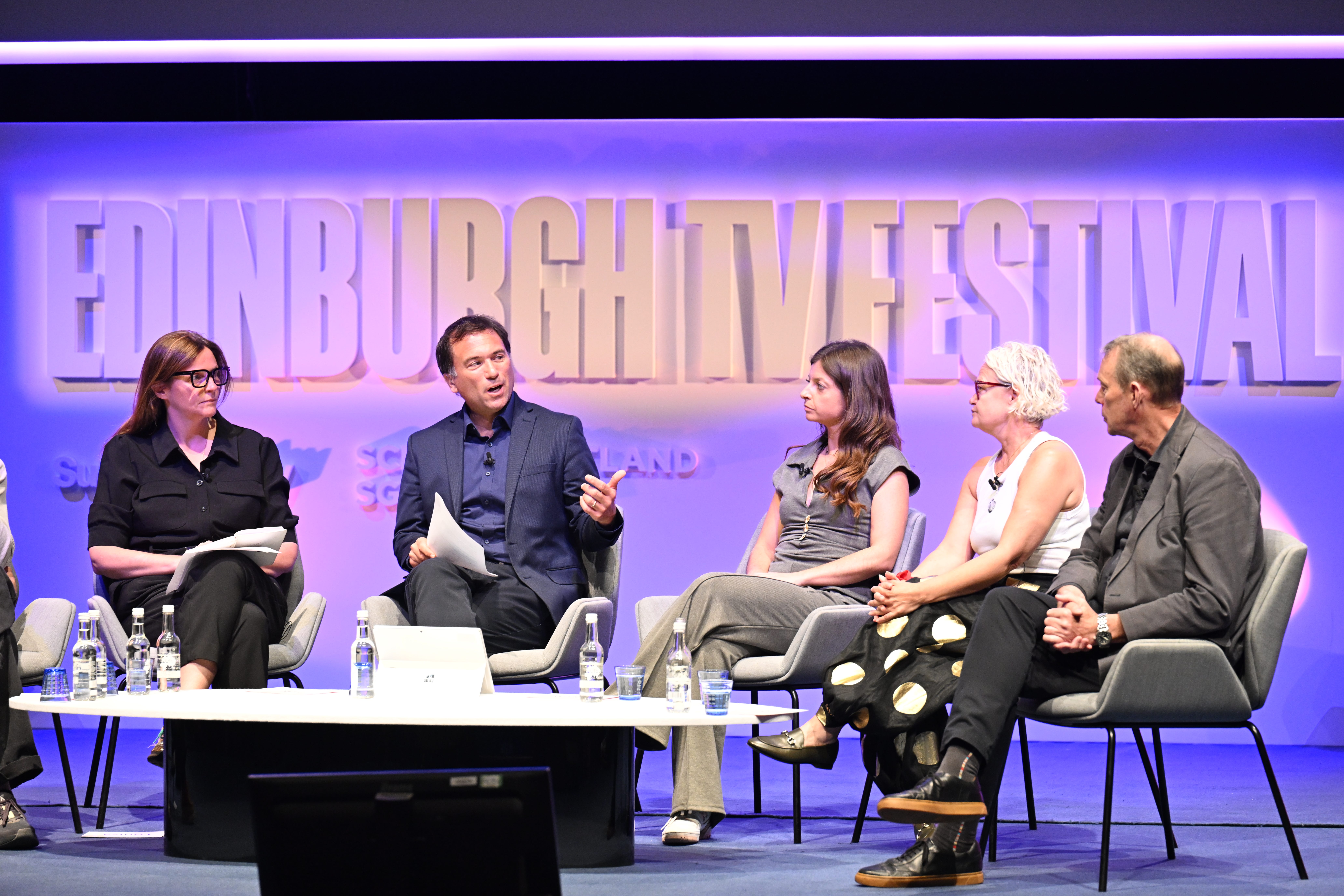
The first comes on 19 December. BeastGames launched on Amazon Prime. It was the most expensive reality show ever made. With the biggest cash prize of all time.
All built around a record-breaking YouTuber.
And yes, BeastGames was beaten in the international ratings by programmes that were cheaper to make, amongst others - Love is Blind and The Circle - but Beast Games will be back for at least two more seasons.
This was the creator economy making itself felt in the mainstream as never before. And it’s surely just the start.
2. Our next moment came on 20 January - when Donald Trump became US President again.
His hostility to businesses involved in news is long-standing.
Mr Trump sued ABC over alleged defamation. ABC settled for $15 million. He sued CBS over the editing of a Kamala Harris interview. CBS’ owner Paramount Global settled for $16 million.
After a Wall Street Journal article, the President is suing parent company Dow Jones and its owner Rupert Murdoch. So far, no settlement there.
President Trump prides himself on being different - and this is definitely a different experience for US media - especially those that produce news. That’s relevant to UK TV in a range of ways.
For example, President Trump also criticised NPR and PBS.
Accusing both of “Biased and partisan news coverage”.
He’s withdrawing all $1.1 billion of federal funding. And here’s why that matters to UK TV.
PBS has a co-production deal with BBC Studios. It’s resulted in over 250 hours of premium content in the last decade. Channel 4 also has a longstanding partnership with PBS. The loss of federal funding raises questions about how these partnerships will work.
Donald Trump’s hostility to sections of the media is not going anywhere - nor is his unpredictability - which he sees as a strength. But it does make things... unpredictable - for US media - and anyone who does business with it.
3. Our 3rd Moment came on March 13th - Adolescence was released on Netflix to huge critical acclaim. And the ratings followed.
It became the first UK streaming show to top the weekly British ratings chart.
Globally, within 3 months Adolescence was the second most viewed English Language series on Netflix... there’s ever been.Wednesday is number one - in case you’re wondering.
Adolescence featured a UK cast, a UK production, a UK story - but it wasn’t on a PSB - it was on a US-owned streaming platform.
And Wolf Hall director Peter Kosminsky told my BBC colleague Katie Razzall
“The BBC or ITV would wish to make Adolescence, but let’s be absolutely clear, there is no way they could make it at the moment.”
“Because the cost of making it has increased radically, directly as a result of the streamers coming and making their programmes here. Nobody disputes that”
Adolescence writer Jack Thorne argued the broadcasters could have made it - but “It would have been a slightly different version of it” - because of cost.
And there is no dispute that costs are rising - and that UK broadcasters are spending less on high end TV. The spend on HETV fell by 25% year on year in 2024.
The lessons we should draw from Adolescence are contested. But it brought to the fore questions around how to turn the best British stories into the best and highest impact television.
So three moments - BeastGames, President Trump’s return, Adolescence. Two more moments for you.
Number 4 - is about Channel 4. On the 21st May it announced plans for in house production.
Channel 4’s creation in 1982 was in part to stimulate and grow the independent production sector. Now, with this announcement, it was becoming a supplier -in competition with that sector.
The new division, we were told, would help Channel 4 invest in Intellectual Property (IP) ownership.
And then CEO Alex Mahon offered reassurance - saying: “Indies will always be the lifeblood of Channel 4, and this new direction is an essential element of our strategy to underpin the long-term sustainability of Channel 4”
But not everyone was convinced.
Wayne Garvie of Sony Pictures Television was direct: “It won’t work...” he said.
C4 doesn’t own IP and has no knowledge of how to run it.
It could be potentially disastrous given C4’s limited resources.”
Channel 4 begs to differ. But this moment - and the reaction to it - highlighted the vital importance of IP - and the difficulties in the indie sector.
In 2024, total revenues earned by UK production companies grew - but only by 1.4% - or £49m. International business was important to that growth.
Because look at revenue from UK commissions - down to £1.74 billion.
And that is having consequences.
According to BECTU, 7 in 10 screen industry workers are struggling financially.
The issues in the production sector go deeper than the relationship between indies and Channel 4. But the announcement of Channel 4 Productions highlighted the pressure that both are under.
5. The 5th and final moment came on 27 February,
The BBC’s Chief Content Officer Charlotte Moore announced she would step down.
Two months later Alex Mahon of C4, did the same.
Two pivotal roles would be changing hands at a pivotal time.
For the BBC there is an awful lot at stake. And it has a story it wants to tell.
In September 2024, Charlotte Moore said ‘Our digital transformation strategy is working’
As evidence - the BBC announced that iPlayer was the fastest growing VOD service in the UK.
The BBC’s good news kept coming. On Christmas Day, it delivered all of the top ten of most viewed programmes.
But, for some, there are also reasons for concern - if we look beyond linear. In the most recent data for total video viewing for individual services in British homes - so this is everything - TV and video, short, medium and long-form.
Recent data shows iPlayer on 4%.
Netflix on 8%.
YouTube on 14%.
This is all relevant as Charter Renewal approaches.
In a speech in May, BBC DG Tim Davie said: “When it comes to funding we are not asking for the status quo. We want modernisation and reform. But in doing so we must safeguard universality.”
That universality means making content that is relevant and popular across our society.
Leading the BBC’s effort will be Kate Philips - who’s replaced Charlotte Moore.
The decisions she takes will be crucial as the BBC heads into Charter Renewal.
As for Channel 4 - we wait on who will be its new CEO. But the challenge is no secret - establish a new business model away from linear advertising.
Channel 4 says its Fast Forward strategy is working towards just that.5556 Its digital revenue was up to 30% of total revenue last year.
But to some, fundamentally, this doesn’t look viable - for Channel 4 - or PSBs as a whole.
Sir Peter Bazalgette, the former Chairman of ITV said: “We don’t have a strategy for their survival (public service broadcasting). It’s that serious.
“Mergers may well be part of the answer.”
Or Lord Vaizey, the former Culture Minister:
“The UK only has room for two domestic broadcasters.”
Needless to say, that is not universally accepted. But the very structure of public service broadcasting is in play as these new leaders take the reins.
Their decisions will have a major bearing on the future of PSBs.
These are five moments, there are many more.
This year has given us more detail on where this industry is heading. And - lest there was any doubt - it’s shown the speed and scale of the change the industry is navigating.
Thanks for listening.
Comments
Nothing yet. Say the first thing.
Sign in to join the conversation.