
In the modern music business, Goliath doesn’t fall overnight. He dominates for decades until the cost of letting him keep winning becomes too high for everyone else, and the game itself is forced to change.
People may argue that the United States is a highly market-driven economy with lighter guardrails than most Western peers. In many ways, it is. Some American politicians have for decades blamed societal problems and inequalities on too much regulation. Too many laws making lives for entrepreneurs and business moguls, the so-called “job creators,” too difficult. Remember the term trickle-down economy? Yes. Part of the same playbook.
However: In this business-friendly environment, there is still one major federal regulator and prosecutor: the U.S. Department of Justice. And they are not to be sneezed at. When they go to town, they do so with guns blazing. If they don’t think there is at least a 90% chance of a verdict in the People’s favor, they wait and keep building their case until they get there.
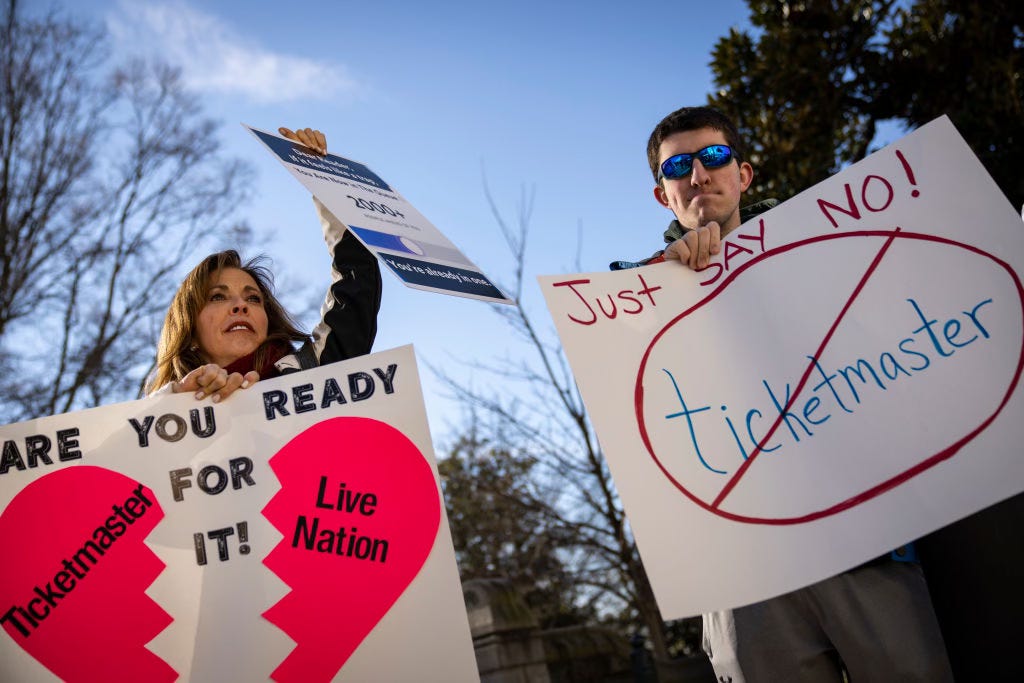
Perhaps this explains why it took 16 years from their merger before a U.S. jury had the opportunity to conclude that Live Nation and its ticketing arm Ticketmaster’s stranglehold on the live music business, is an illegal monopoly.
Over 30 U.S. states, with California being at the core, forced this case all the way to a jury verdict after the DOJ accepted a partial settlement with Live Nation. The implications are huge: the dominant gatekeeper of the live music economy has been called out and may now be forced to break apart.
To understand why this matters, we have to understand how power has been concentrated.
For years, Live Nation didn’t just promote concerts. It also:
controlled major venues (over 400 venues in total worldwide)
owned the ticketing infrastructure
dictated terms across the entire value chain
locked artist in with large financial tour guarantees leaving independent promoters unable to compete
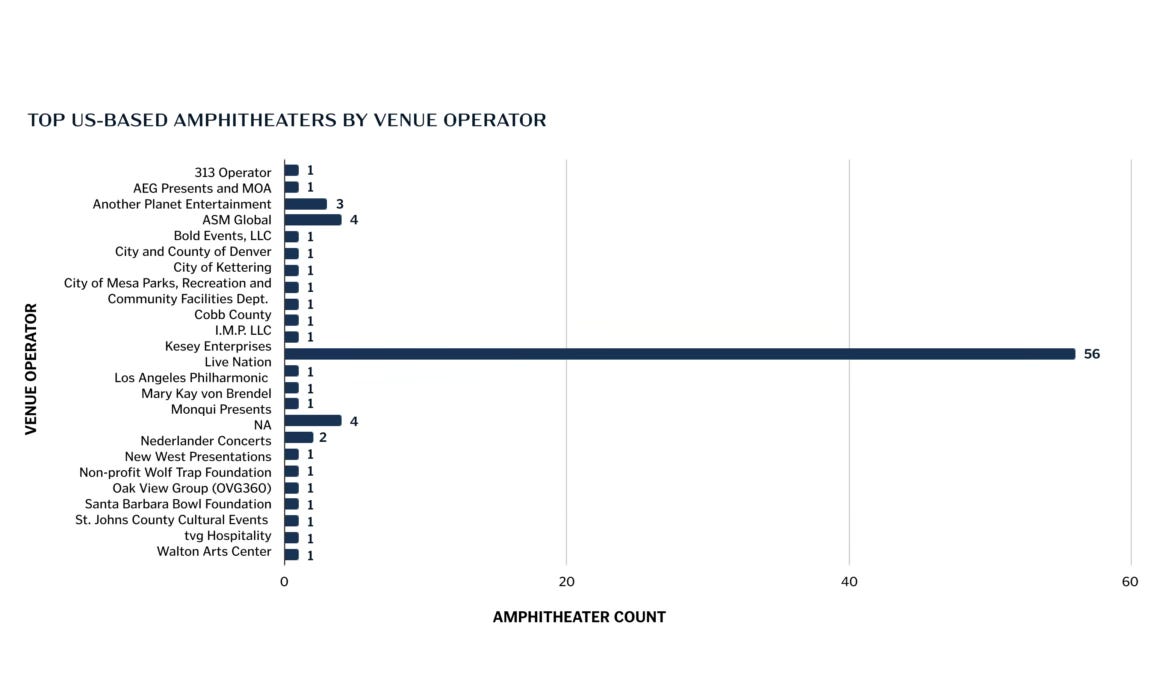
In the United States, Live Nation controls 78% of the large amphitheaters, and 42 out of the top 50. Just think about that. The same entity controlling access, distribution, and monetization. If you want to tour at the highest level, they are really the one and only option.
And now a jury has found them to be operating as an illegal monopoly.
With such an enormous control over live music in the United States, and great influence also internationally, there have been fewer choices for artists, fewer venue alternatives, and higher fees and less transparency for fans.
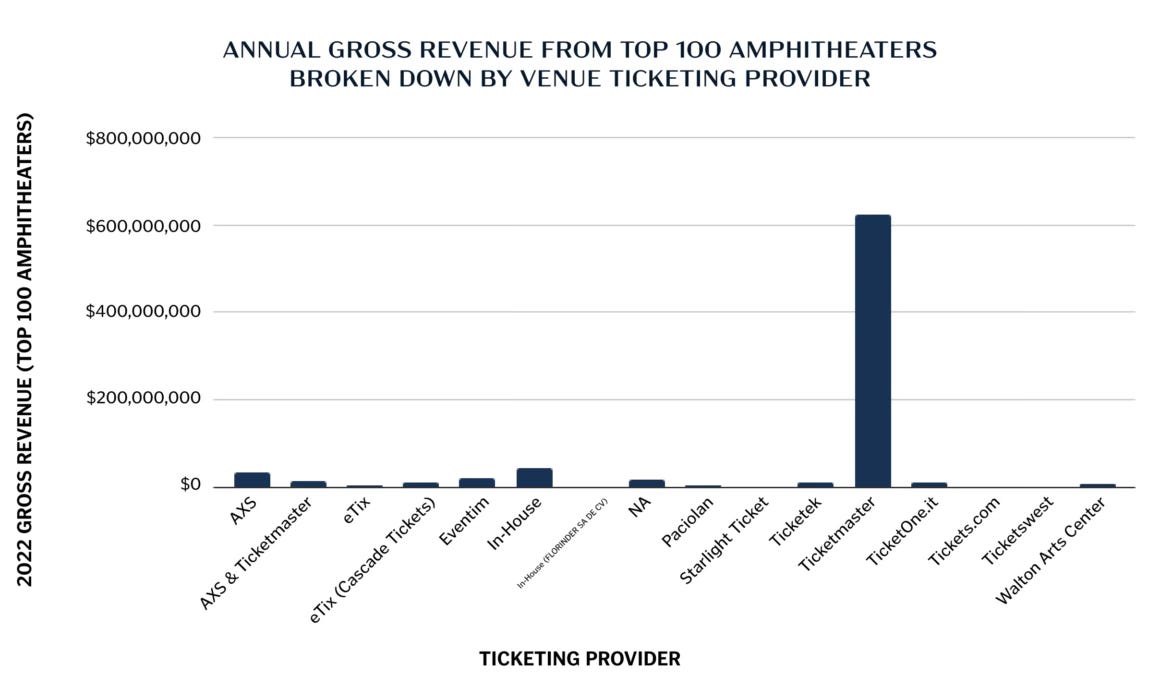
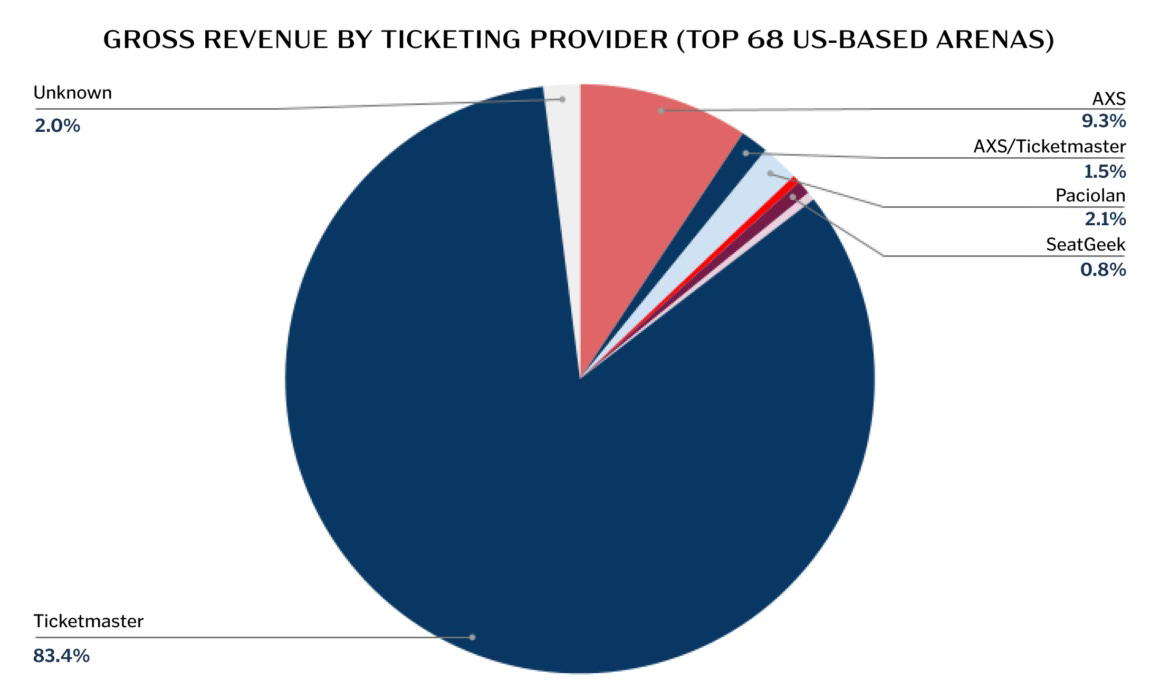
On June 15, 2023, Krista Brown wrote a policy brief for the American Economic Liberties Project, in which she shed some light on Live Nation’s and Ticketmaster’s dominance.
Here are some illustrations from that paper to demonstrate this point:
What the U.S. is now calling illegal, is in many ways what the Nordics never fully allowed to happen. In Scandinavia, Live Nation is still powerful, but without owning the infrastructure. They rent or partner with venues instead. Quite the opposite of what Live Nation have been able to do in the United States.
How come the difference?
It goes back to that highly market-driven economy I mentioned earlier and can be summed up in these bullet points:
United States:
Consolidation allowed over decades
Private ownership of venues and promoters, which then makes it much easier to sell to the highest bidder (which turned out to be Live Nation in most cases)
Ticketing integrated into the same system
Scandinavia:
Stronger public/private separation of venues
Municipal or independent ownership of arenas
Less tolerance historically for vertical integration (meaning a company is less likely to be allowed to expand control across multiple levels of the supply chain; in this case, owning venues, ticketing, producing shows, and managing the artists)
The structural difference is quite clear.
For years, breaking the U.S. touring market has required navigating a tightly controlled system:
limited venue access
promoter relationships
ticketing infrastructure that few outsiders could influence
If competition increases, even slightly, that changes the equation in a meaningful way. For a mid-level Nordic artist trying to build a U.S. presence, even small shifts in access, flexibility, and deal structure can be the difference between getting a foothold or staying locked out.
This verdict is the beginning of a long process with appeals, restructuring, and new players entering the market. But something fundamental has already changed in that the gatekeeper has been bruised and challenged. For artists, for fans, and for anyone building a music career across borders, that matters a lot.
Exploring Nordic creativity from the inside of the global entertainment industry.
If you believe the future of music, film, and culture is being shaped at the intersection of markets, policy, and creativity, you’re in the right place.
Subscribe for weekly insights, and, if you can, upgrade to support independent analysis from Los Angeles with a Nordic lens.
Thanks for reading Reels & Riffs! This post is public so feel free to share it.
Comments
Nothing yet. Say the first thing.
Sign in to join the conversation.