
If the ‘generic ballot’ is to be believed, Democratic candidates should sweep the country 99 days from now. The spread between the two parties is a rough indication of the unhappiness with Donald Trump’s presidency, depressed GOP turnout, and enthusiasm for Democrats (in that order.)
What should be an electoral TKO, however, is shaping up to be a win on points: Enough to secure the US House, some key state races, maybe a surprise or two, but short of 2018’s blue tsunami. As is the case with most political parties, the Democrats themselves are to blame for their issues.
Author’s Note: My dad once said that if campaigns spent as much energy on their opponents as they did fighting themselves, they’d never lose.
Their problems are manifold: Ideological, temperamental, strategic, financial, and organizational.
Of Two Minds
We must acknowledge the Democratic Party’s ideological issues are not ‘progressive’ vs. ‘establishment’ or cultural, but economic. The moderate, moneyed power-brokers don’t even pay lip service to the party’s working class history unless it polls well. Or, like Rahm Emmanuel (D-La La Land) they talk about how hard life is for working people in an attempt seem ‘normal’ or ‘relatable’ or ‘authentic.’
The Bernie Sanders/Alexandria Ocasio-Cortez wing of the Democrats are painted as ‘divisive’ because they’ve dared to challenge the class and economic orthodoxy of the polling/data/focus group class. Candidates like those that won Congressional primaries in New York City and Denver, Colorado, fought campaigns focused first on change, and then economics.
“In a time of universal deceit telling the truth is a revolutionary act” is a quote attributed to George Orwell. For those outside the centrist/establishment belt, the audacity to point out the Democratic Party has no identifiable belief system is obvious. If the moderates love polls so much, they should remember their party is still unfavorably by most Americans.
This multiple-personality disorder is alive and well in Michigan’s US Senate primary. Abdul El-Sayed, the progressive candidate should be the Democrats’ dream candidate. Here’s how The Guardian described him in a recent profile:
“Instead, as a student, he was a starting defenseman on the University of Michigan lacrosse team, vice-president of its Muslim Students Association and, in 2007, the university’s first Rhodes scholar in years. He studied at Oxford, attended Columbia medical school and eventually entered public health, rather than private practice.”
His offenses? Outspoken criticism of Israel, promising not to vote for Sen. Chuck Schumer as Democratic caucus leader, and pointing out that we’ve transitioned from capitalism to oligopoly.
The Establishment is represented by Congresswoman Haley Stevens, an Obama Administration appointee, moderate stalwart, rank-and-file member, who is openly supported by Schumer’s campaign apparatus. Referring to herself as a ‘workhorse’ she brings the folksy, goofy, campaigning only a native Michigander could pull off, accent and all.
Stevens has the money and the establishment on her side, and that may be enough. But Democrats would do well to remember that blunt force and overwhelming negative ads do not equate to support or enthusiasm.
So here’s the rub: If El-Sayed wins, there is an even-money chance DC Dems won’t support him in the General Election against former Congressman Mike Rogers. Stevens has a similar issue: Should she win early next month, there is a sizable portion of El-Sayed’s voters who’ll skip the Senate race.
Who’s In Charge Around Here?
Finding three less charismatic national leaders than Rep. Hakeem Jefferies, Chuck Schumer, and DNC Chair Ken Martin would appear near-impossible, but the Democrats have done it. All three are case-studies in how depressing entrenched, monotone, party bosses can be to the party faithful. None of them would’ve been elected 7th grade president but somehow here they are. They’re like the early 1980s Soviet Politburo without the personality.
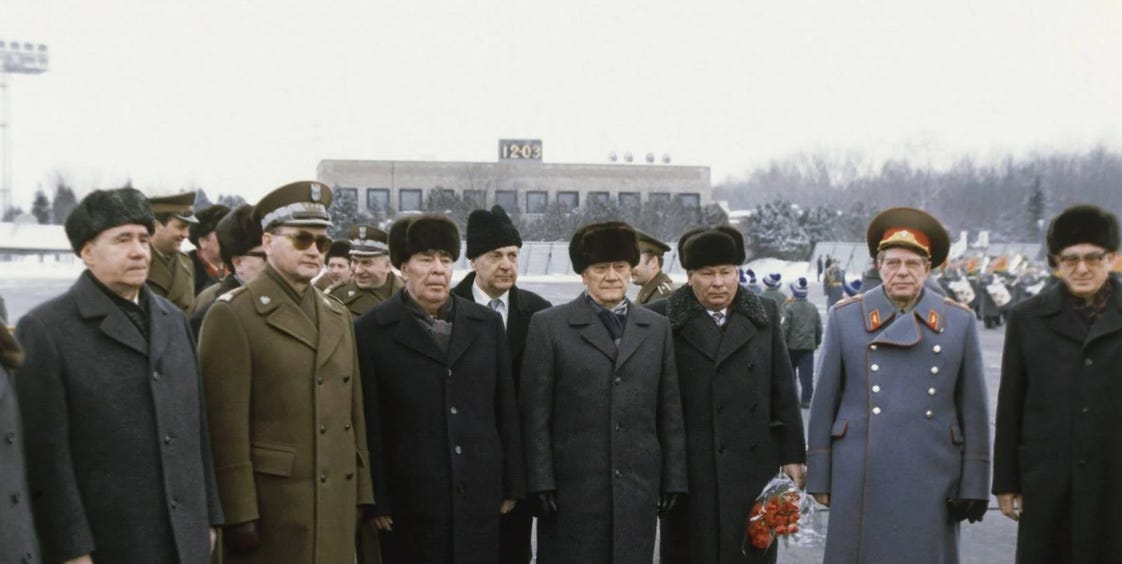
There is a trope that campaigns are reflections of their candidates. In the Democrats’ case, the party is a reflection of its leaders. No one knows what they believe in, they’re energy vampires, and nobody is following them once more into the breach.
Icons like President and Mrs. Obama still command respect and affection. Their opinions on the internal workings of party apparatus hold real sway. Now, a decade out of the White House, tens of millions of young Democratic voters don’t have hold much, if any, recall of their time in office. Time aside, Donald Trump’s presidency’s have blasted our collective memories.
The gaggle of 2028 wannabes want to be seen as national leaders, and some have had their moments in the sun. Until after Election Day, though, they’ll tread lightly, trying to make as many friends, and pick as many winners as they can. Their actions, though, are rooted in ambition and self-interest, not for the good of their party.
Without national and regional leaders to listen and look up to, many mid-term voters, already too small a number, will wait and see how their local races shake out. Maybe they’ll show up; the odds aren’t great.
Strategery
Without a president in the White House, the Democratic Party splits into specific campaign committees at the federal and state levels. Schumer has to raise money for his races, which may take money away from Jeffries’ efforts. The DNC is broke (more on that later) so no one is counting on them for anything. The governors, attorneys general, and legislative committees are all competing for less dollars. Many Democratic donors, still smarting from 2024, have kept their pocketbooks closed to committees, preferring to give to candidates directly.
This dynamic, coupled with the ideological differences I mentioned above, makes a national, concerted strategy impossible. Rather than focusing on an unpopular Republican Party and its unpopular leader, or an unpopular war, or ‘kitchen-table’ issues, the various factions have to out-pitch their party-mates for precious campaign dollars.
Meanwhile, the Republicans reload.
This is going to shock you: Elections happen every two years. We even know what day they’ll take place, way, way ahead of time. And yet, the Democratic Party is unable or unwilling to use the time between elections to construct a coherent, multi-year, multi-cycle plan that will provide some roadmap to supporters, donors, and voters. Without a blueprint, every election becomes another exercise in holding on for dear life and hoping the base shows up.
Buddy, Can Ya Spare a Dollar?
The Democratic National Committee had to mortgage its building to secure a $15 million line of credit. I don’t think Ken Martin is the right guy to chair the DNC, but he has worked under impossible conditions: He’s not a principal in his own right, he took over after Kamala Harris’ campaign raised and spent billions only to still be in debt, and under the pressure of a spotlight causes all but the toughest characters to wilt.
Other Democratic-aligned committees are hurting for cash, too, as Trump’s allies rake in cash from plutocrats and big businesses looking to get a favorable nod. With the recent Supreme Court decision that allows party committees to coordinate directly with candidates on paid advertising, some outside groups will be left without the resources they’re expecting. Grassroots organizations, which have sprung up across the country as the national and state party organs have gotten out of the field-program business, are also hurting for the money needed to run their GOTV programs this fall.
Democratic Donor sentiment is downstream of all this. “What difference does it make?” One donor said to me. If they put $1 million on top of $1 billion in television ads, how much impact will their contribution have in late October? With no broader project, the donor class has become hyper-transactional: Show me you can win and I’ll consider giving you money.
De-Constructed
All of the noise, all of the money, all of the speeches, the tweets, the TikToks, the reels, they’re all supposed to be in service of ONE THING: Convincing a voter to participate and vote for your candidate on a Tuesday in November. That’s it. The rest is bullshit.
Democrats’ results in November are contingent on this fact, which for some reason seems to be an afterthought rather than the party’s modus vivendi. If we know that voter turnout in midterm elections doesn’t often reach 50%, then it tracks that every extra tenth of a percentage in turnout can have a massive impact in a given district or state.
Rather than put resources, energy, and real leadership into year-round organizing, voter registration, and party building, Democrats rely on large donors, super PACs, and late TV buys to eke across the line.
Without a stable foundation, local candidates aren’t recruited. County races aren’t won, and no bench is built for future elections and opportunities. Without a stable of available candidates, newcomers like a Graham Platner arrive on the scene.
Having spent a lot of time going door to door the last five years, I’m not surprised that ‘democracy’ isn’t a motivating message, that voters ask why they’re only hearing from us for the first time in October, or why they’re not buying what’s being sold. Politics is an emotional endeavor. Citizens need some connection to the people for whom they’re voting and Democrats spend too much time studying the brain and no time appealing to the heart.
To be successful in 2028 and beyond, the party must commit time, leadership, and resources to, you know, talking to people when an election is just days or weeks away.
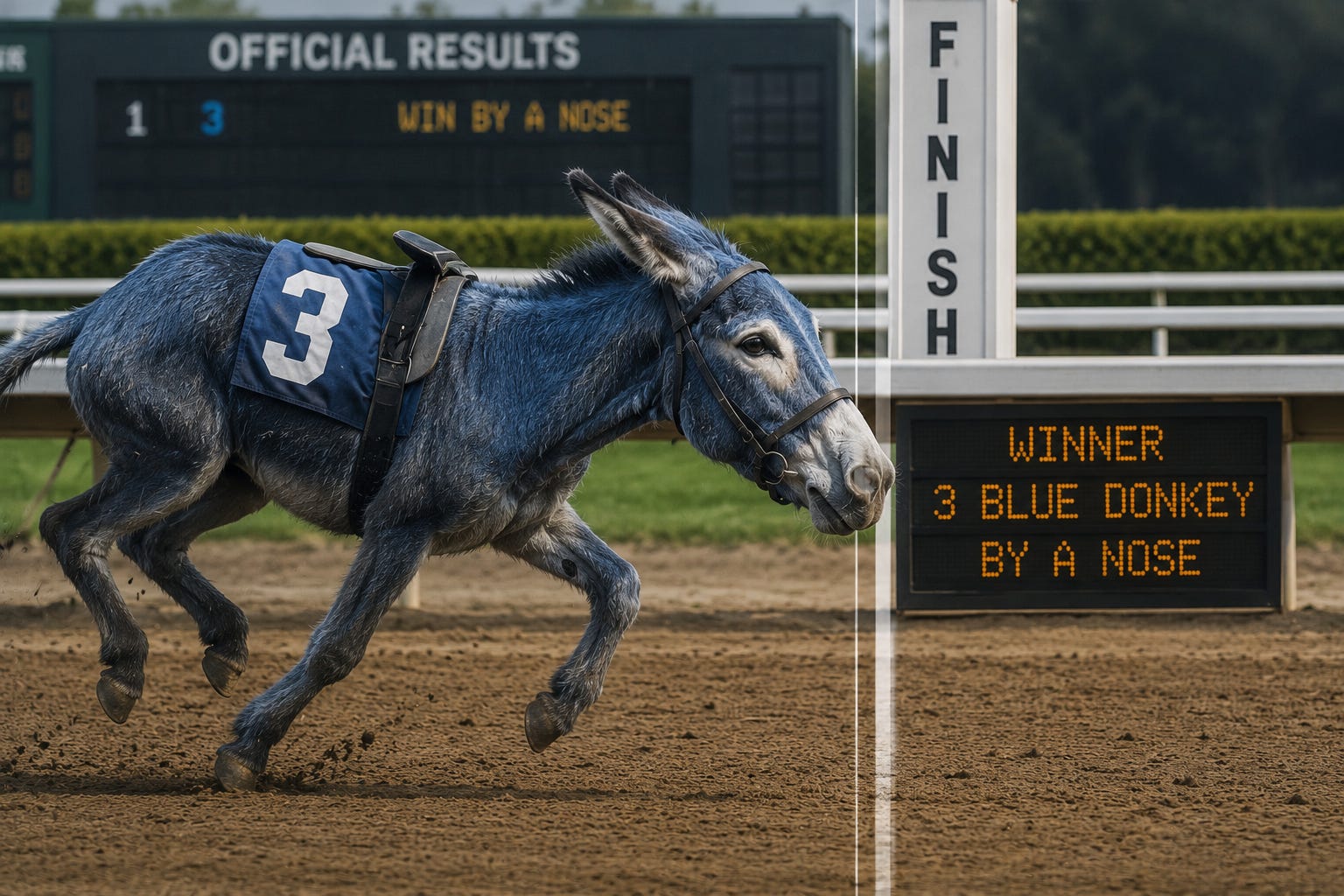
By A Nose!
Donald Trump is hovering around 30% approval. His war in unpopular. His policies are unpopular. His act is wearing thin. Trump by himself may help Democrats to some victories in November, but he alone isn’t enough to create the tidal wave of rejection that America needs to turn the page on his decade at the center of our lives.
Until and unless the Democrat Party sees politics as more than winning just enough, or being happy that they’re just in the room, they won’t have the success they should, or the country requires to put itself on a different path.
Comments
Nothing yet. Say the first thing.
Sign in to join the conversation.