
I have been saying this newsletter was "coming soon" for about a year now (eek!), so voilà! It has come! Thanks to those of you who subscribed in advance of any content, and who encouraged me to share my thoughts. I so appreciate your support.
So there’s this thing on Instagram right now that many of my favorite artists are doing. It’s called #marchmeetthemaker, and I’m learning so much about these people whose work I enjoy every day. I don’t quite have the attention span to keep up with daily Instagram posts for a month, but I thought I’d try to approximate the concept in my own way.
Quick bio: I’m Maddie Maher (last name pronounced “Mar”; Maddie is short for Madeline). I live in Fort Collins with my husband, Jens, and our dog, Sophie. I grew up moving around various European countries. My family left the US when I was 6, and I moved back at age 23, mostly because maintaining a European work visa during a recession became too difficult. It’s been a decade since I moved to Colorado, and I’ve now lived in Fort Collins for longer than I’ve lived anywhere else (7 years this year). I’ve had a lot of jobs and training in some wildly different fields (middle school math teaching, botanical field inventories, computer programming, linguistics), but in my most recent chapter of life I am a botanist/gardener/teacher/artist. I have a Master of Science in Botany from Colorado State University, and until last year, I taught Plant Identification there. The “gardener” part is how I’m currently earning money; the “artist” part is how I’m spending a lot of my time. I teach botany in a volunteer capacity sporadically throughout the growing season, mostly through interpretive hikes.
Where does “red soil seeds” come from? Initially, I wanted to start a seed business, but there were a lot of obstacles (some practical, some regulatory) that I found overwhelming and difficult to navigate on my own. I still hope to offer seeds and seed-collecting services in the future, but for now the “seeds” in my business name are seeds I plant at clients’ houses. “Colorado” refers to the reddish soils we have in this part of the world, hence the “red soil” part of the name.
My style of gardening is what some call “lazy gardening,” and while that notion appeals to me in a way, it’s unnecessarily derogatory. I prefer to think of my approach as easygoing and naturalistic, creating a landscape that can largely take care of itself, and that supports populations of native fauna by providing food and shelter. Hallmarks of this approach:
I use primarily native plants with some non-invasive, xeric non-natives thrown in the mix.
I don’t use landscape fabric. Instead, I usually use wood mulch from tree trimming operations, with cardboard underneath as a temporary, biodegradable weed barrier.
My plantings have a lot of variety and are species-rich. I try to include lots of different plant families, flower shapes, and features (nectar, berries, tasty leaves) that will feed different fauna.
Trimming and pruning are infrequent and primarily for plant health. I tend to mulch my trimmings on the spot, and I avoid any trimming until after the last frost. This allows the creatures, especially insects, sheltering in the leaf litter and dry stems, to emerge in the spring without being disturbed. Leaves are allowed to accumulate where they fall.
Watering is done as infrequently as the plants will tolerate in their various growth stages.
Connected to this gardening philosophy: I am a proud haver of ADHD. This is the way I prefer to say it — “I have ADHD” is accurate but makes it sound like an affliction, and while it sometimes absolutely IS an affliction, it’s such a big part of me that it’s unhelpful for me to think about it that way. I received a diagnosis about four years ago (just in time for the pandemic to kick off!) and it has been a HUGELY helpful step in understanding myself and the way I work. And while many of you will not be gardening through the lens of neurodivergence, you have your own special lenses and situations, and my hope is that sharing some of my gardening challenges will help you tackle some of your own. Native-plant gardening appeals to me for so many reasons (I’m sure I’ll get into each of them in future newsletters), but perhaps the biggest reason is that it takes remarkably little effort from me to reap huge rewards that continue to grow and evolve with each season.
Here are a few early-season bloomers I’m looking forward to seeing in my garden and planting in clients’ gardens this season. They are all native to the Front Range and are good garden plants that require little work to maintain. My two favorite native-plant nurseries in the area are High Plains Environmental Center and Harlequin’s Gardens. They produce reliably strong plants at fair prices, and their staff members are incredibly knowledgeable.
Boulder raspberry/Rubus deliciosus
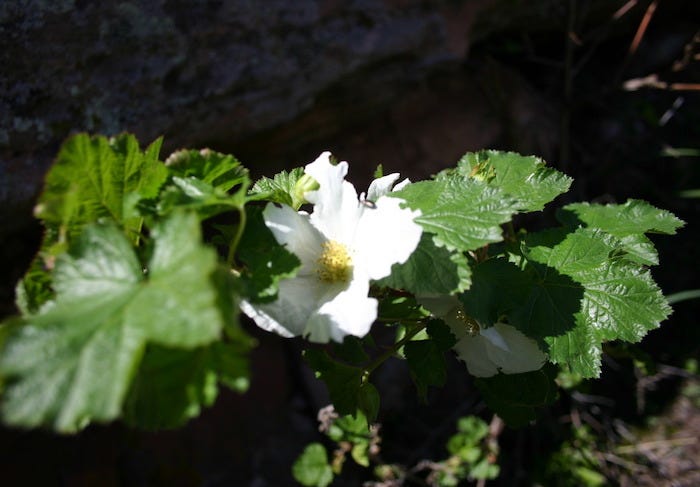
While the scientific name makes this native shrubby raspberry sound tasty, it isn’t very tasty to humans. The flowers, however, are absolutely stunning in the spring, and these plants will go from sort of invisible brown twiggy things to lush large-leaved shrubs to an explosion of large, white flowers over a couple weeks. This is my go-to shrub for dry shade. I hope to see more of these in nurseries this year — last year they were a little hard to find, hopefully because demand is so high!
Saskatoon serviceberry/Amelanchier alnifolia
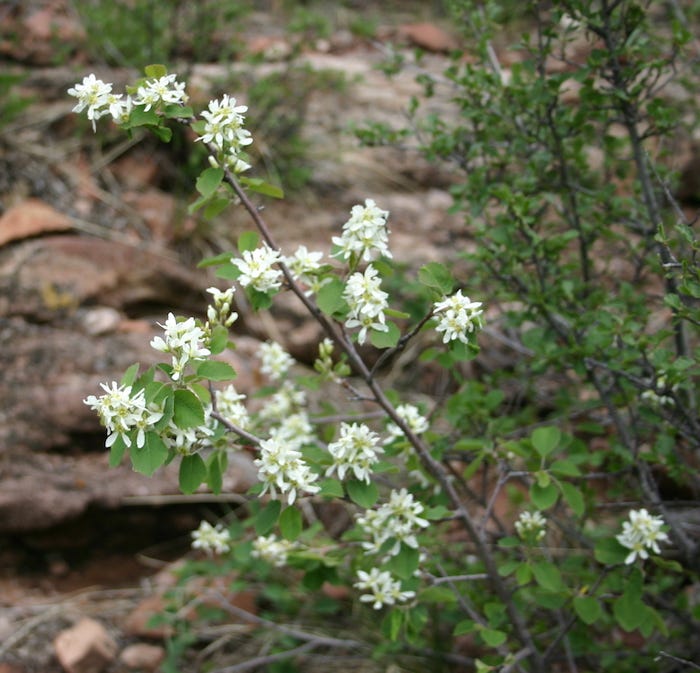
A large shrub or small tree, serviceberry is an absolute star in the garden. The berries are absolutely delicious come June or so (if you can beat the birds to them), and the branches are covered in unusual, star-shaped white flowers in the early spring. The leaves are also attractive — they’re bluish-green with a pink tinge on the margins. They need moderate water for some of the season (in the mountains I often find them where snowmelt runs off a hillside), but they’re otherwise not too fussy. If you want to have serviceberry around but are concerned about giving it enough water, try planting it in a north-facing place that will stay a little wetter and cooler.
Western spiderwort/Tradescantia occidentalis
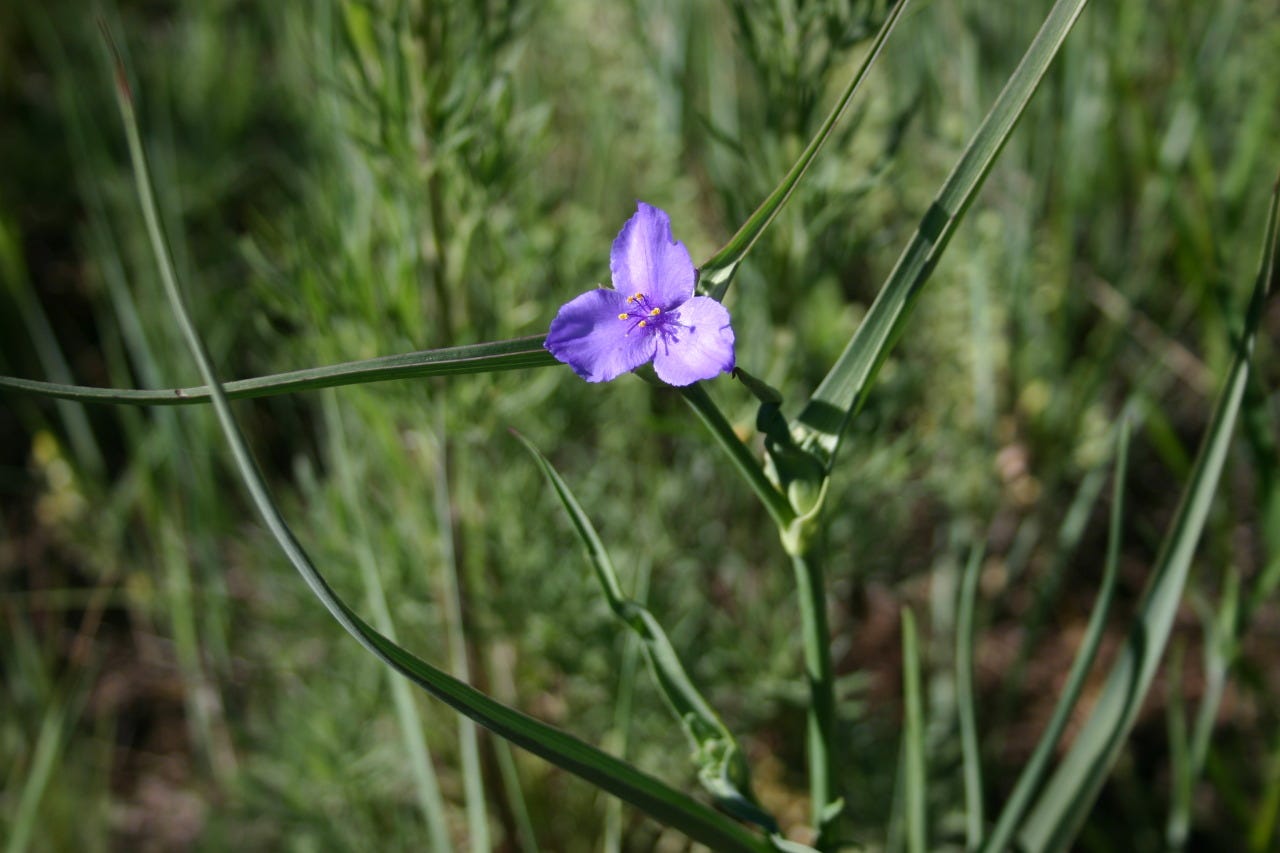
This is a long-blooming, delicate-looking (but tough) plant with large blue-violet flowers that starts blooming in early spring and continues through the summer. Plant a bunch of them together and expect some to be eaten to the ground by rabbits (or physically deter them with a barrier). Apparently spiderwort is a rabbit delicacy. The plants do come back from this pretty consistently, though! My favorite thing about these flowers is the fuzz on the stamens. The flowers also look kind of alien just before they start to bloom. They can take some shade, but full shade in my experience is too much for them. Dappled shade they can work with.
Soil blocking. Annemarie Fussell — local plant person, community organizer, and restoration worker doing important and brilliant stuff with Wildlands Restoration Volunteers — told me about this propagation technique. You compact blocks of potting soil and put these in a tray. Seedlings, rather than growing in cells or pots, grow in isolated blocks of soil, so their roots air-prune. These blocks can then just be put in the ground without fear of excessively disturbing their delicate baby root systems. I have tried propagating both native plants and veg from seed, but with a pretty low success rate — mostly because I tend to neglect the seedlings when they really can’t tolerate neglect, or I fail to transplant them from their tray in a timely fashion. So I’m looking for ways to improve my propagation skills that are accessible for me, and this sounds promising.
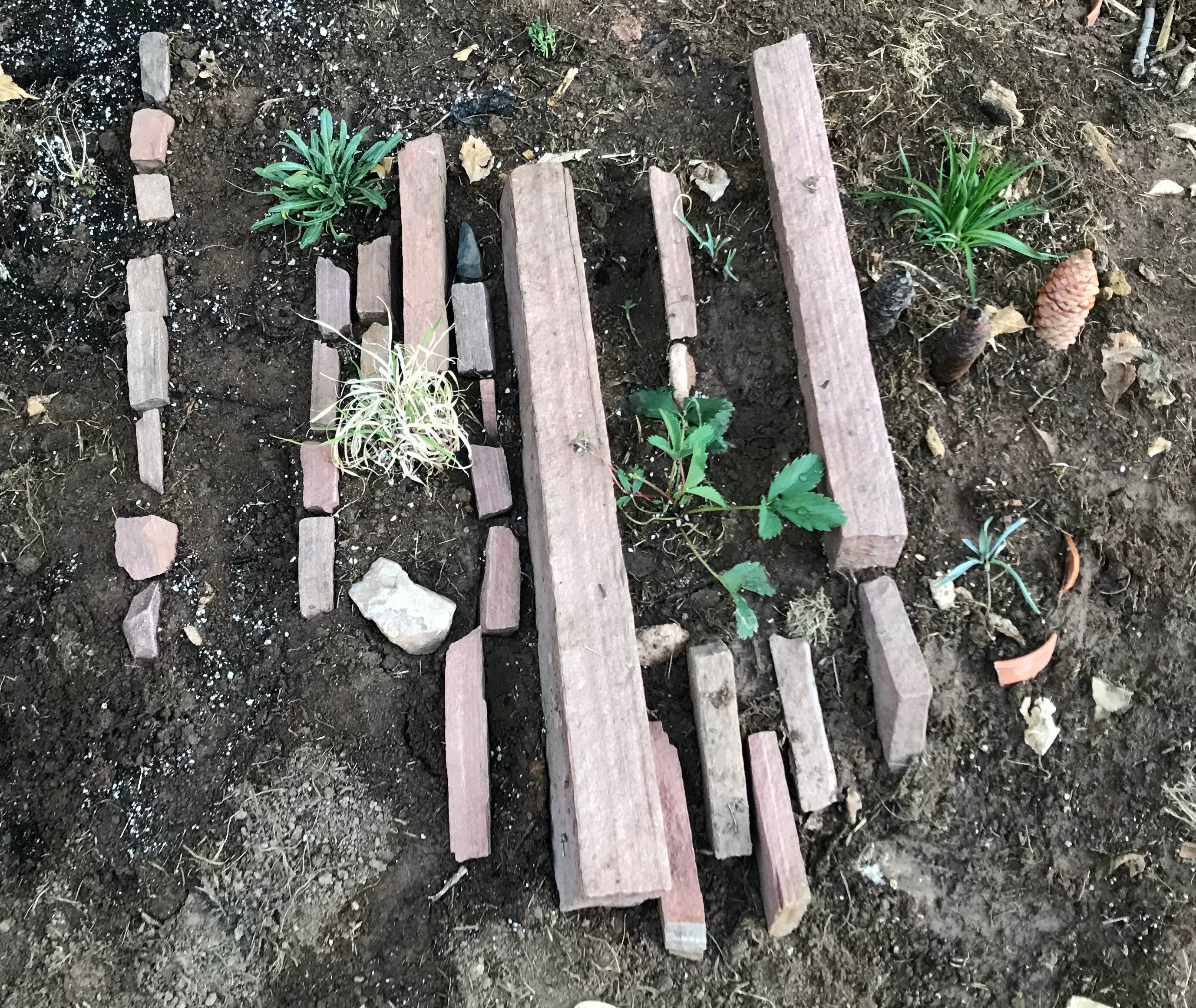
Crevice gardening. Below is the totally unplanned, unresearched, and impulsive attempt I made in my garden last year after hearing the words “crevice garden” with basically no other context. Was it was fun and worthwhile? Yes! Does it work very well? No! For example, I put some plants that need more moisture on the top of the mound (not good) and some that need less moisture near the bottom. Since more water will accumulate at the bottom of the mound, the plants that need more moisture should go near the base, and plants that need less moisture near the top. I also was not careful with my spacing, since I was in a frenzy to get my plants in the ground, and some plants are now shading out the others. So I’m going to take a more concerted stab at it this year, following Kenton Seth’s AMAZING guidance in his book (co-authored with Paul Spriggs), The Crevice Garden. Also: If you get a chance to see Kenton speak about gardening, sign up immediately, because he is so much fun to listen to, and you’ll come away with an abundance of new ideas as well as the means to execute them.
Put in a French drain to divert water into my fruit/veg patch and away from the foundation of my house. Related: Set up those rain barrels that have been sitting in my yard for…yeah, two years.
Broadcast seed before a snow, scratch it into the soil, and then leave it alone and don’t worry too much about germination rates. It’s better that some plants germinate and grow, rather than remain seeds inside my seed drawer and never see the light of day.
Use the dandelions! They’re harmless, tasty, and they’re good medicine. The roots can be dried and roasted to make a bitter, liver-supporting tea; the leaves can be mixed into salads, sauces, and pesto; the flowers can be made into wine (but I’m not that advanced); the stems can be dried and woven.
A residential front garden for a friend. It’s mostly turfgrass and gravel right now, and my mom (Kathy Maher, Native-Mode Landscaping) and I will be packing it with native plants (and a few well-behaved xeric non-natives) over the coming season. Stay tuned for project photos to see the process of turfgrass conversion.
The front garden at the Administrative Office of the Larimer County Department of Natural Resources. This is another Mommy-and-me project. We’ve been working on this garden for a little over a year now and as some of the plants enter their second growing season, it’s exciting to see things coming together! This section used to be mostly a kind of non-native, creeping juniper that was half-dead underneath the top layer of green. Now it’s regularly visited by wildlife and is nicer for employees and visitors to look at.
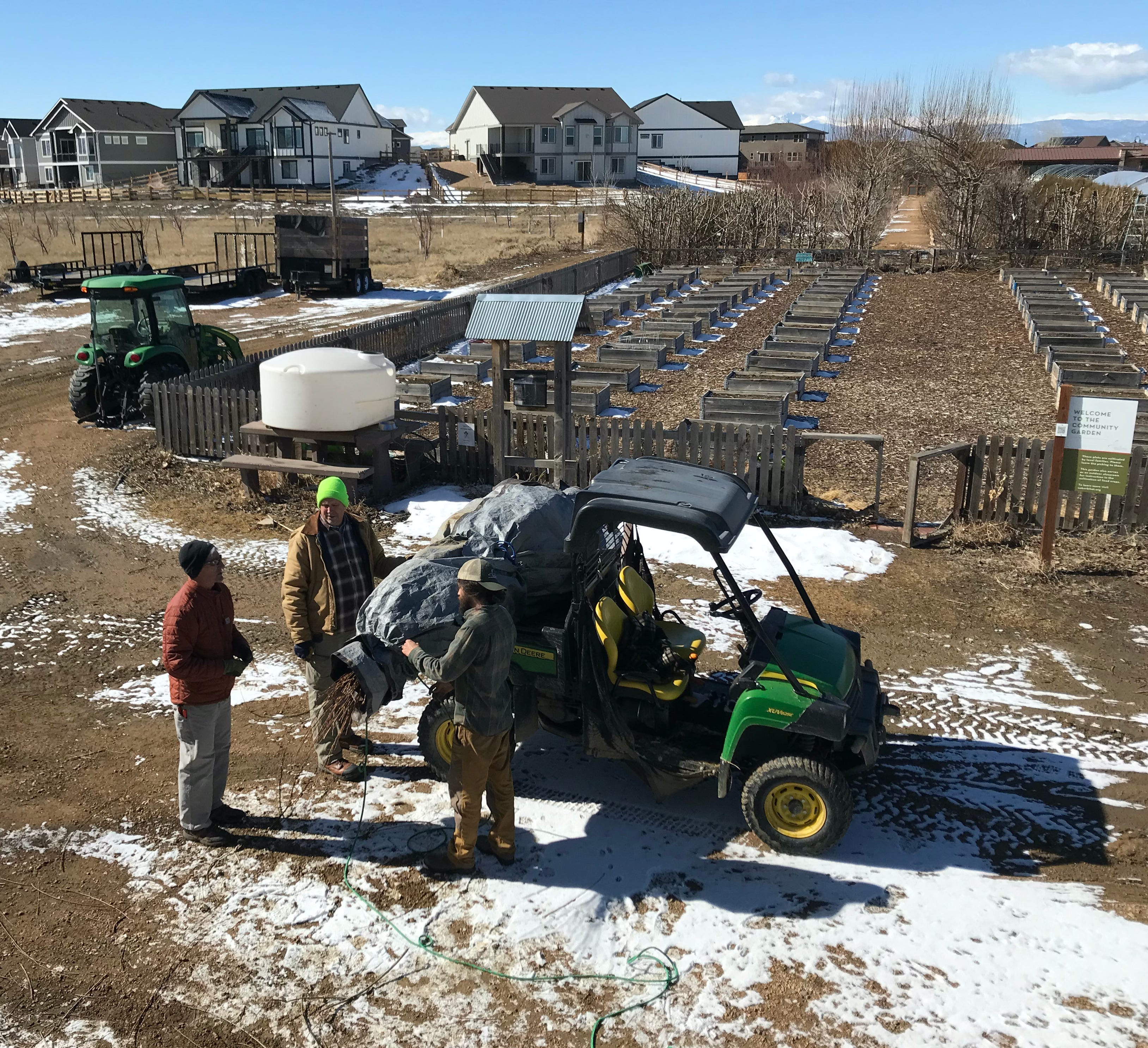
I worked with Jack, Jonah, and Stephen of High Plains Environmental Center, along with a few volunteers, to harvest a ton (maybe literally?) of willow branches over the last week. We’re planning to offer workshops and volunteer projects in willow work later this year, possibly including wattle fence-making, basket weaving, and weaving garden structures. More on that soon. First the willow needs to be cut, sorted by length, bundled, and dried, so it can be soaked and woven in the late spring/early summer.
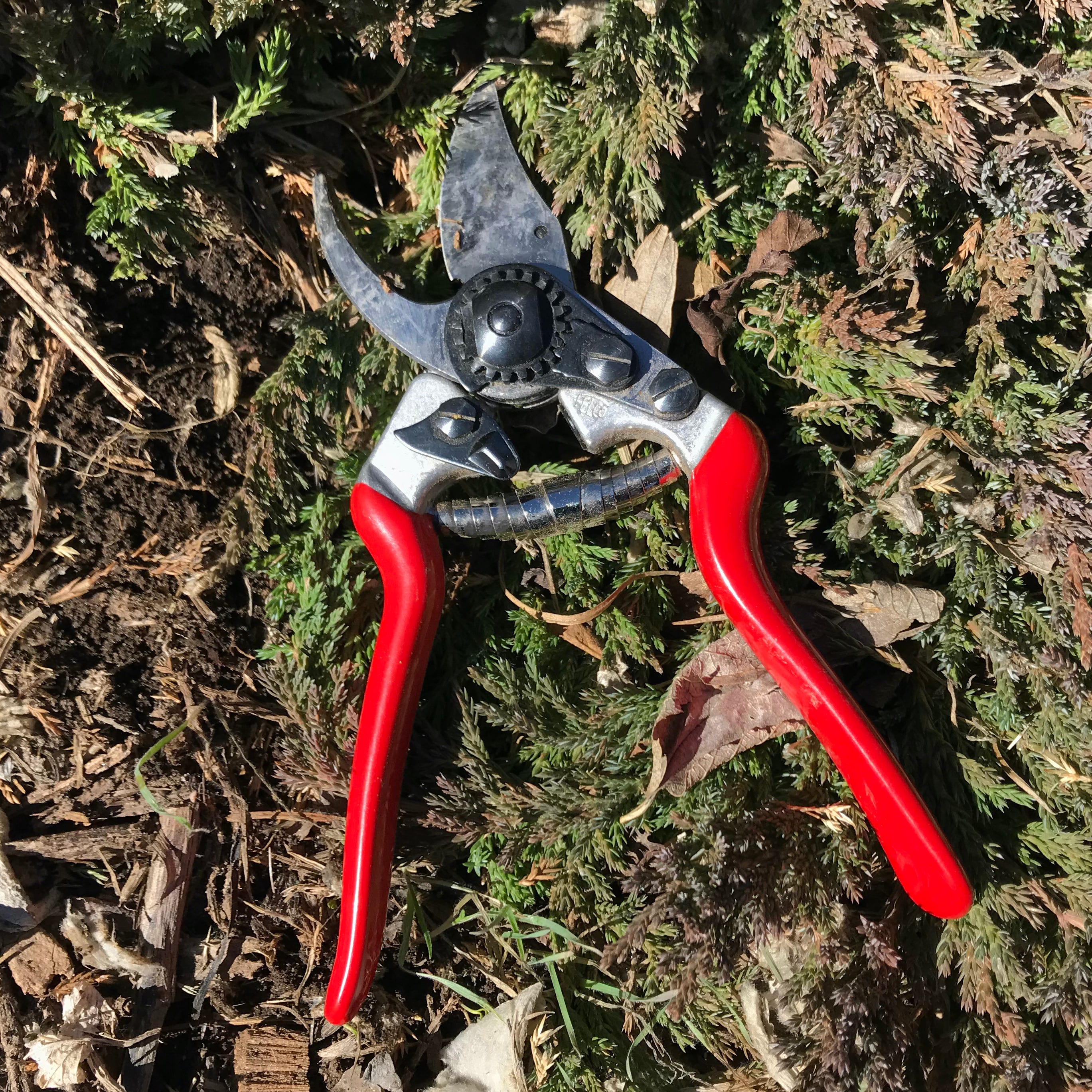
Felco 14 pruners. OMG. So sharp. So ergonomic. So resistant to blunting. They fit so well in the hand. I will never be without these again. They live in my purse just in case I need to cut a stem while I’m out. (A big thank-you to fellow basket-weaver Lilian for showing me these!)
Here are some of the resources I’m looking to for ideas, inspiration, and advice.
Piet Oudolf’s aesthetic and design style is just…perfection.
The Crevice Garden is gorgeous and full of well-illustrated, concise, practical advice.
Visiting High Plains Environmental Center and studying their demonstration gardens. Volunteering there is also a great way to learn about native plants.
Rereading Braiding Sweetgrass, Robin Wall Kimmerer’s absolute masterpiece that every single person should read.
The work of my brilliant basketry teacher, willow grower, extraordinary artist, and just all-round wonderful person, Hanna Van Aelst.
I do projects of many sizes, shapes, and budgets. Most of my clients are doing gradual turfgrass conversions, with small native plantings that grow each year. My schedule is full for March, but I’m still taking on projects for later in the spring. If you’d like to hire me to do some consulting, design a garden for you, help you shop for plants, install a garden, keep your garden maintained, or to make some art for you, please get in touch! Shoot me an email at maddie@redsoilseeds.com.
Enjoying this newsletter? Subscribe for regular updates, and/or follow me on Instagram @redsoilseeds. I plan to publish newsletters once or twice a month. I’m just getting started and I welcome your input about what you’d like to hear about! If you think someone you know would enjoy this newsletter, please forward it to them.
Comments
Nothing yet. Say the first thing.
Sign in to join the conversation.