
This weeks brainfood is supported by our friends at CodeSignal
Goodbye proxies. Hello proof.
Every candidate looks qualified. None of it proves who can do the job.
Your ATS is bursting at the seams, and every resume in it looks strong. So you do what you’ve always done—screen, take notes, run interviews, build a shortlist. But none of it answers the one question that matters: can these people actually do the job?
The resume, the recruiter notes, the interview impressions—they’re all proxies. They tell you how someone looks on paper, not what they can do.
And it’s happening just as application volume explodes. According to CodeSignal:
Applications per role are up 182%, with the average opening now drawing roughly 340 candidates.
93% of hiring managers say hiring takes longer than it did two years ago.
65% have already caught candidates using AI deceptively during the process.
CodeSignal’s proof-based hiring platform replaces those proxies with proof. With role-aligned skill assessments and AI interviewers, you can turn a flood of applications into an evidence-backed shortlist.
Not sure where your team stands with skills validation? Take CodeSignal’s free 2-minute quiz to get your personalized scorecard and playbook.
SPONSORS
Friends,
We’re back to a blazing heatwave in the UK and I’ve resolved to simply enjoy it as much as I can. The only thing I can think of to recommend is to a) avoid the bus, b) the Central line and c) buy and wear one of these personal AC’s. Jisulife that is wear it is at!
Thanks to: Colin Donnery, Bobby Nunn, Robin Beattie, Joey NK Koksal, Nelya Pearson, Darren Topping, Frank Farrelly, Lucinda Thomas, Deb Andrychuk, Niels Geominy, Ashley Doyal, Kanchan Gupta, Jamie Leonard, Jon Claire, Matt Farrah, Andrew Stetsenko, Nilhan de Mel, John Rose,
Can you help? Share this newsletter with your friends on LinkedIn and have them subscribe.
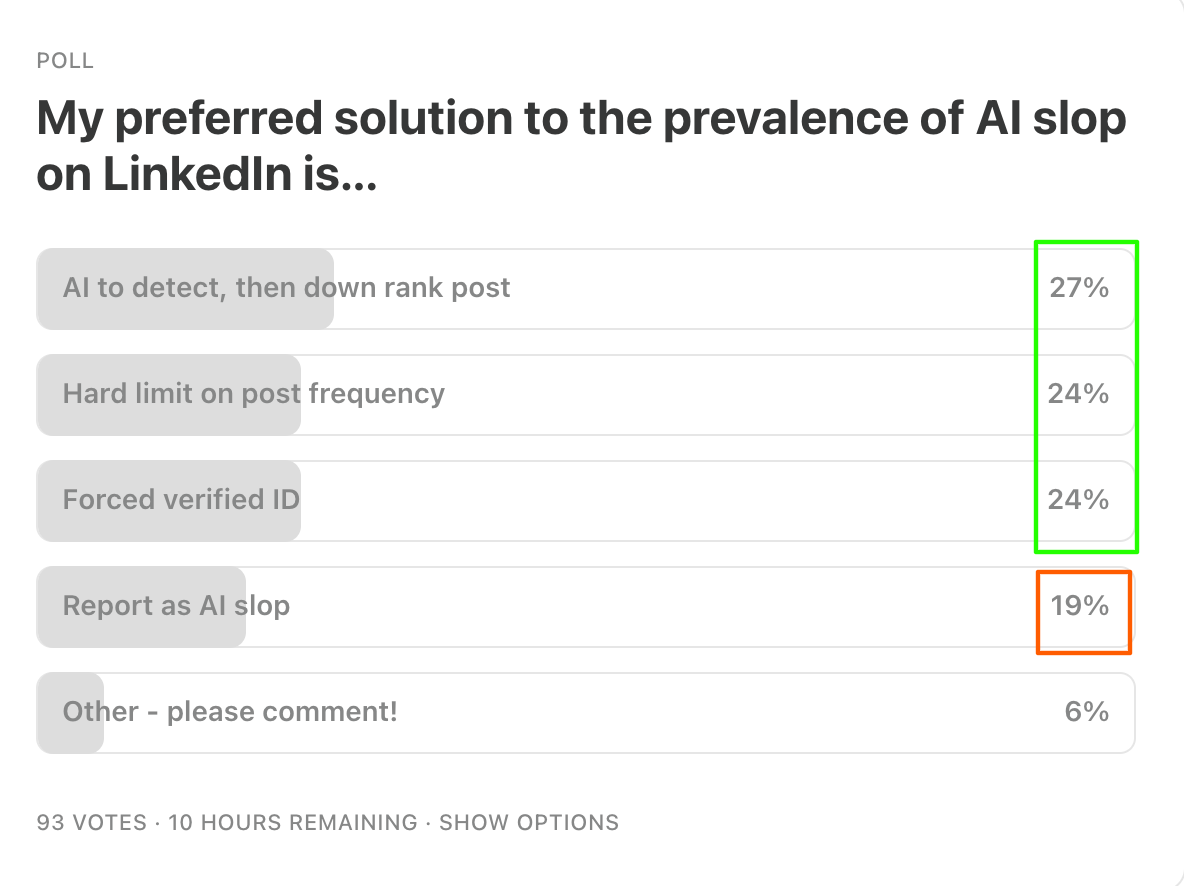
Seems like only 1 in 5 of us like the report button on AI Slop, but we’re pretty divided on what else would be better. Interesting to see how it all goes but no question ‘solving’ the AI generated content problem is going to be one of LinkedIn’s biggest challenges in the coming years, impacting personal and employer brand strategies accordingly. We can only keep an eye on what’s going on and keep connecting with each other (going to figure out a way how we can all do that more effectively)
Brainfood Live On Air - Ep400 - The State of AI Readiness: Is Your Organisation Ready? We’re going to get practical in this session because we want to produce a framework which anyone can use tomorrow to start the process of benchmarking your organisations current posture for AI-enablement. This is something People Ops should be leading on, and an opportunity for TA folks to expand scope, so have at it here.
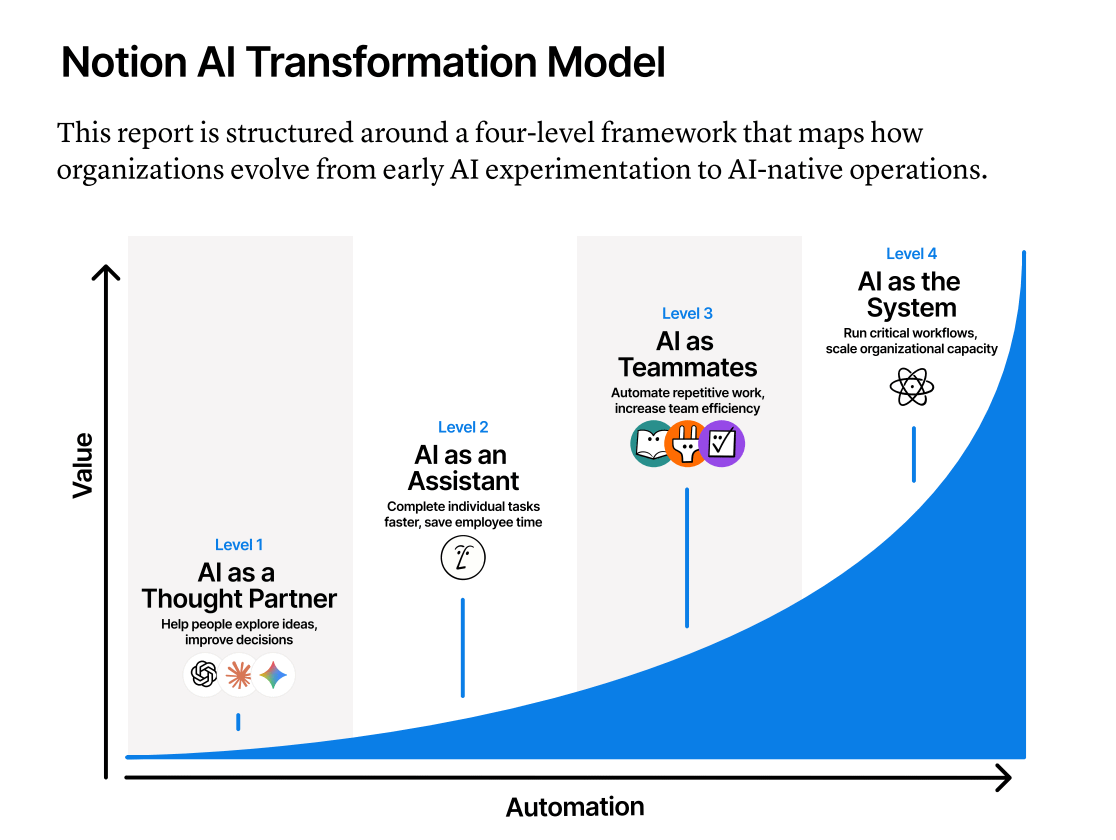
6,000+ people surveyed by Notion on the state of AI transformation within their organisations. The introduction included a perfect analogy, which ended up as the title for this report - AI transformation is like a home renovation - it’s more expensive than the estimate, takes longer than the planned timeline and there’ll be 1 or 2 catastrophic mistakes along the way. But. In the end, it will be worth it. Reading this report certainly is - key points: most of us (88%) are laggards, C-suite and employees see very different businesses when it comes to AI.
TALENT OPERATIONS
Important for us all to get across the detail of the EU AI Act as it came into force last week, and national governments throughout the Union will start enforcing their interpretations of it. LinkedIn do a good job here of pulling together commentators who have made early suggestions, as well strong signals as to who to follow in case you want to know more. We’re doing a ‘What it means for Recruiters’ Brainfood Live on this topic in a couple weeks - make sure you register or get a member of your team to do so here
ASSESSMENT
Everyone marketer knows that the thing you got to do is get into the training data and be recommended by AI. How do it is another matter. I came across this thread on X a couple months ago and have been sitting on it since, mainly because I’m in way over my head trying to understand this. Share this with some SEO / GEO expert you know, and come back to me with what they say? Could be genius, could be madness, probably is both…
EMPLOYER BRANDING
When we label someone as “disengaged,” we mean their energy has stopped flowing toward the organisation’s priorities. We need to understand where it has gone instead
X is a hellscape but I’m getting enough gems that I’ve got still hang out there. Great post by Helen Bevan on how we’re thinking about employee engagement.
CULTURE
With Google’s Gemini widely accepted as being a second tier AI model behind the OpenAI, Anthropic and the leading Chinese open source models, it is perhaps not surprising to see churn at the top of the AI organisation. First, Jeff Dean - the brains behind many of the products which are software architecture today - announces he’s leaving after 27 years with the business followed only a week later with Demis Hassabis stepping down as CEO of Google DeepMind. How important is talent density? Alphabet, Google’s parent company, loses $200 billion on stock market following this news.
AI
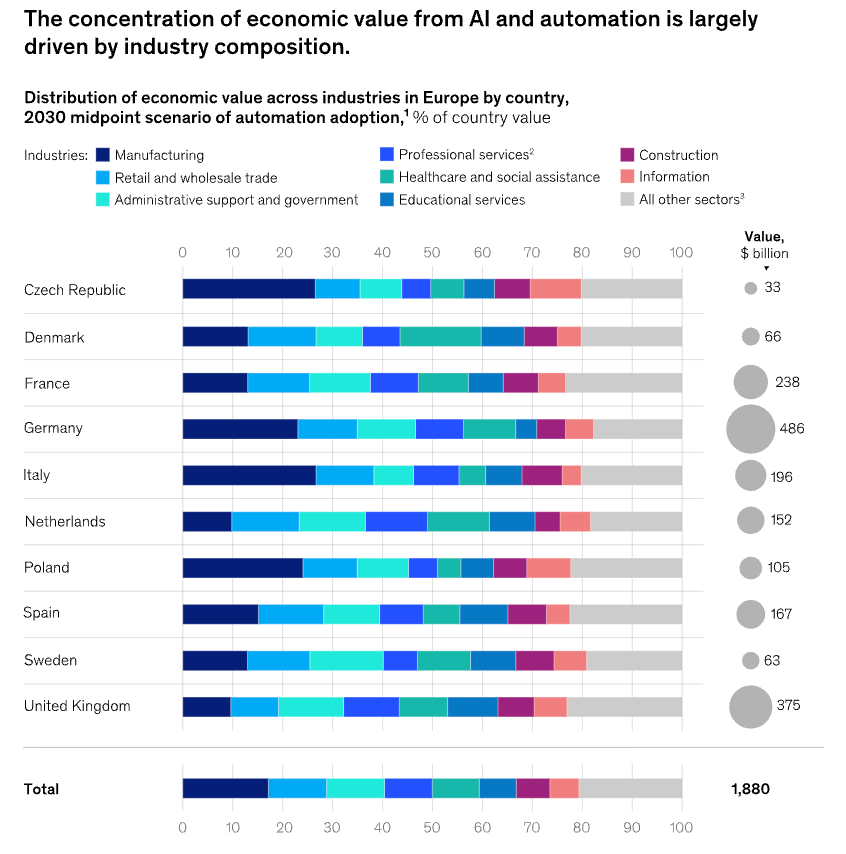
The most interesting part of this research piece from McKinsey is how the structure of different country economies will mean variation on how AI will impact the workforce there. The UK - with its heavy reliance of professional services - is likely to be either the most augmented or most disrupted - economy in Europe. Country-by-Country dashboard is cool - European readers should have a look.
FUTURE OF WORK
So the K-Shaped economy basically tells us we’re already well on our way to a polarised society. This latest survey analysis from Lenny Rachitsky, narrows into the world of tech, and specifically to product to surface up sentiment on how they’re feeling about their profession in 2026. Probably need to do one for Talent Acquisiton tbh - what do you reckon? Anyways, very interesting reading, with validations of what we we’re experiencing ourselves - founders are most pro-AI / optimistic and small teams around those founders might be the best places to work.
ECONOMY
Some interesting questions raised here - sequence of hiring, key player dependency, hiring for judgement (though nobody has yet explained to me how you do this, aside from…just judging some more?) in an easy-to-read, high bang-for-buck mini report cobbled together by investment management firm Iconiq from interviews with function leads at Atlassian, Canva, ElevenLabs, Nevis and other cool logos. Well worth a read folks. H/T to brainfooder Srini Gundelli for the share on the online community.
ASSESSMENT
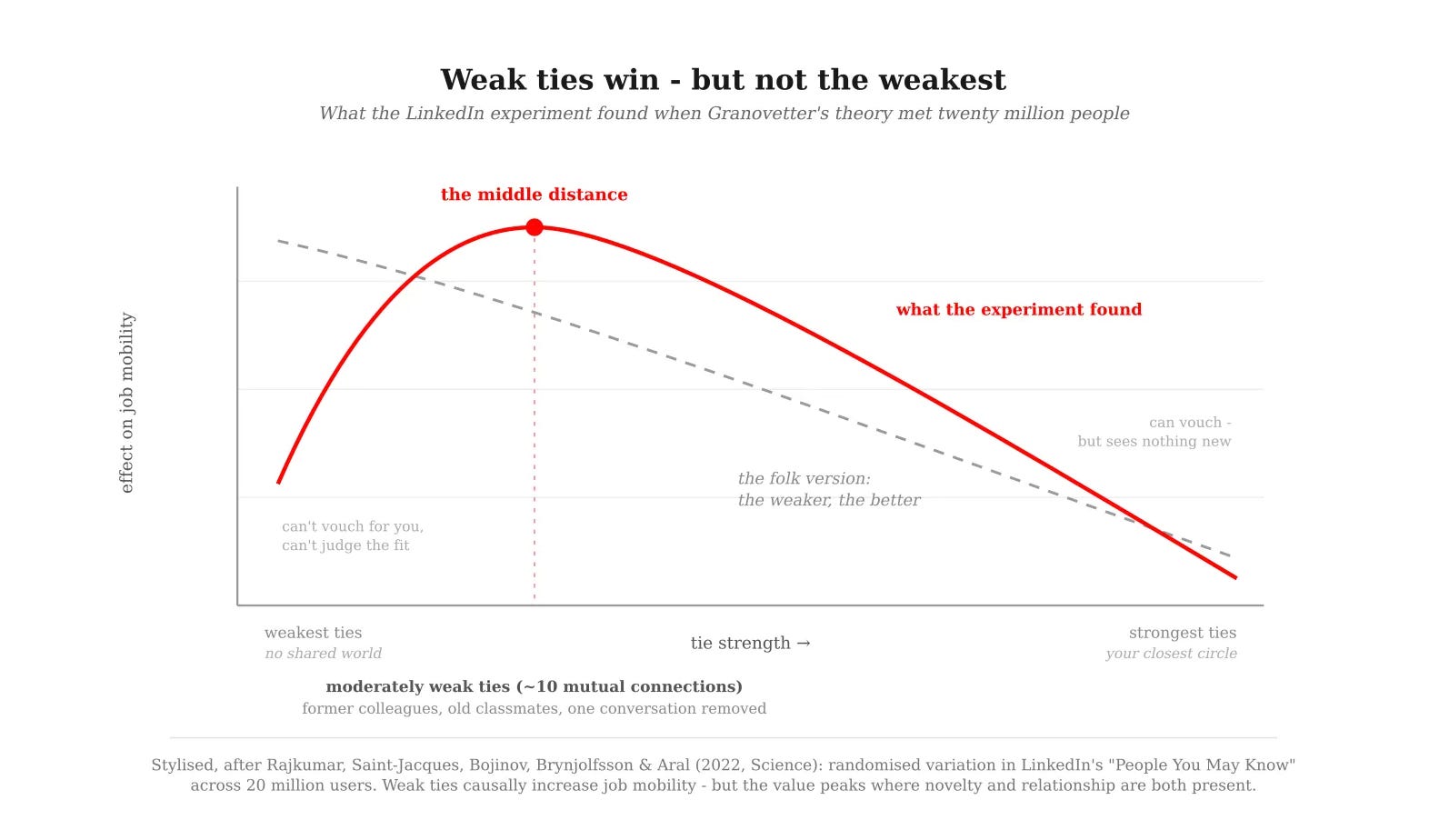
Any one who cites Mark Granovetter has an evens chance of making it to this newsletter 🤣. Granovetters’ seminal 1973 paper on The Strength of Weak Ties had more impact on my professional life than I can measure, and helped cure me of any lingering resentment I had from previously holding a Just World fallacy. It’s weak social ties which are critical to information transfer, because they bridge to networks which you otherwise would not know. Great to see brainfooder Andrew Marritt apply Granovetter to the job search - and it could be applied to anything. Follow Andrew btw, he’s going to feature a lot more on here I suspect, so you might as well get it from source.
NETWORKING
Day Labour markets feel like an echo of the past, but they are still around today and I wonder whether they may make an unwelcome comeback in the future if the pessimists are right about AI impact on job displacement. Interesting interview with a Tsinghua University Ph.D. student who worked as a day labourer in the oldest and ultimate form of the gig economy.
GIG ECONOMY
Generalising a singular story as proof of the inherent behaviour of the entire group is a common form of propaganda to which we are collectively subjected. Novaria Media correctly leads with this angle on the story of former Cambridge University professor Jason Arday, who resigned this week following an avalanche of claims of plagiarism, academic fraud and copious amounts of lying on the CV. The angle for us in recruitment is deeper understanding as to how misaligned incentives always encourage the wrong behaviours - in this case, suspension of due diligence in the rush to secure social approval, and perhaps, employer branding back in the day.
ASSESSMENT
AI being a bubble economy is now a well known theory - maybe even approaching mainstream acceptance - but one of the financial mechanism which is helping inflate it has been under discussed. The 401K - mandated employer- sponsored retirement plan - pile into index tracking funds, which in term automatically buy equities based on %age share of market. Bigger percentage share, more funds pile in until…pop. Nice explainer video, not all AI generated is slop…
ECONOMY
Fluency in English - a legacy of UK / USA colonialism of India and the Philippines respectively - was the pathway toward the growth of BPO, which today make up significant percentage of the economies of both those countries. What is the impact of AI on BPO? Surprisingly nuanced as this video explains. Not without its problems (overly fixated on lineal thinking of economic development) but thought provoking video on how weaknesses can become strengths which then can become weaknesses again.
WORKFORCE AUTOMATION
Lenny’s sentiment archetypes was a fun one to think about for me. How would we in recruiting and HR distribute across those four options? This is the poll for this week folks - give me your vote below.
That’s it - thanks for reading
Have a great week everyone
Hung
Comments
Nothing yet. Say the first thing.
Sign in to join the conversation.