
I have a confession to make. It’s not one that comes easily to someone who has spent a lifetime being labeled as “really fit,” riding bikes, hiking, rucking, running, and deadlifting heavy. But here it is: I was a skeptic. A denier. When it came to VO2 Max training, I thought it was nonsense. At least for most normal people. People not born with a freakishly high genetic anomaly.
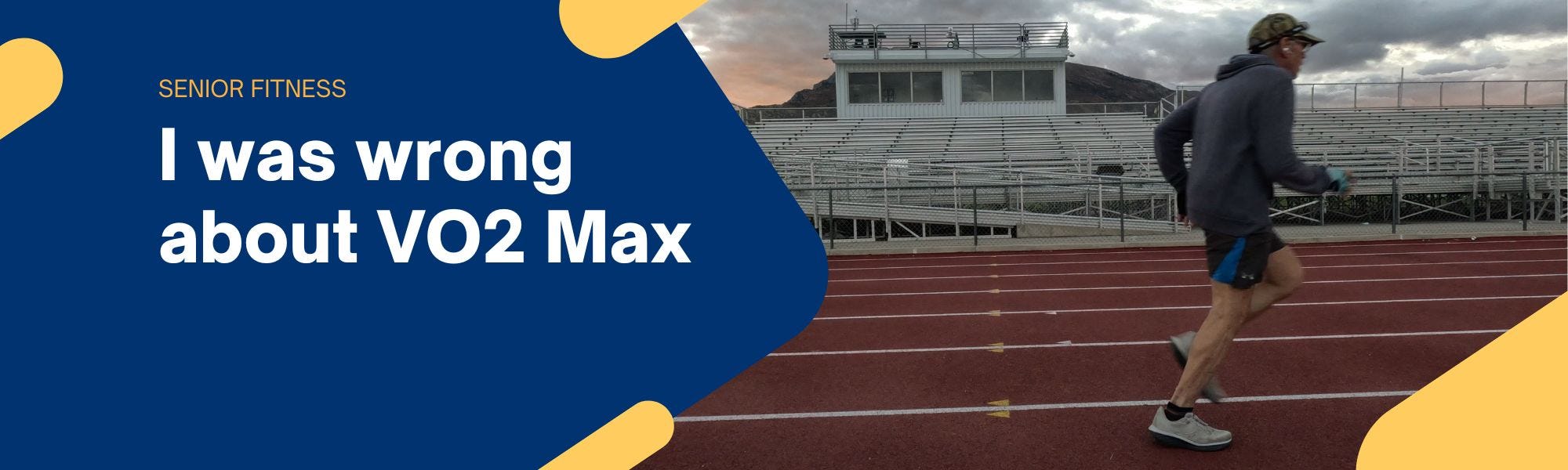
For years, I scoffed at high-intensity training. I saw VO2 Max as a metric for frontrunners and young race winners, not for health. The images of pain caves and athletes pushing to their limits seemed like suffering for trophies, not true fitness.
Was I wrong?
I had convinced myself that as we age, we should focus on a barely comfortable routine of long, slow distance. I avoided intervals. I focused on low- to mid-intensity workouts, living in Zones 2 and 3. It felt good, sustainable, and enough. I was the fastest I’d ever been, coming in 4th in my Age Group and beating my own PBs. I was setting KOMs on Strava.
But as I began researching for Reclaim Your Prime, and diving deep into longevity science during the pandemic, I realized I had overlooked a defining connection: VO2 Max is not just for race winners—it’s fundamental to aging well. This high-intensity metric is core to resisting the gradual decline that affects us all, not just elite athletes.
To understand why I was wrong, you have to understand where I came from. My dad ran track in high school—he had the photos, medals, and the shoe collection to prove it. But by the time I came around, he didn’t run. He walked. He swam. He slowed down. Like many of his generation, once the competitive glory of youth faded, so did the intensity.
I grew up underskilled, weak, and slow. Sports never clicked for me until I discovered cycling at 19. Since then, I’ve been the avatar for the “typically fit” human. I’ve had years where I commuted 100 miles a week and years where I worked 60 hours a week and ate whatever I could grab between tasks.
Through all those ups and downs, I developed a philosophy that fitness should be sustainable. And to my mind, “sustainable” meant “moderate.” I read the literature that seemed suited for track athletes and dismissed it because I wasn’t one. I thought that if I just kept pedaling at a pace where I could squeeze out three-word phrases, I’d be fine.
But here is the hard truth I was ignoring: I noticed a gradual decline in my own performance. I attributed it to aging, illness, and injury. I never made the intuitive leap that the decline was happening because I had stepped away from intensity. I was building a wide foundation for my house, but I had decided to stop building the roof.
The turning point for me wasn’t a race result. It was watching my parents age.
I remember my mom and dad, and the physical challenges they faced in their later years. They didn’t have the most excellent quality of life as they approached the end. The prospect of being strapped to a bed, hooked to machines, and barely lucid isn’t my happy spot. I doubt it’s yours.
This is where we have to draw a hard line between Longevity and Healthspan. Longevity is just the number of days you can squeeze out of your body. It’s a math equation. Healthspan is the number of those days you are alert, aware, active, and doing what you want, need, or love to do.
I realized that if my goal was to play with my grandchildren, to hike mountains, or to just be able to get off the toilet without assistance when I’m 85, “moderate” wasn’t going to cut it. We slowly slow down. We slowly sit down. And if we aren’t careful, we slowly never get back up.
Research consistently shows that VO2 Max is among the strongest predictors of both longevity and healthspan. It serves as the ceiling of your aerobic capacity—and if you allow that ceiling to lower every year, you lose resilience, functionality, and independence.
So, what exactly is this thing I was so afraid of?
In technical terms, VO2 Max measures the maximum amount of oxygen your body can process during an activity. It reflects how efficiently your heart pumps blood, how flexible your blood vessels are, and how well your muscles can extract oxygen to create energy.
In practical terms, think of it like an engine. Zone 2 training—that steady, conversational pace—is like building a bigger gas tank. It helps you go longer. VO2 Max is the size of the engine itself. It’s the horsepower. It’s the nitrous oxide.
If you have a massive gas tank (Zone 2) but a lawnmower engine (low VO2 Max), you can go for a long time, but you can’t go fast, and you can’t handle hills. When life throws a “hill” at you—a sickness, a fall, a surgery—you need that engine power to recover.
I used to think these two things were enemies. You were either a “slow and steady” person or a “fast and furious” person. But they are part of the same structure. Think of a pyramid. Zone 2 is the base. VO2 Max is the peak. If you widen the base, you can build a higher peak. Conversely, if you raise the peak, the whole structure rises.
My biggest error was assuming that VO2 Max training meant training like an Olympian. I thought it meant suffering.
Most of the cycling apps and training plans I saw were designed for people who wanted to win criteriums. They were extreme. They would burn out most of us who just want to be fit for life. That scared me off.
But once I stopped listening to the “young guns” and started looking at the science for “old folks” like us, I realized the risks were manageable. It’s not as risky as I thought. High intensity doesn’t mean “maximum suffering”; it means working at a level that challenges you slightly above your comfort zone.
You don’t need to be a college track athlete. You don’t need to know what “four sets of 200 at a 400 pace” means. You just need to be willing to get uncomfortable for a few minutes.
We aren’t training for the Tour de France. We are training to be hard to kill.
So, how do we fix this? How did I go from a skeptic to a believer without breaking my body?
I adopted the 80/20 rule—or for some of us, maybe the 90/10 rule. It suggests that most of your training should stay in the comfortable, fat-burning Zone 2. You keep the long walks, the rucking, the easy spins on the trainer.
But for that remaining 10% to 20%, you push.
You go above your Lactate Threshold. You go to a place where you can’t talk in sentences. You go to a place where you want to quit, but you hold it for just a minute or two.
For me, this doesn’t look like an Olympic sprint. It looks like 4 intervals of 4 minutes each, done once a week. Or maybe just starting with 1-minute efforts if I’m coming back from a layoff. It’s about “Progressive Overload”—small, incremental increases over time.
The beauty of this is its efficiency. VO2 Max training delivers a massive “bang for your buck”. Twenty minutes of interval work can boost your capacity in ways that hours of walking cannot. It fills the gap, ensuring you are fit not just for the steady grind of life, but for the moments that require a burst of energy—like chasing a toddler or running to catch a bus.
I admit it. I was a VO2 Max denier. I thought I could “hack” healthspan by taking the easy road of moderate exercise. But the body follows the “use it or lose it” principle in its harshest form.
If we never push our hearts to their limit, they forget how to go there. If we never demand maximum oxygen uptake, our bodies stop building the mitochondria to handle it.
I want to be clear: I am still a huge advocate for Zone 2. It is the foundation. But I was wrong to stop there.
We need to embrace intensity because VO2 Max is not just an athlete’s metric—it’s a key indicator of future independence and quality of life. Regular VO2 Max training helps us maintain strength, mobility, and resilience as we age.
The goal isn’t to set a world record. The goal is to fill your bucket list. The goal is to go on that really long vacation and have the energy to enjoy it.
If you’ve felt like me—skeptical or wary of high-intensity work—consider that starting VO2 Max training at any age can offer major benefits. Even older adults can regain lost capacity and improve healthspan.
Don’t worry about extreme influencers. A little hard effort now with VO2 Max training means a much better quality of life later. It’s about small challenges now for a bigger payoff down the road.
I’m stepping up to the plate to aim for a home run. Are you coming with me?
About the Author
Charles Miske is the author of Reclaim Your Prime and a streamer, software engineer, and mountaineer. He explores the intersection of aging, technology, and fitness on his YouTube channel @primetimeendurance.
No posts
Comments
Nothing yet. Say the first thing.
Sign in to join the conversation.