
Since the appearance of commercial gelatin in the mid-1800s, the American home cook has concocted a nearly endless list of ways to utilize this powder. Aspics, a dish that had been around previously for at least 500 years, went from an hours long process to a few minutes, and a whole host of savory gelatin recipes followed suit. When Irma Rombauer’s Joy of Cooking first appeared in 1931, she advised the savvy homemaker to take leftovers and put them in gelatin as an attractive way to make them go further. In the post-war embrace of convenience foods, however, gelatin salads truly swept the nation, and everything from tuna to pineapple to marshmallows to cabbage became an acceptable ingredient.
The longer the gelatin craze went on, the weirder things got, and by the decline of the trend in the early 1980s you could truly find anything suspended in gelatin - and that’s where today’s recipe deep dive makes its appearance. While perusing a new-to-me community cookbook from the Ohio Federation of Republican Women (1980), I stumbled across my first exposure to Circus Peanut Salad. Upon a quick Google search, it became apparent that this wasn’t an isolated phenomenon, although many attribute it to the South.
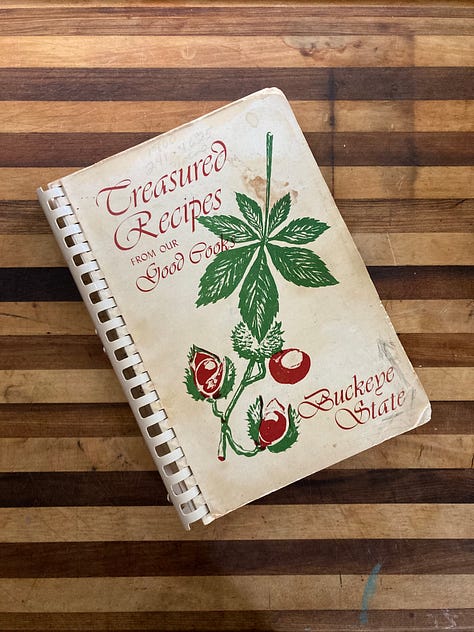
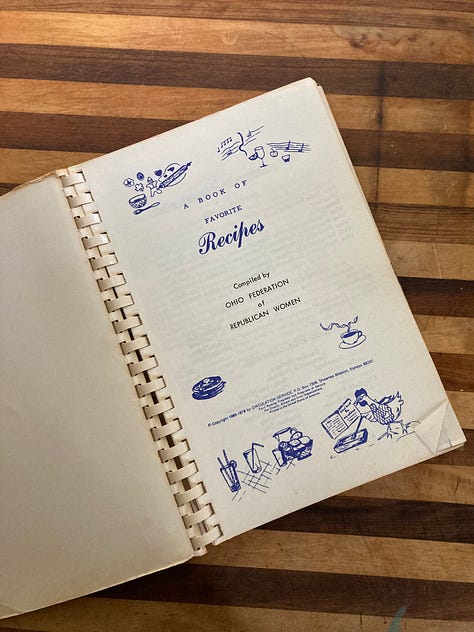
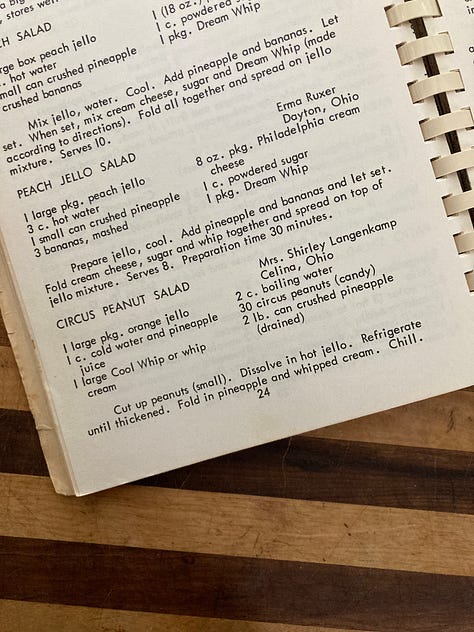
So naturally, I wanted to know the answer to the question I’m sure you’re thinking as well - why? Why would you put circus peanuts in gelatin?
As I started tracking down the recipe’s origin, it became clear that the first question I needed to answer was - what even is a circus peanut?
Technically a marshmallow, circus peanuts are shaped like a peanut, orange in color, and banana flavored. No one knows for sure who invented them, or why they inexplicably picked that shape/color/flavor combo. Nevertheless, they’ve persisted as one of the oldest candies in the United States. One of the original penny candies, they were a seasonal product sold in the spring (and still have their highest annual sales in the spring to this day). When the 1940s spawned cellophane packaging, circus peanuts became available year round.
The three largest producers of circus peanuts today include Brach’s, Spangler, and Melster. A closer peek at these companies, and it becomes apparent the Ohio-based Spangler is the most vocal advocate of the circus peanut, having created their recipe in 1941 and going as far as to collaborate on a Winnie the Pooh themed circus peanut line in the early 2000s (I tried to find an image, but the best I could find were some references from the time).
When looking at the wilder recipes that appear in community cookbooks, it becomes apparent that it’s impossible to separate home cooking from the brands that were available at the time. Brands put out free recipe booklets, full cookbooks, and recipes on packaging in a bid to encourage customers to use their products as much as possible. To get to the bottom of home cooking history, you have to look at what brands were pushing, not just broad cultural trends.
I spent hours trying to track down a branded recipe for circus peanut salad on the internet with no luck. Plenty of people have made and documented the recipe in the past five years, but no one credited a branded recipe. So on a hunch I sent an email to each of the three major producers of circus peanuts. (I assumed that Jello/Kraft wouldn’t have put the recipe out, since Jello had already established its staying power on the table and wouldn’t benefit from a recipe so dependent on a brand they didn’t own.) I got a speedy response from (you guessed it) Spangler.
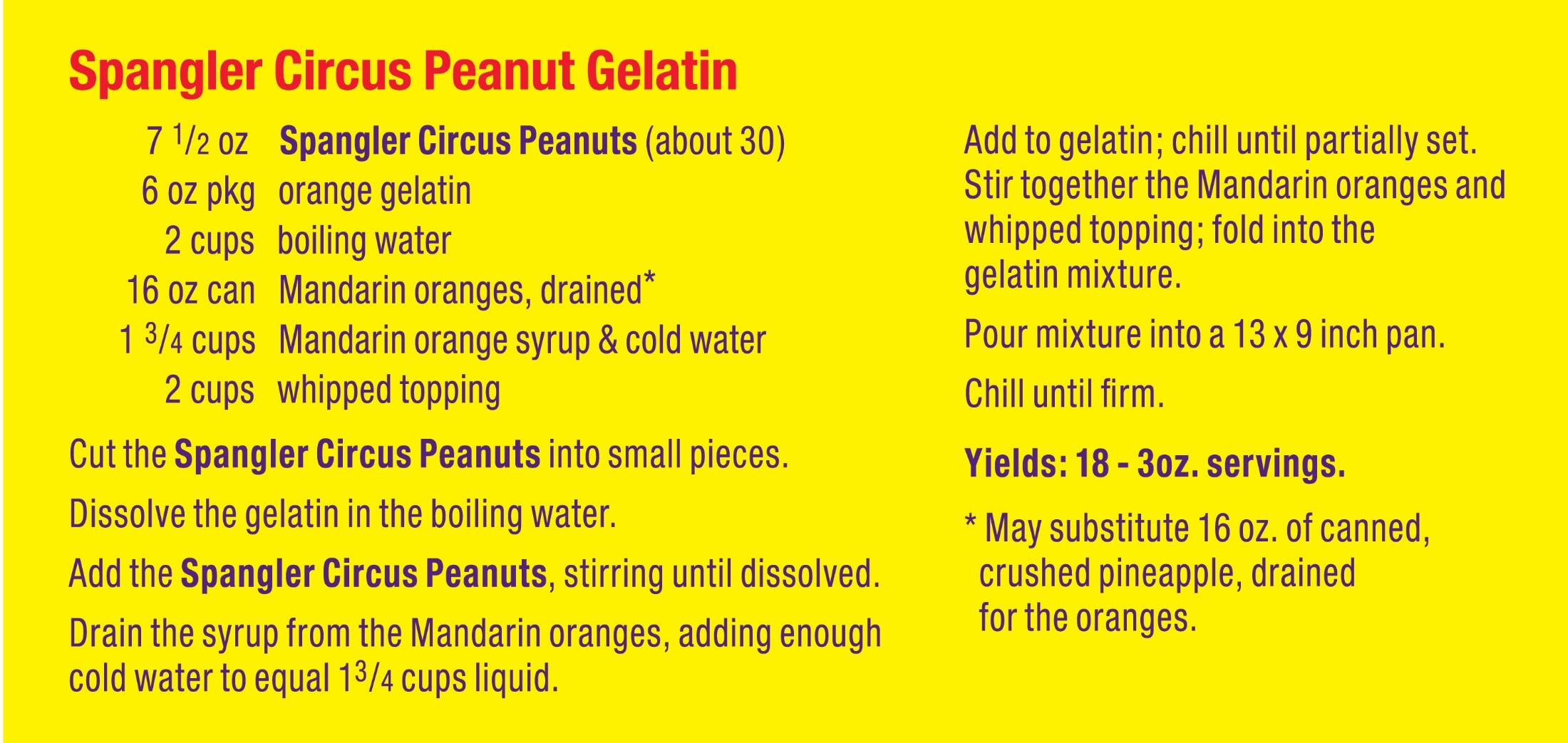
The lovely folks at Spangler sent me the above, and while I can’t guarantee it’s the first, it seems to confirm my theory that the original recipe most likely came from a bag of Spangler Circus Peanuts. The coolest part? The community cookbook recipe I found was credited to a woman who lived only an hour away from the Spangler factory in Ohio. So while Circus Peanut Salad is often credited as a Southern recipe, it turns out that its origins probably lie in the Midwest.
Absolutely not. I had no intention of making this recipe, especially considering how many other blogs and magazines have highlighted it in the past five years.
However, there is a huge discrepancy between every written recipe I’ve seen and every blog post that has tried it. All of the recipes say to dissolve the circus peanuts in the boiling water/gelatin. But every person I’ve seen make it says that the circus peanuts won’t dissolve. There’s a good chance I’ll be making a batch in the near future to see for myself if the circus peanuts are dissolvable, and when I do I’ll be documenting it over on my Instagram. Follow along over there if you’re interested in the process!
Comments
Nothing yet. Say the first thing.
Sign in to join the conversation.