
Happy Halloween / All Hallows Eve / Dia de los Muertos. As I shared with a friend a few days ago, it seems the veil is always thin, if you know where to look.
There are a few upcoming events I’m honored to participate in and would love to share with you.
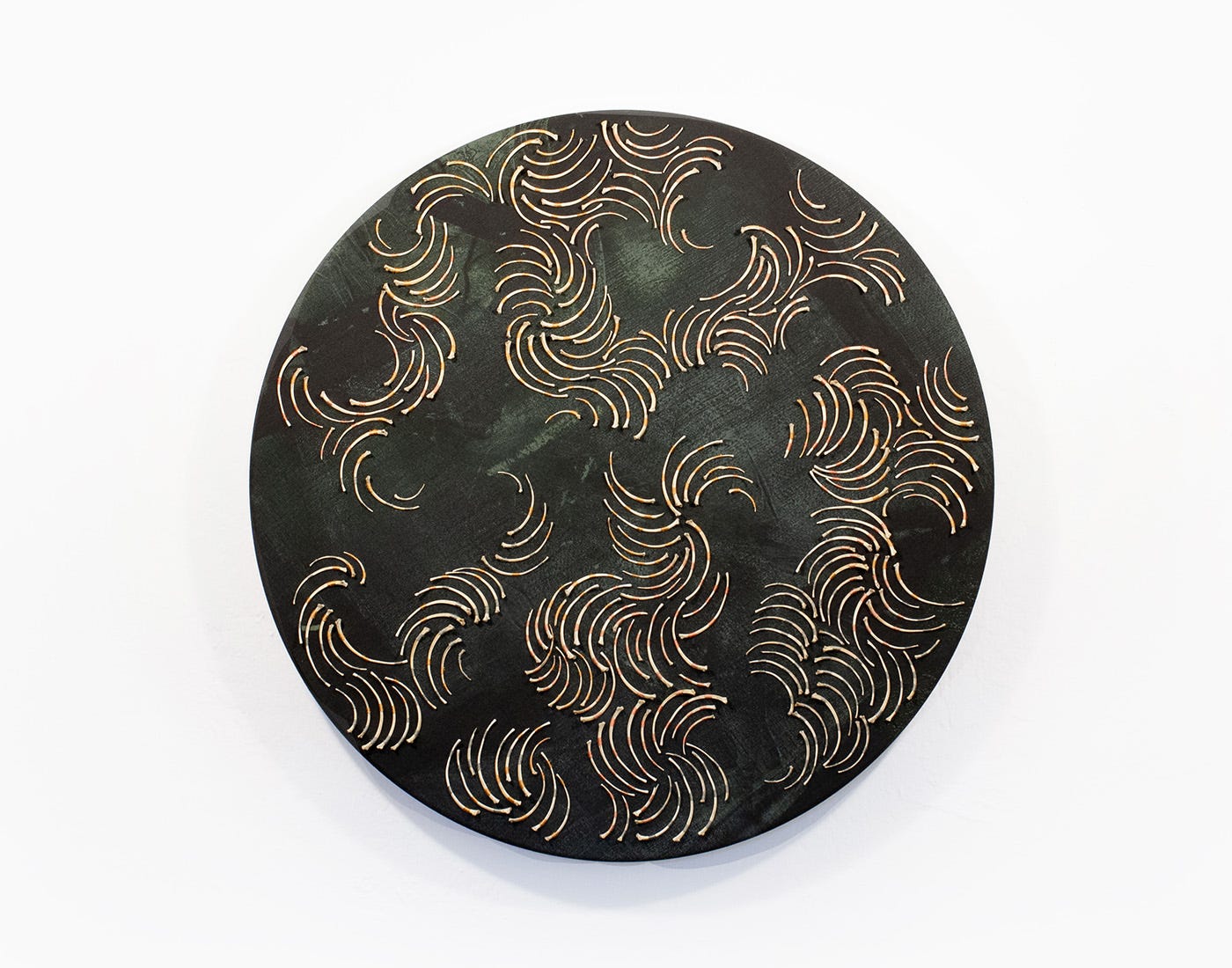
Artist Talk and Workshop At CAMP Gallery
November 8, 2-5 pm
Joined by fellow artist Emily Peters (whose work is also featured in the gallery’s current show), I’ll participate in a talk at 2pm. Following that, Emily and I will lead An Absurd Meditation, a mark-making workshop that explores the connections between body movement, emotion and sensation, creative expression, and our placement in this universe.
Artist Discussion at Coral Springs Museum of Art
November 15, 2-4pm
A handful of artists exhibiting in Transitions at the Coral Springs Museum of Art will gather for a conversation: Giannina Dwin, Kohl King, Richard Garet, Symphonii Smith-Kennedy, and myself, all members of SOBRA Collective.
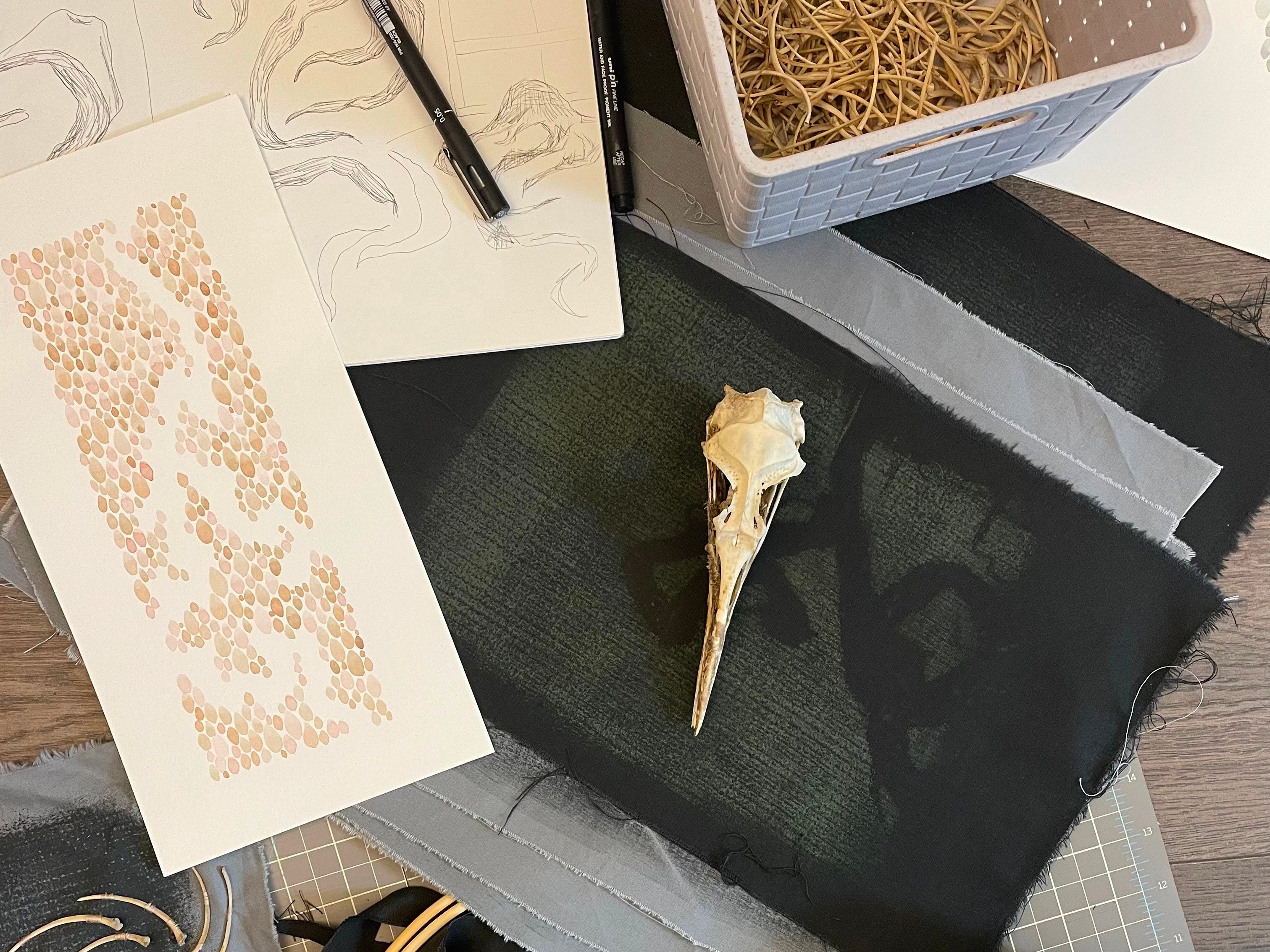
If you haven’t had a chance to see these shows yet, please come out! I’m excited to share more about the process of developing my Everglades Ossuary project, a series of sculptural tapestries adorned with the bones of the invasive Burmese Pythons.
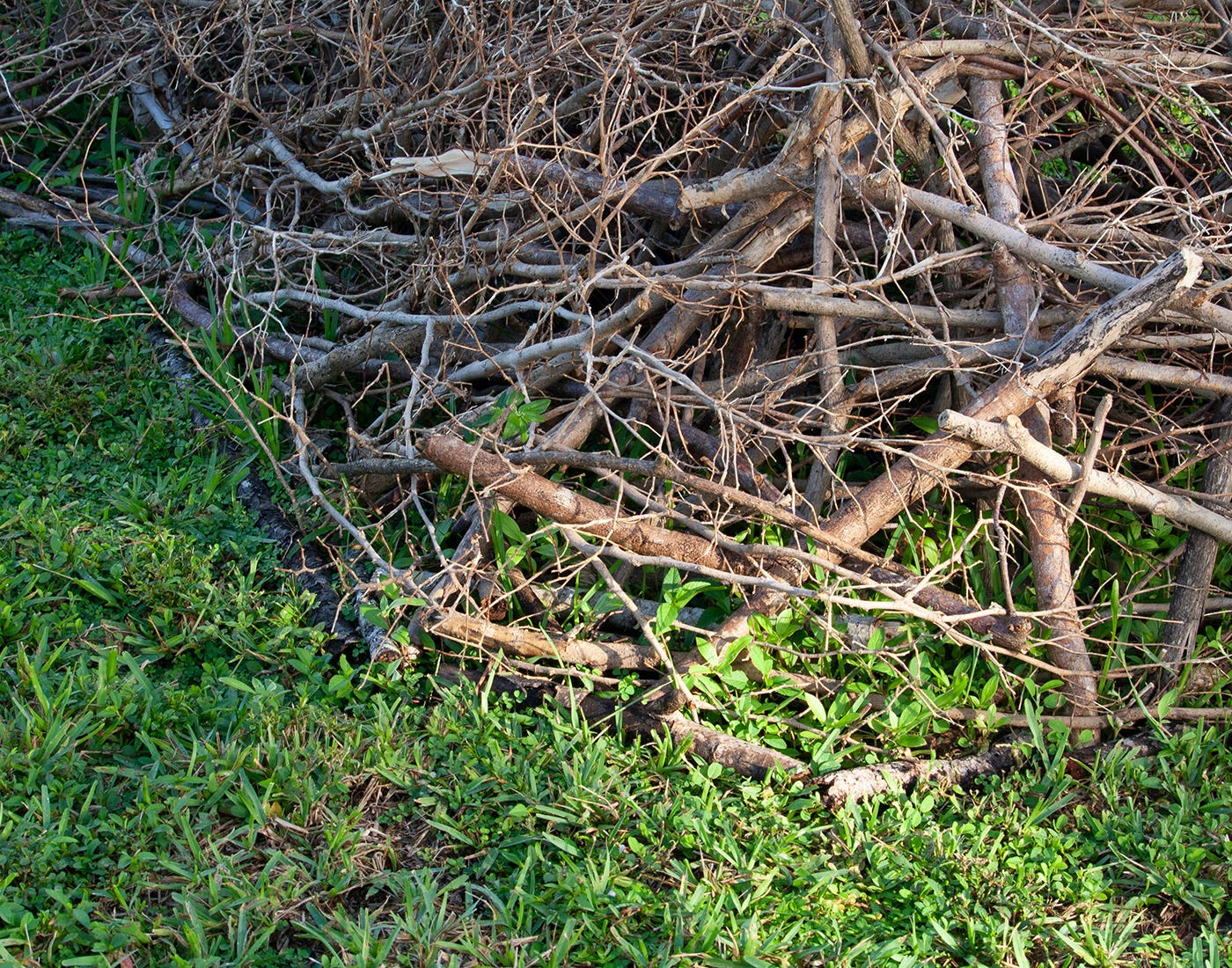
My recent project, Garden of Essence, was a first for me in many ways. The obvious ones…first large-scale installation; first public artwork. There were many things I simply did not know going into the project—logistical things, government things—1 and there was uncertainty because of it. Feels like the only way to acquire such specific knowledge is to to launch into the unknown, deal with the discomfort that arises, problem-solve like your life depends on it, and take good notes for next time.
I was prepared for this, because almost every project involves making and solving for mistakes. Friction, inquiry, learning, improving; this is what we call growth.
But the public nature of this project introduced a challenge that I have little experience with: opposition.
Background
I did not exactly seek out this project. It more or less came to me.
In late June, I reached out to my elected officials to express my dismay and heartbreak at the violence being enacted upon immigrants in our country, urging them to act in conscience. I wrote to everyone I could think of, regardless of political affiliation: the President of the United States, my congressional and state representatives, county leaders, local village commissioners. I knew my message was but a drop in a very large bucket, but it felt necessary to do the exercise. This is what you learn in civics class.
Every time I’ve done this outreach, I get some kind of reply; a generic acknowledgement of the message. Staffers don’t have time for more than that.
The note I sent to the official White House email account bounced back. Symbolic?
Within a few hours came the only response I received. Doris Acosta, one of the commissioners for North Bay Village, the small city where I live, wrote: I am also dismayed, and I’d like to talk to you. Could you come in for a meeting next week?
In that meeting, she proposed creating a participatory public artwork. This was completely unexpected but resonated with me, and over the course of our conversation, we identified an ethos that would anchor the project: we’d create space for people to show solidarity, to feel connected and supported. A vigil-like experience, focused on healing.
Back in the studio, materials suggested themselves. This was to be a temporary installation, and I did not want it to generate waste at the conclusion of the project. And, for a couple of years now, I’ve been looking to work with earth materials here in South Florida, as I have done in Argentina and Tennessee.
And so, a shiver of inspiration indicated branches and sticks and tree limbs, forming a labyrinth-like space, a network of meandering pathways to symbolize our collective migratory history, and the waterways of the Everglades that provide our drinking water.
Materials
I needed dry, bare branches. This sounds like something any landscaping company would have massive quantities of, but the reality is, they mostly trim green, living things. What I needed was quite specific: it either came from a dead tree, or had been laid out long enough that the leaves rot away.
Our timeline was tight, and I had to move quickly. So I became a scavenger, hunting for piles of debris left curbside all around Miami-Dade. My small SUV turned into a makeshift pickup truck (poor thing). Collecting the materials was actually the most difficult, time consuming part of the entire project. It was hard, sweaty, dirty work, especially in August and September heat.
Resistance
There was no private workspace for this project, no discreet trips to art supply stores. The street was my provider, and almost the entire creation process was conducted in public.
I can’t point out any individual, organization, or entity that intentionally opposed the project. And yet, resistance came up every step of the way. For example…
My first load of materials, placed inside the park after I had permission to begin working, just disappeared. This was probably a half-day’s labor lost.
The first weekend I worked in the park (again, with permission), someone saw me bringing branches in, and called the police to report illegal dumping. Four squad cars and six officers, one of whom wore a balaclava mask, descended on the park, questioned me, demanded my ID, etc. They said they were unaware of my project until that point. The intensity of their response was disturbing.
In other municipalities, when I was collecting debris, code enforcement and residents came out to confront me about what they assumed was dumping.
I was given a key for the park’s service entry gate, which allowed me to quickly unload materials. But the amount of difficulty that arose around that gate… contractors working on various things blocked entrance with their trucks and I couldn’t get in. Or they parked in front of the gate while I was inside, and I couldn’t get out. They jammed it closed, and I wasn’t strong enough move it. One man rushed at me, wagging his finger. “You’re not allowed to unlock that!”
Each time, I was calm, bilingual if needed, and assertive. The situation was always resolved in my favor (the cops backed down; the workers moved their trucks to the side, etc). But this stuff happened consistently over 6 weeks, and there was a cumulative psychological effect on me.
I felt like a child who was being punished for something I didn’t do. Constantly looking over my shoulder for the next authority figure who was going to roll up and threaten me. Could I placate them yet again, pleasantly convince them to allow me to do my work? or was I going to get in trouble this time?
None of these people consciously set out to make life difficult for me. They had no idea who I was; they neither knew or cared about my project. But as I was required to constantly negotiate my right to occupy space, I began to see almost archetypal patterns playing out in this work:
One energy (masculine) maintaining order, enforcing rules
Another energy (feminine) challenging norms, generating new life
By nature of what I was doing (something creative, that had not been done before in this space, in this way), I was almost inviting a response from defenders of status quo. None of this was personal; rather, I had stepped into a role that was unintentionally provocative, a character whose mere presence generated opposition.
Often the role that artists play in society, in times of trouble, is exactly this: they ask questions, subvert expectations, bring hidden things to light—and this really generates friction. Lately I find myself thinking of activist + artist Nan Goldin, who, at great personal risk, has relentlessly called out the pharmaceutical industry’s role in our ongoing opioid crisis.
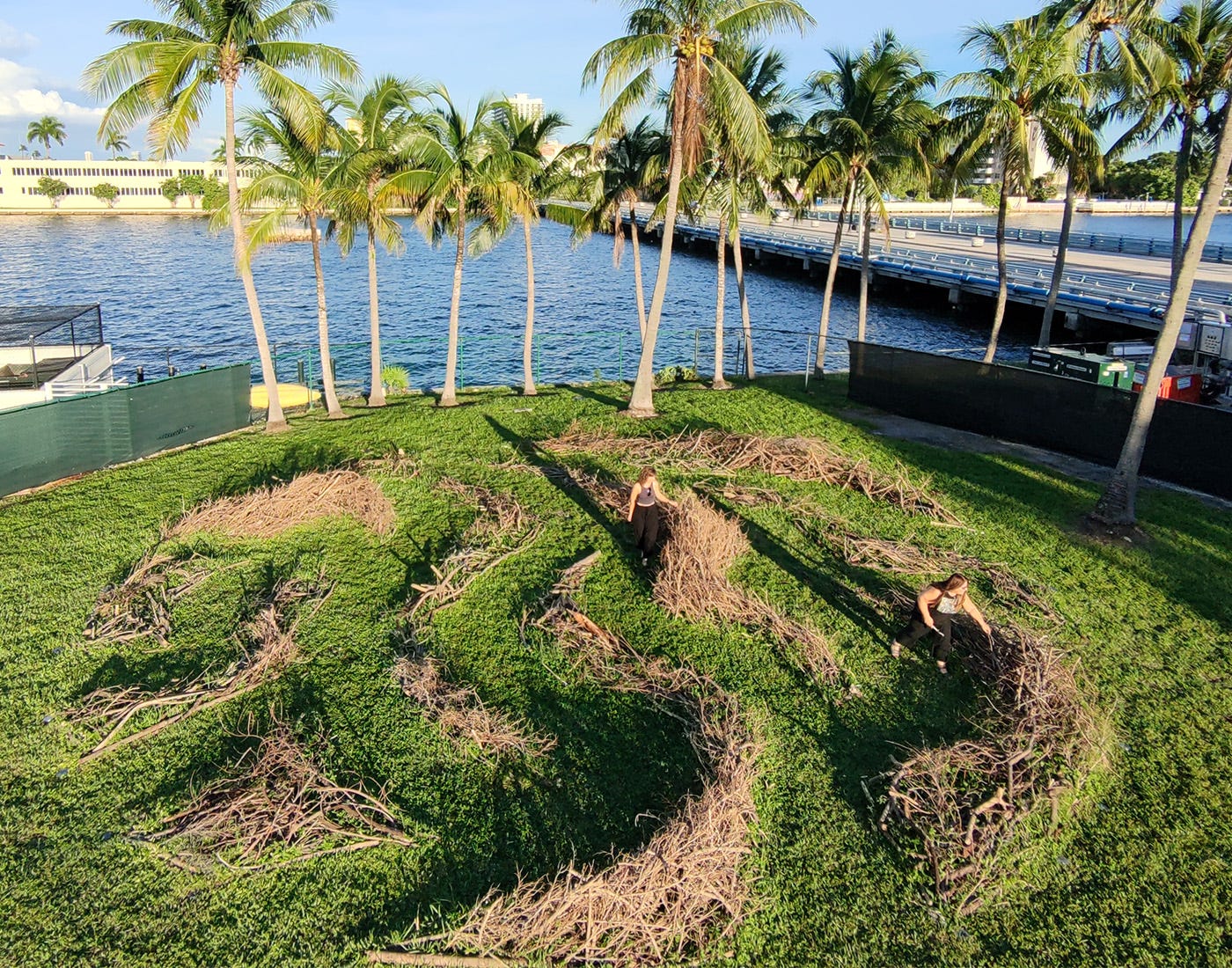
Despite its gentle character, my project gave rise to unending micro-confrontations. It was a useful exercise, a soft space to test an unfamiliar dynamic. Ultimately, I found that the urgency I felt around building a site of healing and solidarity gave me the wherewithal to persist. Its guiding ethos held me all the way.
Please please please understand that I’ve been using the em dash for at least two decades (it is one of the most elegant punctuation devices that exists). You cannot imagine how annoyed I am that it is now considered a dead giveaway for the use of an AI chatbot.
Comments
Nothing yet. Say the first thing.
Sign in to join the conversation.