
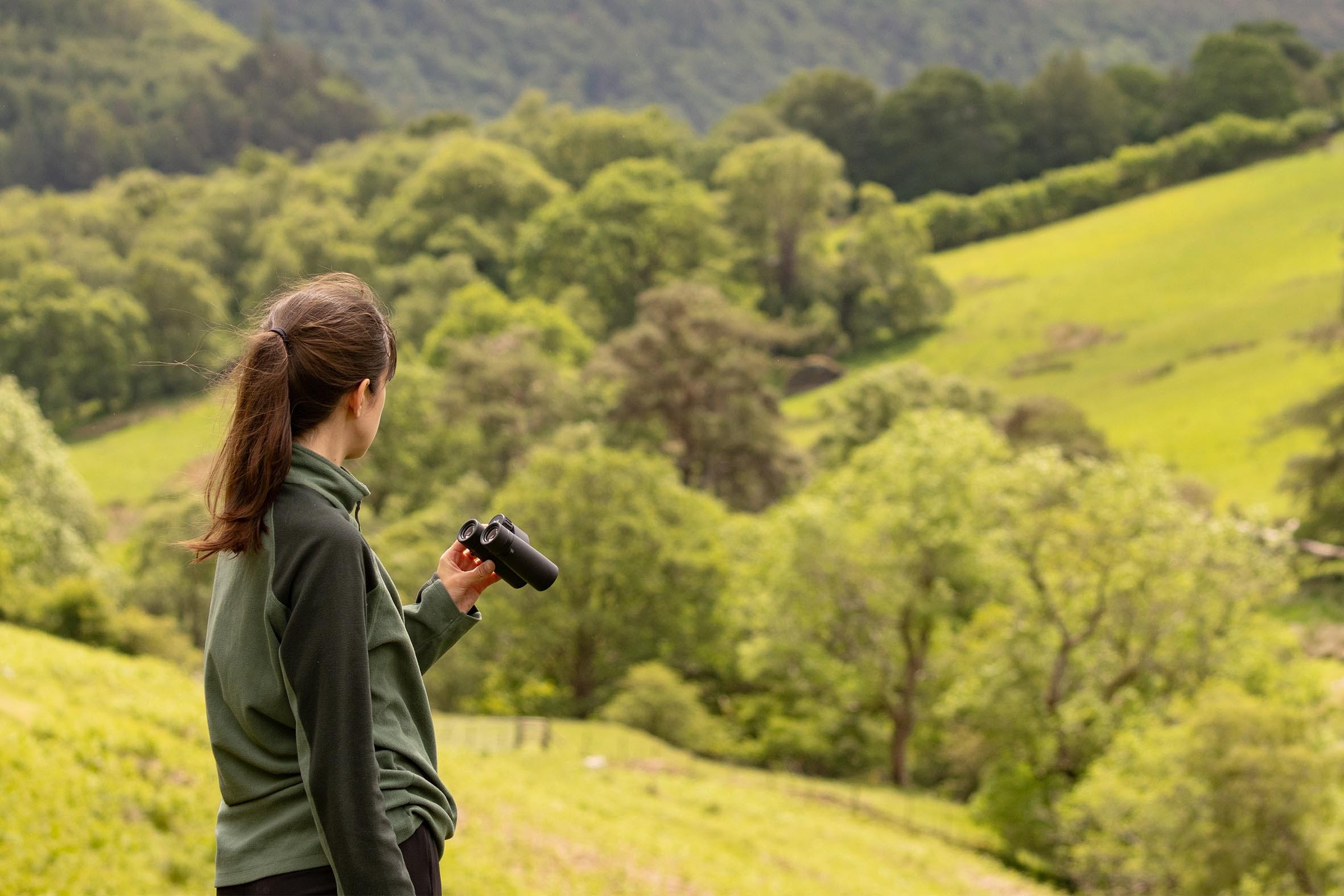
Vision usually outcompetes our other senses. Plonk yourself in a forest and I reckon you’ll notice the shape, size and colour of a tree before the whispering of its leaves or the scent of its pine needles. Largely thanks to technology, most of what we experience starts with what we see, often with subtitles so we don’t even need sound to make sense of it.
Experiences in nature should be immersive. By definition, ‘immersive’ as an adjective is something that tickles multiple senses. You’re fully absorbed. That’s why it’s recommended to leave your phone at home or tuck it deep in a pocket when you’re outdoors. The buzzes and bings pop that immersive bubble too easily.
So how do you unpick the habit of letting your eyes do all the work? The answer is simple: close them. But this would be a very short post if I stopped there, so here are my recommendations for how to involve all the senses and make your time in nature more immersive.
It’s a hot summer’s day and you’re strolling through a forest. The sound of trickling water reaches your ears, so you follow it to a clear stream tripping over pale pebbles. Is it just me or do your feet suddenly ramp up in temperature when natural water appears? Shoes simply must be flung off and, often with an accompanying squeal, toes must be submerged.
This is an example of grounding, also called earthing. It’s a wellness practice linked to bare skin being in direct contact with the earth’s electrical charges. Experiments have shown that sustained contact with the earth enables electrons from the earth’s surface to spread through the body, bringing a variety of health benefits including wound healing and sleep improvement1.
It’s also suggested that grounding helps to reduce anxiety; having a raised awareness of your surroundings in the present moment can have a calming effect. What’s more, walking barefoot helps to strengthen the feet, improve balance and restore our natural gait2.
As well as submersing in natural water, you can also ground by walking barefoot on grass, sand – I don’t have to convince you of how soothing it is to wiggle your bare toes on a beach – or even mud if you don’t mind the oozy sensation. Obviously you should be mindful of potential buzzkills like litter and ticks, but with a little consideration you can enjoy barefoot grounding virtually anywhere.

For me, there’s no sweeter sign of summer than the scent of gorse bushes. Once the sun has a chance to warm up those silky yellow petals, every inhale is perfumed with coconut. As humans, our sense of smell isn’t our strongest, but that doesn’t mean it should be disregarded. Our nose can still be a useful tool to connect more deeply with our natural surroundings.
If I say ‘freshly mown grass’, what comes to mind first? You might have thought of the smell before the sight of the matted green clods left behind. You might have even thought of your old school playing field just from that phrase alone.
Certain smells trigger strong memories because of the parts of our brains that process them. Olfactory sensory neurons fire electrical signals to the amygdala, which generates emotion, and the hippocampus, which builds and stores memories3. If a smell is tied to a particularly strong emotion, our brains file it away so that if the smell returns even decades later, the memory comes flooding back.
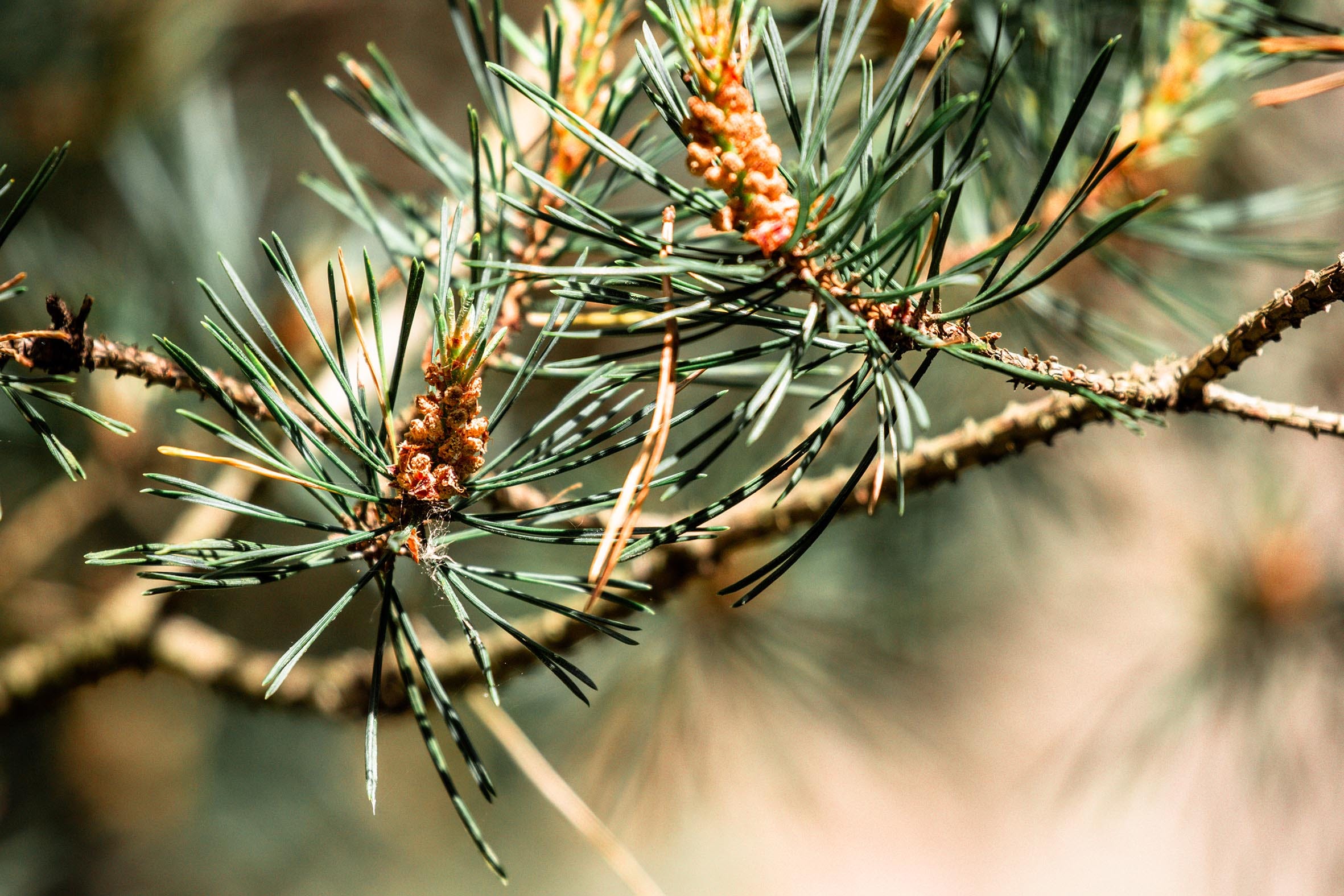
Because our sense of smell is connected to structures in the brain linked to emotion, it plays a strong role in regulating the nervous system. Certain scents have a noticeably calming effect, including pine. Coniferous trees release high levels of organic compounds called phytoncides as a kind of anti-microbial protection.
When we inhale these phytoncides, our levels of cortisol (stress hormone) are reduced, our immunity is boosted and we feel more relaxed4. So the next time you’re in an evergreen forest, take a good deep breath!
When it comes to nature sounds, birdsong and crashing waves appear in countless calming sleep playlists on Spotify. But for a lot of wildlife, sounds are reserved for the cover of darkness, such as the shattering screams of foxes familiar to many urban dwellers.
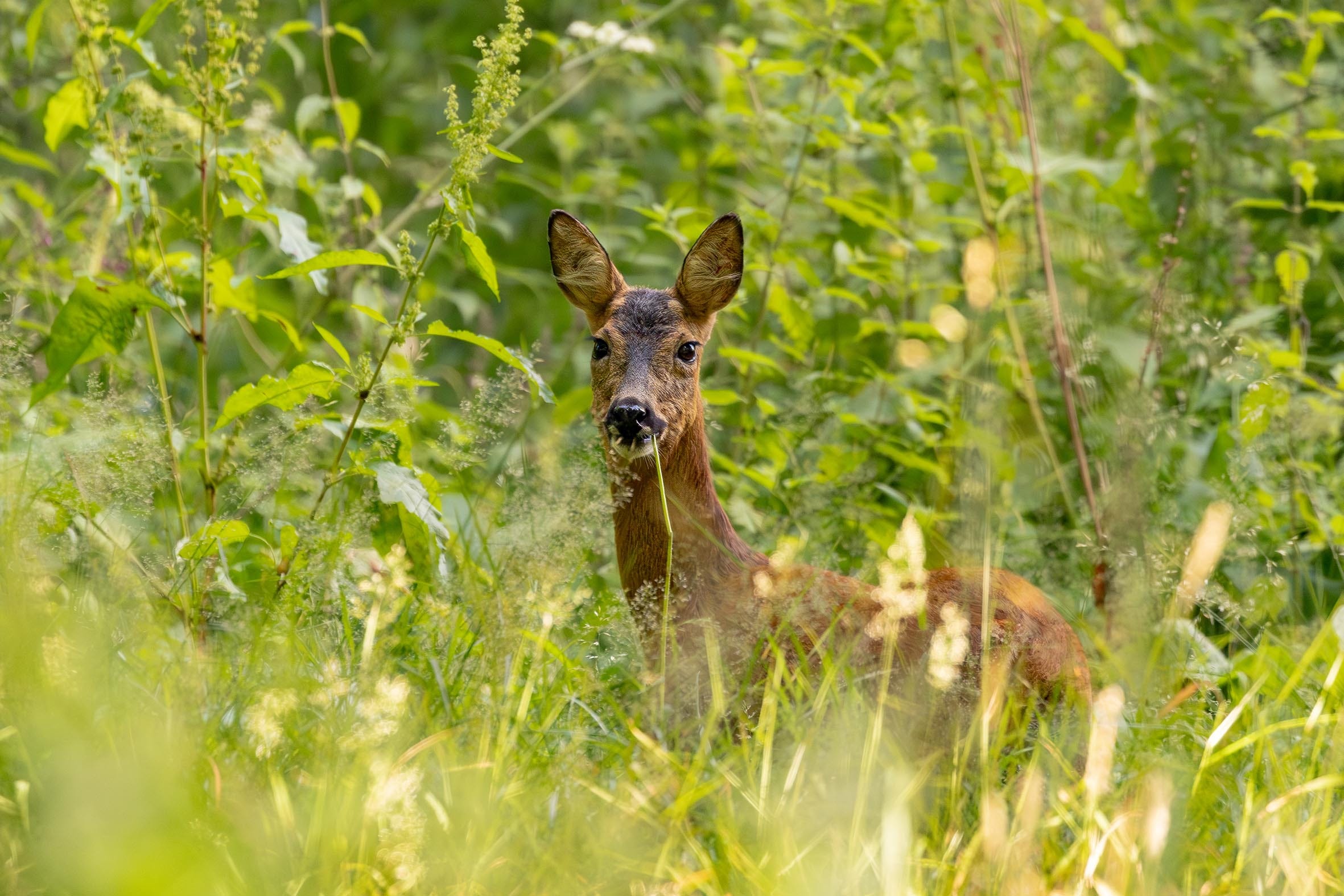
Tawny owls make a familiar hooting call; females say ‘twit’, then males answer with ‘twoo’. Roe deer – petite, pretty-faced British deer often seen at dawn and dusk – bark like dogs when alarmed. This throaty sound ricochets through a forest clearing with fantastic drama. An even rarer sound is the bizarre, metallic churring of the nightjar, a nocturnal bird with a wide, frog-like face.
Tucked up at home, it’s a lot harder to appreciate nature’s nighttime soundscape, so I urge you to explore nature after nightfall, or any time when your eyes can’t pull as much weight.
There’s a misconception that if one of our senses is restricted, the others become stronger. Instead, we become more sensitive to the senses we can use, so in the dark when sight isn’t too helpful, we concentrate more on auditory stimuli instead. This might make it seem like sounds are louder or clearer, but the reality is we’re just focussing harder on them5.
If you don’t feel comfortable walking alone at night, drag a friend out with you or go as part of a group, but make sure to stay quiet to keep yourself immersed and distraction-free. Settle on the edge of a forest or open field and see how many different sounds you notice when your vision is limited.
Any time spent outdoors is rewarding, but concentrating on sounds, smells and textures as well as sights helps forge a stronger connection with the natural world and offers a hefty list of health benefits. By being anchored in the present moment, we can distance ourselves from distractions and enjoy a stripped-back, more immersive experience.
Rain hitting a tree canopy
The pong of seaweed
Wind through dry leaves
Dew-soaked moss
A woodpecker drumming
Sunlight on closed eyelids
Soil after heavy rain (also known as petrichor)
The uniform barbs of a feather
A roe deer barking
Gorse flowers on a warm day
Lichen fuzz
Repairing My Reading
·
Jun 27
I grew up with my nose in a book. As both an only child and an introvert, my natural habitats were bookshops, libraries and cosy reading nooks. I remember at primary school there used to be a pop-up book market every now and then in the hall, and I would bounce in my seat waiting for my class’s turn to have a look. I wrote endless stories, my head full …
Bee's Eye View
·
Jun 6

Slow down. This phrase is thrown around a lot in nature and mindfulness circles. With everyday life constantly trying to speed us up, it’s certainly a useful reminder, but how exactly do we do it?
National Library of Medicine: The Effects of Grounding (Earthing)
Healthline: Does Walking Barefoot Have Health Benefits?
Harvard Medicine Magazine: The Connections Between Smell, Memory & Health
Reconnecting With Nature: The Best Scents in Nature for Calming the Nervous System
Consensus: Does Darkness Make Your Hearing More Sensitive?
No posts
Comments
Nothing yet. Say the first thing.
Sign in to join the conversation.