
Happy Blue Moon. Today marks the second full moon of May, coloring this moon one of the rarest colors in nature. It took humanity thousands of years to see blue as its own color, with very few ancient cultures naming it. In the Odyssey, Homer refers to the “wine-red sea.” Despite ancient indigo fabric and Egyptian glaze, it wasn’t until the 6th Century invention of Ultramarine (from ground lapis lazuli) that the idea of “blue” began to spread. Even still, it barely exists. In almost all animals, blue is a mirage rather than a pigment, produced by clever cells and a trick of the light. Despite what rose breeders may tell you, blue is also rare in plants: <10% of the 280,000 species of flowering plants produce blue flowers. Those that do, use anthocyanins, pigments that change color with pH. You likely know them from Mophead Hydrangea but they’re also in Virginia Bluebells, California Bluebells, Salivas, and Camas Lilies. Fruits and leaves most often get their blues from powdery waxes, thought to function as sunblock or attract pollinators. Any time you see “glauca” in a plant name, it refers to this wax. As a full-tilt glaucophile, the hunt for blue is life-long. I’m overjoyed for the moon this evening.
✤
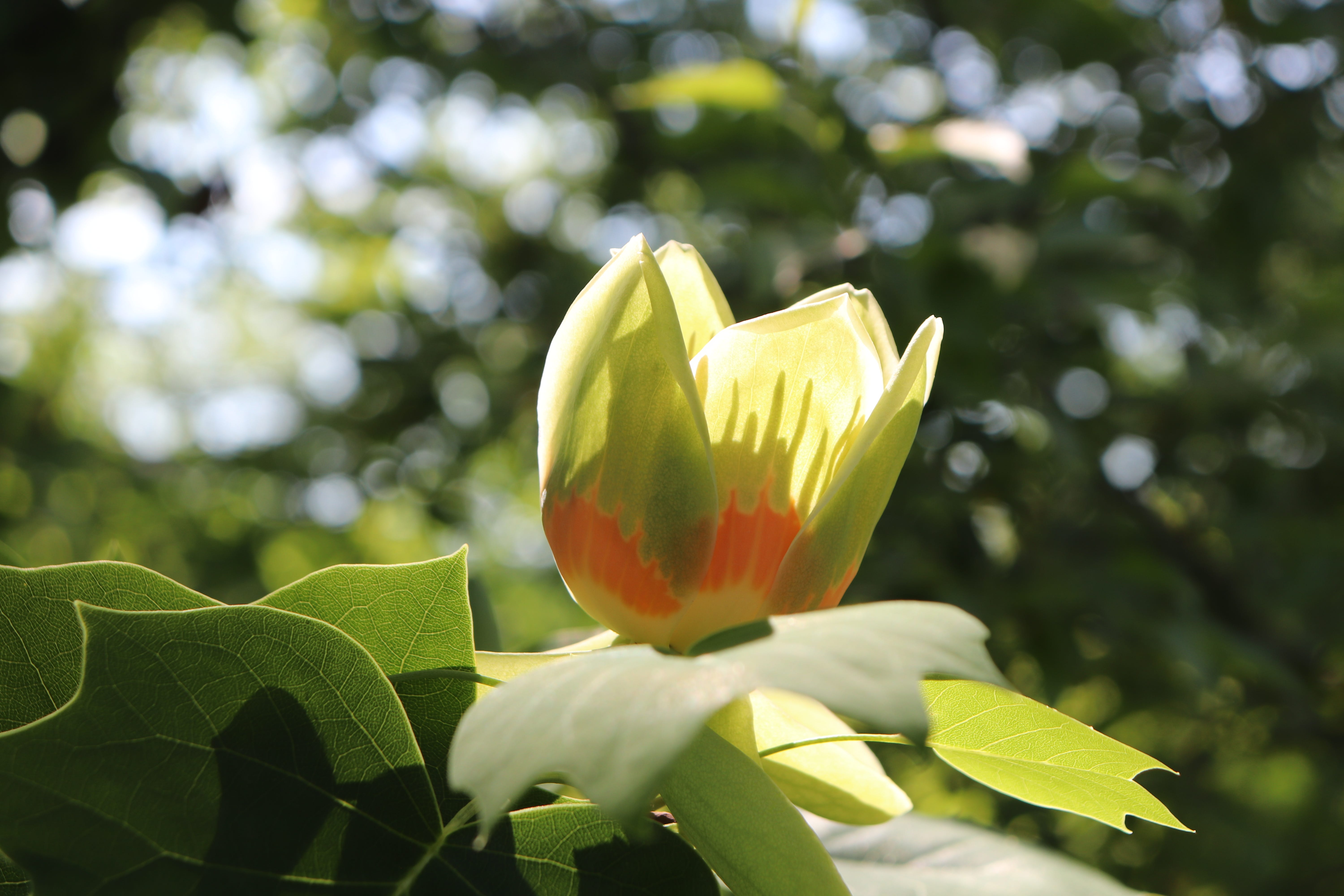
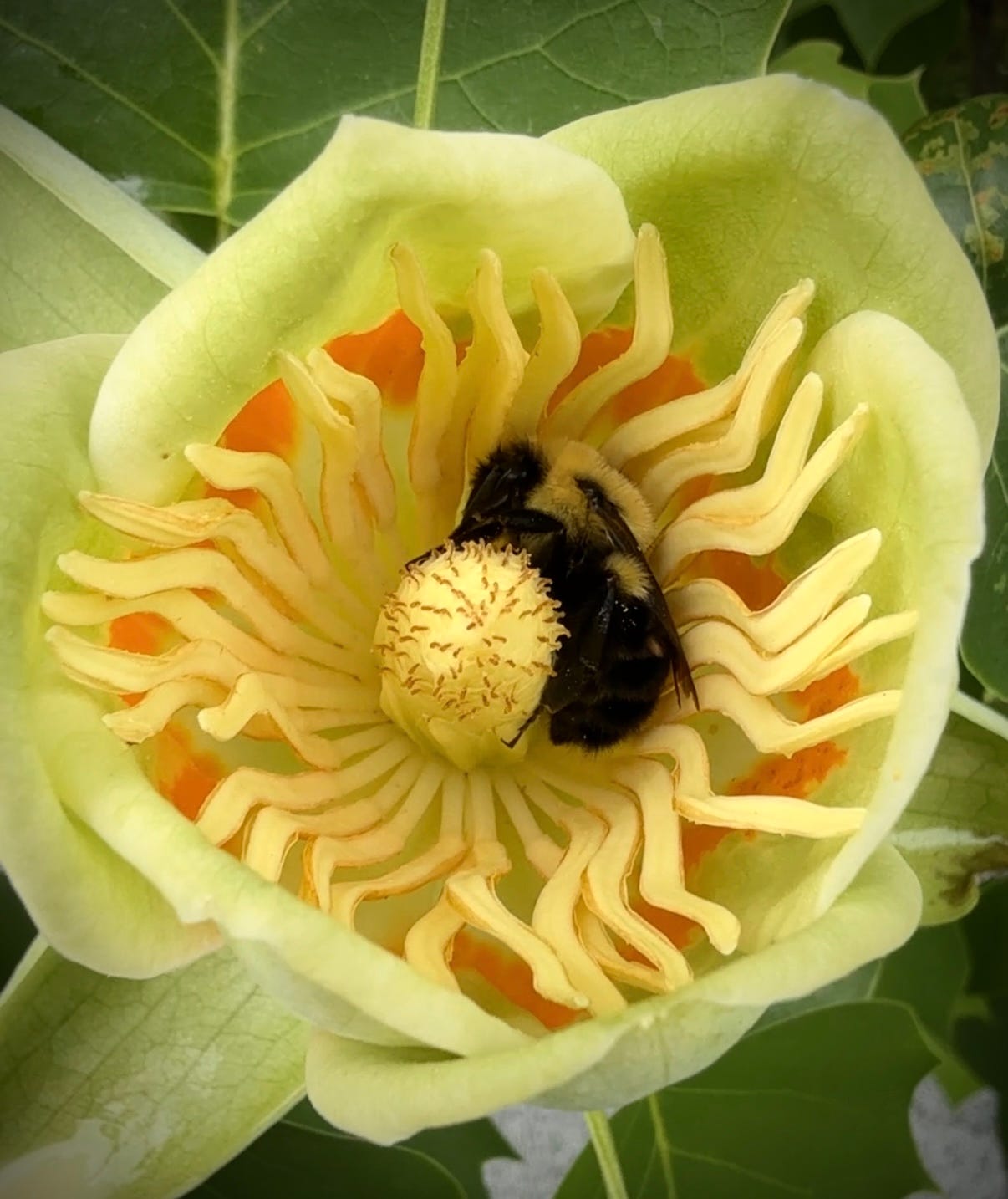
It is not easy to write this newsletter with a Tulip Tree blooming outside of my office window. How am I supposed to type when there is currently an entire flock of Cedar Waxwings drinking nectar from the flowers!?!? I’ve been documenting everyone who visits the flowers and studying as much as I can about this most beautiful of ancient trees, and I’m going to report on them for this month’s Garden-side Chat. The leaves feed Silk Moths and Tiger Swallowtails, and the flowers put out so much nectar it literally drips from the trees. This tree is an absolute marvel and I can’t wait to tell you all about it.
Garden-side Chat: Monday, June 22nd at 6PM EST.
This newsletter is and always will be free for everyone. But if you’d like to join our monthly, virtual chats please become a paid supporter by clicking below.
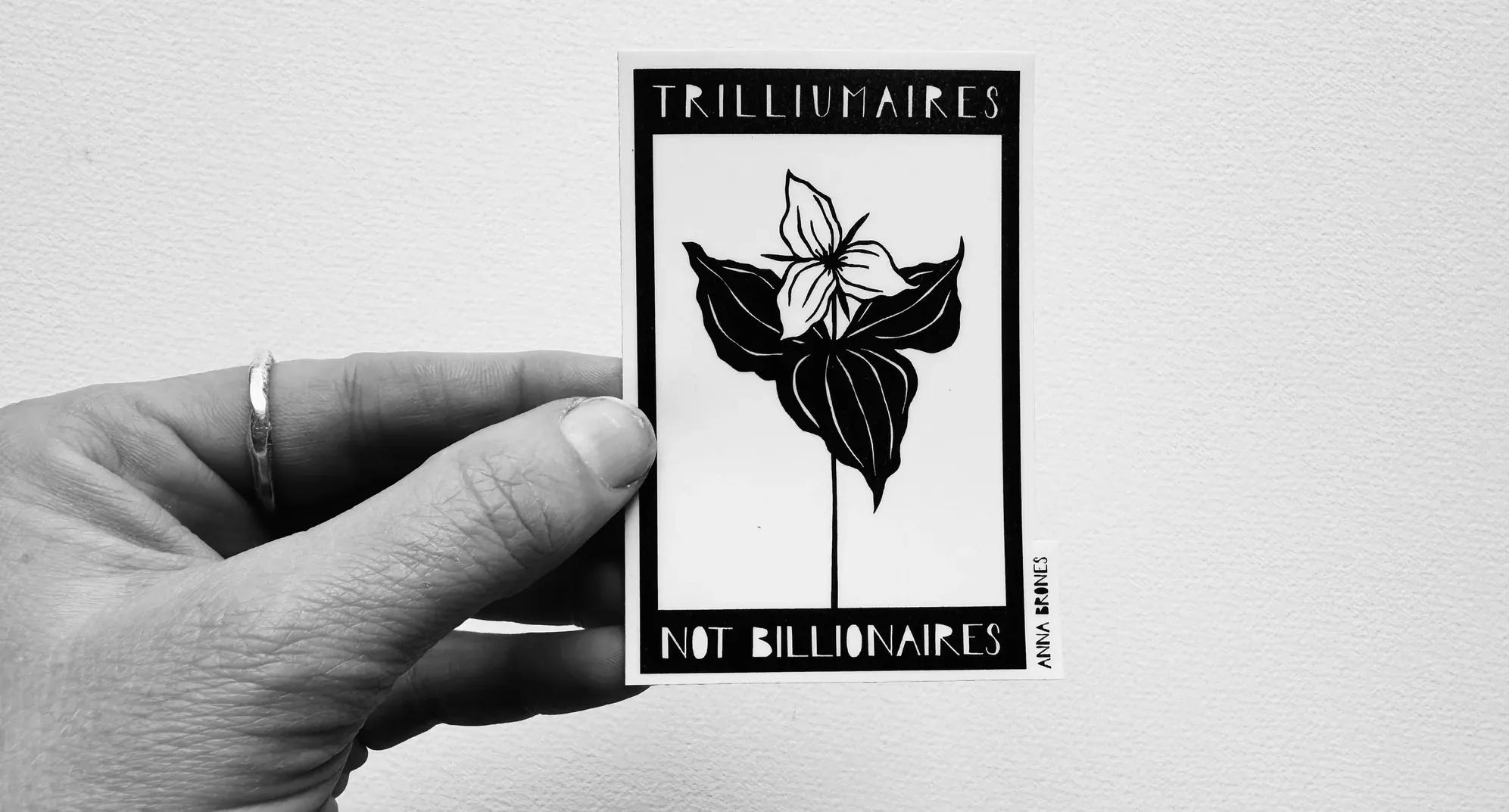
Adorable sticker alert! Artist Anna Brones makes these cuties as stickers, postcards, and prints.
I would be hard pressed to stick to my environmental ethos if someone gave me the option to wipe mosquitoes off the planet. But even still, I would never, ever fog spray to get rid of them, for two reasons: A) It doesn’t work. Fogging only kills mature mosquitoes and larvae replace them in a few days. And B) Fogging does kill everyone else. Even natural treatments harm all the insects they touch, damaging the ecological webs that keep mosquitoes in balance. Thank goodness we have mosquito dunks and now is the time to use them! Homegrown National Park and Doug Tallamy have issued a new challenge: make a mosquitos bucket. They provide clear instructions, methods to help other insects escape, and an option to map your bucket. Remember: these efforts are far more effective when your neighbors do them as well.
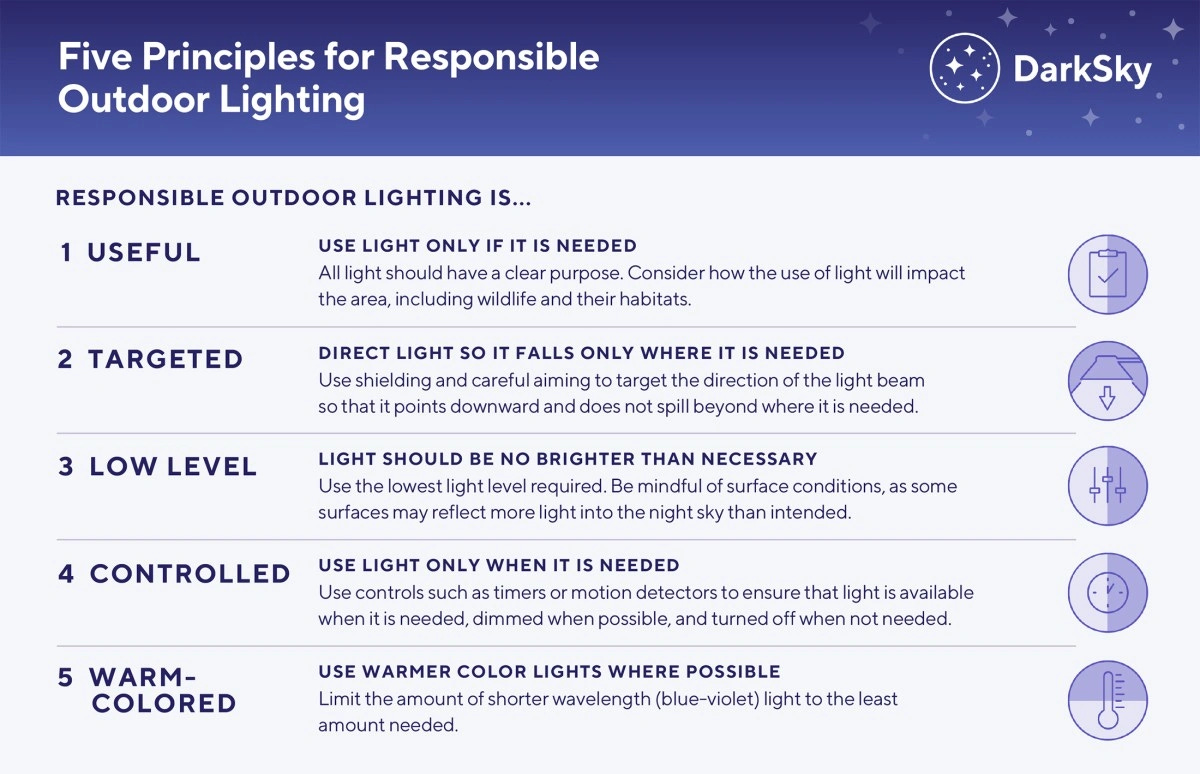
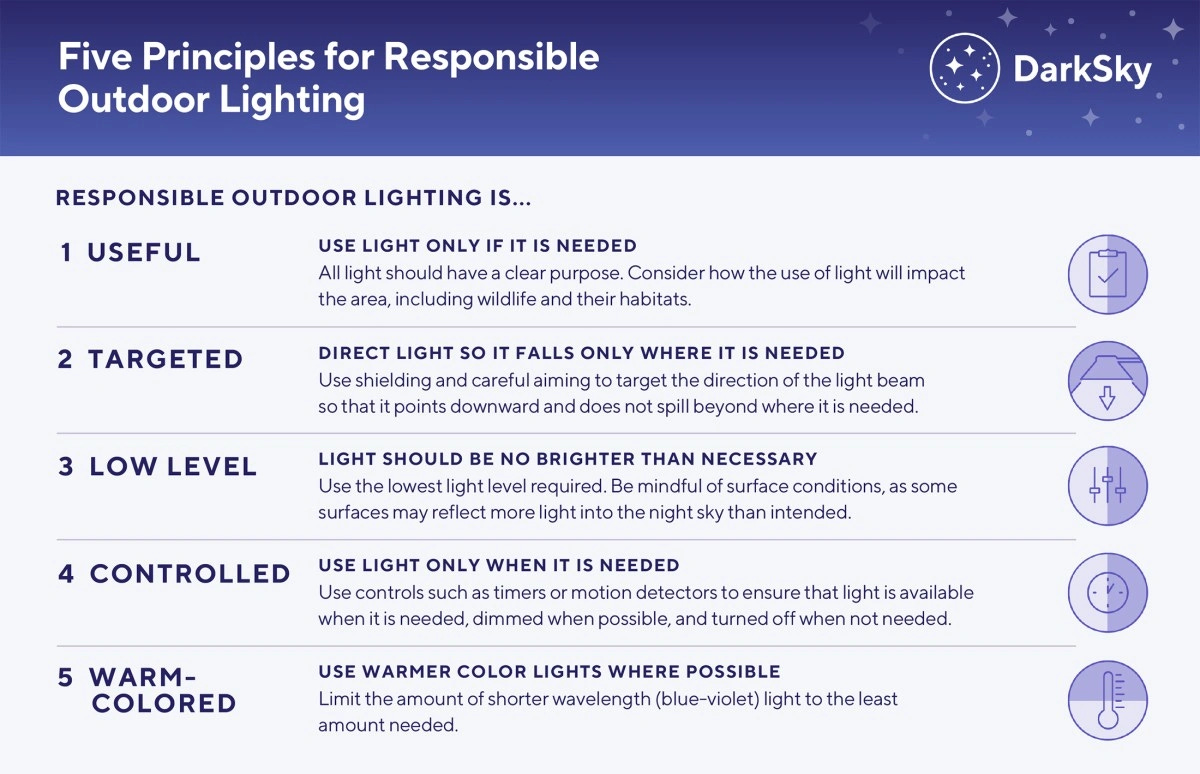
All life on Earth evolved to live in our shifting cycles of day and nighttime. Much of that life is confused by the volume and breadth of light pollution at night. More than 1/3 of humanity cannot see the Milky Way and 80% of Americans literally never have. Light pollution makes plants bloom earlier, causes migrating birds to crash, and can reduce moth populations by 30%. It’s also getting worse, increasing by 10% per year. Thankfully, this is the easiest form of pollution to solve. Light should be useful, targeted, warm colored, no brighter than necessary, and shine only when needed. The above chart is from DarkSky International, a nonprofit that helps people and cities reduce light pollution. Their website has many helpful resources, approved product lists, and can show you how to assess your home lighting.
You don’t get ecological gardening without ecology. And while ecology can be complicated and messy, naturalists are here for us, translating the world into characters with stories. One of my favorite sources is Northern Woodlands Magazine, which comes out each season and is filled with pieces like this one on forest dwelling bees of the northeast. Is it gardening? No. But this is how we develop an ecological gardening practice, by learning what our plant and animal neighbors need to thrive and figuring out ways to support them on the land we care for.
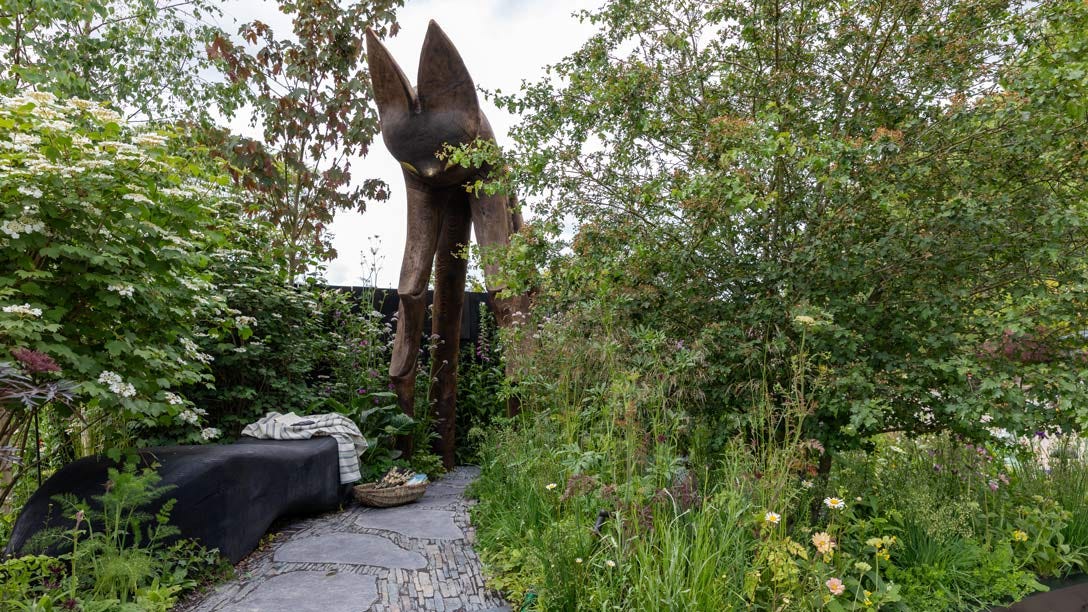
Every spring, I armchair quarterback the Chelsea Garden Show, kvetching about the extravagance and waste while ogling the beautiful designs. This year, there wasn’t a single garden that jumped out of my computer screen and stole my heart. There was a bat garden and a “sexy” garden that were fine, but I don’t think it’s them, it’s me. It’s getting harder and harder to delight in luxury and excess. I want the high design, playfulness, and celebration of Chelsea but I also want it to mean something, to do something real. For the past 5 years, a mysterious philanthropist gave the RHS $23 million so that gardens would fund worthy charities and could then be reinstalled somewhere permanent after the show, but now that money is gone. Others have advocated for a traveling show, that builds real gardens in different towns and cities every few years. I’ve never been to Chelsea and am sure the experience is its own wonderful and overwhelming thing, but from my armchair, I much prefer to peruse the Landezine International Landscape Award submissions and see all the cool new parks, gardens, and playgrounds from all over the world.
All too often ecological gardening is presented as a moral obligation in retribution for our disastrous environmental legacy - a duty we have to plant asters and goldenrods. And while that isn’t entirely wrong, it is a very small part of why anyone should do this work. Ecological gardens are stunningly beautiful, fascinatingly dynamic, and incredibly fun. I feel like we’re perpetually throwing a fancy party, and get to marvel at the flowering and flying guests who show up. Melissa Ozawa collected the many ways these gardens bring us joy in her new piece for Gardenista. Claudia West delights in the Luna Moths who fly through the evening sky, Page Dickey watches winter Juncos feasting on the seeds of her uncut Monarda, and Nancy Lawson finds her first Zebra Swallowtail 20 years after she planted Pawpaws for them. This is work that unites beauty with meaning.
Earlier this month, the New York Times published what was perhaps the worst gardening article ever written. Entitled, the Right Way to Much, the author proceeded to recommend the wrong way to mulch: 4 inches of dyed red wood chips around all plants, followed by synthetic fertilizers. Commenters set the paper straight, and thankfully, the following weeks were followed by quality garden reporting. Reporters went to the Arnold Arboretum to ask actual gardeners about their favorite tools. An article threw a bit of shade on the “chaos gardening” trend while giving Robin Wall Kimmerer the last word. And the Times Magazine included iconic garden styles in their “How to be Cultured” series. There are more important things happening in the world (and at the Times) than bad garden advice, but I’m so grateful for all of you keeping this movement on track and orange mulch out of the picture.
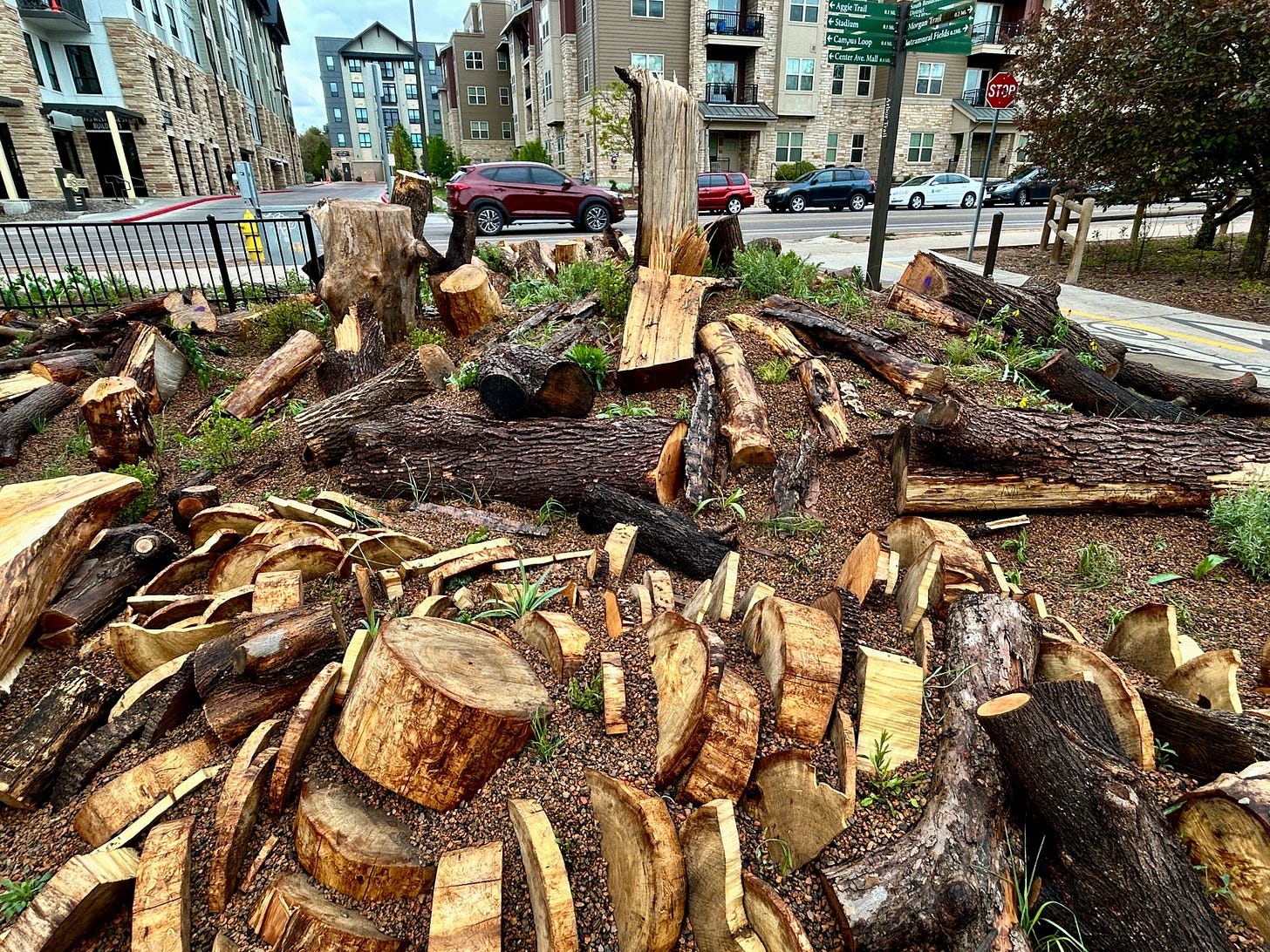
An exciting new garden was installed at the entrance of the Colorado State University Arboretum. Entitled THE FELL, the garden imagines a blown down tree and the life that emerges afterwords. Designer and gardener Kevin Philip Williams used trees salvaged from campus and worked with students to grow plants and staff to build it. Importantly, the garden was mostly improvised as the land and materials came together, rather than meticulously designed. It will be fascinating to see how the composition grows and what it becomes over time.

Ticks are, without a doubt, the single worst part of being outside. They’ve changed our relationship to gardens, meadows, and forests, instilling fear with places and plants that people desperately need. Many folks mow down plants and spray their land with pesticides, trying to keep themselves and their families safe. And I get it, Lyme and Alpha-gal are terrifying. But these efforts bring very little, if any, real protections and over time, could lead to more disease! Dr James Shepard, an infectious disease researcher at Yale, breaks down how this works in a presentation for the Native Plant Society of New Jersey. All over the world, areas of low biodiversity have high infectious disease transmission. That’s because of something called the “dilution effect.” Monocultures allow disease to spread through individuals easily, but diversity and genetic variability disrupt spread. With Lyme Disease, not every animal a tick bites will infect them with the bacteria. White-footed mice and Eastern chipmunks can be Lyme reservoirs, while deer, rabbits, and lizards are not. When land is fragmented and developed, mice abound and Lyme can spread through them unabated. But when land is diverse, carnivores keep mouse populations down, predators keep tick populations down, and there are many more animals for ticks to bite besides mice. Biodiversity dilutes Lyme in a system. As Dr. Shepard says, “Your environment dictates far more than the pleasantness of your garden. It dictates what infections you’re going to get.”
We talk a lot about how birds + berries and bees + pollen evolved together, shaped by and for each other, and not enough about how humans have done the exact same thing. A new study in Nature Communications reveals how entangled we really are. The Quechua people of the Andes Mountains have tons of an enzyme in their saliva that breaks down starch - they’re unusually fantastic at digesting carbohydrates. They also domesticated the potato 10,000 years ago and ever since then, the people and the plant have been adapting to life together. It’s an important reminder that we are part of these ecological webs, tenders of them even, and should take that responsibility seriously.
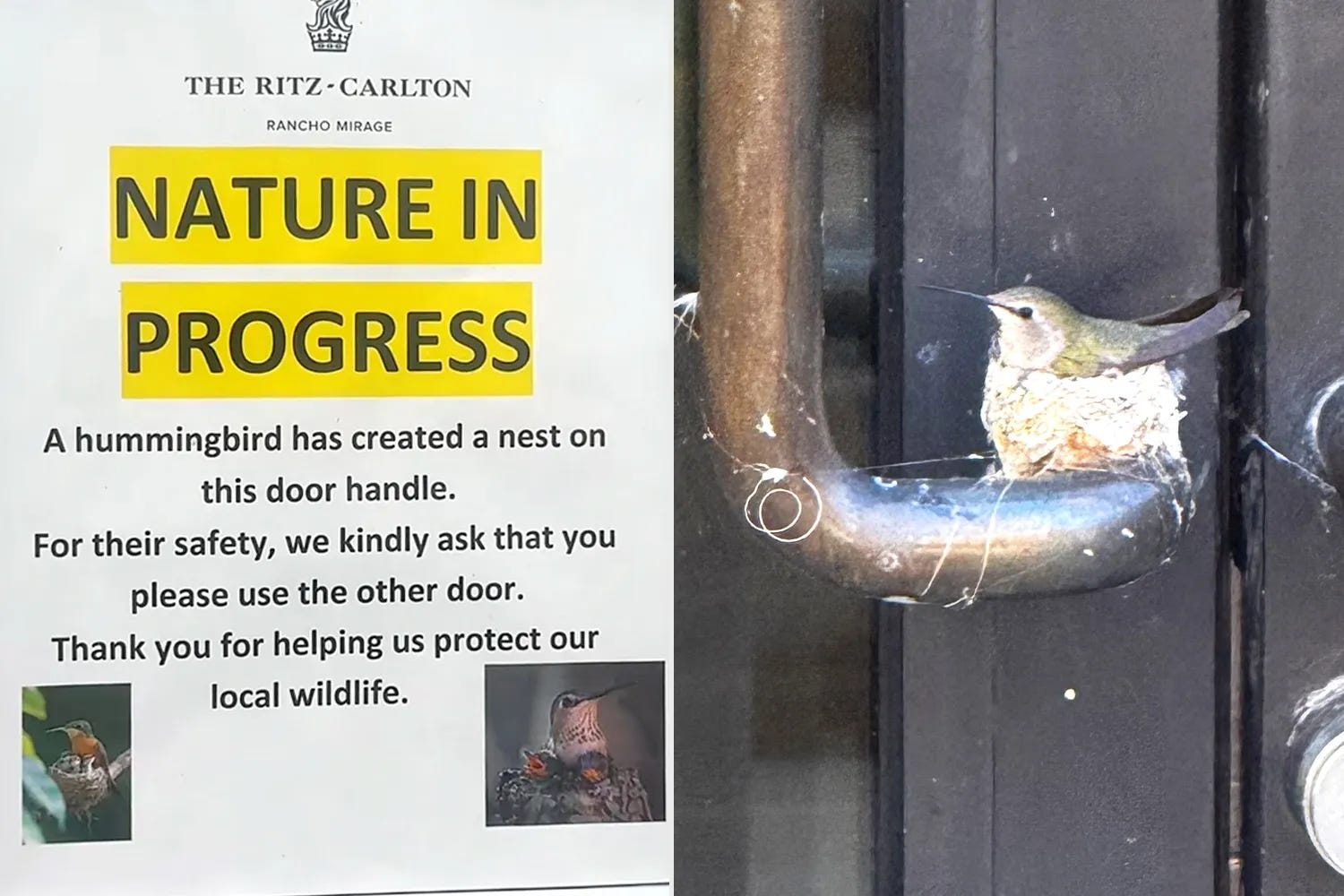
The entrance of a California Ritz-Carleton had to be closed after a tiny guest made her nest on the door. People Magazine has the exclusive.
Meadows are one of the prettiest and most popular ways for people to shrink their lawns. Among the northeast gentry, they’re THE thing to have, but it’s not easy to grow a meadow! And we’re all still collectively figuring it out. Charlotte Lorick at the Oak Spring Garden Foundation in Virginia tracked and detailed their process diversifying an old pasture field without using herbicide or tilling. They sod scraped 2” off the top of two acres of pasture in late Fall. They raked and seeded in native plants and temporary cover crops, then covered everything with straw. The site was mown and spot-weeded in spring for the following two years. While all results remain preliminary, they saw diversity skyrocket and cool season grass go from 100% cover to just 5%, indicating that their sod scraping technique was effective! It’s exciting to have a new potential tool for this important toolbox and I look forward to hearing about your sod-scraping project soon. (H/T to Jared Barns and his fab newsletter Plant.Ed)
A new film tracks a Ginkgo tree in Germany over the course of a century, exploring the mysteries of plant and human connection.
OK, this is literally the exact opposite of everything this newsletter is about but nonetheless fascinating: Science News took a deep dive into what it takes to grow the grass for World Cup soccer pitches and it is a level of technology that I did not know existed. There are 16 stadiums all over the continent, but all have to play the exact same on sod that will be just two weeks post-install by game day. With such a short window, normal sod cutting can’t work - grass goes into shock when the roots are cut. FIFA sod is grown on in a thin layer of soil that sits on top of plastic racks. Roots are essentially air pruned and peel off the racks easily when it’s time to ship. Sod is then installed on top of a vacuum ventilation system that pumps air to the roots, keeps them warm if it gets cold, and sucks out excess water when it rains. To assure all pitches play identically, a robot foot covered with sensors tests cleat traction and sound analysis software is used to measure how well balls bounce on the turf. But all of that pales in comparison of what it takes to get the grass to grow: massive banks of bright pink lights are rolled out each day. The light is mostly red but that makes for a long and thin blade of grass. A bit of blue is used because those shorter wavelengths grow short and sturdy grass, better for playing on. All of this effort is of course intended to be completely invisible. And you thought front yards had too many inputs!
Science round up:
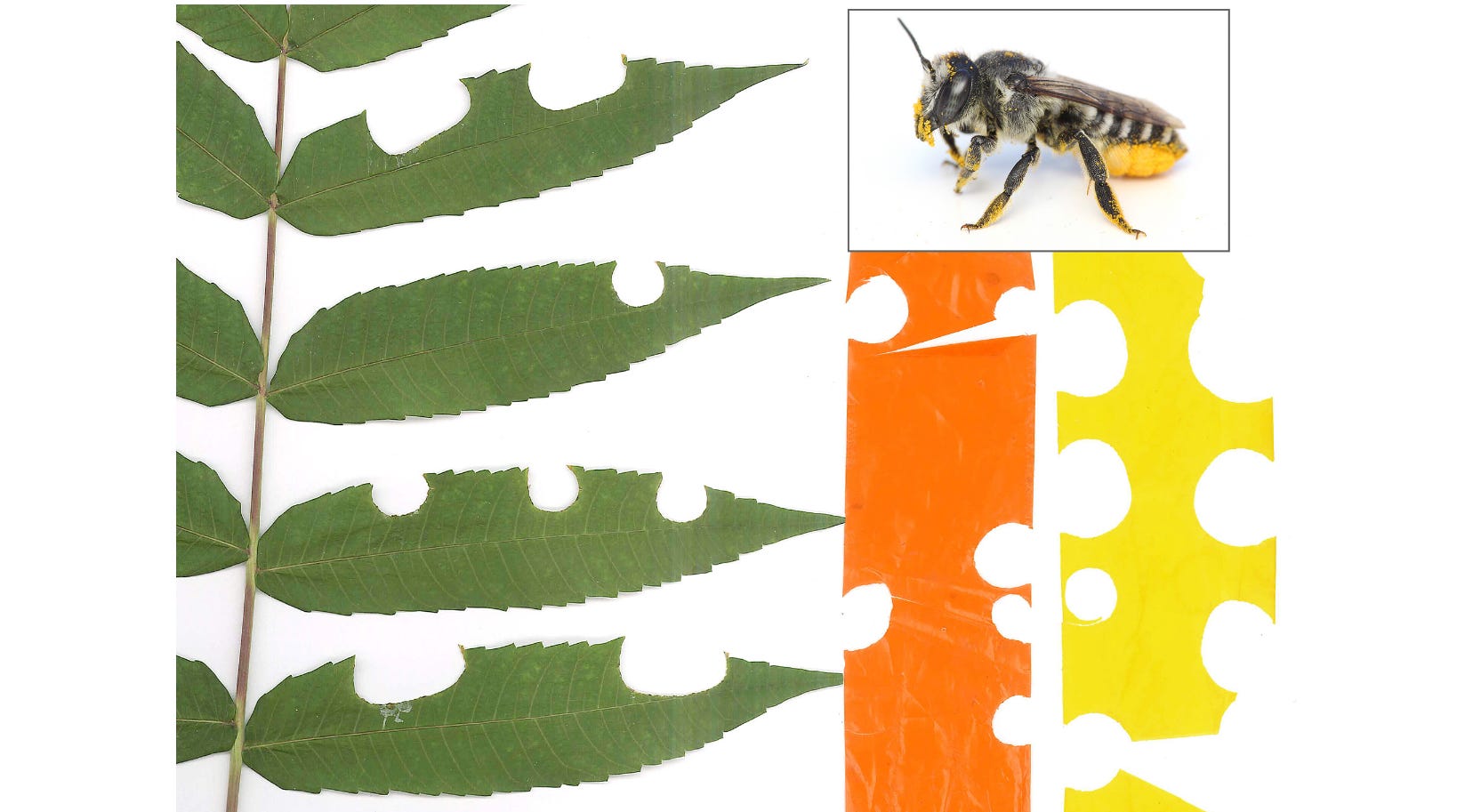
Leafcutter Bees are using fluorescent flagging tape as nest material.
When leaves in German forests were eaten by herbivores, the trees were able to respond by delaying budburst the following year, reducing herbivory by 55%.
Smarter male chickadees sing more.
Researchers tested >40 species of urban European birds and found that across the board, they were more scared of women than men.
As introduced warm-season grasses push out native plants in western sagebrush-steppes, bird species initially diversify, but shift from specialist to generalist species.
Your potted Kalanchoe looks like it might just be the next big antibiotic.
Some Monarch butterflies are migrating to Florida for the winter rather than Mexico.
As temperatures warm, forest pests increase.
Wildlife gardens in Australian cities had more native bees diversity than conventional gardens and remnant wild lands. Researchers believe this was because native plant diversity in wildlife gardens was higher.
Daddy longlegs have been revealed as bloodthirsty killers… of frogs.
Carbon dioxide pollution is making the plants we eat less nutritious.
Nice work, readers! You’ve finally made it to the end. This month’s reward is awfully warm and fuzzy considering it’s about plants eating animals. Researchers have long characterized carnivorous plants as preying upon the insects who fall into their traps through bait, pitfalls, and sticky globs. But California Pitcher Plants seem to have a more wholesome tactic: they treat their prey well and keep them around. Researchers noticed that the wasps who made up most of the plants’ victims only rarely fell into their traps, spending most of their time drinking the generous nectar the pitchers provided. Analysis showed that pitcher nectar was indeed a major part of wasp diet, and that perhaps this was more of a mutualistic relationship rather than a competitive one. It’s lovely to think of these dynamics in such kind terms but far more fun to imagine that Pitcher Plants have simply discovered animal husbandry.
The Future Now Summit: Taking Action for People + Planet by Design
June 2-6, Detroit
In person and open to the public
I won’t be able to attend this landscape architecture summit, but I hope you do. It’s all about cultivating a city and planet for people and biodiversity. I honestly cannot think of the last time I’ve seen any conference with such a diverse, local, and appropriate lineup of speakers. It literally gives me hope for the future, that the critical task of passing over the levers of power to the people best positioned to cultivate the future we all want, is happening. At least in this small corner. Let me know how it goes!
June 27, MA
In person and by invitation only
I’m honored to be giving the commencement address for the Conway School’s graduate program in Sustainable Landscape Planning and Design. I haven’t met them yet, but I already know these students are going to change the world.
Chanticleer: Adventures in Ecological Horticulture
July 15, PA
In person and open to the public
I am overjoyed to lecture for Chanticleer this summer. If you needed an excuse to visit the most romantic gardens of the region, this is it. I’ll be speaking on cultivating habitat in ornamental landscapes, from city lots to pleasure gardens. Hope to see you there!
No posts
Comments
Nothing yet. Say the first thing.
Sign in to join the conversation.