
In which Rebecca goes behind the scenes of a post in progress that she isn’t actually going to write.
Dear Reader,
It’s been an interesting couple of years, and around six months ago I settled down to write about it – not for you, necessarily, but for me.
I had the name for the post right from the start – Lst nd fnd – a title which I felt combined my repeated experience of being lost and my forever-fascination for the foibles of language.
I’ve been revisiting the post in progress often, hoping that the finished piece would go some way to explaining something to myself. It won’t, because I haven’t written it. It’s all too difficult to explain, and in my attempts to get the story out of my head and onto the page I have ground to a halt too many times.
The post had been going to to start with some playful use of language; an exercise to explain that our knowledge of language and our acquaintance with the world can go a long way when it comes to dcphrng wrds whch hv hd thr vwls rmvd, and that no matter how chaotically we didece to sacmblre a wrod we will still be able to recognise it if we keep its first and last letters in their original places.
I was going to move on to explore what happens to a _____1 when entire _____2 have been removed ____3 it; something which my friend Terry Freedman showed us recently in this fascinating and entertaining post from his Experiments in Style series.
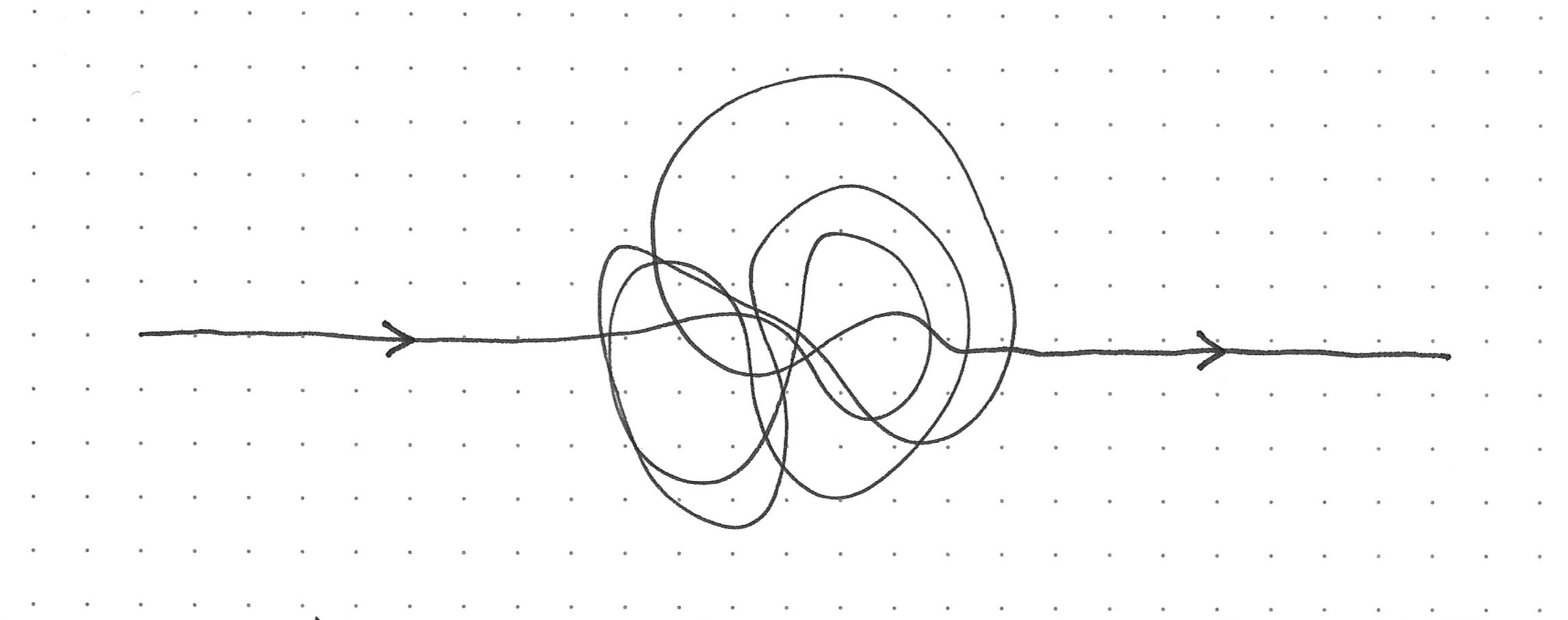
Yet this wasn’t going to be a post about being lst – sorry, lost, – nor about questionably-constructed anagrams or making sense of a story with some of its words missing. In fact, it was meant to be an exploration of my experience with FND (Functional Neurological Disorder), and how dealing with it is an exercise in filling in the gaps.
I’d been going to tell you how an unremarkable faint in May 2024 had triggered a landslide of inexplicable, insidious and unpredictable symptoms which have since distilled themselves into things I have now begun to accept; that there’s weakness on my right side, and that to avoid my not-always-reliably-mobile body having to choose between either moving forwards or steering, I use a walking stick when I’m out of the house so that I can do both simultaneously and with confidence. I’d tell you that sensory overload often results in involuntary movements in my limbs, and that the unlikely bedfellows of daytime fatigue and nighttime insomnia see me both resting and restless.
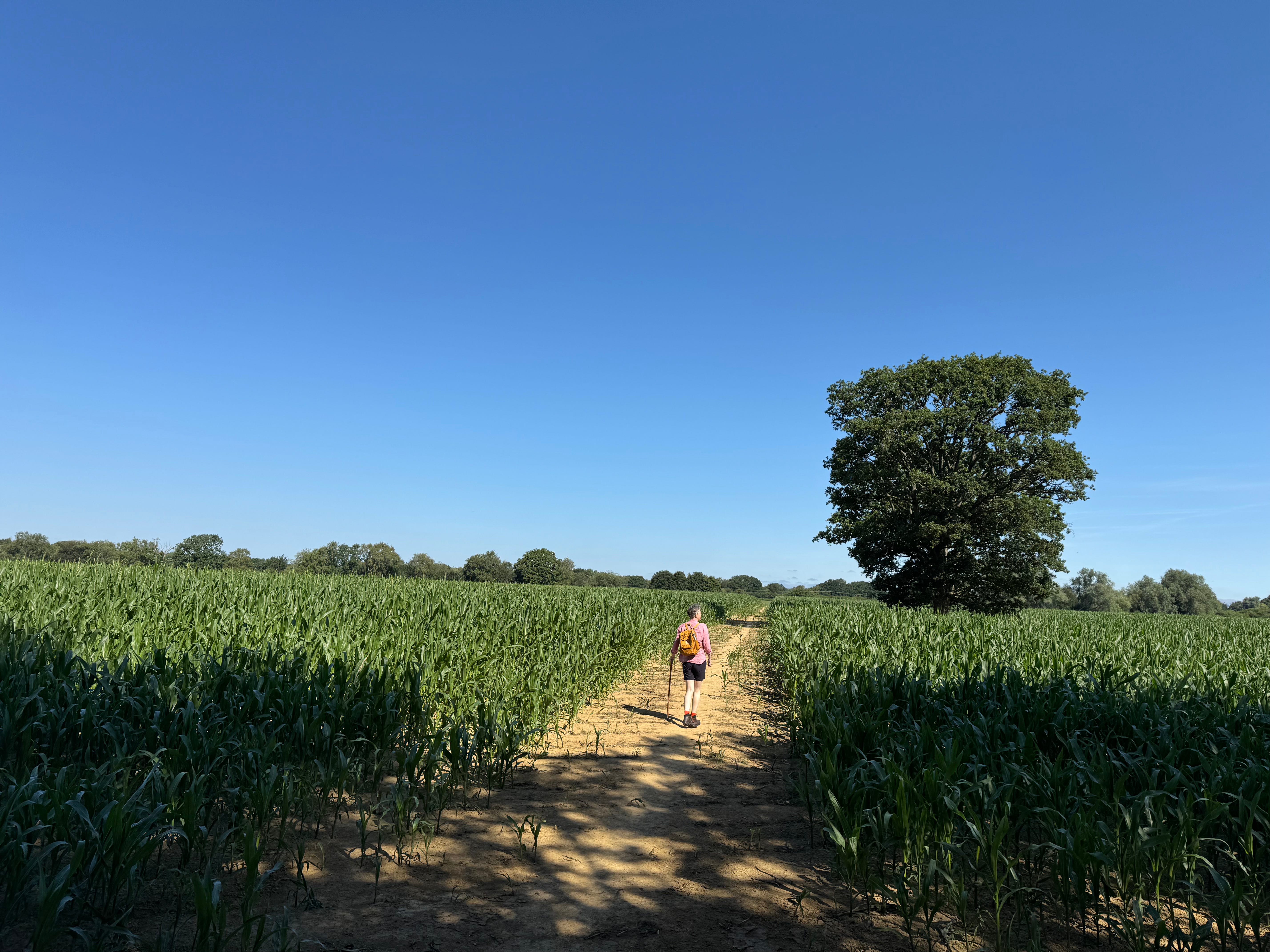
I was going to explore how filling in some gaps has been helping me; to explain that the body follows the path of least resistance, and that it’s a problem when its own muscle memory adapts to its new compromised position and finds itself resetting its default menu. I was going to tell you about how I’d set about trying to regain control of my wacky gait with techniques and exercises to reestablish automatic, subconscious movement.
I’d been going to share that in My Road (this is Julie’s own affiliate link), writer, poet, athlete and my friend Julie B. Hughes identifies that in her work to overcome persistent symptoms – in her case, the pain she was experiencing when running – there is ‘no separation between brain and body…. my nervous systems were on high alert, and that was why the volume of my symptoms had gone up.’ I was going tell you how much I’d learned from Julie about neuroplasticity: our ability to rebuild neural pathways in order to overcome such problems between the brain and the body as the ones which she – and I – have experienced; that there is a way through this.
I would have told you that in her 2010 book Cold Hands, Warm Heart, author and explorer Tess Burrows reports asking for advice on her walking technique during her training for the South Pole Race.
‘Relax and believe in what your body wants to do’, she was told. ‘Think of something else and your body will work out the right way for you personally.’
I would have announced that with the help of those around me, including my fabulous osteopath and my neurological physiotherapist, I am doing really, really well.
Lastly, I’d intended to remind us all that recovery is never linear, and to make you laugh by pointing out the irony in that statement, given how long it’s been since I last walked in a straight line. 🤣
But no, I’m not going to tell you any of that stuff. Writing this story as a string of hypotheticals has been the only way I’ve been able to get it out.
All is well. I may often be lst, but I’m also fnd. And the shape-shifting form of FND has created space both for self-compassion and for all sorts of gaps to be filled.
With my love, as ever,
Rebecca ❤️
When I first started writing on Substack it was to explore my almost infallible ability to get lost pretty much anywhere. In future posts I’m going to be looking back at some of those stories and bringing you some new ones, so do stick around!
It’s hard to explain a diagnosis of FND, and as a patient very hard to understand, not least because the combination of symptoms can vary hugely from person to person. Tests and scans have to my relief revealed that no disease or damage are affecting my nerves, and my subsequent FND diagnosis has been described to me as a software problem, not a hardware problem. It is the function of my nervous system which is impaired, in that although my nerves work, they don’t always seem to know they do. I often find my body following instructions from my subconscious brain without it having the courtesy to run them by my conscious brain first. Shaping those new neural pathways is a work in progress, and it’s making a difference!
Thank you for reading about the post that I couldn’t actually write.
Life is good. ❤️
If you’ve enjoyed this post, please let me know by clicking the heart. Thank you!
Thank you for reading! If you enjoy ‘Dear Reader, I’m lost’, please share and subscribe for free.
Comments
Nothing yet. Say the first thing.
Sign in to join the conversation.