
I wrote this letter a few years ago, and it became the beginning of my new book. So today, I’m sharing it here with you.
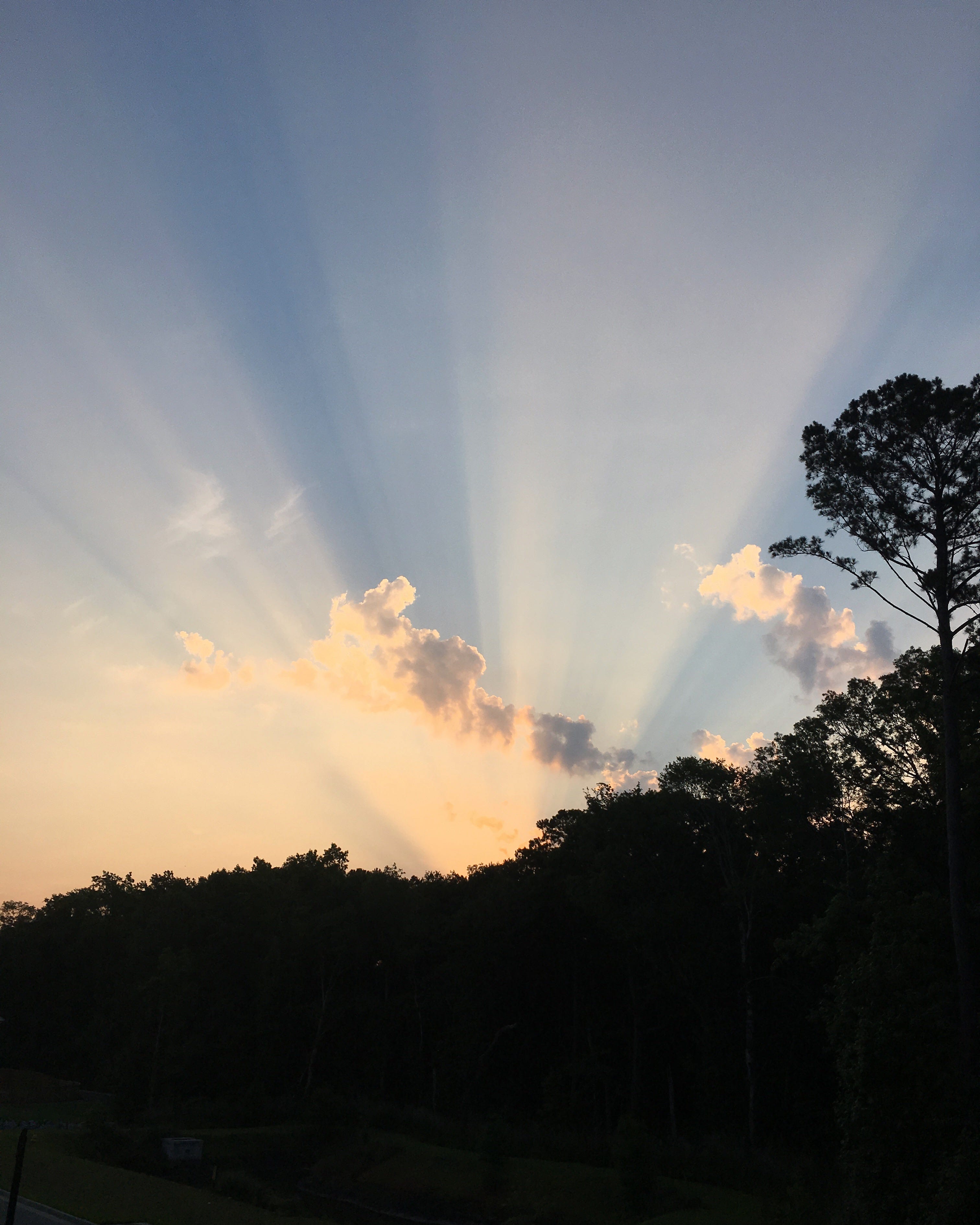
Landscapes have always been my surest reference point. As a young girl, I remember sitting with my Aunt Allison on the beach on Cape Cod and telling her that one day I would have a room in my house with sand in it. It was like a screened-in porch with a floor covered in sand. There were low chairs like beach chairs, a rake for smoothing the sand, and rocks to play with. It looked out over the dunes and had a sweeping view so I could watch the changing scene: stormy gray days with crashing waves, peaceful mornings, colorful golden hour.
In my imagination, I lived right on the beach, but that wasn’t enough. I wanted the beach to surround me. I loved how I felt being there. As an adult who could do anything, surely I could design a house that was like the beach. Looking back, I realize that I understood just how intertwined the landscape outside us is with the landscape within us—what I think of as our personal landscape.
That connection to nature has driven my art from the beginning. I learned to paint by painting the coast, and in art school abstract drawings finally clicked for me when my teacher Alfred De Credico taught me how to see them as landscapes. Applying the order of something I could see and understand—background, middle ground, foreground, like in a landscape painting or a still life—allowed me to imagine the marks and shapes coming together to capture a feeling or tell a story. I could imagine memories living in my head as a cloud above a stretch of land or my thoughts floating around inside a container. When I turned off my mind and freed my hands to paint, I could see them in what I had made. That’s still true for me. When I can tap into my personal landscape, I find my flow.
Visualizing my thoughts, memories, emotions, stories, dreams, and sensations in this way, like elements in a landscape painting, helps me understand myself more clearly as well. The colors, shapes, patterns of my living landscape aren’t always calm and pleasant; they’re layered and complex, messy at times, even dark. As an adult and a mother, when I’ve processed anxiety and deep sadness, I’ve closed my eyes and seen them moving from the foreground to the background, changing as I breathed. I find that awareness during challenging times helps me embrace joy and beauty as well. I try to slow down and relish when the shapes, colors, and patterns I feel are at ease or musically moving in delight. That grounds me.
To be able to do that, I have to be able to get out of my head. I can do it when I paint, when my hands take over. Sometimes I can do it in yoga. And sometimes the sun hitting a leaf a certain way on the sidewalk does it for me. The simple act of living and noticing the outer world quiets my thoughts and brings me back to myself.
I remember trying to express this idea as I worked on an update to our vision, purpose, and values for the company a few years ago. It’s difficult to put into words. Luckily, my business coach, Holly Howard, understood and told me the ideas I’d been exploring reminded her of the Irish poet John O’Donohue. I listened to him on the On Being podcast: “I think that connecting to the elemental can be a way of coming into rhythm with the universe,” he tells host Krista Tippett. “And I do think that there is a way in which the outer presence, even through memory or imagination, can be brought inward as a sustaining thing.”
I had to pause, rewind, and listen again because it connected so much with me. That led me to read his work and that of others like David Whyte and Ellen Langer.
“...Strangely when you pay attention to something other than yourself in silence, you actually become aware of your own body in a deeper way. It’s as if the world is actually looking back with the same intensity. You cleared a space. You’re fully in your body, but that body is paying attention to something other than itself and it’s created this live gravitational path between what you think is you and what you think is not you.” –David Whyte
“Mindfulness, for me, is the very simple process of actively noticing new things. When you actively notice new things, that puts you in the present, makes you sensitive to context. As you’re noticing new things, it’s engaging, and it turns out, after a lot of research, that we find that it’s literally, not just figuratively, enlivening.” –Ellen Langer
Looking can be a form of healing. I read research that found looking far into the distance can reduce stress. Forest bathing and even looking at pictures of nature can too. That’s how powerful an effect nature has on us, biologically and spiritually. These ideas speak to the essence of what I want my art to do.
If you can “clear a space” by focusing your attention outward, as Whyte says, you can see the colors, shapes, and textures of inner landscape—your living landscape—more clearly and feel them more completely. For me, clearing that space means drawing. It means painting. It means quiet time alone. It means sitting outside, feeling the wet grass and the cool air. It means looking and surrounding myself with things that remind me to look. That’s where design comes in. You can create a home that helps you find harmony with your living landscape if you’re intentional and considerate.
That’s where my patterns come from. They’re designed to be layered and combined to create a more idyllic calm and happy space. Looking ahead with my work, my hope is to cultivate this idea more. I want you to be able to use our fabrics and wallcoverings, with their colors, motifs, and textures that resonated so deeply for me, in a way that resonates with you and reflects what you want to feel. I want to give you what you need to create living landscapes—natural habitats that feed the soul and give us what we need to flourish.
My new book, The Harmonious Home, explores this further. If you’re interested I hope you’ll consider picking up a copy.
No posts
Comments
Nothing yet. Say the first thing.
Sign in to join the conversation.