
Abstract
This essay develops a positive conception of freedom, arguing that genuine liberty requires more than the absence of interference. It critiques the traditional liberal view of negative liberty, demonstrating its limitations in addressing inequalities in the capacity to exercise choice. Instead, it proposes that freedom is best understood as the capacity for self-government, which depends upon enabling conditions such as education, health, economic security, and political voice. The essay explores five interconnected dimensions of freedom: sovereignty, agency, mobility, factuality, and solidarity. It addresses the danger of paternalism, drawing on Isaiah Berlin’s critique, and argues that institutional safeguards can prevent the state from defining the good life on behalf of citizens. Considering contemporary challenges such as disinformation, inequality, and declining social trust, the essay concludes that freedom must be re-envisioned as a civic achievement rather than a static possession, one that requires active investment in the conditions that enable individuals and communities to flourish.
Introduction
Freedom is one of the most celebrated ideals in political thought, yet it is also one of the least understood. It is frequently invoked in political debate, defended in constitutions and claimed by governments across the ideological spectrum. Too often, however, freedom is reduced to a simple proposition: the absence of interference. While this understanding captures an important aspect of liberty, it is ultimately incomplete.
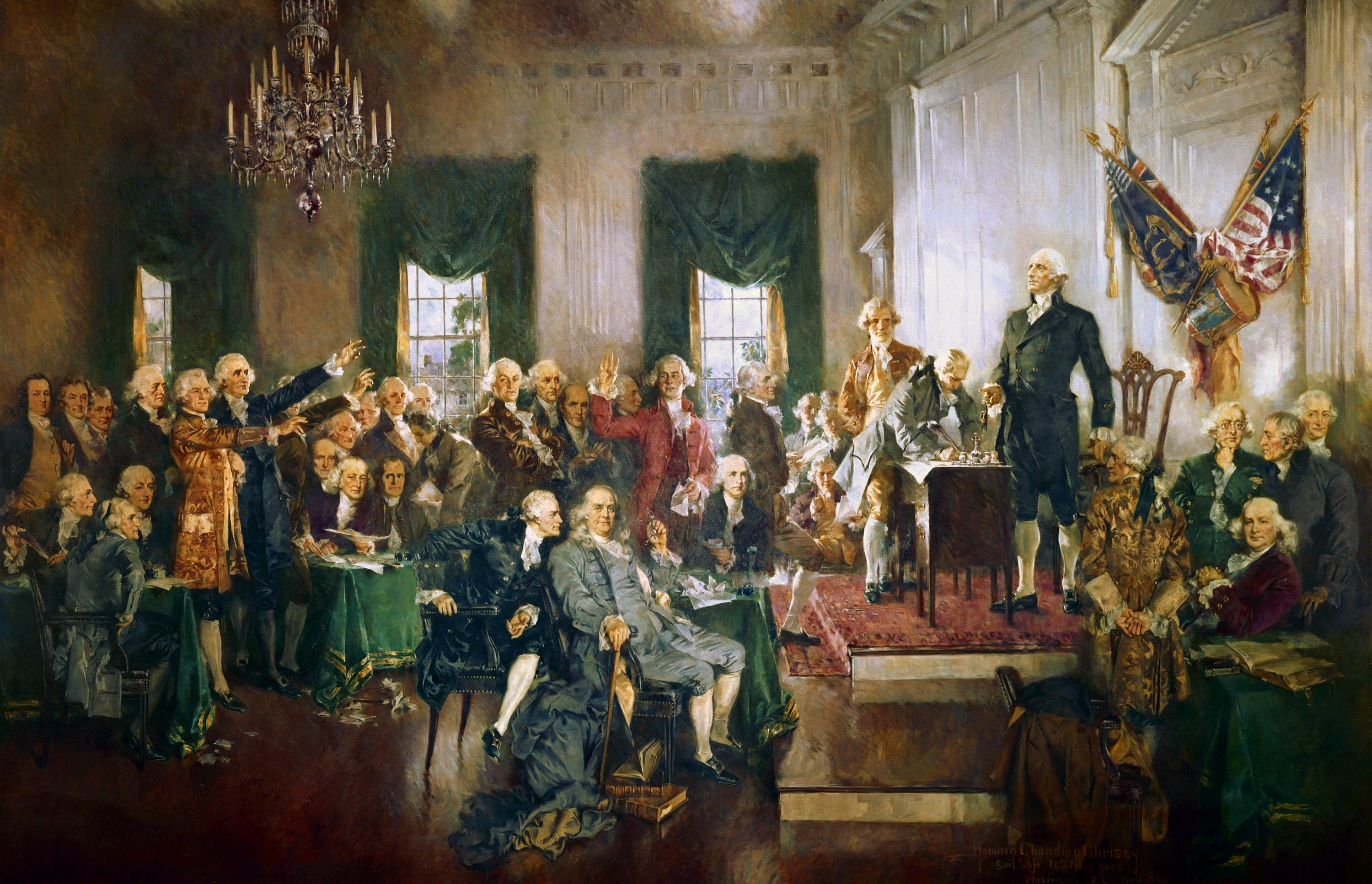
This essay was inspired by the 250th anniversary of the United States, a moment that invites reflection on what freedom truly means and whether the founding ideals of that nation have been realised. The American Declaration of Independence proclaimed that all men are endowed with “certain unalienable Rights,” including “Life, Liberty and the Pursuit of Happiness.” Yet two and a half centuries later, the meaning of liberty remains contested across liberal democracies. For some, it means freedom from government interference; for others, it means the capacity to live a flourishing life. The anniversary offers an opportunity to revisit these questions and to ask whether the conception of freedom that guided the founders is adequate for our own time, or whether we must develop a richer understanding of what it means to be free.
Genuine freedom, understood here as the capacity for reflective self-direction, requires more than simply being left alone. It depends upon the social, economic and institutional conditions that enable individuals to form their own judgments, pursue worthwhile goals and participate fully in the life of their communities. Freedom is not merely the absence of chains; it is the presence of opportunities, relationships and institutions that allow individuals to realise their capacities as responsible members of a democratic society.
This essay develops a positive conception of liberty that builds upon rather than rejects the liberal tradition. It acknowledges the achievements of negative liberty while demonstrating its limitations, then constructs an alternative framework centred on five interconnected dimensions of freedom. It addresses the danger of paternalism directly, drawing on Isaiah Berlin’s influential critique to argue that institutional safeguards can prevent the state from defining the good life on behalf of citizens. Finally, it considers what this richer conception of freedom implies for contemporary politics and public policy—not only in the United States but in all liberal democracies seeking to honour the promise of liberty in an age of profound challenge.
The Achievements and Limits of Negative Liberty
The traditional liberal conception of freedom emphasises protection from arbitrary power. Citizens should be free from coercion by governments, employers or other individuals. This negative understanding of liberty has been one of the great achievements of modern constitutional democracy. Freedom of speech, religious liberty, private property and the rule of law all serve to limit arbitrary authority and create space for individual choice. Without these protections, freedom quickly gives way to oppression.
The establishment of habeas corpus, the gradual expansion of the franchise and the development of independent judiciaries represent hard-won victories against the concentration of power. These institutions ensure that individuals cannot be imprisoned without cause, that governments must answer to citizens and that legal disputes are resolved by impartial adjudicators. The historical struggle for these protections was not merely technical but profound: it transformed subjects into citizens and replaced arbitrary rule with accountable governance. The American founding, with its insistence on constitutional limits, separation of powers and a bill of rights, represented a landmark achievement in this tradition.
Yet the absence of coercion does not necessarily produce genuine freedom. A person overwhelmed by addiction, trapped in poverty, deprived of education or manipulated by constant misinformation may formally possess legal rights while lacking the practical ability to determine the course of their own life. Consider a young person growing up in a community where schools are underfunded, job opportunities are scarce, and drug dependency is widespread. They are free in theory—no one has imprisoned them—but constrained in practice by circumstances they did not choose and cannot easily escape.
In the United States, this gap between formal rights and substantive freedom has been visible since the nation’s founding. The Constitution protected liberty while slavery persisted; women were denied the vote while the Declaration proclaimed equality; indigenous peoples were displaced while the nation expanded westward. These contradictions were not mere historical anomalies but revealed a deep tension between the promise of freedom and its realisation. Even today, not only in the US but in many advanced liberal democracies, formal equality before the law masks deep inequalities in the capacity to exercise freedom. A wealthy individual and a person living in poverty possess the same legal right to start a business, but the former has resources, connections and knowledge that the latter lacks. Similarly, a well-educated citizen and someone who left school at sixteen both have the right to participate in political debate, but the former is far better equipped to evaluate competing claims and form independent judgments.
Freedom, therefore, cannot simply mean the absence of external restraint. It must also include the social, economic, and institutional conditions that make meaningful choice possible.
Reframing Freedom as Capacity for Self-Government
Freedom is therefore best understood as the capacity for self-government. By this, I mean the ability of individuals to reflect critically upon their circumstances, to form their own judgments about what is worth pursuing and to act effectively upon those judgments in both public and private spheres. Human beings become free when they possess the education, health, economic security and political voice necessary to exercise judgement, pursue worthwhile goals and participate fully in society.
Education, health, economic opportunity and functioning democratic institutions are not limitations upon freedom but essential preconditions for it. They expand rather than diminish the range of meaningful choices available to individuals. A person who cannot read is not free to explore the world of ideas; a person who is chronically ill is not free to pursue demanding careers; a person who lacks economic security is not free to take risks or change paths. These preconditions are enabling conditions—they make freedom possible rather than constraining it.
This is not an argument for state paternalism. The purpose of enabling conditions is to expand the range of options available to individuals, not to prescribe which options they should choose. A society that provides universal education, accessible healthcare and a social safety net does not thereby determine how citizens should live their lives. It equips them to make their own decisions from a position of genuine choice rather than necessity. The distinction is crucial: securing the conditions for freedom is not the same as defining its content.
This richer understanding of liberty, proposed by political theorist Thomas Snyder in his excellent book “On Freedom,” rests on several interconnected dimensions, each of which illuminates a different aspect of what it means to live as a free person.
Sovereignty: Governing Oneself
Freedom begins with the ability to govern oneself rather than becoming subject to external domination or internal compulsion. Individuals who cannot distinguish truth from manipulation, who surrender their judgement to propaganda, or who lose control through addiction are not fully autonomous. Personal freedom, therefore, requires habits of reflection, discipline, and moral responsibility alongside political rights.
Self-governance involves two distinct capacities. The first is the ability to resist external manipulation—to evaluate information critically, to recognise when one is being deceived or exploited and to maintain independence of judgment in the face of social pressure. The second is the ability to resist internal compulsion—to exercise self-control over impulses that would otherwise determine behaviour. Addiction, whether to substances, gambling or digital media, undermines freedom by reducing the individual’s capacity to choose.
These capacities are not innate but must be cultivated. Education systems that teach critical thinking, media literacy and emotional regulation are not imposing a particular worldview on students; they are equipping them with tools for independent thought and self-control. This is why the quality of education is a freedom issue, not merely an economic one. Societies that fail to develop these capacities in their citizens are failing to prepare them for freedom.
Agency and Authenticity: Resisting Manipulation
Human beings possess a unique capacity for creativity, innovation and moral judgement that distinguishes them from mere mechanisms. Yet modern technologies increasingly seek to anticipate, influence and shape behaviour through algorithms, surveillance and behavioural profiling. While these technologies undoubtedly improve efficiency and convenience, they also risk reducing individuals to predictable consumers whose preferences are continually manipulated without their awareness.
The concern here is not unpredictability as such—friends and family may predict our behaviour without diminishing our freedom. The deeper problem is manipulation that bypasses conscious reflection. When social media platforms invisibly shape our emotional responses, when targeted advertising exploits psychological vulnerabilities, or when recommendation algorithms steer our choices without our knowledge, they undermine autonomy even in the absence of coercion.
Consider the experience of scrolling through a social media feed. The content one sees is not neutral; it has been selected by algorithms designed to maximise engagement, often by provoking emotional responses. Users may find themselves feeling angry, anxious or outraged without understanding why, and may form political opinions based on content they encountered accidentally rather than sought out deliberately. This is not freedom of choice but the illusion of it—preferences that have been shaped by forces invisible to the chooser.
Freedom requires that individuals be able to form their preferences through deliberation rather than deception. This is why transparency and media literacy are not peripheral concerns but central to the preservation of liberty in the digital age. Citizens who cannot understand how their behaviour is being shaped are not fully autonomous, however extensive their formal rights.
Mobility: The Possibility of Advancement
Freedom requires mobility—realistic opportunities to improve one’s circumstances through education, employment and participation in civic life. Formal equality before the law means little if large sections of society remain permanently excluded from economic or social advancement.
Consider the persistent gap in intergenerational economic mobility across Western democracies. In the United Kingdom, children born into the poorest fifth of households are significantly less likely to reach the top fifth than their peers from wealthier backgrounds. In the United States, the correlation between parental income and children’s adult earnings is among the highest in the developed world. The American dream—the promise that anyone can succeed through hard work—has become less attainable for each successive generation. These patterns are not merely economic problems; they are failures of freedom. When circumstances of birth determine life outcomes, individuals are not genuinely free to chart their own course.
Mobility has multiple dimensions. Geographic mobility, the ability to move where opportunities exist, depends on housing costs, transport infrastructure and labour market flexibility. Social mobility, the ability to move between different social strata, depends on the quality of education, access to networks, and the absence of discrimination. Economic mobility, the ability to improve one’s material circumstances, depends on wage growth and progressive taxation. All of these are freedom issues.
Freedom therefore includes the possibility of movement, not only across geographical boundaries but also within society itself. Progressive education funding, accessible higher education, affordable housing and labour market policies that prevent entrenched disadvantage are all components of a free society, not concessions to it. They ensure that the starting point of life does not determine its destination.
Factuality: The Foundations of Democratic Deliberation
Democratic societies depend upon a shared commitment to truth. Citizens cannot deliberate effectively if they inhabit entirely separate realities constructed through propaganda, conspiracy theories or deliberate disinformation. The erosion of trust in journalism, politically biased education and public institutions therefore represents more than a political problem; it strikes at the foundations of freedom itself.
The rise of deepfakes, AI-generated content and coordinated disinformation campaigns illustrates how the erosion of shared reality undermines democratic deliberation. During the Covid-19 pandemic, for example, misinformation about vaccines spread rapidly across social media, leading some communities to reject public health measures. Citizens who refused vaccination were exercising their legal rights, but their choices were shaped by falsehoods rather than reasoned deliberation. They were free in form but not in substance.
Without commonly accepted facts, democratic debate becomes impossible because disagreement can no longer be resolved through evidence or reason. Instead, politics degenerates into a struggle between competing narratives, in which power, not persuasion, determines outcomes. This is not merely inconvenient; it is fundamentally incompatible with self-government. A citizen who cannot distinguish truth from falsehood cannot exercise independent judgment.
Protecting freedom, therefore, requires robust investment in independent journalism, transparent public institutions, and educational systems that teach critical thinking. These are not constraints on liberty but conditions that make meaningful democratic participation possible. Societies that allow truth to become a matter of opinion are societies in which freedom is slowly extinguished.
Solidarity: Freedom Within Community
Liberal societies often emphasise individual rights, yet individuals achieve freedom only within communities. Families, schools, voluntary associations, markets and democratic institutions all rely upon trust and reciprocal obligations. Rather than competing with personal liberty, solidarity enables it. Recognising the dignity and freedom of others strengthens rather than weakens one’s own freedom because social cooperation expands the opportunities available to everyone.
The Covid-19 pandemic offered a vivid illustration of this principle. Countries with higher levels of social trust, measured by willingness to comply with public health guidance, mutual assistance among neighbours and confidence in institutions, generally achieved better health outcomes with fewer restrictions. In Denmark and Sweden, where trust in government and fellow citizens is high, lockdowns were shorter and less severe than in countries with lower trust. Solidarity proved not the enemy of freedom but its precondition. When citizens trust one another and their institutions, societies can rely on voluntary cooperation rather than coercive enforcement.
This insight has deep roots in political thought. Alexis de Tocqueville observed that American democracy depended upon “habits of the heart”—the customs, practices and associations that connected citizens to one another and to their communities. These intermediate institutions, between the individual and the state, were the school of democracy, teaching citizens how to cooperate, deliberate and exercise responsibility. Their decline, Tocqueville warned, would leave individuals isolated and vulnerable to state domination.
Contemporary liberal democracies face similar challenges. Declining membership in civic organisations, falling trust in institutions and increasing political polarisation all erode the social fabric upon which freedom depends. Rebuilding solidarity is not a distraction from the defence of liberty but central to it. Communities characterised by mutual trust and reciprocity are places where individuals can exercise genuine freedom.
Historical Warnings and Contemporary Relevance
Historical experience repeatedly demonstrates these principles. Authoritarian governments rarely abolish freedom overnight. Instead, they gradually weaken independent institutions, undermine public trust, manipulate information and encourage citizens to retreat into fear or private life. The destruction of truth often precedes the destruction of liberty.
The Nazis’ rise to power, for instance, was preceded by years of propaganda that eroded Germans’ ability to distinguish fact from fiction. The Nazi regime did not abolish freedom in a single act; it systematically dismantled independent media, politicised the judiciary and eliminated civil society organisations until no institutional resistance remained. Citizens who had once been free found themselves trapped in a system where independent judgment was impossible.
More recently, democratic backsliding in countries such as Hungary and Turkey has followed a familiar pattern: independent media were silenced, judiciaries were politicised, and civil society organisations were systematically weakened. In Hungary, Prime Minister Viktor Orbán consolidated power by taking control of the media, rewriting the constitution and packing the courts with loyalists. Elections continued to be held, but the conditions for meaningful democratic choice have been eroded. Although Hungary’s recent elections removed Orbán from power, it is too early to ascertain the damage done to Hungary’s democratic order.
The United States and the United Kingdom are not immune to these dynamics. The erosion of trust in democratic institutions, the proliferation of partisan media that present competing realities and the growing willingness of political actors to challenge election outcomes or the crowning of new Prime Ministers without general elections represent warning signs.
Conversely, societies that preserve independent courts, free media, universities that pursue truth without fear or favour and bipartisan civic organisations create conditions under which individuals can exercise meaningful freedom. The defence of freedom therefore involves far more than protecting elections or constitutional rights, important though these remain. It requires maintaining institutions that cultivate informed citizens capable of independent judgement. Democracy depends not simply upon procedures but upon habits of trust, responsibility and civic participation.
Markets and Freedom: A Nuanced Relationship
Competitive markets undoubtedly expand choice, encourage innovation and disperse economic power. Yet markets themselves depend upon legal systems, property rights, enforceable contracts and social trust. Economic freedom cannot flourish where corruption, cronyism, misinformation or institutional collapse undermine confidence.
The relationship between markets and freedom is therefore more complex than libertarian accounts suggest. Markets are social institutions, not natural phenomena. They require rules about what can be bought and sold, who can participate and how disputes are resolved. These rules are not constraints upon freedom but preconditions that make market exchange possible. A society without property rights, contract enforcement and dispute resolution mechanisms cannot sustain market activity at all.
Moreover, markets do not automatically produce the conditions necessary for human flourishing. The pursuit of profit may lead to environmental degradation, the exploitation of vulnerable workers or the erosion of community ties. In the United States, for example, the opioid crisis was exacerbated by pharmaceutical companies that marketed addictive painkillers aggressively while downplaying risks. The market produced enormous profits for shareholders but devastating consequences for communities. A society that treats market outcomes as the sole measure of freedom misunderstands liberty as merely consumer choice.
Markets are therefore one important component of a free society rather than its sole foundation. They must be embedded within legal and ethical frameworks that prevent them from undermining the very conditions—education, health, social trust—upon which freedom depends. This is not an argument against markets but for their proper regulation, just as we regulate other powerful institutions to ensure they serve rather than subvert human flourishing.
The Paternalism Problem: A Necessary Tension
This broader conception of freedom raises important questions. If governments seek to create the conditions necessary for human flourishing, there is always the danger that public authorities begin defining what constitutes the Aristotelian ideal of a “good life” on behalf of citizens. History offers numerous examples of states restricting liberty while claiming to promote individuals’ true interests.
Isaiah Berlin warned that positive conceptions of liberty invite authoritarianism, as rulers may claim to know what citizens “truly” need. In his influential essay “Two Concepts of Liberty,” Berlin argued that the positive conception of freedom—the idea that freedom consists in self-mastery—had been used to justify tyranny by those who claimed to know the “real” interests of the people better than the people themselves. This danger is real and must be taken seriously.
However, the solution is not to abandon positive liberty altogether but to institutionalise safeguards that prevent any single authority from monopolising the definition of human flourishing. Independent courts, free media, civil society organisations and competitive elections all ensure that no one group can impose its vision of the good life on others. The argument here is not that governments should define the good life, but that they should secure the conditions under which citizens can define it for themselves.
The distinction matters. Providing universal education is not the same as mandating a particular curriculum. Ensuring healthcare access is not the same as dictating treatment choices. Maintaining a social safety net is not the same as prescribing how citizens should spend their resources. The state can secure the conditions for freedom without determining its content. The state's focus is to ensure equality of opportunity for its citizens, not to determine or dictate outcomes.
This tension remains one of the central challenges of modern liberal democracy. Too narrow a conception of freedom risks reducing citizens to isolated individuals formally protected by law but practically unable to shape their own lives. Too expansive a conception risks inviting paternalism in the name of human flourishing. A durable understanding of liberty must therefore balance individual autonomy with the institutional conditions that enable autonomy to be exercised responsibly.
Navigating Conflicts Among Dimensions
The dimensions outlined above—sovereignty, agency, mobility, factuality and solidarity—are not always harmonious. The demands of solidarity may sometimes constrain individual mobility; shared truths may limit unconventional expression; community expectations may challenge personal sovereignty. These tensions are best understood as productive rather than destructive. The challenge of freedom is precisely to negotiate competing goods through democratic deliberation, not to eliminate conflict altogether.
Consider the tension between mobility and solidarity. A community that values solidarity may discourage members from leaving, but individuals who feel trapped may experience this as a constraint on their freedom. Similarly, a commitment to shared truth may limit the expression of fringe viewpoints, but allowing falsehoods to circulate unchecked undermines the possibility of democratic deliberation. These are genuine conflicts with no easy resolution.
What matters is that institutional arrangements allow these negotiations to occur fairly and transparently. A healthy democracy provides spaces, parliaments, courts, public forums, and civil society organisations where citizens can debate the proper balance between individual rights and collective responsibilities. Freedom does not require the resolution of all tensions but the existence of fair processes for managing them.
Conclusion: Freedom as Flourishing
Ultimately, freedom is not simply the absence of chains. It is the presence of opportunities, institutions and relationships that allows individuals to realise their capacities as responsible members of a liberal democratic society. It requires both protection from arbitrary power and the cultivation of the civic, moral and institutional foundations upon which self-government depends.
This understanding reshapes how we think about public policy. Investment in education, public health, affordable housing, and independent journalism is not an expense that trades off against freedom; it is an investment in the conditions that make freedom possible. Protecting democratic institutions and combating disinformation are not secondary concerns but central to the preservation of liberty.
Yet we must also remain vigilant against the temptation to define freedom too expansively. The state that claims to liberate citizens against their will is no liberator at all. The challenge for modern democracies is to maintain a conception of freedom rich enough to encompass human flourishing while remaining modest enough to respect the diversity of human purposes and the limits of political authority.
Only when these two dimensions are held together can freedom become more than a political slogan and instead serve as the basis of a flourishing society. The question that remains is whether contemporary liberal democracies have the institutional resilience and political will to sustain this demanding vision of liberty in an age of fragmentation, misinformation and growing inequality. The answer depends not on abstract theory but on the choices citizens make and the institutions they build together.
The American founders understood that freedom was an experiment rather than a guarantee. They knew that republican government depended upon the virtue and vigilance of its citizens. Two and a half centuries later, that insight remains as urgent as ever. Freedom, in this richer sense, is not a possession but an achievement. It is one that must be renewed in each generation by citizens who understand that liberty without the conditions for flourishing is only half the promise. Happy 4th of July to the land of the free and the home of the brave - long may it remain so.
Comments
Nothing yet. Say the first thing.
Sign in to join the conversation.