
No, these tools will not conquer us. Our present defeat by the machinery around us is a transient thing, a halt in our visible progress to a slaveless world. The menial labor that degraded both master and man is lifted from human shoulders and harnessed to the tireless muscles of iron and steel; soon every waterfall and every wind will pour its beneficent energy into factories and homes, and man will be freed for the tasks of the mind. It is not revolution but invention that will liberate the slave.
~ Will Durant, The Greatest Minds and Ideas of All Time (p. 100)
The difference in quality between what you or I get out of the same AI model is context and intent. Context is awareness of what is possible, what has happened, and what might happen. Intent is the harnessing of one’s context into purpose. They are the two differentiating talents, AI is a tool to amplify them. Software may be “infinitely available”, but useful software is not, because useful intent and context is rate-limited by time, effort and experience.
Not to dismiss its value, but AI can be categorized as the latest invention that made things more “infinitely” available. Consider the invention of mass-manufacturable book. Before Gutenberg's press, knowledge spread slowly from generation to generation. The press made it durable, cheap to print, and difficult to destroy all copies. In other words, the book scaled context across society. But at the same, it became easier to spread junk.
The press also didn’t make a book more worth reading. That part still came from the author's experience, and often a great deal of mental or physical suffering, which produced ideas and stories worth spending time with. Anyone literate can write a book today, just as they could in 38 BC. And so it is true of the reader, who has always had 24 hours in the day and had to decide if a given book is the best use of time. What is worth writing, what is worth reading, is the essential “unknown unknown” that makes great works so special and profoundly human.
The steam engine, invented in 1769, created a similar effect with physical goods. It demonstrated that machines could be automated and scaled, and it lit the fuse on the Industrial Revolution. It became easier to mass produce steel, automobiles, and eventually Coca-Cola. But it also became easier to manufacture the junk that now piles into our landfills.
As before, entrepreneurs recast society by crafting what gets manufactured. They applied their creative intent to specific context gathered in physics, chemistry, and medicine. They built factories, and workers gave up the till for the assembly line.
But this trade of one dull job for another was temporary. Unlike the printing press, automated manufacturing freed the average worker to toil less for more output. That surplus bought something new: leisure, and the opportunity it affords to explore new context. Some used it to make art and music. Others experimented. The Wright Brothers began as bicycle makers (the bicycle itself being a tool of leisure) who wondered what would happen if they extended the principles of aerodynamics.
This is the late, mature stage of the cycle, where we finally learn to wield our new tools judiciously and co-exist peacefully with them.

We are in the early stages of the next moment. The AI model, like the book and the engine, will lift millions of people out of daily drudgery through automation. Soon, we'll look back in horror that we spent so many hours with spreadsheets and steering wheels. And worse, that we mourned those tasks when they went! Many transient roles, like the data labeler and Uber driver, will fade away on the longer horizon. What doesn't go away is the context and intent that cannot be automated. Sourcing those remains the work of humans, which we scale on the backs of machines.
So no, these tools will not conquer us. But we are learning to live with their byproduct: context overload.
The consequence of infinitely available everything (including Substack posts!) is that we have to wade through an ocean of noise to find the “good” stuff. It’s never been easier to gather useful context, and paradoxically, it’s never been easier to drown in low signal.
Especially in the early stages, new automation gets misused intentionally, generating extreme levels of noise. We see this manifesting in the explosion of new AI products, slop, and vague corporate initiatives. It can be hard to tell which have any substance, so investors take bets across the board and that fuels the cycle. The spread of business conferences and podcasts have normalized infinite performative conversations, while the interesting dialogue stays off-script or backstage.
We participate in this theater often subconsciously, and we become nervous to speak up that it might have real costs. We forget momentarily that great things are still born the old-fashioned way: a genuine melding of minds, a unique burst of insight, or just sitting alone reflecting underneath the apple tree.
So how do we filter our exposure to useful context?
I think the simple answer is to become old-fashioned again. We have to walk away from the noise and pursue the wandering, time-intensive quest for thought-provoking context. Instead of the passive noise of conferences and news feeds, we search through less scalable sources: a dense book, or a deeper discussion.
This isn’t a new realization, but it’s easier said than done. Reading Tolstoy for hours or writing an essay word by word is exhausting, just like it is exhausting to run for hours. But that’s the game, the hunt, the essence of the Liberal Arts. We can decide to spend our leisure time in the slow hunt for great ideas — alongside deep friendships, athletics, travel and love — in the same way that hunting for dinner once consumed our ancestors’ time.
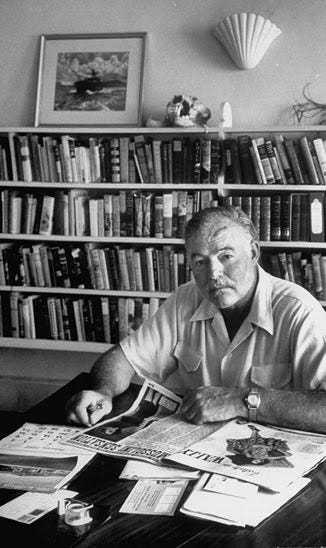
We intuitively know that the mind is like a garden. It has to be tilled and watered. Our mental acuity is not a given, as we find out with age. But if we misuse AI tools, our garden will quickly sprout weeds in the form of poor mental patterns: low attention spans, poor recall, and limited creativity. Don’t let them take root.
My current filter is to read anything predates AI noise - mostly fiction, some mathematics and history. I’m also trying to re-engage with poetry. There’s a well-known principle that says that if you observe something at a random moment, you’re probably seeing it somewhere in the middle of its life, not the very start or the very end. That means if you randomly pick up a book from 500 years ago, it is very likely to be read for 500 more years, while this Substack post is, statistically, about to be irrelevant. Logically, these timeless pieces might be the best path to discover some buried gemstones and refract them under modern light.
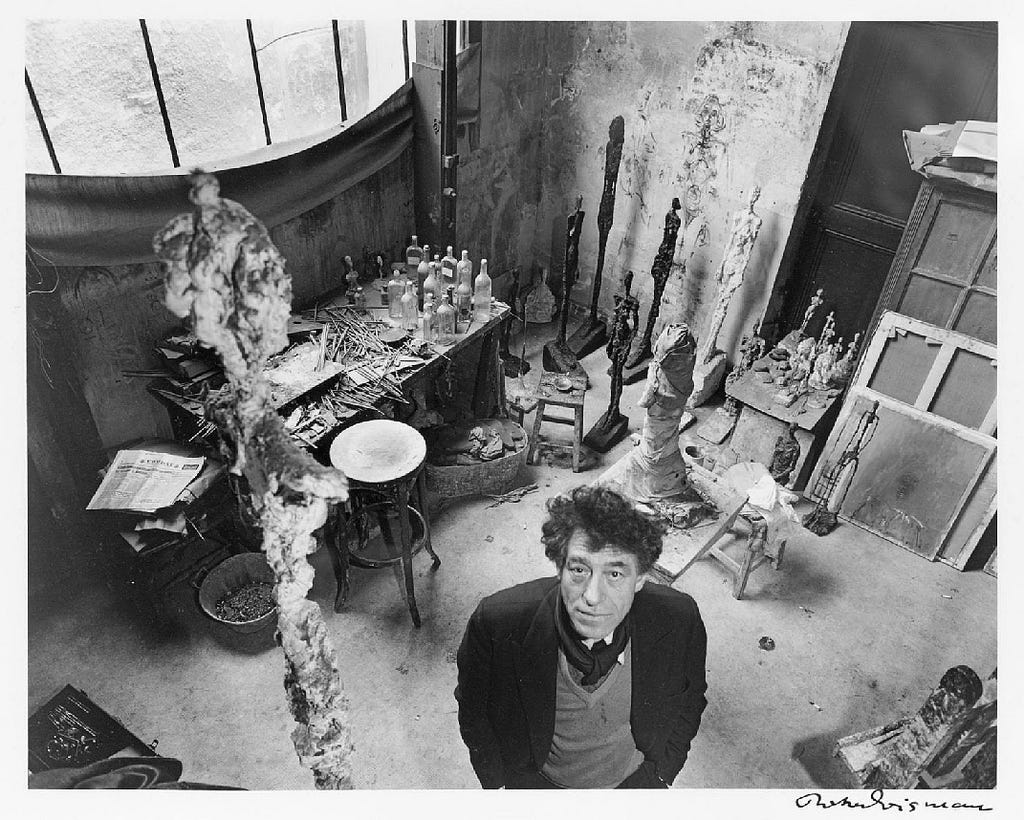
After reading, I try to talk about it over a meal or a phone call, or even argue about it until something shifts. Don’t skip this part and just move on after reading. You need to sit with the idea long enough for it to soak in. Shed the discomfort of talking through an idea you had recently when you grab drinks with a friend. That’s how we water our garden minds.
What’s the point of all this? In startups, we often talk about building a “moat.” Usually it’s technical or structural, like special access to data or something you invented keeps competitors at bay. But as individuals, our moat is our unique context. It’s the one thing that can’t be copied off us in a world where everyone has the same tools. It’s part of what makes you really you.
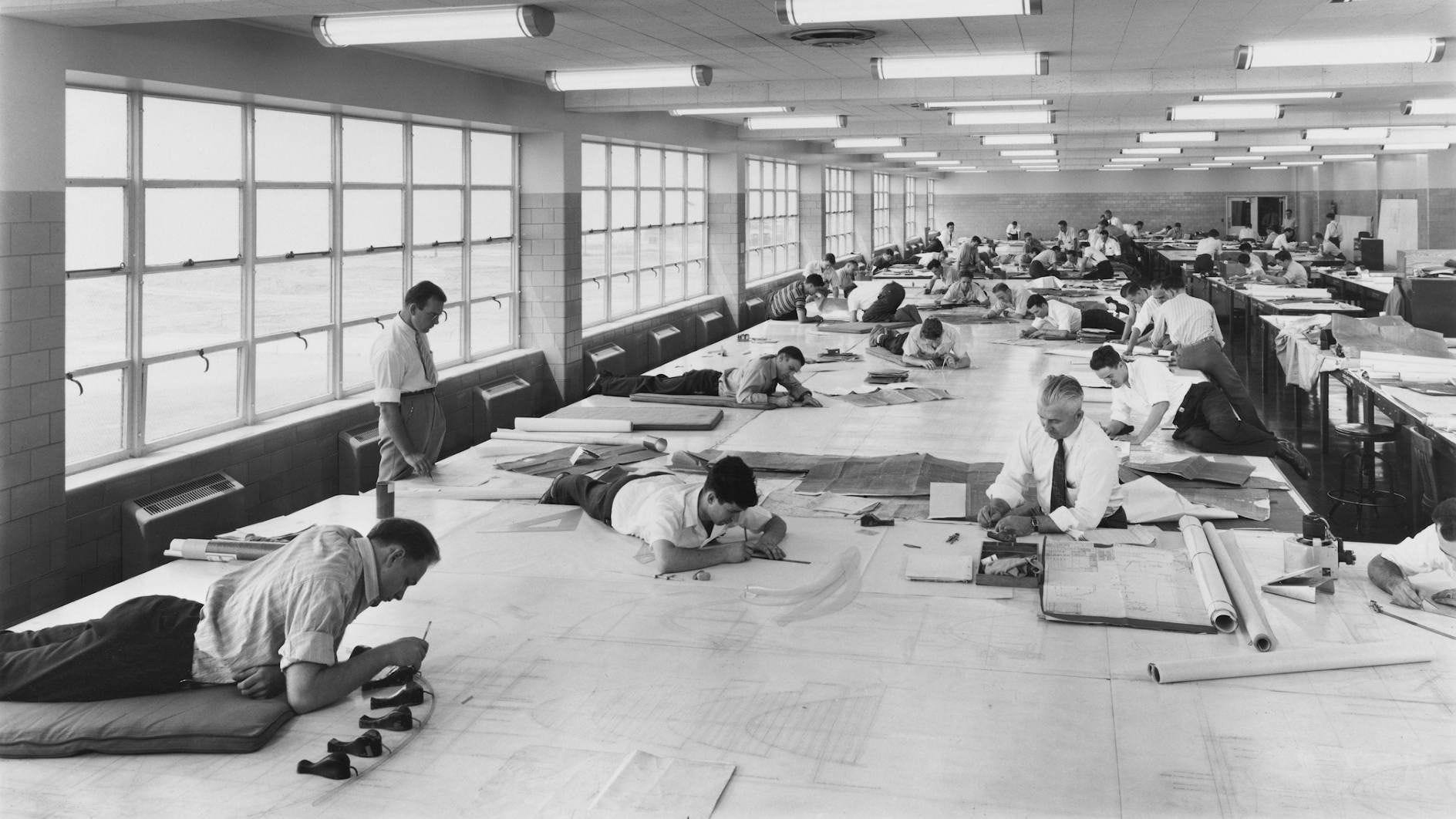
That’s why it matters what we let enter our garden. All this to say, modern wisdom and fulfillment may still be found in the toil of the ancient hunter-gatherer. We can all learn to re-discover the slow, nonlinear progress of foraging for context, in the company of curious friends, while everything else around us automates away.
No posts
Comments
Nothing yet. Say the first thing.
Sign in to join the conversation.