
Welcome to edition #52 of 54 Shades of Opportunity, a weekly deep dive into Africa’s distinct markets. Each Monday, we explore innovation, culture, and investment opportunities across the continent, one country at a time.
Note: This analysis draws on publicly available sources, including government reports, international organizations, business publications, and research institutions. It’s not exhaustive; readers should explore further and, where relevant, consult local expertise before making decisions.
Tunisia is North Africa’s most structurally complex economy, a country whose actual industrial base is routinely underestimated by its own international image, and whose fiscal position is under pressure that its official growth figures do not fully capture. Outside the country, Tunisia is usually associated with a familiar Mediterranean image: beach tourism, olive groves, dates, historic medinas, and agriculture shaped by dry coastal climates. But Tunisia’s actual export structure is far more industrial than most people realize. Electrical machinery and equipment, automotive wiring harnesses, cables, connectors, Tier 2 and 3 components for European automotive assembly lines, is now Tunisia’s largest export category, ahead of olive oil, tourism, and phosphates. President Kais Saied, re-elected October 2024 for a second five-year term, has governed since July 2021 under a presidential system established by the 2022 constitution, concentrating executive, legislative, and judicial authority in the presidency, dissolving the previous parliament, banning political parties from legislative elections, and rejecting an IMF structural adjustment programme he described as a “diktat” incompatible with national sovereignty.
The economy recovered slightly in 2025, with 2.5% GDP growth, compared with 1.5% in 2024, driven by agriculture, the phosphate sector, construction, and tourism. Growth is expected to reach 2.1% in 2026 and 2.8% in 2027, driven by momentum in the tourism sector and a recovery in industrial exports. Against this modest recovery: public debt climbed to 83.7% of GDP in 2024 (from 67.8% in 2019), with gross financing needs rising to 16.1% of GDP, mainly due to external debt service. The treasury’s reliance on exceptional financing from the Central Bank is placing increased pressure on macroeconomic balances. The informal sector comprises some 50% of the economy. Unemployment fell to 15.2% in Q4 2025 but remains high among youth (38.4%), women (22.4%), and college graduates (24.9%), reflecting limited inclusion. Approximately 12.1 million people, GDP $53.4B nominal (2024), GDP per capita $4,700 (2025) (one of Africa’s highest) Mediterranean coastline, borders Algeria and Libya, Arab League and African Union member.
Size: 163,610 km² (roughly the size of Georgia or Tunisia is North Africa’s smallest country by land area, Mediterranean coastline 1,300km, northern tip closest African point to Europe across the Sicilian Channel).
Population: Approximately 12.1 million, Arab-Berber, Arabic official language (Tunisian dialect distinct), French widely used in business/education, predominantly Muslim, 70% urban, significant diaspora in France, Italy, Germany.
Capital: Tunis (northeast, 2.5M+ metropolitan, political/economic/cultural center), major cities include Sfax (south, second city, industrial/commercial), Sousse (central coast, tourism hub), Monastir (coast, tourism, textile industry), Gabès (south, phosphate chemicals), Gafsa (southwest, phosphate mining region).
Economic Profile: GDP $53.4B nominal (2024), 2.5% growth (2025), 2.1% projected (2026), inflation 5.3% (2025, declining from 7.0%), electrical/mechanical exports largest category, olive oil second-largest global producer, phosphates significant, tourism 5% GDP (recovering), remittances 6% GDP, fiscal deficit 5.2% GDP (2025), public debt 82.1% GDP (2025), Tunisian dinar, FX reserves 3.4 months imports (end 2025).
Strategic Position: Mediterranean crossroads (between Europe and Africa, Sicilian Channel), European automotive supply chain integration (Tier 2/3 components), second-largest global olive oil producer, phosphate reserves (fertilizer supply chain), tourism (Carthage, Roman ruins, Saharan desert, Mediterranean beaches), proximity to EU market (80%+ exports to Europe), Algeria natural gas supply, migration transit and origin point, Association Agreement with EU (1998).
Tunisia achieved independence from France March 20, 1956, under Habib Bourguiba, who led the country for 31 years (1957-1987), building a secular state identity, investing substantially in education and women’s rights (Tunisia among the first Arab countries to grant women voting rights, 1957, and codify personal status protections), and establishing a French-aligned, state-led economic model with significant public sector dominance. Zine El Abidine Ben Ali removed Bourguiba in a 1987 “medical coup,” governing until January 14, 2011, when mass protests, sparked by Mohamed Bouazizi’s self-immolation in Sidi Bouzid and amplifying across the country, forced his departure in what became the opening event of the Arab Spring.
The decade that followed (2011-2021) was Tunisia’s democratic experiment: a transitional period, a Constituent Assembly, the 2014 constitution (praised internationally as a model for post-Arab Spring governance), elected governments alternating between Islamist-aligned Ennahda and secular parties in coalition arrangements, a National Dialogue Quartet (awarded 2015 Nobel Peace Prize for navigating political crisis), and persistent economic difficulties, high unemployment, regional inequality, terrorism (2015 Bardo Museum and Sousse beach attacks), subsidy costs, and structural rigidities that successive governments could not resolve.
July 25, 2021, Saied a constitutional law professor elected president in 2019 with 73% of votes on an anti-corruption, anti-establishment platform suspended parliament, dismissed the prime minister, and assumed executive authority by decree. He described the move as a constitutional emergency measure; opposition parties and international observers described it as a self-coup. A September 2021 decree formalized presidential rule. The July 2022 constitution, approved by referendum (30% turnout), established a strong presidential system eliminating the parliamentary checks of the 2014 constitution. In 2022, President Saied implemented a decree prohibiting political parties from participating in legislative elections. Legislative elections in December 2022 (11% turnout) and October 2023 (8.8% turnout) produced a parliament with minimal political competition. Saied won re-election October 2024 with 89.2% of votes and 28.8% turnout, the democratic credibility of which is contested by domestic opposition and independent monitors.
Saied’s governance model is explicitly sovereignty-framed: reducing dependence on foreign financial institutions, rejecting structural adjustment conditionalities, pursuing state-led economic management, and asserting Tunisian autonomy in foreign policy, maintaining ties with the EU and US while strengthening relationships with Russia, China, Algeria, Saudi Arabia, and the UAE. His rejection of the IMF programme reflects both political calculation (the powerful UGTT labour union opposes subsidy removal and wage reform) and ideological conviction that Tunisia must chart its own economic course rather than adopting externally designed adjustment programmes. Whether this sovereignty claim generates sustainable economic management or deepens fiscal fragility is the central contested question about the current trajectory.
Electrical machinery and equipment generate a larger share of exports than any other category in Tunisia’s economy. A large part of this sector revolves around insulated wiring systems, electrical cables, automotive harnesses, connectors, and industrial components used inside European manufacturing industries.
This is not a recent development, it emerged over decades from a deliberate combination of geography, labour cost structure, and industrial policy. Tunisia sits across the Mediterranean from Europe’s automotive manufacturing heartland (France, Germany, Italy, Spain). European automakers building vehicles in these countries need Tier 2 and Tier 3 components (wiring harnesses, connectors, sub-assemblies) that are labour-intensive to produce but don’t require proximity to final assembly. Tunisia offers: low labour costs relative to Southern Europe, close logistics (ships across the Sicilian Channel in hours), educated technical workforce, and an Association Agreement with the EU providing preferential trade access.
The result: Leoni, Yazaki, Sumitomo Electric, Draxlmaier, Lear Corporation, and dozens of other automotive component manufacturers operate Tunisian production facilities. The sector employs hundreds of thousands, primarily women, in factory employment that is formal, export-oriented, and integrated into global supply chains at a level most sub-Saharan African manufacturing has not reached. Greater exports of machinery and electrical systems, mainly European automotive Tier 2 and Tier 3 subsidiaries, as well as the textile industry, supported the 2025 balance of payments improvement.
The structural constraint: this integration positions Tunisia as a mid-chain assembler in supply chains designed and controlled by European OEMs. Value addition is real but captured primarily upstream (design, engineering) and downstream (vehicle assembly, retail) from Tunisia’s production stage. The sector is also exposed to European automotive market cycles, as European EV transition reshapes automotive component demand, Tunisian manufacturers face both risk (wiring harnesses for combustion engines being displaced) and opportunity (EV battery management systems, new cabling architectures). Whether Tunisia’s component manufacturers adapt to the EV transition or lose business to competitors closer to European battery production (Poland, Czech Republic, Morocco’s expanding automotive sector) is a medium-term industrial competitiveness question.
US customs duties (25%) on Tunisian exports, part of the April 2025 Trump administration tariff framework, have constrained export diversification toward the US market, reinforcing European market concentration (80%+ of exports to EU). Exports will remain sluggish, hampered by weak European demand, internal constraints (strikes, lack of financing, stagnation in the phosphate sector).
Tunisia is the world’s second-largest olive oil producer (after Spain), with approximately 1.9 million hectares of olive groves (one of the largest in the world) concentrated in the Sahel region (Sfax, Sousse, Mahdia) and the north. Olive oil is Tunisia’s most internationally recognized agricultural product and a significant export earner, though volumes fluctuate substantially with rainfall cycles. Good rainfall years (2025 agricultural season was strong) produce record harvests; drought years (2023 was severe) collapse production and generate import needs for domestic consumption.
Phosphate mining in the Gafsa region of southwest Tunisia represents a strategic resource: Tunisia holds among the world’s largest phosphate reserves, and phosphates are essential for fertilizer production underpinning global food security. The sector employs tens of thousands in a region where alternative employment is extremely limited. However, internal constraints (strikes, lack of financing, stagnation in the phosphate sector) have prevented production from reaching potential. Labour disputes at the Compagnie des Phosphates de Gafsa (CPG) and chemical fertilizer producer GCT have periodically disrupted output, reducing export earnings and government revenue from a sector that should be performing significantly better given global fertilizer demand.
Date production, citrus, tomatoes, and seafood complete the agricultural export basket. Tunisia’s agricultural output is meaningfully climate-constrained: the 2023 drought slashed agricultural production by double digits, contributing to the weak 1.5% growth in 2024. The 2025 agricultural recovery was a primary growth driver, illustrating the sector’s weight in overall performance despite representing a smaller formal GDP share than manufacturing.
Tourism surged by 10.3% between January and November 2025, continuing to pick up after the Covid-19 collapse. Tunisia’s tourism sector, Mediterranean beaches, Carthage, Roman ruins at Dougga and El Jem, Saharan desert landscapes, medinas of Tunis and Kairouan, serves primarily European markets (French, German, British, Italian, Polish tourists dominate arrivals). The 2015 terrorist attacks (Bardo National Museum, Sousse beach) devastated the sector, arrivals collapsed from over 8 million annually pre-2015 to below 4 million, with partial recovery through 2019 before the pandemic drove a further collapse.
The 2025 recovery (tourism revenues approximately 5% of GDP) represents genuine momentum but has not yet returned the sector to its pre-2015 scale. The structural challenge is not just arrival numbers: Tunisia’s tourism model concentrates visitors on coastal all-inclusive resorts, limiting economic distribution inland and generating foreign exchange while creating enclave economies that don’t deeply connect to agricultural, craft, or urban service economies. Developing higher-value cultural tourism, ecotourism, and heritage tourism would deepen economic linkages but requires infrastructure investment and marketing repositioning.
Remittances (6% of GDP)</cite> from the Tunisian diaspora in France, Italy, Germany, and Gulf countries provide a complementary external revenue flow. The diaspora (established over decades of labour migration beginning in the 1960s) sends funds supporting family consumption, housing construction, and small business investment. Tunisia has also become a transit country for sub-Saharan migrants seeking passage to Europe, a migration dynamic that Saied’s government has addressed controversially, with documented incidents of sub-Saharan migrants being expelled to desert border zones in conditions humanitarian organizations have documented as dangerous.
Tunisia’s fiscal situation is the article’s most analytically consequential dimension. The numbers form a clear pattern: public debt climbed to 83.7% of GDP in 2024, from 67.8% in 2019, with gross financing needs rising to 16.1% of GDP mainly due to external debt service. Limited access to international markets pushed authorities to rely more on domestic financing. The treasury’s reliance on exceptional financing from the Central Bank is placing increased pressure on macroeconomic balances. Fitch Ratings estimate payroll, interest payments, and subsidies consume, the large majority of tax revenue, leaving minimal fiscal space for public investment.
The IMF programme standoff sits at the centre of this dynamic. An October 2022 staff-level agreement for a $1.9B Extended Fund Facility was never formally approved, Saied publicly rejected its conditionalities (subsidy reform, wage bill reduction, state enterprise privatization), describing them as external diktats. Domestically, the powerful UGTT labour union also resisted the IMF package, especially opposing subsidy removal and wage freezes. Without the IMF programme as an anchor, bilateral and multilateral financing has been harder to mobilize, and Tunisia’s access to international bond markets has been constrained by credit rating downgrades.
Saied’s alternative: focusing on domestic financing via its commercial banks and the central bank, following Algeria’s state-led economic model, however without the cushion of oil revenues that its neighbour enjoys. The distinction matters structurally: Algeria’s state-led model is financed by substantial hydrocarbon revenues that enable deficit spending without the same debt sustainability pressures. Tunisia runs a comparable governance approach without a comparable revenue base, making the fiscal arithmetic tighter. 80% of tax receipts are earmarked to pay civil servants and workers in state companies and for subsidies.
The budget deficit narrowed to 5.2% of GDP in 2025, supported by improved revenue collection and lower energy subsidies. Public debt stabilized at 82.1% of GDP, but heavy reliance on domestic financing is further crowding out the private sector. Private sector credit constraint (banks lending to the government rather than businesses) compresses investment, employment, and productivity in precisely the private sector that structural diversification would require.
The Tunisian government increased corporate and income tax rates for most businesses and employees in January 2025, a revenue mobilization measure that improves near-term fiscal position while reducing private sector investment incentives. The informal sector at 50% of economic activity absorbs a significant portion of workers outside the formal tax base, limiting the revenue yield from formal sector tax increases.
Unemployment fell to 15.2% in Q4 2025 but remains high among youth (38.4%), women (22.4%), and college graduates (24.9%), reflecting limited inclusion. The graduate unemployment figure is particularly structurally significant: Tunisia invested heavily in tertiary education expansion under both Bourguiba and Ben Ali, producing large cohorts of university graduates whose qualifications exceed available formal employment. The mismatch between education output and labour market absorption generates a specific social pressure, educated young people unable to find work commensurate with their qualifications, contributing to emigration, political disillusionment, and the informal economy’s expansion.
Regional inequality is deep and geographically structured. The coastal belt (Tunis, Sousse, Sfax, Monastir) concentrates economic activity, infrastructure investment, and employment opportunity. The interior regions, Kasserine, Sidi Bouzid (where the 2011 uprising began), Gafsa, Tataouine have substantially lower incomes, higher unemployment, worse public service access, and persistent underdevelopment despite phosphate wealth in Gafsa and agricultural potential elsewhere. About 18% of the population lives below the poverty line, with significant regional disparities.</cite> The spatial dimension of poverty (heavily interior and rural) is the development challenge that coastal economic growth does not automatically address.
The government has strengthened social protection through targeted cash transfers and food subsidy maintenance, resisting IMF-urged subsidy removal partly for welfare reasons and partly for political ones. The UGTT’s approximately one million members represent a political constraint on wage and subsidy reform that any Tunisian government must navigate regardless of ideological orientation.
Growth is expected to reach 2.1% in 2026 and 2.8% in 2027, driven by momentum in the tourism sector and a recovery in industrial exports. However, weak private investment, labour market rigidity, and limited productivity gains are likely to continue to hold back growth. Tunisian average GDP growth between 2026 and 2030 will be 1.2% against an average of 3% in neighbouring countries, according to IMF projections, the weakest in North Africa.
The medium-term trajectory depends on two questions that interact: whether the fiscal position stabilizes without triggering a debt crisis, and whether private investment recovers enough to generate employment at scale. The budget remains rigid and exposed to external shocks. FX reserves at 3.4 months of imports provide a limited buffer. Rollover pressure on external debt (16.1% of GDP in gross financing needs) requires continuous market access or bilateral arrangement. As the EU, Tunisia’s main export market, is set for increased growth in 2026, Tunisia should benefit from increased demand, for its electrical components and textile exports, the most direct growth lever available without structural reform.
Tunisia’s structural assets are real and durable: educated workforce, Mediterranean location, European manufacturing integration, world-class agricultural products, significant tourism appeal, and phosphate reserves. The gap between these assets and economic performance reflects governance and fiscal choices rather than resource constraints. Whether those choices shift, through IMF re-engagement, private sector liberalization, regional development investment, or alternative sovereign financing arrangements, will determine whether the 2026-2030 period produces the acceleration that the asset base would theoretically support, or the continued stagnation that current trajectories project.
Thank you for reading!
Disclaimer: Market conditions in African economies change quickly. While this analysis relies on credible sources, readers are encouraged to conduct additional research and seek local insights before making investment or business decisions.
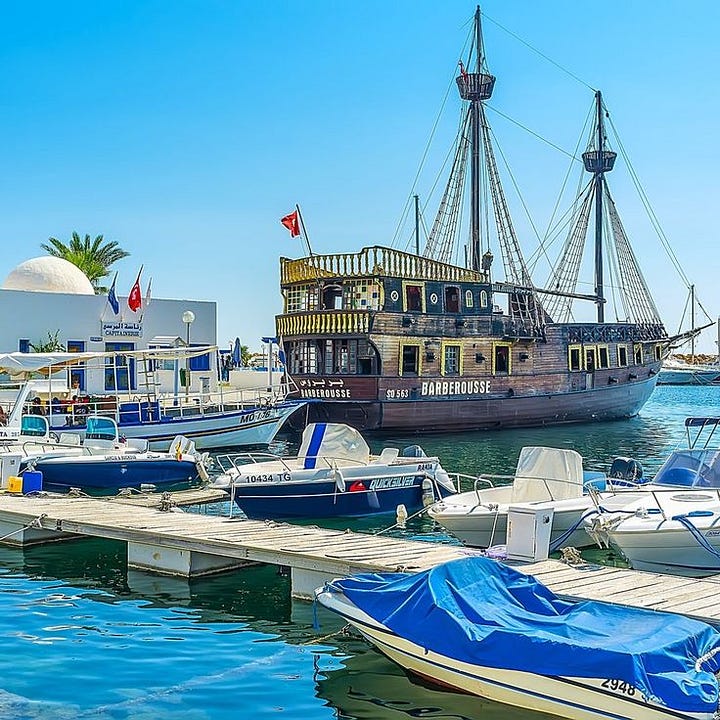
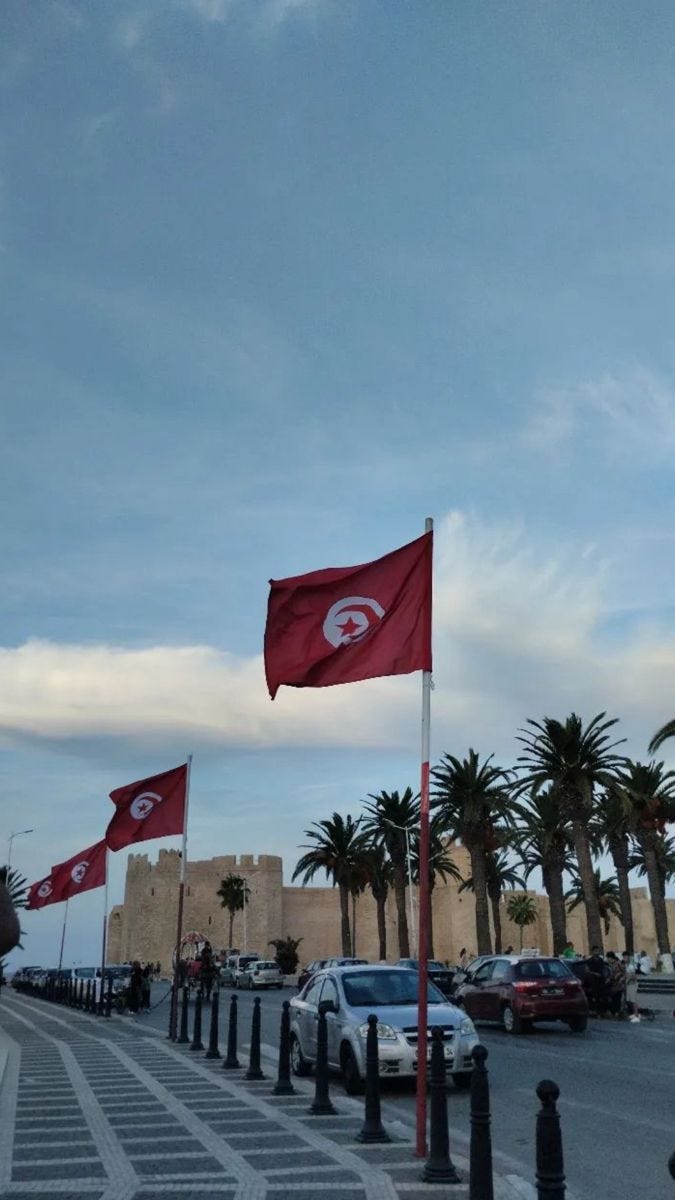
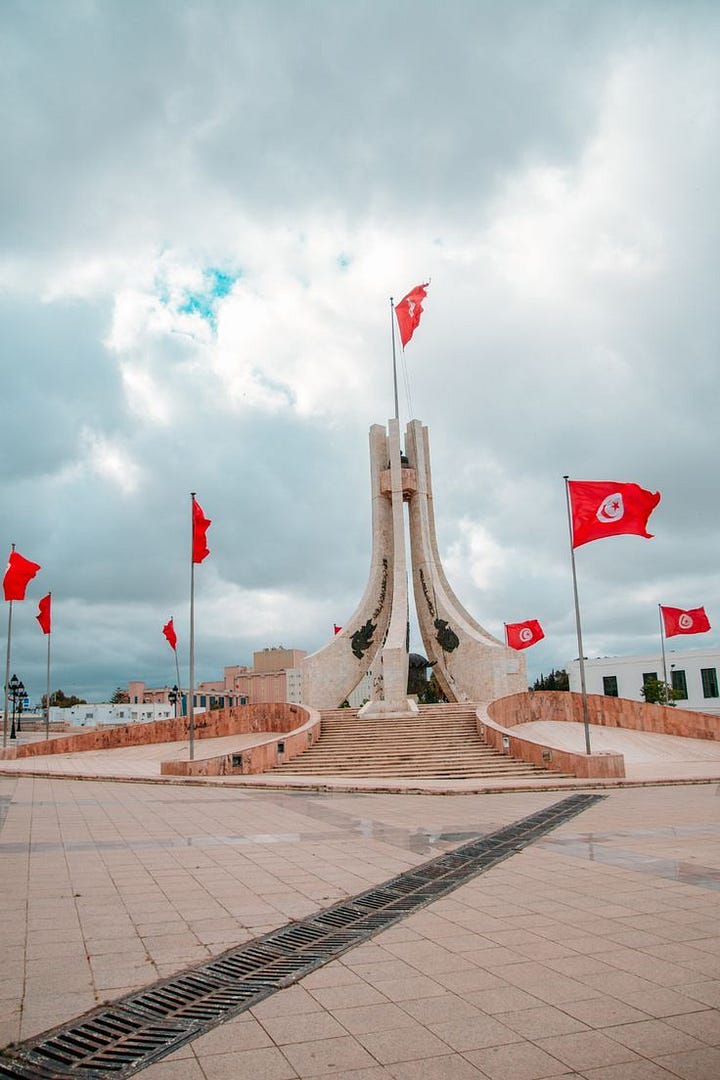
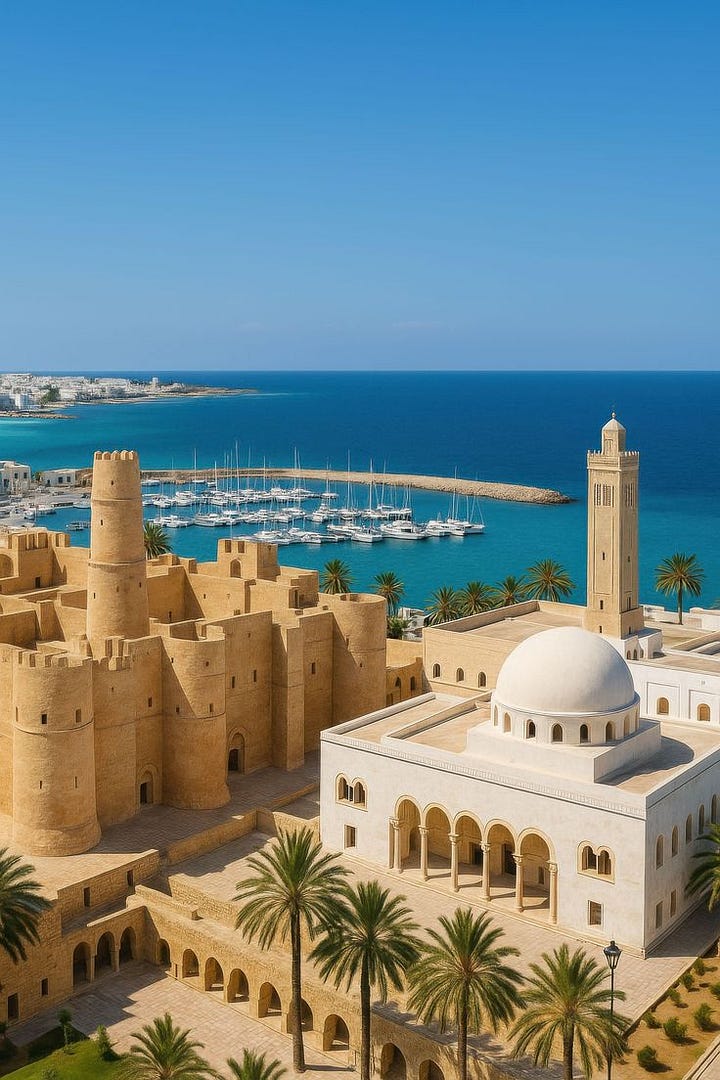
Take a short virtual tour of Tunisia with me.
Next week: Your vote last week already decided our next destination.
Comments
Nothing yet. Say the first thing.
Sign in to join the conversation.