
was trying not to write this.
Not because I didn’t have thoughts. Because I knew once I started pulling the thread, it would connect to everything.
It started in a family group chat. Highlighted lines from *The New Jim Crow* by Michelle Alexander were moving back and forth between phones like sparks.
One line in particular sat in my chest:
“Every system of injustice depends on the silence, paralysis, confusion, incorporation of those it seeks to eliminate or control.”
Another:
“We’ve come a long way and still have a long way to go, but we’re on the right track.”
And underneath that was the reminder that America has always moved in cycles: reform, backlash, reformation of systems of racialized social control.
Not disappearance. Reconfiguration.
I remember responding that I could write an entire article off that highlighted section alone. Because the truth is — slavery was never just about labor.
Labor was the mechanism. Power was the point.
And maybe that’s the part people still refuse to confront.
What cracked something open for me was realizing how many systems survive because people inherit narratives before they inherit facts.
My sister had just come back from Amsterdam and Belgium . She talked about old cities that had existed for centuries. Not perfect places. Not utopias. But places where infrastructure actually seemed designed for human beings to live. Efficient trains. Solar panels. Mobility. Public systems that felt intentional instead of performative.
And she asked the question that lodged itself in my mind:
Who decided America was the greatest country in the world?
That question makes people uncomfortable because Americans are raised inside the answer before they are ever allowed to examine the premise.
That’s what propaganda actually is. Not always lies. Sometimes repetition. Sometimes selective storytelling. Sometimes mythology so normalized it becomes emotional reflex.
When we were younger, my sister was the first person who ever taught me the word propaganda. I didn’t fully understand it then. I do now.
Then there was Morocco.
My sister talked about how some people there did not associate themselves with Africans despite geographically being on the continent of Africa.
And all I could think was: colonization does not just conquer land. It reorganizes identity.
Because proximity to power has always been rewarded. Even when it requires distancing yourself from people who look like you.
That is not unique to one country. That is empire logic.
And honestly, America mastered it.
People come here from all over the world and immediately learn the racial hierarchy whether anyone says it aloud or not. They learn who is considered “acceptable.” Who gets humanized. Who gets criminalized. Who gets associated with struggle. Who gets used as a cautionary tale.
And the most infuriating part is that descendants of enslaved people — the people whose labor literally built the economic foundation of this country — are still expected to defend the mythology of a system that has historically struggled to fully recognize their humanity.
That contradiction should disturb more people than it does.
What unsettles me most is not that nations pursue power. History has always involved power.
It is the performance of innocence while doing it.
The ability to invade. Influence. Destabilize. Control. Sanction. Redraw narratives. Then stand at the podium as the moral authority.
That contradiction is not accidental. It is branding.
And maybe that is what I have been struggling to articulate.
America did not simply inherit empire behavior from Europe. It perfected the marketing of righteousness.
You could have been the dregs of society somewhere else. Then arrive here and become “respectable” simply by attaching yourself to whiteness, patriotism, distance from Blackness, or proximity to power.
That is not freedom. That is social alchemy.
And people protect it fiercely because once mythology becomes identity, questioning it feels like personal attack.
Slavery was never just about labor. Labor was the mechanism. Power was the point.
I think that’s why the highlighted lines from “The New Jim Crow” kept echoing in my head.
Because systems do not survive only through force. They survive through confusion. Through incorporation. Through convincing people they are participants in freedom while carefully controlling the boundaries of power.
And it doesn’t matter whether the chess piece is being moved by Republicans or Democrats if the structure underneath remains largely untouched.
That’s the part people don’t want to sit with.
Not because it’s complicated. Because it’s destabilizing.
The most effective propaganda is the kind people mistake for patriotism.
I was trying not to write this because I knew people would immediately try to sort it into political teams instead of sitting with the deeper question underneath it.
But I am less interested in party loyalty than I am in patterns.
And one pattern that keeps repeating throughout history is this: people will tolerate almost anything as long as the story they tell themselves about their nation allows them to feel innocent inside it.
That is what makes propaganda powerful. Not because people are stupid. Because identity is emotional.
And once power convinces people that morality belongs exclusively to them, accountability starts feeling offensive instead of necessary.
That is a dangerous place for any nation to live.
Especially one convinced it is incapable of becoming what it condemns in others.
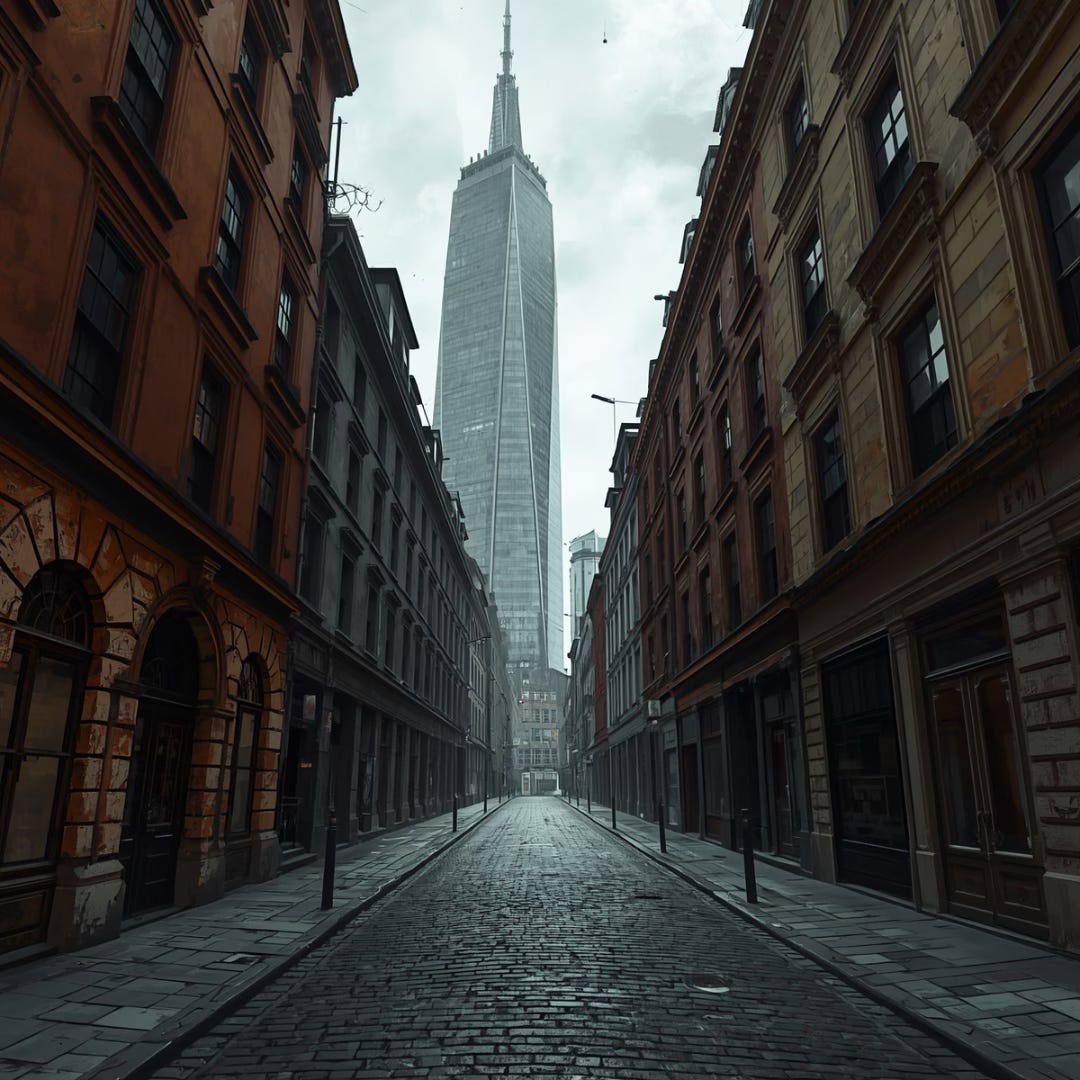
The storm had been building longer than I realized.
No posts
Comments
Nothing yet. Say the first thing.
Sign in to join the conversation.