
Your patients aren’t searching the way they used to.
They’re not typing two keywords into Google and scrolling through ten blue links anymore. They’re having conversations — with ChatGPT, with Gemini, with Google AI Overviews — asking the kind of specific, nuanced questions that used to require a friend’s recommendation or a phone call.
“Can you find me a provider near me who can correct my dermal filler — someone who’s actually good at this?”
“I want to try Ozempic for weight loss. Which medspa near me has a good physician-supervised programme?”
“Best injectable provider in Austin who specialises in natural-looking results — not overdone.”
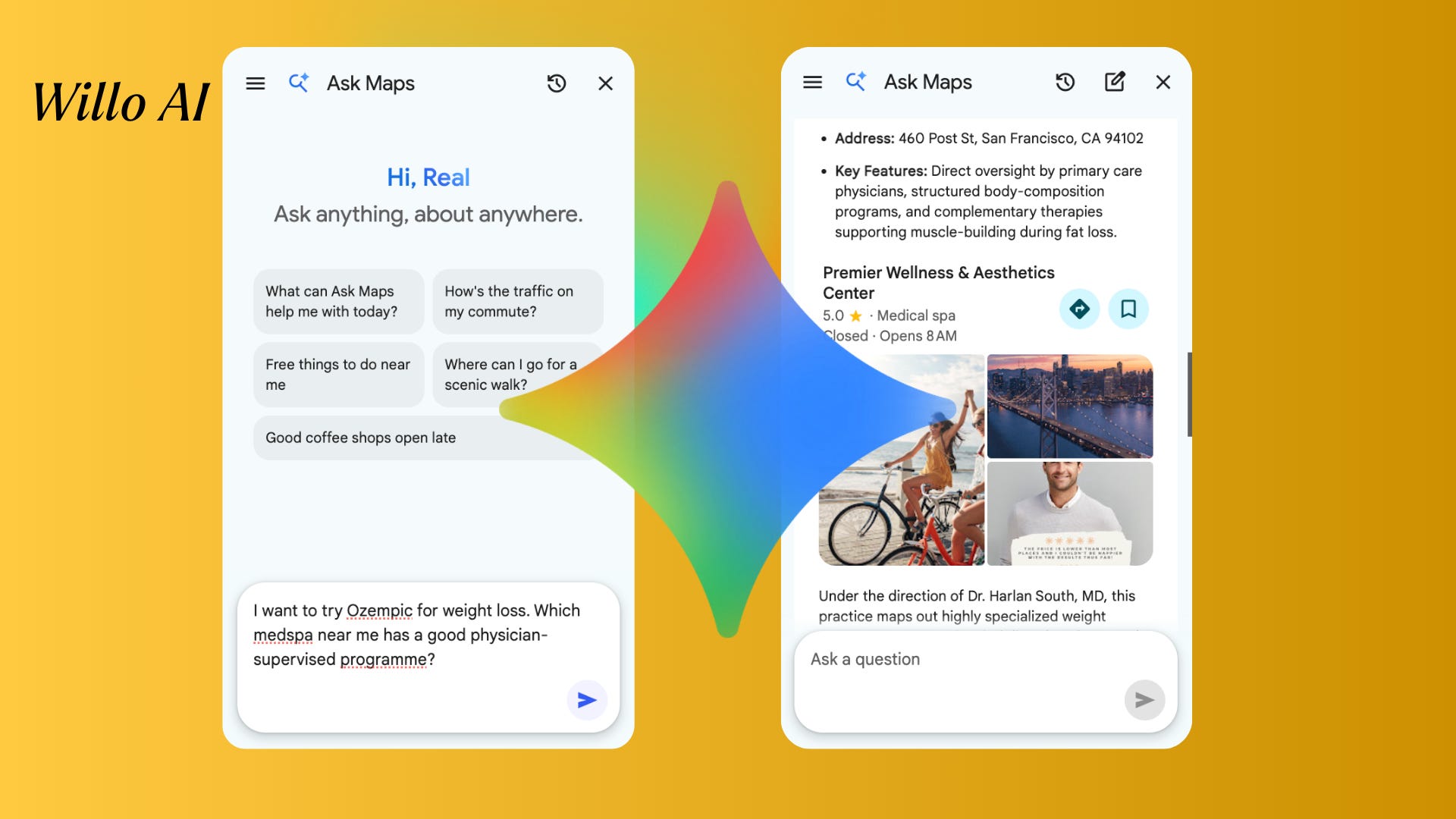
These aren’t keyword searches. They’re conversations. And AI gives them one answer — two or three names at most. In an AI answer there are no ten links. There are two or three names, and being one of them is the whole game.
The practices showing up in those answers are growing their new patient pipelines. The ones who aren’t — invisible at the exact moment a high-intent patient has already decided she wants treatment.
🔍 Why Keywords and Google Maps Alone Aren’t Enough Anymore
For years the playbook was straightforward. Rank on Google for “Botox near me.” Keep the Google Maps profile current. Collect reviews. That playbook worked — and it still matters. But it’s no longer the whole game.
Even if you’re number one for “Botox [your city],” when AI Overviews appear, organic click-through rates drop 61%. 45% of consumers were using AI tools for local business recommendations in 2026, up from just 6% the previous year. And high-income aesthetic patients are no longer typing keywords into search engines. They’re asking ChatGPT, Gemini, and Claude — “What’s the best medspa in SoHo for Ultherapy?” “Where can I get a PRP facial with no downtime near Tribeca?” “Which clinic offers NAD+ IV therapy with real anti-aging protocols?”
Most high-revenue medspas — clinics with stunning branding and top-tier providers — are completely invisible in these answers. Because AI doesn't rank. It retrieves.
And if your practice isn’t built for retrieval — through structured data, semantic content, and trust signals AI platforms understand — it doesn’t matter how well your Google SEO has been performing. You’re invisible in the channel where your patients are now starting their search.
This isn’t a small optimisation. The practices building AI visibility now aren’t early adopters chasing a trend. They’re protecting a revenue line that’s already being affected — whether they can see it in their numbers yet or not.
📈 The Visibility Math — What Getting Found Actually Means in Revenue
Traditional SEO tracked rankings. Position 1, position 3, position 7 for a keyword. A number that felt meaningful but rarely connected directly to new patients walking through the door.
AI visibility connects differently. Because the patient asking ChatGPT which provider to trust for filler correction or GLP-1 support isn’t browsing ten options — she’s booking from one or two. Getting cited isn’t a traffic metric. It’s a booking metric.
Here’s what the math looks like as it compounds.
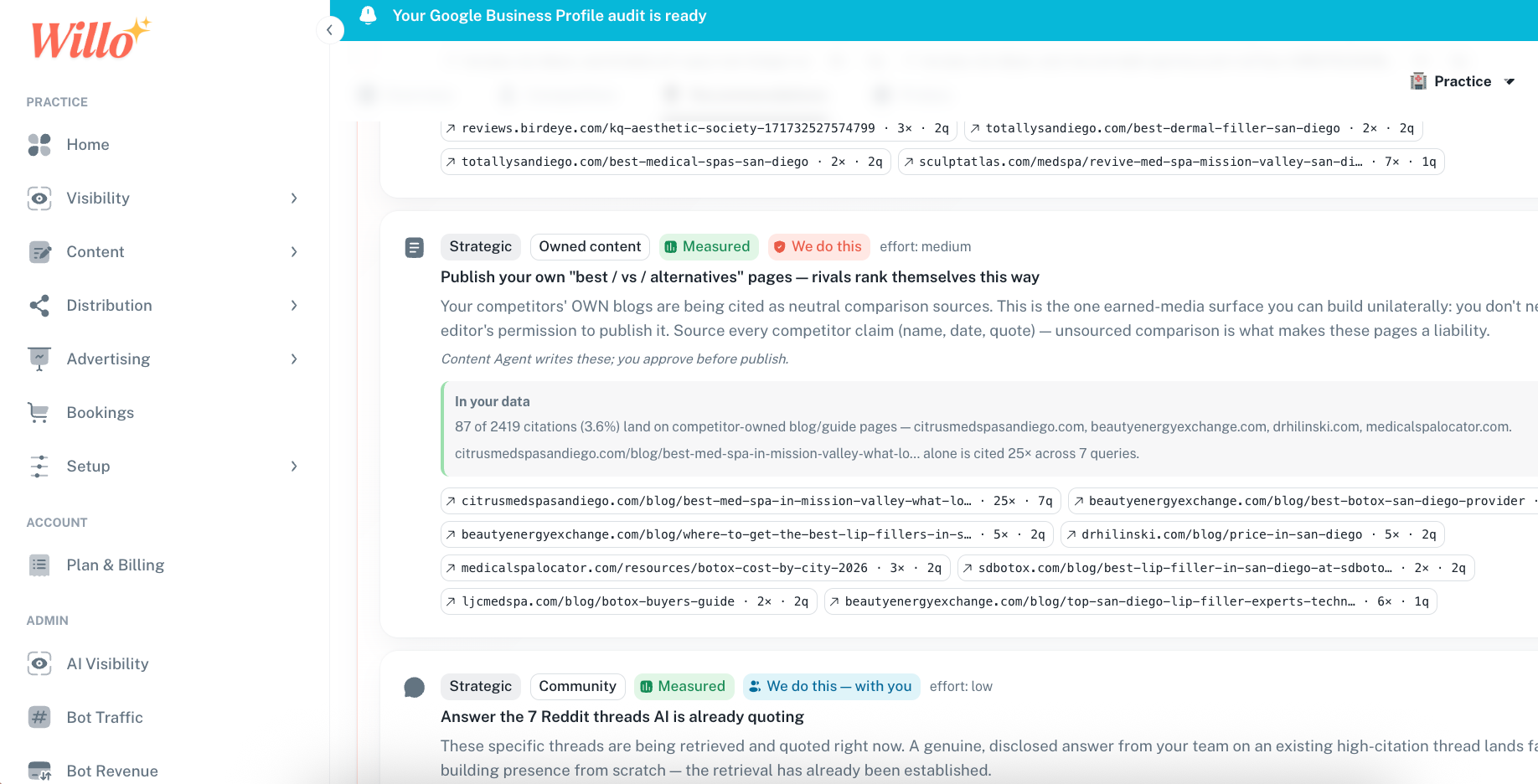
At 90 days, a practice consistently showing up in AI answers for its core treatment categories starts seeing approximately 4 new AI-referred patients per month. These aren’t cold leads. They’re patients who found the practice through a trusted AI recommendation, arrived already informed, and called to confirm — not to compare.
At an average appointment value of $400 across injectable and treatment bookings, that’s $1,600 in new monthly revenue directly attributable to AI visibility at the 90-day mark.
But here’s where it gets interesting. Those patients numbers compound after the 90 day mark as the AI Platforms like ChatGPT, Gemini, Goole Maps Ask etc keep building trust on your domain, on your content, on your backlinks all powered by Willo AI. And more AI Referral traffic converts into repeat patients.
The average aesthetic patient returns 2–3 times per year. Each new patient acquired through AI visibility is worth $800 to $1,200 annually in recurring revenue. Four new patients a month — retained — compounds to $38,400 to $57,600 in cumulative annual revenue from AI-referred patients alone, from a programme that costs $300 a month.
And the citation share keeps growing. By month four the foundation is stronger. By month six the content authority is compounding. By month 12, the practice has built a Share of Voice in its local AI market that is genuinely difficult for a competitor starting from scratch to close.
National chains like Ideal Image dominate AI answers nationally because of raw web presence volume. But in a specific city, for a specific treatment category — a well-optimised local practice consistently cited by ChatGPT for “filler correction provider in Austin” or “GLP-1 programme near me in Scottsdale” can absolutely out-rank a national chain in that answer. Because AI rewards relevance, specificity, and fresh trust signals — not just size.
Practices like SkinSpirit and Highland Aesthetics are growing their injectables Share of Voice month over month by tracking the exact prompts patients are asking in their markets and building content that becomes the answer. Willo AI’s visibility programme tracks citation share across ChatGPT, Gemini, and Claude week over week — so when a competitor takes a spot, the response is immediate, not identified at a monthly review meeting three weeks too late.
🗓️ What 30, 60, and 90 Days Actually Look Like
Getting consistently cited by AI platforms isn’t a one-week fix. It’s a structured build — and the compounding is what makes it powerful.
Days 1–30 — Foundation: Making Your Practice Machine Readable
AI doesn’t rank. It retrieves. The first 30 days are about building the infrastructure AI can actually read.
Willo AI audits the existing digital presence and closes every gap between what AI currently sees and what the practice actually offers. Structured schema markup across every treatment page and provider profile. 12 pieces of machine-readable content for hero treatments — formatted for how large language models extract and cite clinical information. Directory consistency across every platform AI cross-references — because conflicting information across sources kills AI confidence instantly.
By day 30 the foundation is in place. AI can find, read, and understand the practice. Citations start appearing. Everything that follows accelerates faster because of it.
Days 31–60 — Authority: Content Built Around What Patients Are Actually Asking
Willo AI tracks the specific prompts patients in the market are typing into ChatGPT and Gemini about the practice’s treatment categories — then builds content that answers those exact questions with the practice as the source.
Not generic blog posts. Specific, outcome-focused answer content. “What’s the difference between Sculptra and hyaluronic acid filler for someone who’s lost facial volume on GLP-1?” “What should I look for in a provider who does correction work on previous filler?” Each piece built to be the answer AI reaches for — with the practice named as the trusted source.
Treatment-specific review signals fed consistently. Two targeted backlinks per month to the publications that influence AI credibility in the category. Authority compounding month over month.
Days 61–90 — Compounding: Share of Voice Grows, Competitors Start to Notice
By day 60 citation share is measurably up. Patients are arriving pre-informed, pre-trusting, treatment already decided.
Fresh signals pushed to ChatGPT and Claude daily. Adjacent prompts targeted — the related searches that represent the next wave of citations to capture. Competitor Share of Voice tracked weekly — when a competitor pushes into an answer the practice was owning, the response is immediate.
Everything in the 30/60/90 day roadmap above, maintained continuously:
Machine-readable service content — 12 pieces of structured, entity-rich treatment descriptions that AI can extract, trust, and cite. Updated as treatments and providers change.
AI reviews structuring and feeding — treatment-specific review signals built consistently, formatted for how AI platforms assess clinical credibility.
Targeted backlink outreach — two trusted placements per month to the sources that influence how ChatGPT and Gemini evaluate authority in your category.
Daily fresh signal pushes — updated practice information pushed directly to Google AI, ChatGPT, and Claude continuously. Your practice stays current while competitors go stale.
Weekly Share of Voice tracking — citation share monitored across ChatGPT, Gemini, and Claude for your core treatment categories. When your share dips, the response is immediate.
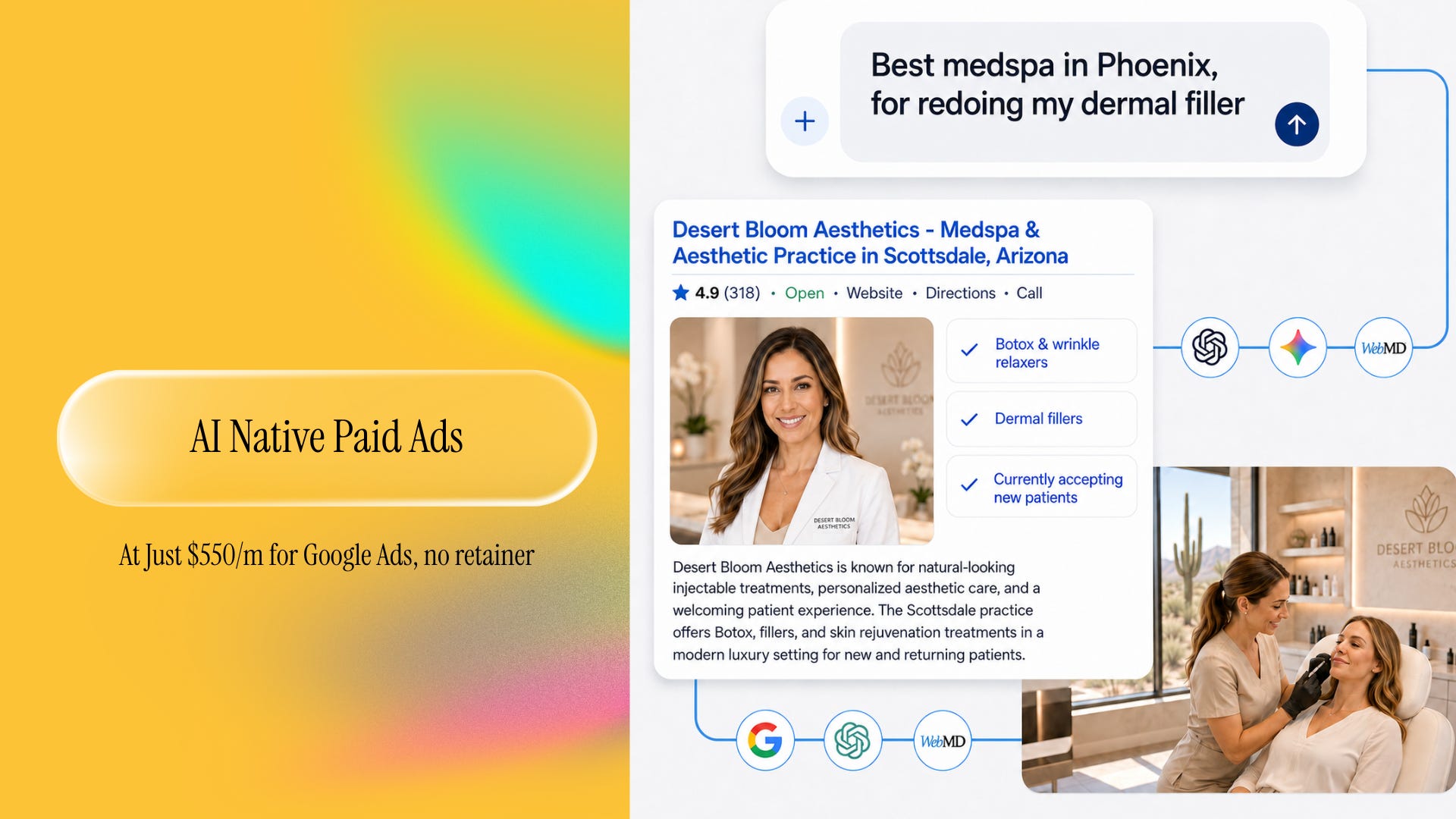
⏰ The Window Is Open. The Practices Moving Now Are Building a Lead That Compounds.
Practices optimised for AI search see 18–34% more discovery-stage enquiries within 90 days. The ones that wait watch that growth compound for someone else.
SkinSpirit, Highland Aesthetics, and the practices growing their injectables Share of Voice right now didn’t get there by optimising for a search engine that fewer patients are using every month. They got there by becoming the answer AI gives when a patient asks — in a conversation, at 9pm, having already decided she wants treatment and just needing to know which practice to trust.
That patient is asking right now. The only question is whether your practice is the answer she’s getting.
No posts
Comments
Nothing yet. Say the first thing.
Sign in to join the conversation.