
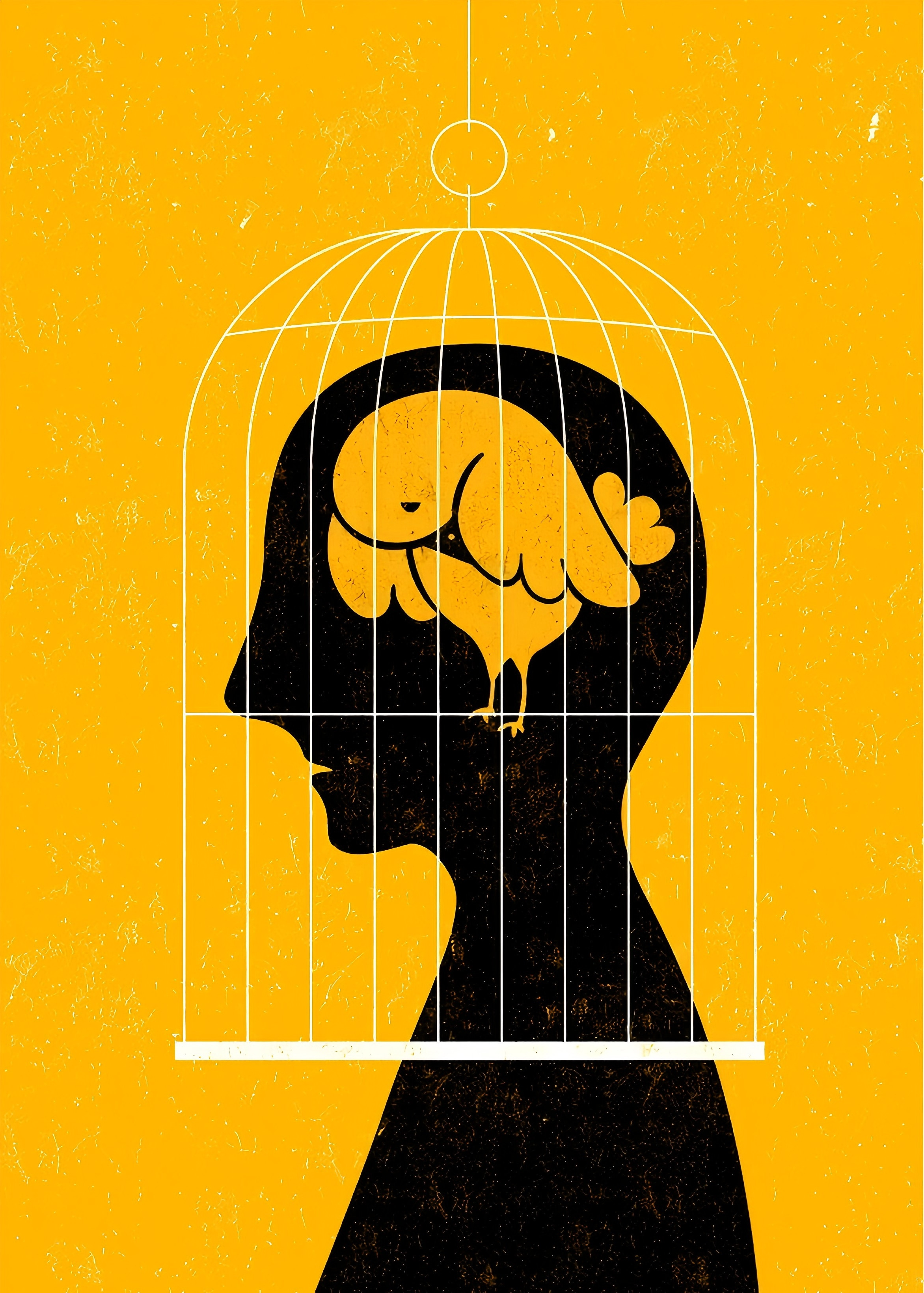
There is a frightening possibility most of us never consider:
What if the problem isn’t that you aren’t trying hard enough?
What if you are working incredibly hard…
…but inside a life you never consciously chose?
You wake up earlier.
You answer more emails.
You exercise.
You read books.
You set goals.
You try to become more disciplined.
And yet, somewhere beneath all that effort, you feel a quiet disappointment:
“Why am I still here?”
The apartment may be nicer.
The résumé may be longer.
The bank account may be larger.
The calendar may be fuller.
But you are still carrying the same anxiety, repeating the same relationship patterns, making the same compromises, and asking yourself the same questions.
This is where philosophy becomes uncomfortable.
Because some of history’s greatest thinkers understood something modern productivity culture often ignores:
A person can become extremely efficient at living the wrong life.
And that may be one of the most dangerous forms of self-deception.
Imagine a fish swimming inside a glass tank.
It can move.
It can turn.
It can accelerate.
It can explore every corner.
From the fish’s perspective, it has freedom.
But it doesn’t know where the walls are.
Human beings can live the same way.
We change jobs.
Change cities.
Change partners.
Change routines.
Change goals.
Change our appearance.
Change our productivity systems.
And still remain inside the same invisible psychological structure.
The walls are made of beliefs.
“People like me don’t do that.”
“I have to be realistic.”
“That’s just how life works.”
“I can’t disappoint my family.”
“It’s too late for me.”
“I need more money first.”
“Successful people are naturally confident.”
“I have to keep everyone happy.”
“I should be grateful for what I have.”
Some of these beliefs may be true.
Others may once have been useful.
But the dangerous ones are the beliefs we stopped questioning years ago.
We don’t experience them as beliefs anymore.
We experience them as reality.
That is the boundary.
Socrates famously associated wisdom with recognizing one’s own ignorance.
That idea sounds almost trivial today.
It isn’t.
Because modern life rewards certainty.
We want answers.
Algorithms tell us what to watch.
Experts tell us what to buy.
Social media tells us what success looks like.
Families tell us what a “good life” should resemble.
Schools teach us how to pass exams.
Companies teach us how to perform.
But very few institutions teach us how to ask:
“Who decided that this is the life I should want?”
That question is dangerous.
Because once you ask it seriously, some of your goals begin to look suspicious.
Why do you want that promotion?
Why do you need that house?
Why are you terrified of disappointing people?
Why do you measure your worth through productivity?
Why are you still trying to prove something to someone who may not even be watching?
And perhaps the most uncomfortable question:
If nobody could see your life, would you still want it?
Sit with that one.
It has a way of making certain ambitions suddenly feel strangely empty.
There is also a psychological reason these boundaries are so difficult to escape.
The human mind is not designed primarily to maximize happiness.
It is designed to navigate uncertainty, conserve resources, detect threats, and make predictions.
Familiar patterns are easier to process.
That means your brain can become comfortable with things that are objectively uncomfortable simply because they are predictable.
A miserable job can feel safer than an uncertain career.
A lonely relationship can feel safer than being alone.
Chronic overwork can feel safer than confronting the possibility that your identity has become dependent on achievement.
Even anxiety can become familiar.
And familiar anxiety can feel safer than unfamiliar freedom.
This creates one of life’s cruelest paradoxes:
Sometimes we don’t stay because something is good.
We stay because leaving requires us to become someone we haven’t yet learned how to be.
Friedrich Nietzsche repeatedly challenged conventional morality and the tendency to conform to the values of the crowd.
His broader philosophical challenge remains painfully relevant:
Are your values actually yours?
Or did you inherit them?
Think about how many definitions of success are socially contagious.
A prestigious career.
A certain income.
A particular body.
A beautiful home.
A perfect family.
A packed calendar.
Constant productivity.
Visible achievement.
None of these things are inherently bad.
The problem begins when you pursue them automatically.
You can spend twenty years climbing a ladder only to discover that it was leaning against the wrong wall.
And the tragedy isn’t simply wasted time.
It’s that you may become extremely good at defending the wall.
Psychologically, identity can become a powerful constraint.
Once we define ourselves in a particular way, we tend to interpret new experiences through that identity.
“I’m not creative.”
“I’m terrible with money.”
“I’m an introvert.”
“I’m always anxious.”
“I’m bad at relationships.”
“I’ve never been disciplined.”
“I’m just not that kind of person.”
Notice the subtle shift.
You are no longer describing a behavior.
You are describing an identity.
And identities feel permanent.
That is why saying:
“I haven’t learned this yet”
is psychologically different from saying:
“I’m not capable of this.”
One leaves a door open.
The other quietly closes it.
Viktor Frankl’s work offers perhaps the most profound reminder that circumstances and psychological freedom are not identical.
Frankl, a psychiatrist and Holocaust survivor, wrote extensively about meaning, suffering, responsibility, and the human capacity to choose one’s response to circumstances.
His insight was not that circumstances don’t matter.
They matter enormously.
Rather, he emphasized that even under extreme conditions, human beings can retain some degree of inner agency.
For ordinary life, the implication is unsettling:
We often underestimate the freedom we still possess because accepting responsibility for it is frightening.
It is easier to say:
“My boss made me this way.”
“My childhood made me this way.”
“My partner made me this way.”
“The economy made me this way.”
“My circumstances made me this way.”
Sometimes these explanations are legitimate.
But if they become your entire identity, they can quietly become a prison.
Because if everything is controlled by something outside you, then nothing can change until the outside world changes first.
And that may never happen.
This newsletter takes dozens of hours to research each week.
If you’d like to support independent writing, you can buy me a coffee below.
This is where the central idea becomes more disturbing.
Your life may not be limited primarily by what you can do.
It may be limited by what you can imagine yourself doing.
Consider two people with similar intelligence, resources, and opportunities.
One sees ten possible futures.
The other sees two.
Even before either person takes action, their psychological maps are different.
The second person doesn’t need to be less talented.
They simply inhabit a smaller world.
And when your internal map is small, effort often produces diminishing returns.
You work harder.
You optimize more.
You become more efficient.
But you are still solving problems inside the same conceptual box.
That is why sometimes the next breakthrough doesn’t require more effort.
It requires a larger question.
Instead of asking:
“How can I become better at my current life?”
Ask:
“What if my current definition of a good life is incomplete?”
That question creates psychological space.
Maybe you don’t need another productivity system.
Maybe you need fewer obligations.
Maybe you don’t need another degree.
Maybe you need permission to stop proving yourself.
Maybe you don’t need more motivation.
Maybe you need a different goal.
Maybe you don’t need to become more disciplined.
Maybe you need to stop spending your discipline on things you don’t actually value.
This is the cognitive reversal most self-improvement advice misses.
Growth isn’t always adding more.
Sometimes growth is removing the assumptions that made “more” necessary in the first place.
Carl Jung approached another dimension of the problem: the parts of ourselves we reject, suppress, or refuse to acknowledge.
The “shadow” is not simply a collection of bad traits.
It can also contain desires, ambitions, anger, creativity, vulnerability, independence, and other aspects of ourselves that don’t fit the identity we’ve constructed.
You may have spent years becoming the person everyone approves of.
Responsible.
Reliable.
Successful.
Pleasant.
Strong.
But somewhere inside, another version of you may still be waiting.
Not necessarily a reckless version.
A more honest one.
And sometimes psychological suffering is not evidence that you are broken.
Sometimes it is evidence that your current identity has become too small for your actual life.
This does not mean every feeling of anxiety is secretly profound wisdom.
It isn’t.
Mental health difficulties can be serious and deserve appropriate professional care.
But ordinary psychological discomfort can sometimes contain information.
The restless feeling before another Monday.
The emptiness after achieving something you thought would make you happy.
The strange sadness after receiving praise.
The recurring thought:
“Is this really it?”
We often silence these signals immediately.
Another vacation.
Another purchase.
Another achievement.
Another distraction.
Another productivity hack.
But perhaps the question isn’t:
“How do I make this feeling disappear?”
Perhaps sometimes it is:
“What is this feeling trying to make me examine?”
That question requires courage.
Because the answer might demand change.
This sounds paradoxical, but it matters.
You don’t always need a dramatic external transformation.
You may need a different interpretation of your circumstances.
The same job can feel different when it becomes a conscious choice rather than an unconscious obligation.
The same relationship can become healthier when boundaries replace resentment.
The same income can feel different when your definition of enough changes.
The same aging process can feel different when you stop treating youth as the only valuable stage of life.
The external world doesn’t always need to change first.
Sometimes the meaning you assign to it changes first.
And that can change what you do next.
Tonight, don’t make another five-year plan.
Instead, take a piece of paper and answer these questions without trying to sound intelligent.
Not because I value it.
Not because I enjoy it.
Because I fear judgment.
This reveals how much of your behavior is shaped by reputation rather than desire.
Write down the sentence.
Then ask:
“Where did I learn this?”
Maybe the problem isn’t effort.
Maybe the strategy is wrong.
Don’t answer quickly.
The first answer is usually social conditioning.
The deeper answer often arrives later.
There is something more frightening than failure.
It is reaching the end of a decade and realizing:
You were extremely successful at becoming someone you never wanted to be.
You followed the rules.
You worked hard.
You behaved responsibly.
You achieved things.
People admired you.
And yet, somewhere along the way, you confused being admired with being alive.
This is why the boundaries of thought matter.
Because before you change your circumstances, you need to notice the mental architecture through which you interpret them.
Otherwise, you may simply rebuild the same prison somewhere else.
New job.
Same anxiety.
New relationship.
Same insecurity.
New city.
Same emptiness.
New goal.
Same dissatisfaction.
Different scenery.
Same mind.
Maybe you do.
Sometimes the answer really is discipline.
Sometimes you need to practice longer, save more, study harder, exercise consistently, or endure temporary discomfort.
But there is a question that should come before effort:
“Is this actually worth becoming?”
That question can save you years.
Because effort is powerful.
But effort without examination can become a very sophisticated form of self-destruction.
The goal isn’t to stop striving.
The goal is to make sure your striving belongs to you.
Socrates questioned.
Nietzsche challenged.
Frankl searched for meaning.
Jung explored the hidden self.
Different thinkers, different centuries, different philosophies.
Yet beneath their differences lies a common invitation:
Wake up.
Look again.
Question what you assumed was inevitable.
Examine the identity you inherited.
And notice the invisible boundaries you have mistaken for reality.
Because your life may be larger than the story you have been telling yourself.
And perhaps the next chapter doesn’t begin when you work harder.
Perhaps it begins when you finally ask:
“What if the wall I keep pushing against… was never a wall at all?”
Your circumstances matter.
Your history matters.
Your limitations are real.
But so are your assumptions.
And sometimes the most important change in a life begins with something almost embarrassingly small:
a belief you finally decide to question.
Subscribe as a paid reader to continue. The next layer is where the uncomfortable questions begin.
If you enjoyed this article and would like to support more deep, valuable, and thought-provoking content, you can buy me a coffee ☕
Your support is more than a tip.
It helps an independent creator keep writing, stay free, and continue producing meaningful work without being driven by algorithms.
Every cup of coffee helps fuel the next article worth reading.
Thank you for reading until the end.
The most valuable thing online isn’t traffic—it’s people like you who choose to support real value.
No posts
Comments
Nothing yet. Say the first thing.
Sign in to join the conversation.