
The ultimate, hidden truth of the world is that it is something that we make, and could just as easily make differently.
—David Graeber
I was born at the end of Folkhemmet.
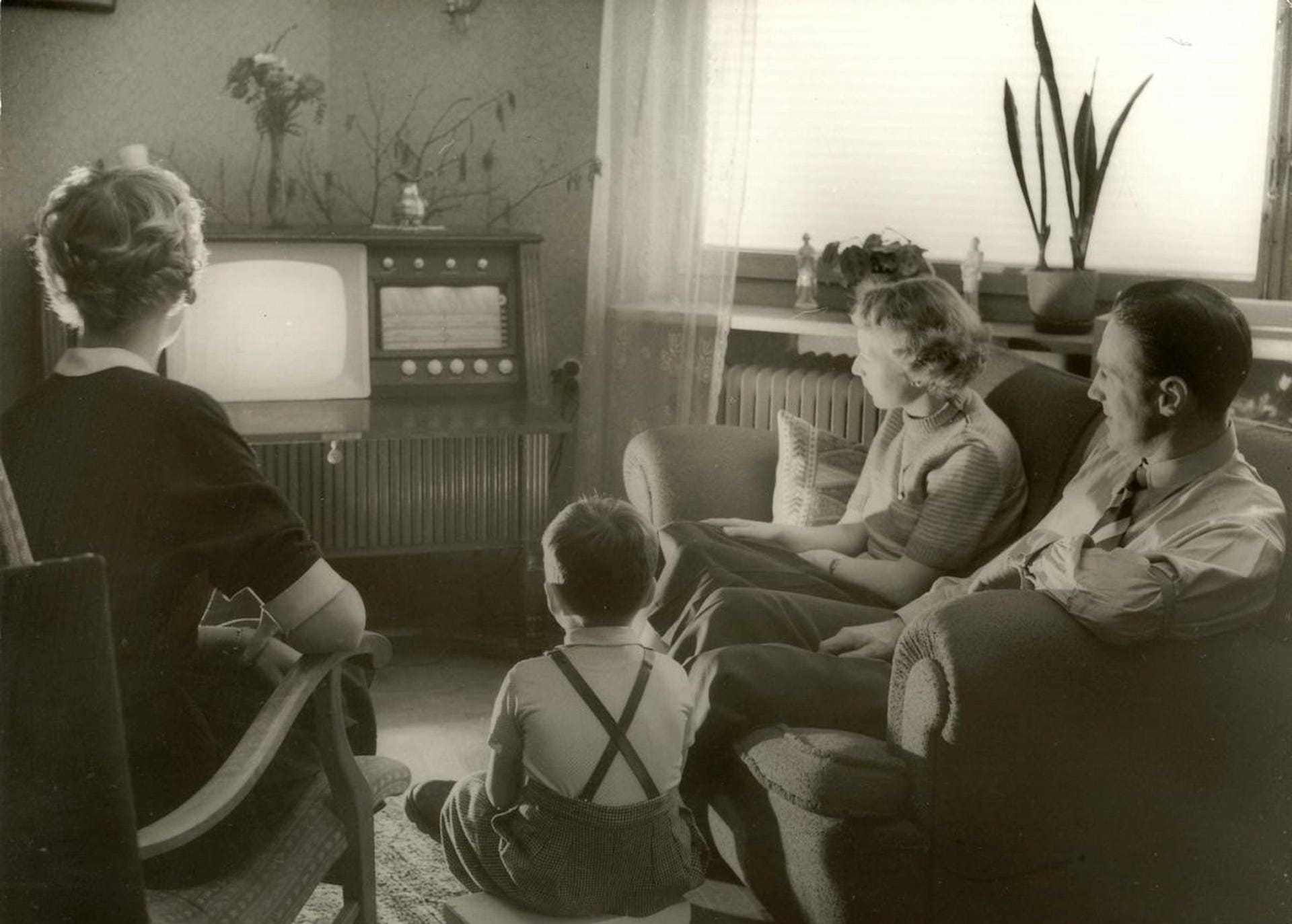
For those of you who don’t know, Folkhemmet—the People’s Home—is the metaphorical name given to Sweden’s welfare state, especially between the 1930s and the 1980s. The name itself comes from a speech by Per Albin Hansson from 1928, before he became prime minister, outlining his vision for society. The idea, quite simply, is that a good society must be like a good home. Hansson declared:
The foundation of the home is community and fellowship. The good home recognises no privileged or disadvantaged; no favourites and no stepchildren. There, no one looks down on another; no one tries to gain advantage at the expense of others; the strong do not oppress or plunder the weak. In the good home there is equality, care, cooperation, and helpfulness.
Applied to the larger home of the people and the citizenry, this would mean the breaking down of all social and economic barriers that now divide citizens into the privileged and the disadvantaged; the ruling and the dependent; the rich and the poor; the propertied and the impoverished; the plunderers and the plundered.
Folkhemmet is undoubtedly one of the most impactful metaphors on 20th-century Swedish politics. The ideas outlined and later enacted by the Social Democratic Party (predominantly through Hansson’s successor Tage Erlander) laid the foundations for Sweden’s success in the mid-century. It is also the root to the romanticised view of the Swedish / Nordic / Scandinavian ‘model’ society.
And I was born at its end.
The whole affair faced a long period of decline towards the end of the 1970s, only to be shuttered wholly by the early 2000s. This is a fascinating story, but perhaps one I will cover elsewhere. As you no doubt have noticed, the whole metaphor is a bit socialist-y. Not a surprise, of course. This is something tabled by a socially democratic party, and Hansson, in his youth, was a real firebrand, too!
However, what I want to discuss is Folkhemmet’s more fundamental kind of utopianism, and what we can learn from it today—because there is more here than just mid-century Scandi nostalgia.
Folkhemmet is conceptually steeped in capital-M-Modernity. Baked into its core premise was the idea that a better society can be built through good values, clever planning, and some elbow grease. In short, the world is something that can be (and to the High Modernists, ought to be) deliberately improved.
Central to Sweden’s case, in particular, was science and technology. The whole project was predicated on new breakthroughs that would discover novel solutions, create new materials, or uncover new knowledge. Indeed, in 1955, the so-called Rigoletto Conference gathered together scientists, politicians and other big-wigs to establish what historian Per Lundin has called “a ‘supreme ideology’, an ideology above all other ideology, an ideology that unified all existing ideologies”, with technoscience at its core. Technological solutions were to be adopted totally across society as the necessary drivers for social change.
The utopianism here cannot be understated; its capacity to transcend political divides and bring all aboard is equally fascinating. After all, whilst Folkhemmet was largely instantiated by the Social Democratic Party in Sweden, the broader idea enjoyed plenty of support. In other words, the utopianism goes beyond some left-wing idea of an ideal society; technology and the hope placed in it was really at the core.
It’s tempting to think that all this was accompanied by the same rabid shouts demanding more and more technology—as if the fundamental drive had shifted away from building a “good home for the citizenry”, to quote Hansson, towards a craving for more technology. In actuality, there was something much more measured about the whole affair.
Today, we’re used to thinking about technology’s capacity for societal transformation as framed around an event of some kind. Typically that some egghead figures out some genius solution to some huge problem and boom!, society will never be the same again. This is a narrative of quantum leaps; one moment, humanity is tied to this here planet Earth; the next, we’re spread across the galaxy, all because someone figured out some doohickey or thingamabob to get us there.
I have my own hypothesis for where this idea comes from—again, perhaps for another time. Here I am more interested in contrasting this to Sweden’s very, well, very Swedish approach. In the little-country-of-just-enough [lilla landet lagom], the narrative was indeed much more lagom, or ‘just enough’. There, techno-optimism was steeped in incrementalism. In short, if you can ensure that society gets x% better every day ad infinitum, you’ve basically cracked the utopian calculus.
This rationale makes even more sense when considered in the context of the time. Prior to the 1920s, Sweden was one of the most socially conservative countries in Europe. Social inequality was immense, and the tumultuous 1920s destabilised society further. It was only from 1932 onward—crucially, after the Ådalen Shootings in ‘31—that things got bad enough for them to begin to get better.
I am aggressively truncating the history lesson here, of course, but the point I wish to make is that for someone born in 1965, their grandparents’ lives from 1905 would’ve seemed like a completely different world. In fact, in many ways it had been! Technology was moving fast, and in a lot of ways, this speed translated to the improvement of everyday life for most people; running water (hot and cold!); telephones; nation-spanning electrical grids; railways; car ownership for the masses; air travel!
This was a very convincing utopian path.
I mentioned that I was born at the end of Folkhemmet. Its slow decline is one I’ve been deeply intrigued by. It was a slow decline from around the mid-1970s towards something akin to a complete collapse throughout the 1990s and early 2000s. This shift in social and political realities, doctrine, and narratives crucially coincided with a rise of digital utopianism.
The internet was about to make it big, and either through great foresight or, indeed, desperately looking for some new grand vision to pivot to, Sweden jumped in, feet first, and went mad for home computing and internet connectivity1, as well as training folks in how to use it all. I still remember how I had to take an exam for a computer driving license in school; by today’s standards, it’s positively quaint.
Meanwhile, whilst Sweden was going mad for all this new tech—and we’ve made a pretty good reputation of it, too—new narratives around technology, and its potential for societal change started to spread. Perhaps the biggest shift here has been the launch of social media.
Many today see social media as a (if not the) seminal mistake of our current times, but let’s not forget its humble beginnings as part of the realisation of a decades-long dream of bringing humanity closer together through digital technologies—a genealogy that stretched directly from 1960s counterculture and the hippie movement all the way to the founding of what was originally called the Facebook. The launch of the internet was equally one step towards such realisation.
Importantly, then, is that at Folkhemmet’s end in Sweden, the previously everyday and mundane utopianism was being replaced by a digital utopianism with its roots an ocean and a continent away. Importantly, it was also a vision that came with a very different narrative. This was a technological explosion, of sorts, that would fundamentally revolutionise society. One of the more extreme articulations of this is the idea of the Technological Singularity; yet, make no mistake, this revolutionary narrative remains at the heart of much tech discourse today, though the explicit utopianism is often better hidden.
Why am I talking about this at all?
I’ve for a long time been thinking hard—perhaps too hard—about the narratives we create around technology, and especially emerging ones. As the late great David Graeber said, we make the world, and it can just as well be made differently. Yet, this is a bit of a dirty little secret. More often than not, things are said to be the way they are due to the natural demand, or the long arc of history, or something else that merely is that way.
Right now, for example, we’re seeing this front and centre when it comes to AI and its various vicissitudes. No matter the development, from a narrative perspective, the arrow must always point to progress. Any setback now is not even a minor setback, it’s a necessary step towards greatness—and honestly, this narrative needs to be challenged. Not only because this is potentially harmful, and often breeds an ends-justifying-the-means mentality, but also because not having any clear alternatives is equally, if not more, dangerous.
So let’s look at an alternative. Anthropologist Alicia Sliwinski discusses the everyday utopia; in her words: “everyday utopias are sites whose members actively seek to realize shared values against a current state of affairs. But they do not operate in autarchy: their conduct expresses what they consider to be meaningful in comparison to other ways of doing things”. In other words, they are not “programmatic”; the utopianism lies not in completion, but rather in process. And here we return to Sweden and Folkhemmet.
What I have always found compelling in Folkhemmet’s doctrinal structure was how it effectively proscribed process as the central utopian driver for a society. I’ve come to think of this as boring utopianism; or a utopianism that purposefully sidesteps the big, exciting revolutionary narratives in favour of improving the present moment, a little bit, forever.
Boring utopianism combines hope for the future and genuine contemplation of the good life, with the ever-so-crucial and all-too-often overlooked practical grounding. In the realm of technology—whether new or old—this has some key implications. As technology is, fundamentally, a tool and not a goal, it also necessitates that technological progress is more about humans and less about technology: to meet the need for water, food or shelter; to sate the longing for companionship, or the yearning for art and beauty.
I see this as a form of everyday utopianism; this is a really useful concept because it highlights that all of these projects are as much about the process as the ending. This is a somewhat philosophical point, but also one that’s really easy to lose sight of, and it is crucial that we don’t. It forces us to ask whether the ends really justify the means, to think carefully about trade-offs; perhaps most importantly, it lets us actually answer these questions more completely.
Technology has preoccupied thinking about society, our place in it, and the future. One of my favourite works that leans into this is Fritz Lang’s 1927 Metropolis. It’s image of a crushing city in which it is man that is the cog in the machine; where the image of the Machinenmensch is simultaneously a metaphor of the widespread fear of technology’s encroachment on our lives, but also as the affirmation of sociocultural change par excellence. It is, of course, a product of its time—specifically of the particularly complex sociocultural anxieties of Weimar Germany.
Yet, it’s epigraph has always struck me as something that transcends its particular time and place: mittler zwischen Hirn und Händen muss das Herz sein; that the mediator between the head and the hands must be the heart.
And, surely, it must be so.
Fun fact, Swedish Prime Minister Carl Bildt and US President Bill Clinton were the first heads of government to exchange emails with each other in 1994.
No posts
Comments
Nothing yet. Say the first thing.
Sign in to join the conversation.