

Last year over 9 million foreigners visited Brazil, an all-time record.
Putting it in perspective, though? It’s, not that much. Some spots in Europe which are a fraction of a fraction the size of Brazil, pull those numbers alone. The Louvre in Paris, for instance, gets 8–10 million visitors a year.
Still, for us, that was a 37% jump in a year. Quite a rise.
Brazil’s never been a major tourist destination, mostly because of the violence. That hasn’t disappeared, by the way. It’s improving, but it’s still there.
Still, something’s shifted in how people see us. There’s always been sympathy, especially from other Latin Americans and Portuguese-speaking Africans, but not like this. Not globally. People want to be in Brazil, they want to be our friends and they want to be like us.
Tourism is largely driven by social media nowadays. Touristic videos of Brazil have been popping up for the past five years or so on YouTube, Instagram, TikTok, so there is of course the snowball effect. People see others visiting on social media, that leads to more people traveling there and making more photos and videos that makes more people want to go there.
We kind of own the internet. Not just because we’re 220 million people, but because of how much we’re online. We share a lot, so more people are exposed to our culture. We also engage with any video that mentions Brazil. Foreigners catch on quick on the advantages or this engagement, talk about us more, and it spreads even further.
So all of that has been quite helpful to spread our culture around the globe. People are interested in Brazilians themselves, in the content, the aesthetic, the movies, the music. But why Brazil and not another large country like Nigeria or India?

My theory is that we show the world something that a lot of people want. We live in a world where we never produced more and never lived less. There are so many issues caused by late-stage-capitalism. So much terror, destruction, hopelessness. People are looking for a new model. For something more human, more sensory, more alive.
And that’s where people find Brazilians. We are always outside, always with friends and family, always in nature. We are always laughing, dancing, having fun. We are alive.
We don’t want more productivity, work, success. We want to live.
We maybe have become a cultural exporter along the way, the country that exports joy.
But more than that, although we have always lived in hardships we keep moving on and most of all, we keep happy and celebrating. There’s a famous music in Brazil that summarizes well what the Brazilian spirit is about: we laugh so we won’t cry (rir pra nāo chorar).
Are our lives easier than in the rest of the world? Not at all. Life in Brazil is hard. I don’t know anyone who hasn’t directly been affected by violence. From being mugged on the streets to being kidnapped. We work a lot, many hours, for cheap. Foreign companies keep buying politicians up and do basically whatever they want: Do you want a new iron mining here that will destroy 20 waterfalls and this pristine ecosystem? Sure, why not. Fancying to burn this forest down to plant 5,000 new hectares of soy bean? Say no more.
Do we despair? Of course, but mostly we move on. We focus on the good things, on what we can control. Our surroundings, our work, our colleagues, our friends, our families. We still have fun and prepare for carnaval. We still dance, we sing. We worry about football. We understand life is hard, that life is not about being happy. It is about living it.
We also fight back, of course. We have for instance the strongest peasants movement in the world: O movimento dos sem-terra. We have fought against a bloody dictatorship last century, the indigenous people keep fighting for their survival, we create from trash, we mobilize and turn a failing public school into one of the best in the world.
And maybe that’s why people are consuming so much Brazilian content, why we are back to the Golden Globes and the Oscars. Why our TV shows are leading on Netflix. Why the tourism is soaring. Why the country leads the ranking as the most ‘fun’ in the Soft Power Index.
On such difficult moment for many, we look for resilience and positivity.
There was also a cultural shift inside Brazil itself. We started appreciating the parts of our culture that are not so polished and pretty. Things that are part of our own shared and built esthetic: the weirdly ugly street dogs, the plastic chairs, the water filters, the cheap and colorful clothes. Not the aesthetic that has always been imposed on us by the richer countries. We are decolonizing our minds little by little and it’s beautiful to see.

Wouldn’t be a text by me without pointing the problems.
Am I telling you to visit Brazil? Maybe. It’s amazing! It’s huge, you could spend a lifetime and not see it all and it has out-of-this-world places. Really. Great people, great food, great weather. We’re glad people are interested.
But I also see what mass tourism, digital nomads, and rich retirees did to Portugal, Spain, Italy, Bali, Thailand…so… maybe don’t come? I really hope we don’t get gentrified because that’d be a disaster.
Also, some foreign tourists have been racist while in Brazil. As dumb as that sounds. It’s a crime there. Literally. You can go to jail for it.
And the big one: cultural appropriation. I know it’s not a black and white topic, but if you’re a foreign company selling “Brazil” as a brand to make money? Sorry, that’s appropriation. I’m looking at you Sol de Janeiro, Oakberry, and many others.
It’s fine to do Brazilian things anywhere. Just don’t forget where they come from. Tell people to wear Havaianas (which is actually ours), don’t sell something as Brazilian when it’s not, just to cash in.
Especially because most of that cool aesthetic, music, and style comes from poor people in favelas who earn nothing from those companies. Appropriation is about using the best of the culture without actually having to experience the worst of it.
If you look at videos of Carnaval parties in Brazil, you won’t see people on their phones as much (or even barely) as you see in parties and shows anywhere around the world.
Right now with AI and everything that is going on in the world we value quality of life, real connection, cultural expression, collective experiences, nature, happiness and fun. All of that has always been there for Brazilians.
This isn’t about Brazil being better. It’s about a world that is tired. Tired of performance, tired of isolation, and tired of postponing life. Brazil offers the exact opposite and that’s why you can find so many people around the globe being obsessed with it right now.


An Invincible Memory by João Ubaldo Ribeiro
An epic novel spanning four centuries of Brazilian history. João Ubaldo’s language is always humorous, engaging, and surprising. The author skillfully describes the feelings and motivations of characters as diverse as 16th-century Dutch explorers, cannibal natives, plantation slaves, powerful oligarchs, religious figures, public officials, and politicians, among others. Dozens of characters appear in a fascinating and well-told story that runs parallel to and is consistent with Brazilian history, including its inconsistencies and injustices.
Before the novel begins, we read these words on an otherwise blank page:
The secret of Truth is as follows:
there are no facts, there are only stories.

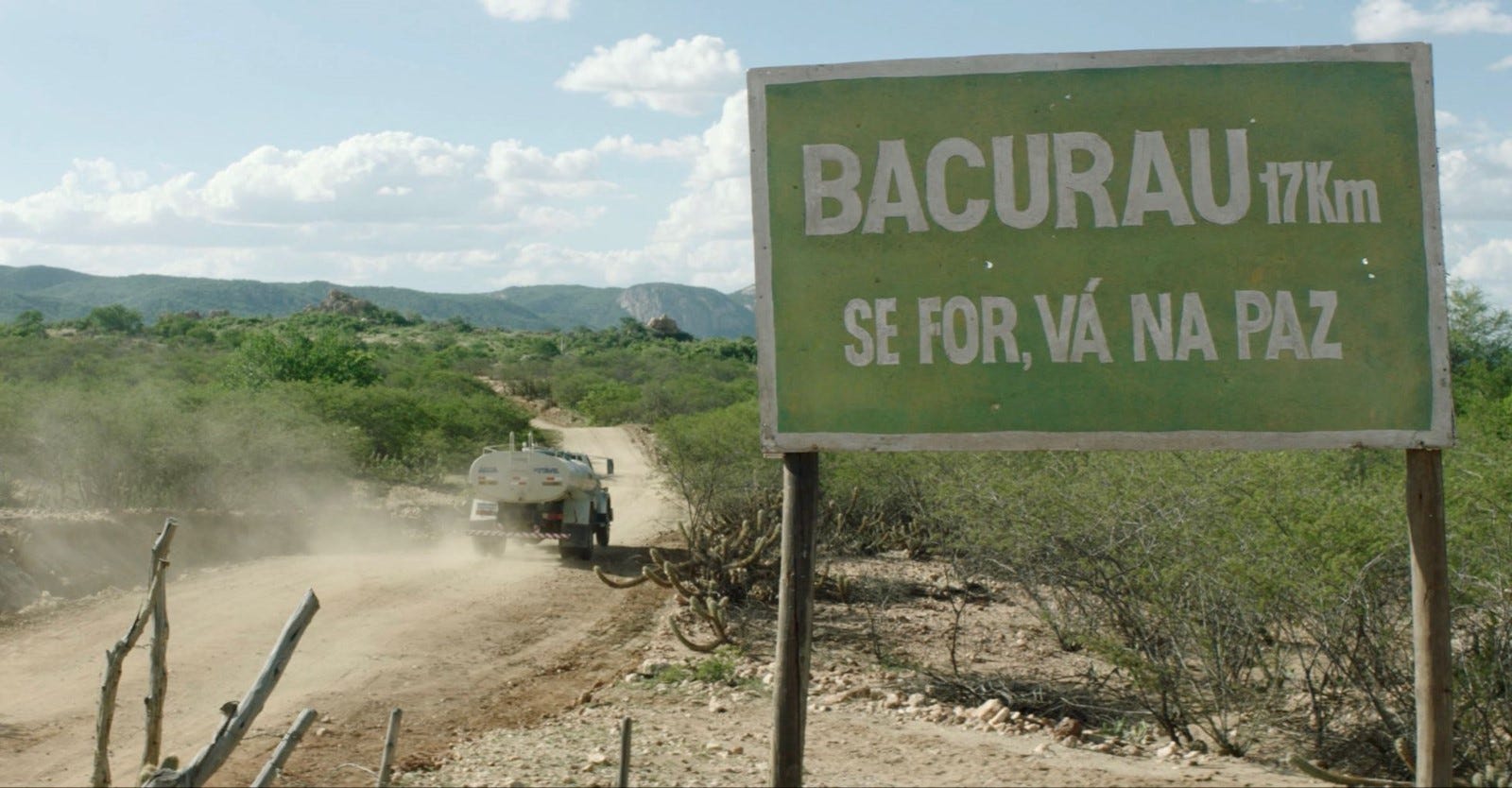
Bacurau (2019)
This movie was directed 7 years ago by Kleber Mendonça Filho (the same director who directed the Best Movie nominee of this year The Secret Agent). From the moment it premiered, it became a Brazilian indie favorite. Taking place in the driest region of Brazil, it is set in a fictitious small city that is constantly fighting for survival and now is facing a new enemy.
It’s bloody (as 90% of Brazilian movies are) and just like Secret Agent, Kleber doesn’t give much context about the background the movie is set in. My partner (who is not Brazilian) had questions about the two movies. Is that a bad thing? Not really. There is a lot to enjoy about this movie, but you should know that it won't give any explanation as to the cultural background.

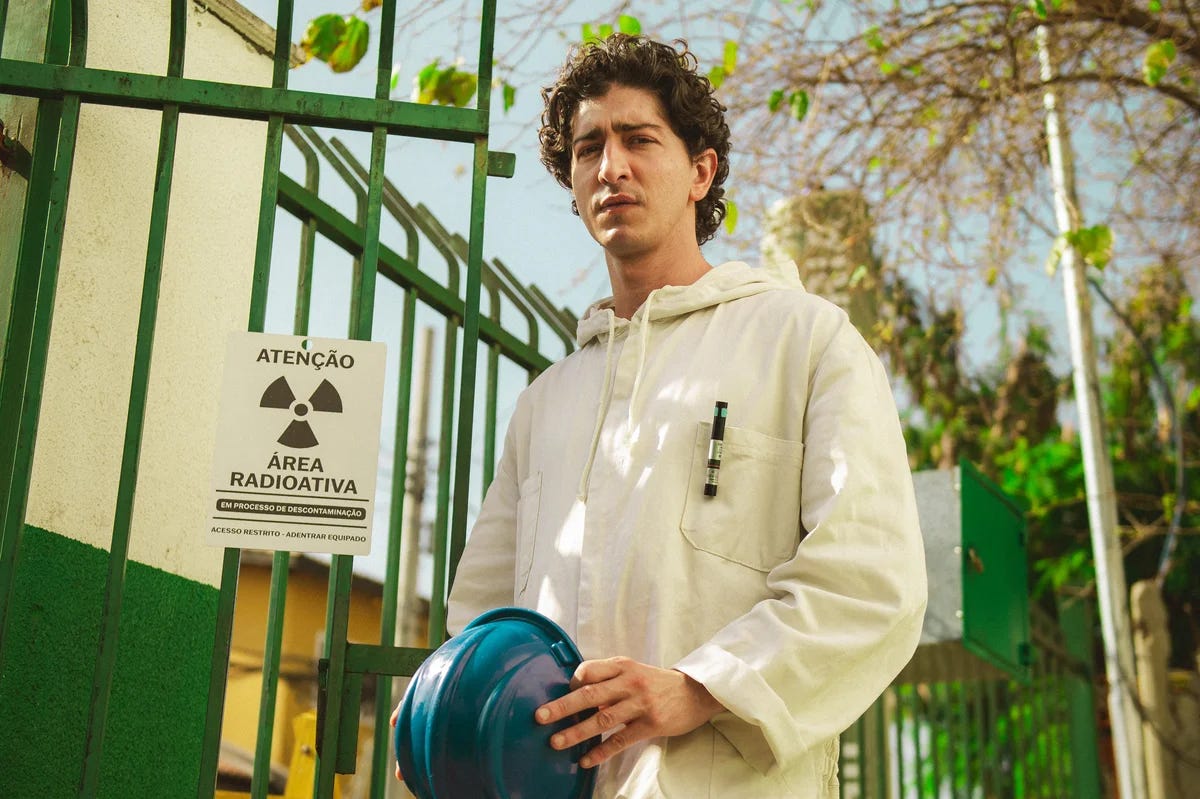
Radioactive Emergency (Netflix)
I haven’t watched yet, but it it became the most-watched non-English language series on the platform, so it certainly caught my attention.
What is it about? In 1987 Brazil, a scrap metal owner discover a mysterious glowing substance in an abandoned hospital. As the material changes hands, scientists and doctors desperately work to prevent a radioactive disaster from claiming countless lives. It was the biggest radioactive accident in Brazil’s history.
Thanks for reading Read, Watch, Binge! This post is public so feel free to share it.
Comments
Nothing yet. Say the first thing.
Sign in to join the conversation.