
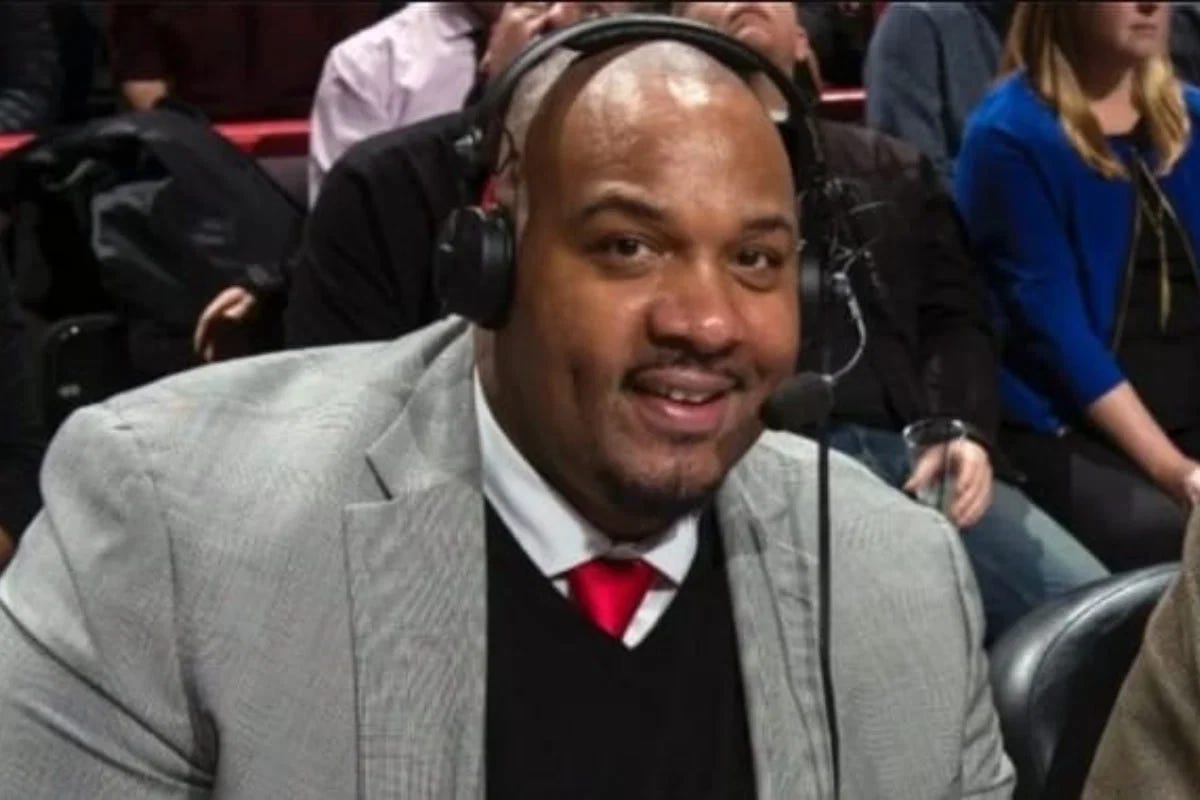
This sucks.
There are many other ways to start this story: a tribute to how he delivered the Derrick Rose experience, a heart-pulsating re-telling of his bring-the-house-down jumper in the comeback against the Blazers to seal ring number two, or the way he forever changed what we say when we use hot sauce.
But considering the way this news crushed Chicago, clever feels wrong. Stacey King died Sunday at age 59, and it absolutely sucks. We weren’t ready. We’ll never be the same. Because Ronald Stacey King gave us one of the greatest gifts of sports:
The voice of the fan.
There are two templates for elite color commentators: the analyst and the fan. Each can blend into the other but the best always end up getting known for one more than the other. Obviously Stacey could and did analyze the game, but what made his death hurt so badly was the fan side: he was us in the booth, the spiritual successor to his fellow Bulls lifers Red Kerr and Norm Van Lier.
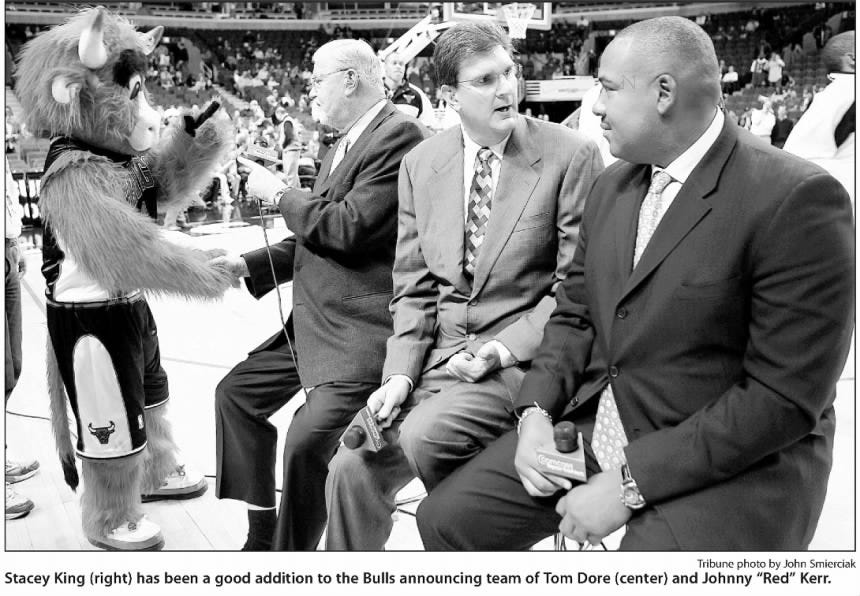
Stacey became the standard bearer in Bulls broadcasts nearly immediately upon joining the booth in 2006 as a third man with Kerr and Tom Dore. Two years later, the team’s booths reshuffled, bringing radio man Neil Funk to TV to pair with King.
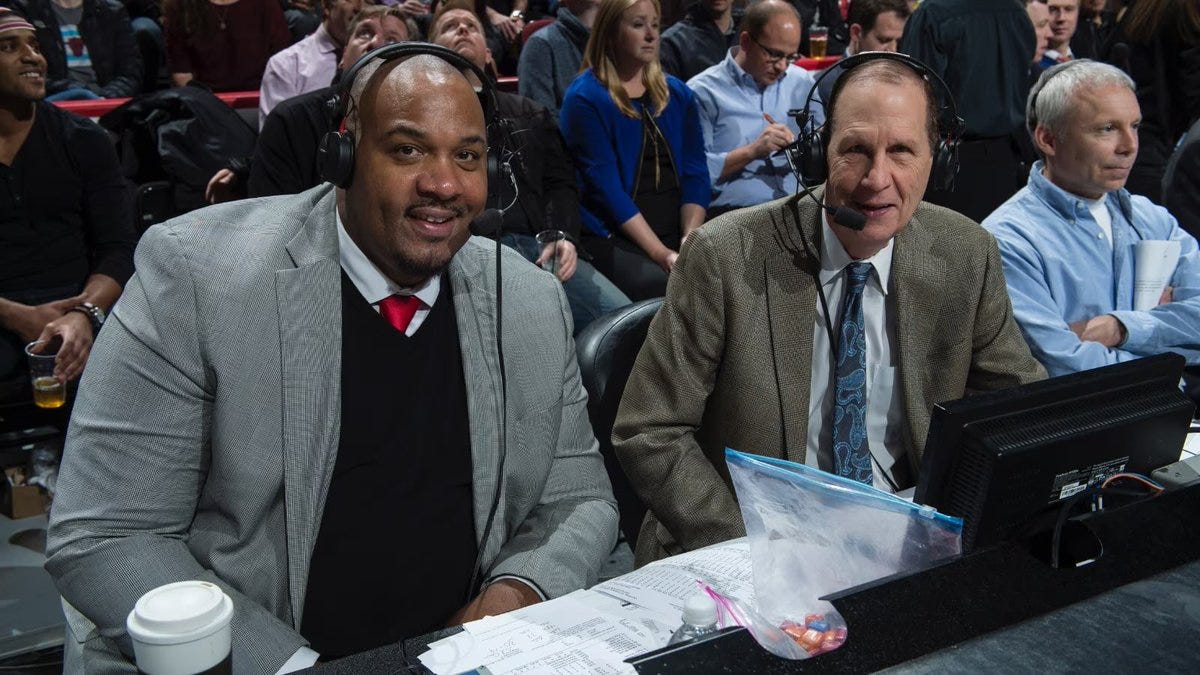
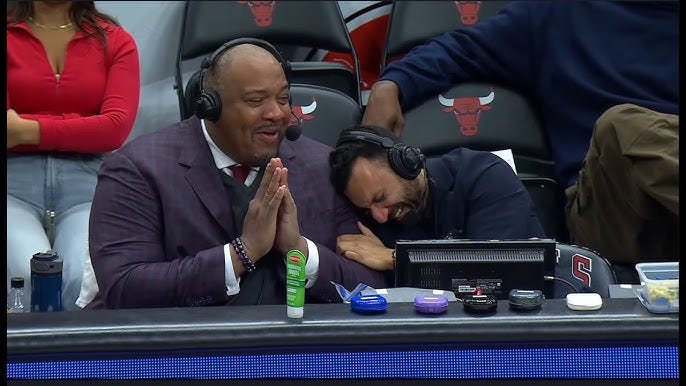
This is where Stacey’s legacy lives. With Funk and then with Adam Amin, Stacey became to the Bulls what Ron Santo was to the Cubs, what Doug Buffone and Ed O’Bradovich were for the Bears in the studio. In a perfect stroke of fate, two weeks after Stacey became the team’s #1 color man, the Bulls won the 2008 NBA draft lottery, leading to the selection of the player whose magnificent play would become King’s calling card: Derrick Rose.
As D-Rose became the most exciting player in a Bulls uniform since Michael Jordan, Stacey King became the voice of our excitement. Most famously was January 22, 2010, when Derrick unleashed his iconic dunk on Goran Dragic and the words flowed out of King in revelation.
Sixteen years later, I find his voice from that night in my head word for word.
“Stop it! Stop it! … What are you doing, Dragic? Did you not get the memo? Derrick Rose can go upstairs!”
“All my stuff is instinctive,” Stacey told ESPN’s Jon Greenberg the next season. “I don’t write it down and say, ‘Let me say that.’ It’s fun and the fans get a kick out of it, but I take my job seriously as an analyst. That’s what I do before anything.”
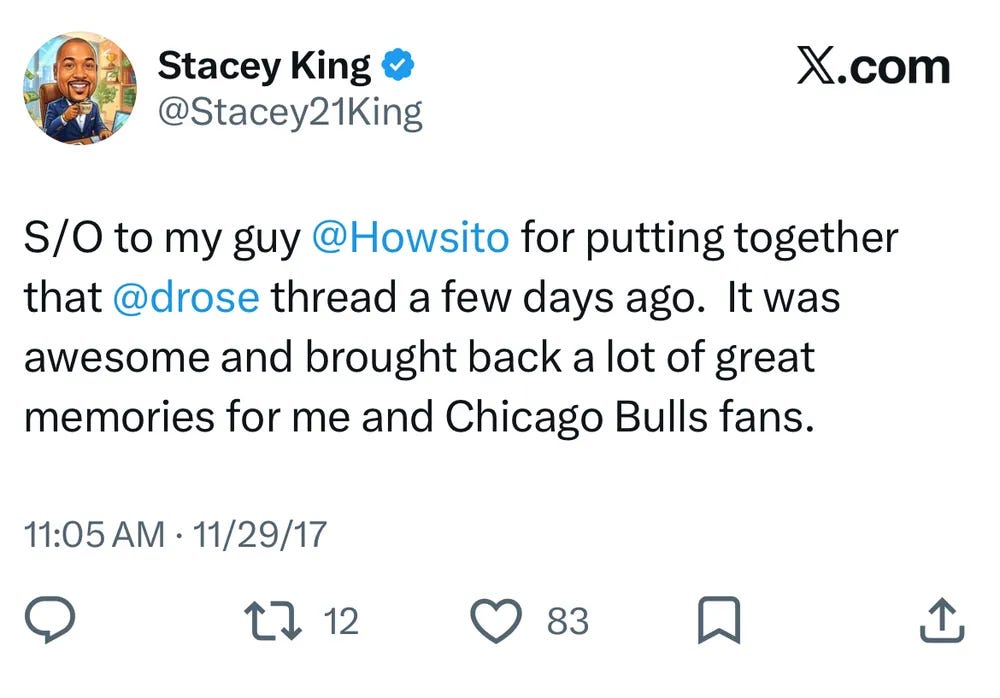
Stacey’s voice is the backdrop for every chapter of Derrick’s rise, from hometown kid to Rookie of the Year to NBA MVP to tragic figure to comeback tail. In 2017, Bulls superfan Adam Howes produced a Twitter thread of King’s greatest D-Rose calls. The collection of clips underscored just how special the bond was between Rose and King, and between King and us, with Bulls Nation using it as the launch point for a celebration of not just Derrick but our man Stacey.
“It was awesome and brought back a lot of great memories for me and Chicago Bulls fans,” Stacey tweeted as the thread made the rounds. It was the first time I remember Bulls fans taking specific notice of the connection between King and his muse Rose, an acknowledgement that the greatest era of Bulls basketball since the dynasty was made all the more memorable by this man and his microphone.
It was through Derrick Rose’s heroics that we heard Stacey exclaim “Step back and kiss myself!” And certainly no mention of the player and the voice is complete without recalling Stacey’s succinct description of the man wearing #1: “Too big, too strong, too fast, too good!”
With Stacey, the G stood for Gets, the hot sauce was heavenly and we all knew what to do after a Bulls win, because Stacey told us: “Drive home safely, Chicago!”
What’s fun about that last one is that so often, he didn’t — at least not until he’d celebrated with fans. My guy Stephen Noh pulled up so many tweets from Stacey where he tells fans that he’s happy to meet them after the game. All throughout Sunday as news spread, Bulls fans posted their pictures that they took with Stacey at Bulls games. He was a favorite on Cameo, recording messages for fans on their birthdays or other celebrations. I attended Derrick Rose Day in January of 2025, and trailing only Derrick that night and maybe Joakim Noah for fan reception was Stacey. He was our voice, and we never felt as if a Bulls moment was complete until Stacey was part of it.
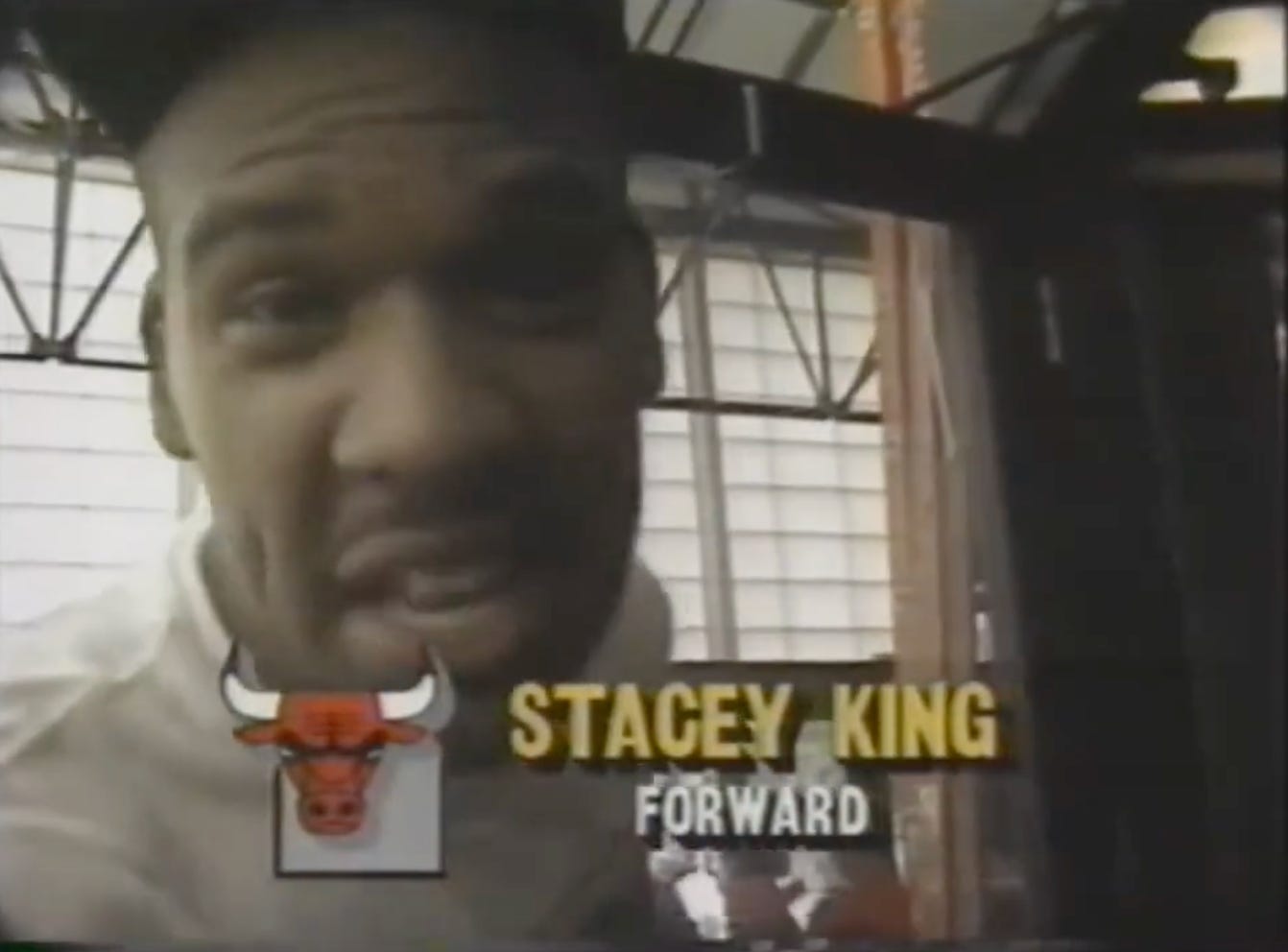
For much of his playing career, that was not the case. I think about that a lot: how Stacey’s broadcast career completely transformed his relationship with Bulls fans. Drafted sixth overall in 1989, King’s Bulls career was rocky, especially the first two seasons. His attempts to overtake Horace Grant as starting power forward never materialized. The team’s vets, especially MJ, lit King up in 1991, as documented in painful detail in The Jordan Rules.
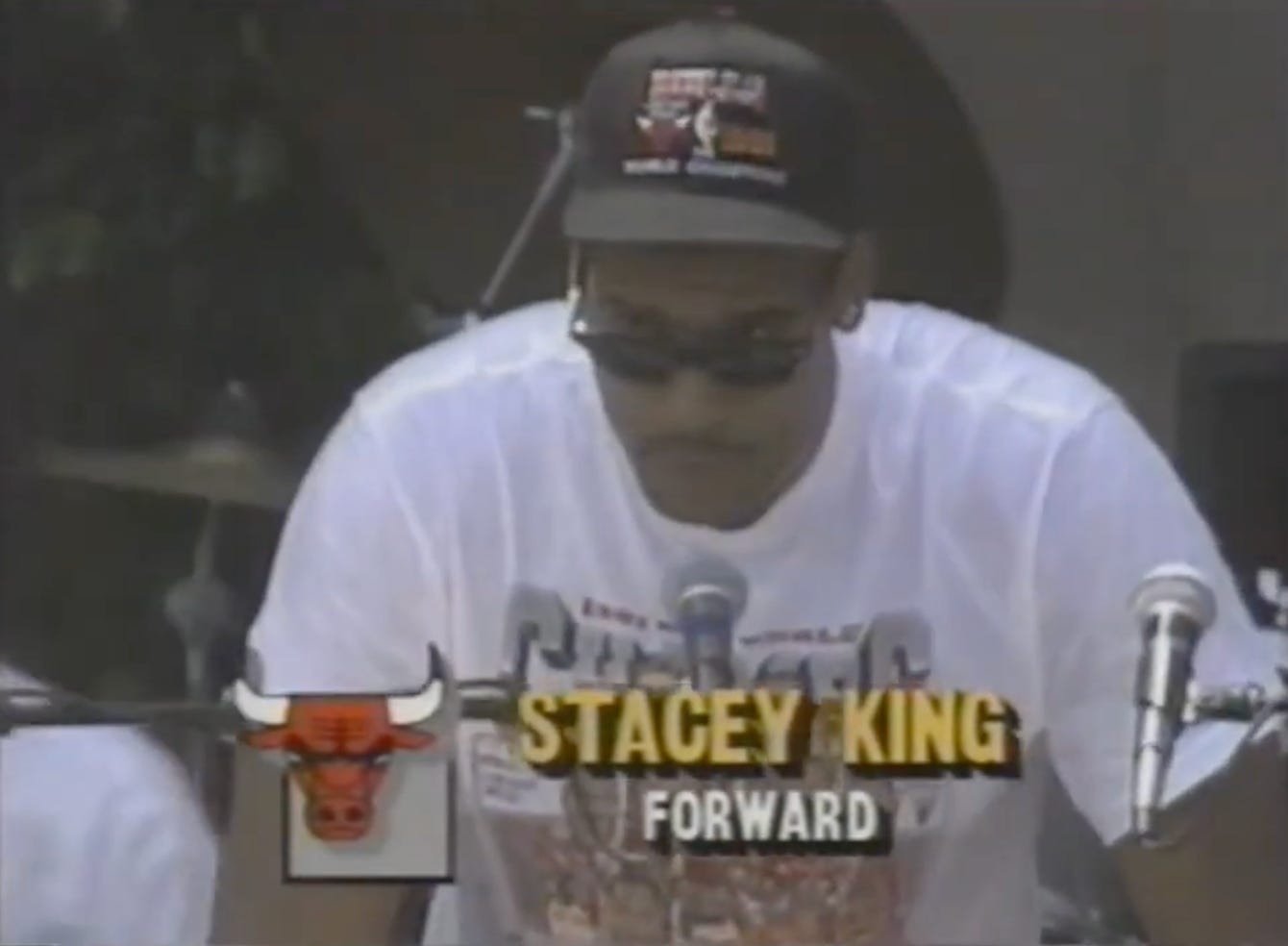
At the 1991 Grant Park rally, when Red Kerr announced Stacey to the crowd, Bulls fans booed.
Entering his third season, King wanted to shake the funk of his first championship season. He changed his number from 34 to 21.
“I just wanted to get rid of last year,” King explained. “I had a bad year, and I know I can play better than that.”
Stacey didn’t become a starter, but there’s a saying in basketball: it doesn’t matter who starts, it matters who finishes. In the final game of the 1992 season, with the Bulls trailing the Trail Blazers by 15 points to open the fourth quarter, Phil Jackson rolled out an atypical lineup, Scottie Pippen joined by four men off the bench: B.J. Armstrong and Bobby Hansen in the backcourt, Stacey King and Scott Williams down low.
Toward the end of the comeback, Stacey’s huge jumper brought the team within three, prompting fist bumps and shouts on the bench from MJ and Horace.
“It was gut-check time, and Phil put our quick lineup out there,” King said after the game. “It was our job to hustle — to claw our way back.”
Recalled Scottie: “We needed him now, and he delivered.”
That comeback drove the Bulls to title #2. When Red Kerr introduced Stacey to the fans at Grant Park that time, they gave him a hero’s call.
“Last year they booed him,” ABC’s broadcasters said. “This year he’s a hero. As well he should be, after that performance in the final four minutes.”
A few minutes later, Kerr called King up to speak to the crowd. Once again, they showered him with the adoration of a favorite Bull.
In February of 1994, the team traded King straight up for Luc Longley, meaning during the second three-peat, Stacey became a symbol of how Jerry Krause transformed one three-peat into another. And that’s where his Bulls story would have ended if he hadn’t returned to the booth in the 2000s, one of the multitude of Bulls alumni to whom Jerry Reinsdorf showed loyalty.
He returned the favor. Boy did he ever.
“We enjoy what we do,” Stacey said recently. “Every night I go to work, win, lose or draw, I’m having fun.”
Stacey King built himself into one of the great voices of Chicago sports. He is a fixture in the annual sports media power rankings from Sun-Times sports media reporter Jeff Agrest, who placed King 12th last year and has ranked him in all six years of the feature. Stacey’s goal on the broadcast is simple: make sure Bulls fans are happy.
“We want you to come to Bulls games, but if you can’t come, you’re going to be entertained at home,” he explained. As the team staggered through the post-Rose years, Stacey’s fellowship was our lone reprieve. When there was nothing to celebrate, Stacey kept us hopeful. When DeMar DeRozan was drilling winners, Stacey gave us vocal high-fives. When a blatant Bulls bungle left us shaking our heads, we would hear Stacey shaking too, sometimes just saying, “No, no, no.”
And when we were kissed with the magic of sports, like Josh Giddey’s halfcourt winner against LeBron’s Lakers, Stacey’s words brought immortality.
“That’s a shot for the ages!” he said. “That will be replayed when we’re all gone.”
No one expected Sunday to be that day for Stacey. It doesn’t seem fair to wake up to a world where Stacey King is with us and go to sleep to one where he’s not. The next season of Chicago Bulls basketball will rightly be played in his honor. His legend will grow in the years to come, until one day a young Bulls fan yells “Gimme the hot sauce!” and has no idea why.
I bet that would be just fine with Stacey. A Bulls fan had fun. And he helped.
-
-
Rest in peace to our man Stacey. Condolences to his family, his teammates and the entire Bulls organization. Drive home safely, Stacey. We’ll miss you.
Another sad occurrence: last week, NBA lifer and Naismith Hall of Famer Rick Adelman died at age 79. Adelman played a season and a half with the Bulls in the 1970s under Dick Motta, and his legendary coaching career included a magnificent run in Portland, where he coached the Trail Blazers to the NBA Finals in 1990 against the Pistons and 1992 against the Bulls. Rest in peace.
No posts
Comments
Nothing yet. Say the first thing.
Sign in to join the conversation.