
You know LinkedIn drives B2B leads better than other platforms. You’ve seen the case studies. You understand the value of thought leadership. But here’s what actually happens: you post when client work allows, which means you don’t post for weeks at a time. Then you feel guilty, draft something quickly, and wonder why it doesn’t generate pipeline.
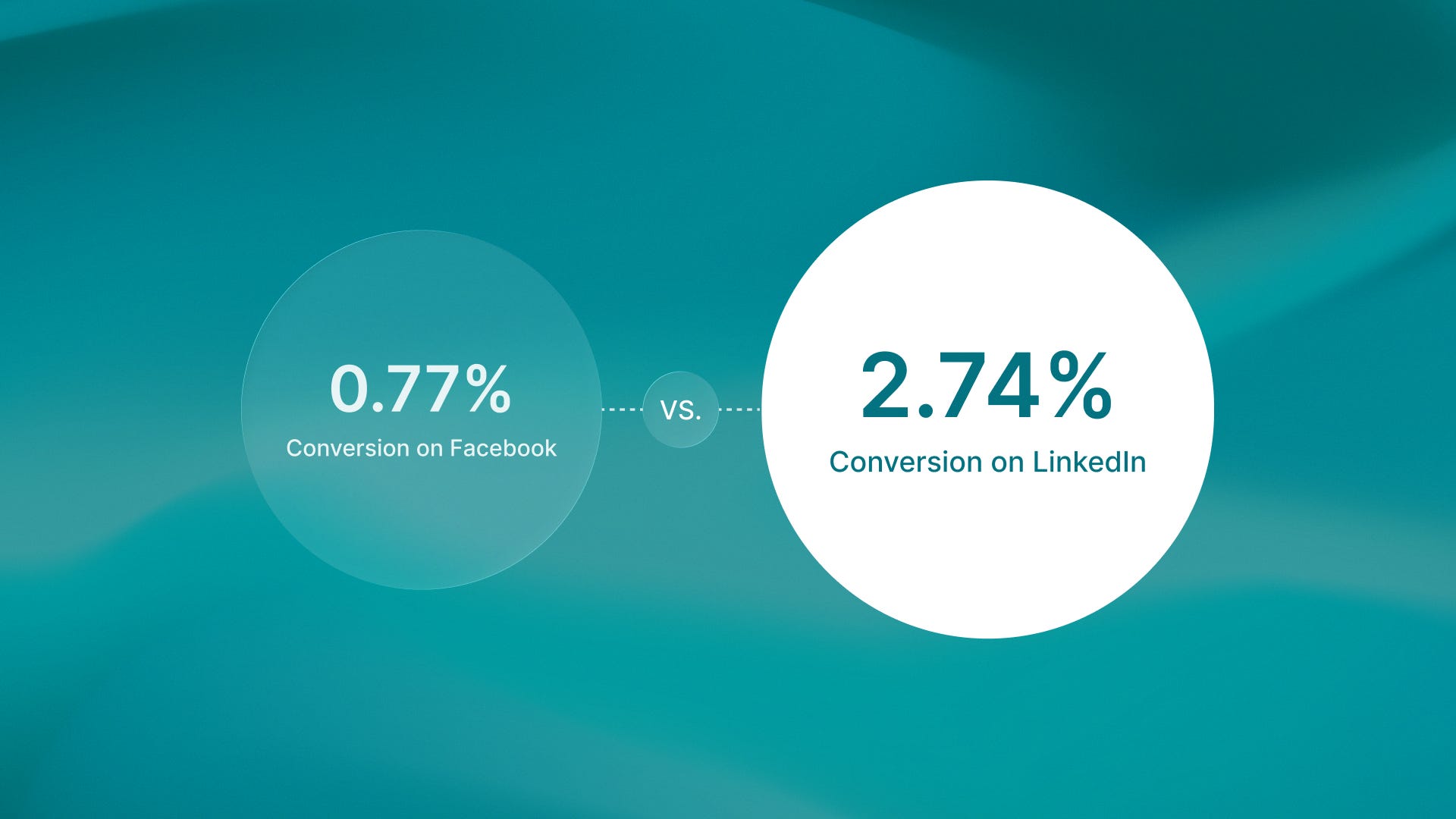
The problem isn’t motivation. It’s infrastructure. How agencies can use LinkedIn to get clients depends on whether your content workflow can keep going. It must still work when billable work ramps up. Marketing agencies generate 277% more leads on LinkedIn than on Facebook and Twitter combined. LinkedIn has a 2.74% visitor-to-lead conversion rate, compared to Facebook’s 0.77% (Brenton Way). But that advantage only compounds with sustained presence. Sporadic posting when capacity allows doesn’t build pipeline.
LinkedIn members have 2x the buying power of the average online audience (Buffer). That concentration of decision-makers doesn’t exist on other platforms. When agencies target mid-market and enterprise clients, their buyers are already on LinkedIn reading content from potential partners.
79% of B2B marketers say LinkedIn gives the best campaign results among paid social channels (Brenton Way). This isn’t about platform preference. It’s about where qualified buyers focus their attention. As I shared in why LinkedIn delivers better B2B lead generation, focus on one platform works best.
It beats spreading your resources across many channels.
Facebook and Twitter serve different purposes. LinkedIn lead generation for marketing agencies happens where business development actually occurs. The 277% lead generation advantage only materializes with sustained presence. A single viral post might generate a few inquiries. Systematic publishing over months converts connections into discovery calls.
Agencies understand this intellectually. The execution failure happens at the operational level. Here’s what the typical workflow looks like:
Research trending topics manually across industry publications
Draft content in Google Docs or ChatGPT
Edit for brand voice and accuracy
Format for LinkedIn (line breaks, emojis, hashtags)
Copy into Buffer or Hootsuite for scheduling
Switch between tools for each step
Repeat daily or weekly
That workflow creates cognitive load and tool-switching overhead. When client work intensifies, content creation is the first thing deprioritized. Not because agencies don’t value it, but because the operational friction makes it unsustainable.
Fragmented workflows kill consistency. Posting every day helps you build an inbound pipeline. Posting only when you have time makes you start over each time. If you’re tracking billable work systematically, you know exactly how content hours compete with revenue-generating hours.
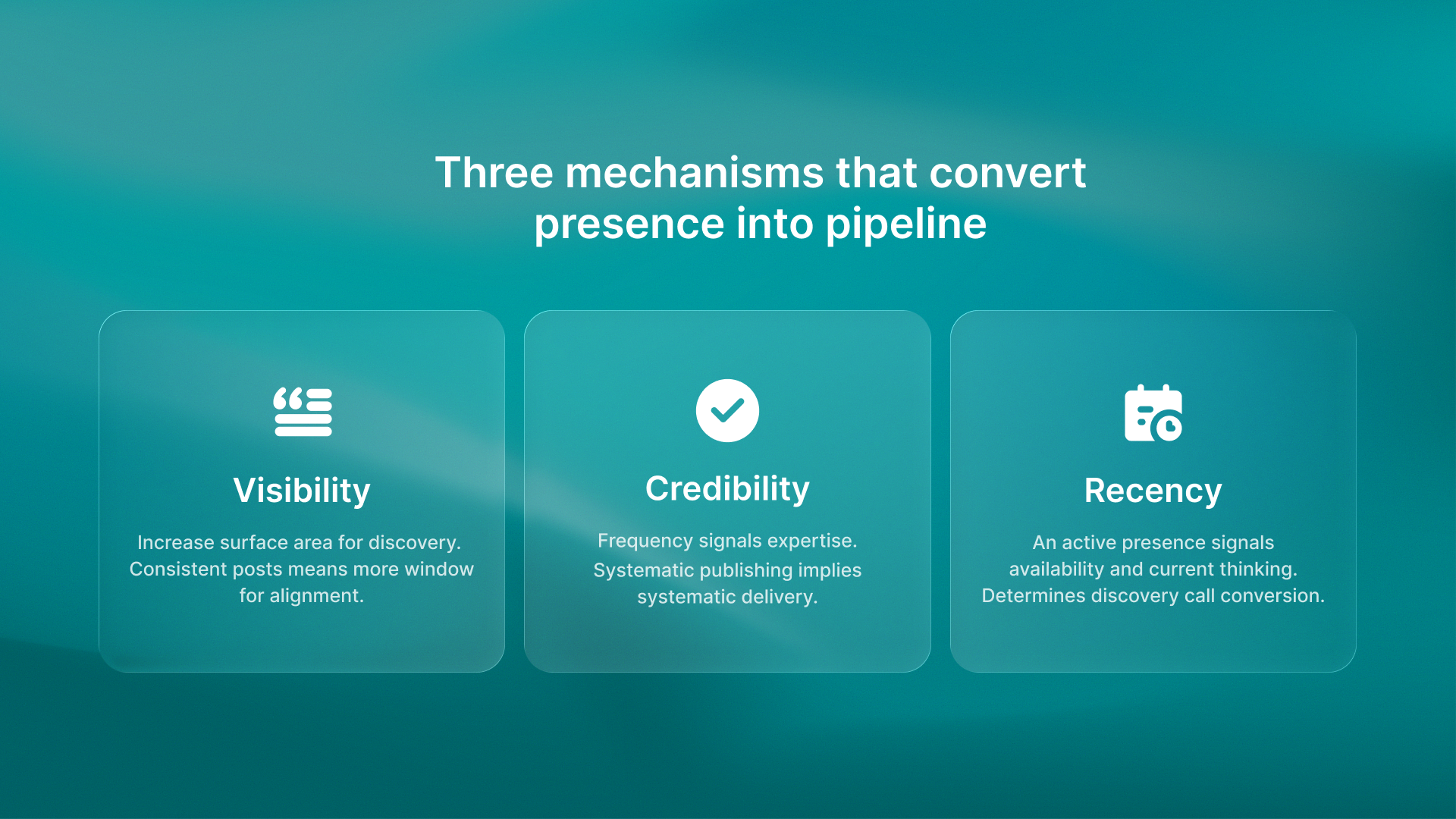
Consistent expertise demonstration through regular posting builds inbound pipeline through three mechanisms:
Agency decision-makers scroll LinkedIn daily. Consistent posting increases surface area for discovery. A prospect might scroll past ten posts before one catches their attention at the exact moment they need that specific expertise. Sporadic posting reduces the chances of that timing alignment.
Frequency signals matter. An agency that posts daily about marketing strategy demonstrates deeper expertise than one that posts monthly. The content quality might be identical. But systematic publishing signals operational maturity. Prospects infer that an agency with consistent thought leadership also has consistent project delivery.
Recency determines discovery call conversion. When a prospect needs an agency, they check LinkedIn profiles before scheduling calls. An active presence in the past 30 days signals availability and current thinking. A dormant profile raises questions about capacity and relevance, even with strong past content.
QA flow moved from sporadic to systematic posting, increasing from 6 to 14 posts monthly. Engagement per post doubled. More importantly, qualified inbound inquiries shifted from reactive responses to proactive outreach by prospects who had followed for months.
Maintaining 12-15 posts monthly requires operational systems that remove the trade-off between billable work and content creation. This is where most agency LinkedIn strategy 2026 approaches fail. They focus on content tactics (hooks, formats, engagement bait) but ignore the infrastructure problem.
Integrated platforms eliminate tool-switching friction. They combine content research, drafting, scheduling, and engagement tracking in one interface. ReachSocial automated the pre-posting engagement workflow, generating 47 qualified demo requests through systematic LinkedIn presence. The platform handles 12,000 messages monthly, maintaining relationship-building at scale without manual effort. That consistency compounds.
Islands tracked 12 hours weekly across multiple platforms, then consolidated to LinkedIn only. Qualified leads increased from 23 to 38 monthly. The shift wasn’t about working harder. It was about concentrating effort where architecture determines competitive advantage.
The pattern is consistent: agencies that treat content creation as operational infrastructure rather than creative inspiration maintain the consistency required for compounding inbound pipeline. Automation removes the capacity trade-off. Billable work and thought leadership no longer compete for the same hours.
Here are three concrete steps to shift from sporadic posting to systematic thought leadership:
Audit current posting frequency over the past 90 days. Calculate the opportunity cost of inconsistency using the 277% lead generation multiplier. If you posted 12 times instead of 90, you missed 78 chances to build momentum.
Map your current content workflow and identify which manual steps create the most friction. Is it topic research? Drafting? Scheduling? Tool-switching between ChatGPT, Google Docs, and Buffer? The step where work stops most often is the operational bottleneck.
Test an integrated approach that removes tool-switching overhead and automates the publication cadence. Agencies that track billable work systematically apply the same thinking to content operations. Measure consistency, identify friction, remove bottlenecks.
That’s not a content problem. That’s an infrastructure problem. Solve the infrastructure, and the content compounds. Ready to build systematic LinkedIn presence without sacrificing billable hours? Start automating your content workflow today.
No posts
Comments
Nothing yet. Say the first thing.
Sign in to join the conversation.