
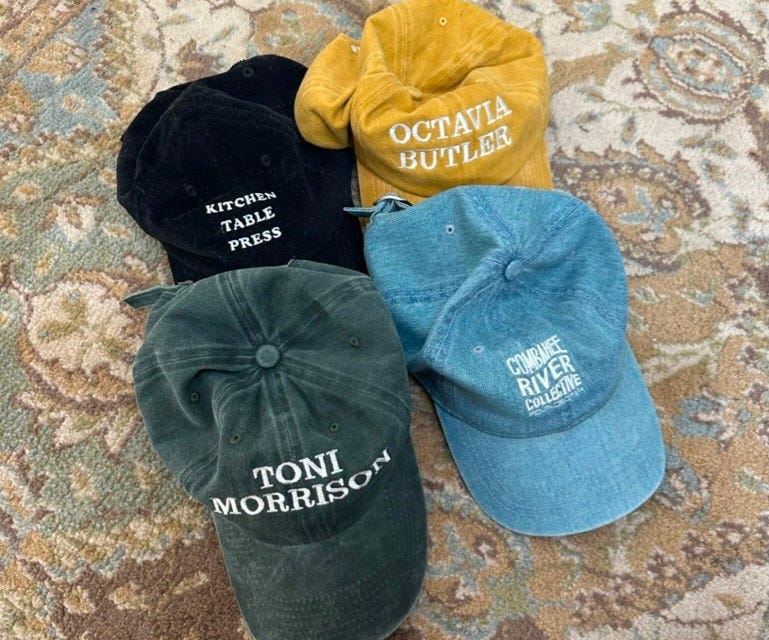
When I say “literary citizenship,” I am thinking about the things we do in service of our community of people who advocate for literacy, in whatever way that may be. Acts of literary citizenship are often things that have no monetary value attached to them, but are important parts of the ecosystem and make our world turn. Black writers, in particular, tend to be very serious about their roles as literary citizens and the larger citizenship, I think because our people’s history is tied up with the weight and responsibility of storytelling.
A frequent conversation that I see on a social media platform like Threads, is a frustration with people who do not see reading as political, or as pure entertainment and escapism. I have three humanities degrees, all of which were deeply bound up in studying various types of media, including literature. I’ve studied Black American intellectual history; I know that learning to read and write was a punishable offense for Black Americans for a great deal of our nation’s history. I’m watching books continue to be hot topics for banning across the nation when they offer realities different from dominant narrative.
Reading is political. What we do in service of advancing everyone’s right to read, think critically, and access information is also political.
Because reading (and writing) is political and because we should be held accountable to some type of public when we write, being a published writer is a responsibility. For me, this means that I don’t just write something, publish it, and dip. Publishing for me means I’ve agreed to participate in a larger literary citizenship, and I am responsible for bettering our community. I have responsibilities to readers, other writers, booksellers, librarians, folks who make this community exist.
So what does this participation look like?
It could be a multitude of things, and let me be clear, some of it is inconvenient. But as it has been said many times across the internet, inconvenience is the price you pay for community.
For me, this participation can mean that you agree to blurb books for other writers, even though it is requires a lot of time and energy. It also requires discernment to make sure your values are in alignment with the manuscripts you are endorsing, and that your endorsement is true and meaningful. It might mean that agree to be a conversation partner for a writer at a bookstore, which also requires time and thoroughness to read carefully and ask questions that show you value the work the author has put into their book. It means that you show up to book events in your area when you are not on the stage. That is a show of support for the authors and the bookstores/libraries. It is an ongoing awareness of other people who are working in a similar lane to you, and being able to lift up their name as often as you speak your own.
But it also means patronizing your local library and your local independent bookstores when you’re able. It means attending events put on by local bookish folks, getting to know those people, getting to know librarians and booksellers. It means bringing people into the fold as you get to know your local literary community more, spreading the word and inviting people in. It means going to the local festivals with enthusiasm and bringing your friends. It means opting for discernment about what you read, how you read, and who/what stories you platform.
Literary citizenship is just as much agreeing to trade pages with writer friends for feedback and organizing private workshops as it is looking around in your local community, identifying a need, and creating a bookshop to meet those needs. It is as much sinking time and energy into editing good work from writers for literary magazines as it is reading those literary magazines. It is as much about speaking the names of others into the rooms you have access to as it is doing political advocacy work in community against book banning.
It means mentorship, both of other writers coming after you and young readers navigating the world. It means equitable partnerships with booksellers and librarians and teachers. It means a careful and thorough eyes on words when you’re entrusted with them from other writers, at any stage.
My commitment to literary citizenship is a time investment. It is time that I am willing to spend because I know what a responsibility being a truthteller is and what a responsibility it is to make room for other truthtellers to join me here. Mostly I invest my time because money hasn’t followed in the ways I would hope yet, but I do make sure I have money to invest into the book businesses I love.
I have my beefs with academia for sure, but I’ll always be grateful for the people who helped me understand certain practices about academia were acts of citizenship. They helped me understand that peer review was not a burden, it was rent you paid to better the knowledge community you were in service to. Citation was not something you slapped on to the end of your papers just to make sure everything was in order; it’s a politic, and at its most caring, a rigorous practice of gratitude and recognition for everyone who worked before you, not just other academics. Mentorship is your opportunities to train up a class of scholars to continue to take up the charge.
The thing that always got lost in translation in academia was that a lot of skills that constituted academic citizenship were viewed as soft labor—the administrative tasks you check off before you can get to the real work of research. Or worse, that soft labor was more the interest of women scholars.
I’m grateful to have been trained by people who helped me see that this labor was some of the most important parts of my training.
So as I pivot more into being a literary citizen more broadly, and less an academic citizen specifically, I’m grateful to know that this it labor well spent. My big caveat is you do have to have boundaries around this. You can’t give so much you don’t have energy for you own work. It’s your responsibility to assess who and what you’re going to give your time and energy to. I prioritize organizations and institutions that have a commitment to Black children, and then I have a list of things I try to support after that: I love to support Black women owned literacy institutions, local independent bookish institutions and events, especially in my hometown or areas that are meaningful to my larger family in Virginia1, the list go on.
But my investment is in this citizenry at large, not just my own work. It’s why I love movements like the Harlem Renaissance and the Black Arts Movement so much. These were periods where the literary infrastructure and ecosystem were strong. People actively fed it.
I hope I continue to act in accordance with that tradition. I’m a people-centric art-maker. An equal opportunity people’s professor.
I’ll never not be.
And I have the greatest tradition in the world to order my steps.
Women's Work: On Communal Art-making and Literary Citizenship
·
May 18
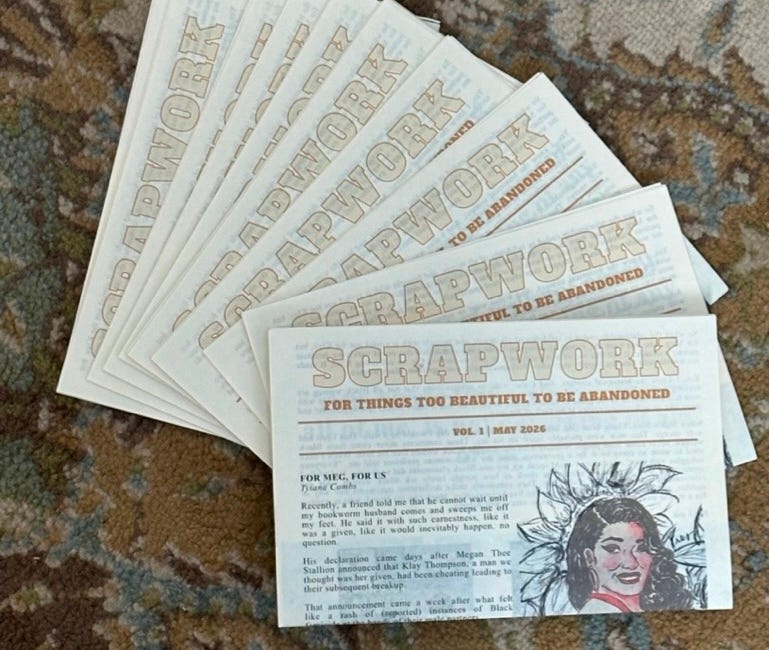
Last November, I floated the idea of creating a micropress. To some, it felt like a random idea; to the people who knew me best, it was inevitable. I have always found myself attracted to the concept of running a publication. Black Girl Does Grad School,
Building a Creative Life Day by Day
·
Jul 20
There’s a lot that’s stressful about organizing your life around writing and creativity, especially if your work isn’t tied to an institution: infrequent and low payments, lack of health insurance, inconsistent contracts. Being a full time creative isn’t just about being creative about your projects, it requires ingenuity around how you’re going to make…
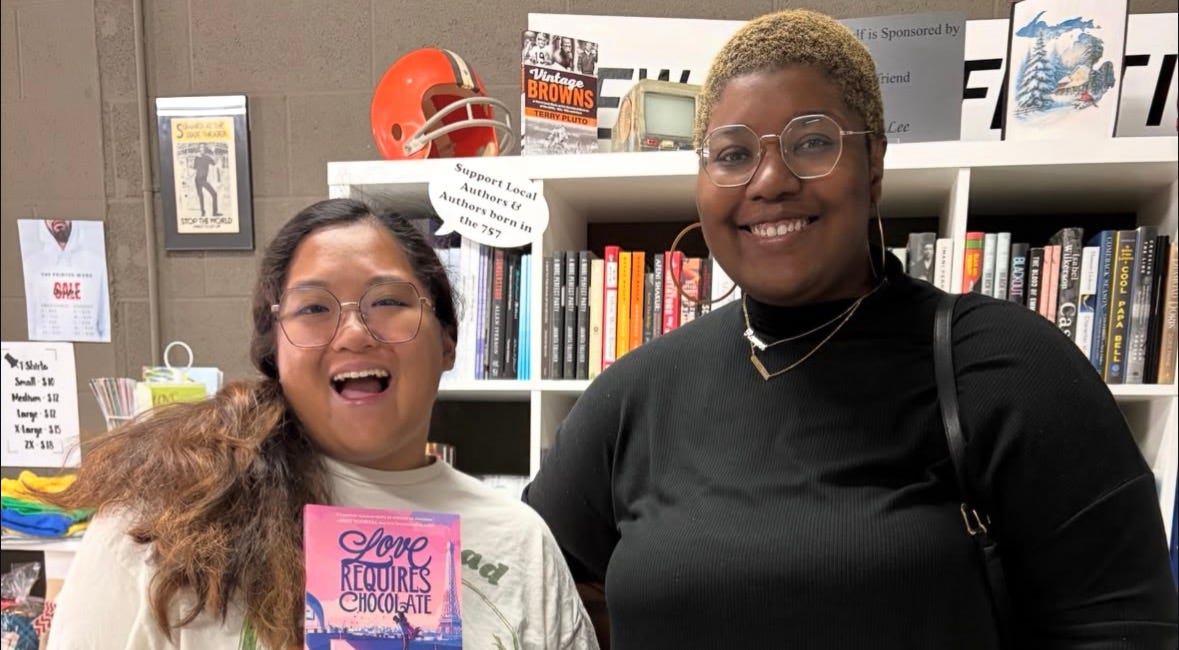
If you’re new here and you don’t want to do all that clicking to find out what I’m about: I’m Dr. Ravynn K. Stringfield, a writer, editor, artist and former Peanut Fest Queen from Suffolk, Virginia. I am the author of two novels for young adults, Love in 280 Characters or Less (Feiwel & Friends, 2025) and Love Requires Chocolate (Joy Revolution, 2024). I am a product of Virginia public schools (Suffolk Public Schools) and universities (University of Virginia), all the way up to my PhD in American Studies from William & Mary. I’ve been published in a variety of venues for the last seven years—book collections, magazines, scholarly journals—but most importantly, I’m a life long reader and a maker of beautiful things.
*
I just can’t get behind putting my Substack behind a paywall, but I do respect that sometimes folks want leave a little something in the plate for a good post.
Here’s my Ko-Fi. If you feel moved to leave a dollar or something, thank you! My personal blogs have been free for 10 years, I’m not interested in changing that now. You can also buy physical and digital copies of my zines there!
I have a personal commitment to Resist Booksellers just off the strength of them being good people, but Petersburg, Virginia is a location important to my family history. It was one of the big cities my family would go to for shopping and the like, as they grew up in a very small rural town off route 460 in Virginia.
No posts
Comments
Nothing yet. Say the first thing.
Sign in to join the conversation.