
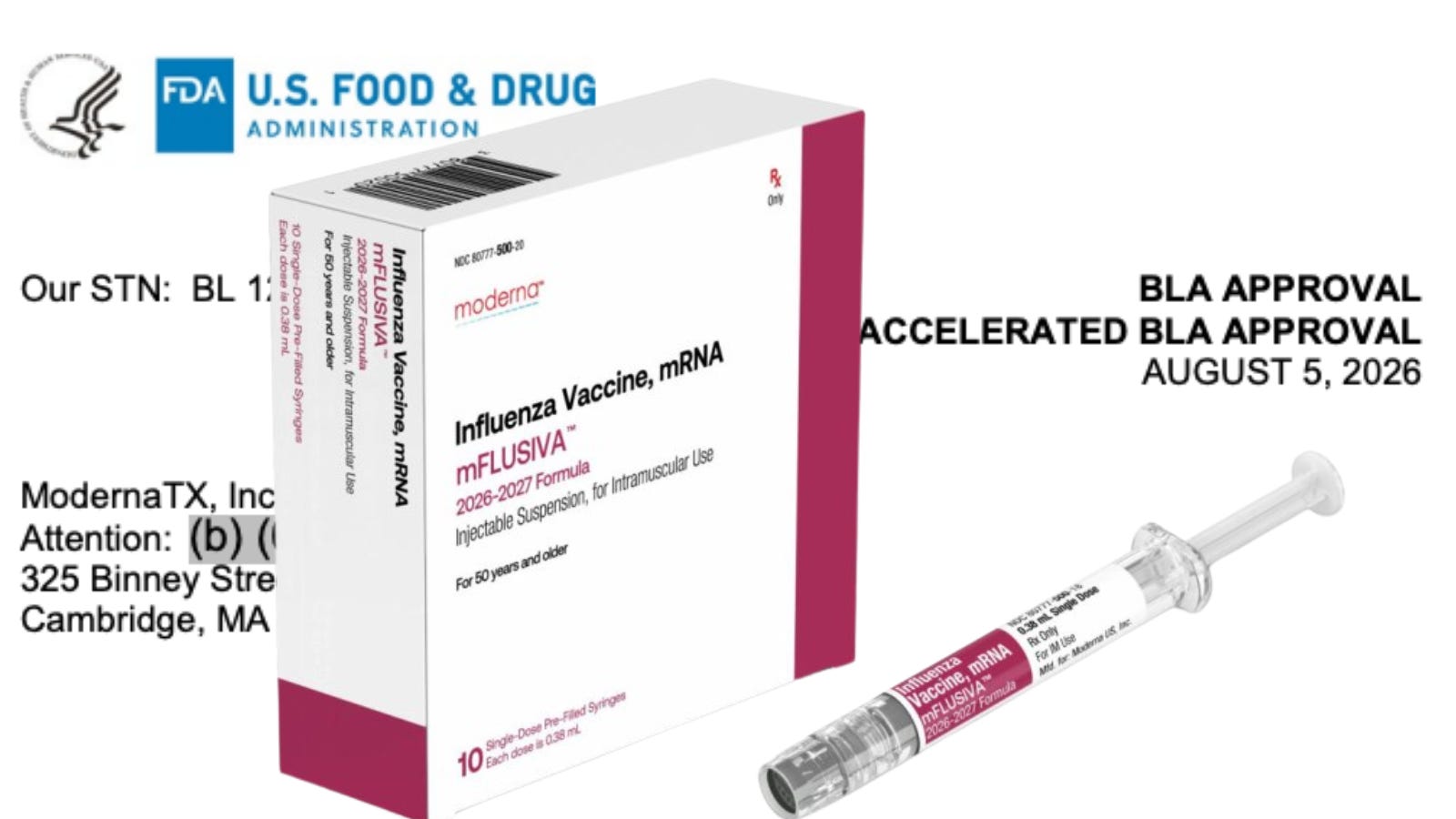
The Food and Drug Administration (FDA) approved Moderna’s application to license mFLUSIVA, a new seasonal flu mRNA vaccine. I was on NPR Here and Now this week talking about it.
People have a lot of very understandable questions, considering this administration’s whiplash-inducing take on vaccination, particularly mRNA vaccines. Although the first mRNA vaccines came to the market in record time during the COVID pandemic due to the first Trump administration’s investment in Operation Warp Speed, there has been considerably less enthusiasm for the technology this time around.
Last year, US Health and Human Services (HHS) Secretary Robert F. Kennedy, Jr. announced that he prefers his viral protein synthesis to occur in the context of a natural disease-causing and possibly deadly infection rather than from a synthesized, proven safe, and non-infectious mRNA transcript. He slashed funds for mRNA research. As a result, Moderna and other manufacturers were forced to shutter, delay, or reduce scope of a number of promising mRNA vaccines and treatments in development.
Fortunately, he did not get all of them, but it’s not for lack of trying. And with so much drama around vaccine policy and regulation, the science is not the headline of the stories about this. So…what’s the deal with this vaccine that just got approved?
Unfortunately Kennedy and HHS aren’t going out of their way to brag about advances in mRNA vaccines. Good news! I’m a vaccine expert, so The Save America Movement and I thought we could help out.
mRNA vaccines work by taking advantage of the normal process our cells use to make protein. By using messenger RNA (mRNA) wrapped in a fat globule called a lipid nanoparticle (LNP), mRNA vaccines effectively make a protein vaccine using our ribosomes—our cells’ protein factories—instead of manufacturing the protein. Our cells are surrounded by a fatty membrane that keeps the watery contents of the cell inside and things like mRNA molecules out. The LNP allows the mRNA inside to get across the membrane in a process called transfection. As an added bonus, transfecting nucleic acids like mRNA can trip sensors that trigger innate immune defenses and improve the overall response to the vaccine.
The mRNA part itself takes advantage of how genes in your DNA normally get turned into proteins that go forth in the cell and do different things. If you have COVID, the virus makes mRNA for spike and the other viral proteins. Your cells make mRNA encoding antiviral genes. mRNA vaccines make the antigen (vaccine target) that you will develop immunity to. For COVID vaccines, the antigen is SARS-CoV-2 spike. For flu vaccines, the antigen is hemagglutinin (HA) from two seasonal subtypes (H1N1 and H3N2) of influenza A virus and an influenza B virus strain.
mRNA encodes the protein of the antigen using the genetic code. When it gets inside your muscle cells at the site of injection thanks to the LNP allowing it to cross the membrane, it hooks up with a ribosome. Ribosomes are the machinery cells use to make protein by translating mRNA into protein. mFLUSIVA HA mRNAs get translated into HA protein, which then goes to the outside surface of the cell. Out in your body, HA is recognized as foreign by your immune system, and your B and T cells take it from there.
The mRNA platform is the major difference. Conventional flu shots are inactivated vaccines that are made by growing vaccine strains of influenza viruses in fertilized chicken eggs or cell culture and using chemicals to render them non-infectious. Most vaccines now are split virion formulations, in which inactivated virus particles are broken up into smaller pieces, as this is thought to reduce side effects. Other types of flu shots are recombinant protein subunit vaccines, or individual HA proteins that are sometimes combined with an adjuvant.
For regulatory purposes, mFLUSIVA is considered a seasonal flu shot just like inactivated or recombinant protein subunit vaccines now that it has been approved. It is interchangeable with other flu shots for the group it is recommended for, although I’d argue you might want to get it.
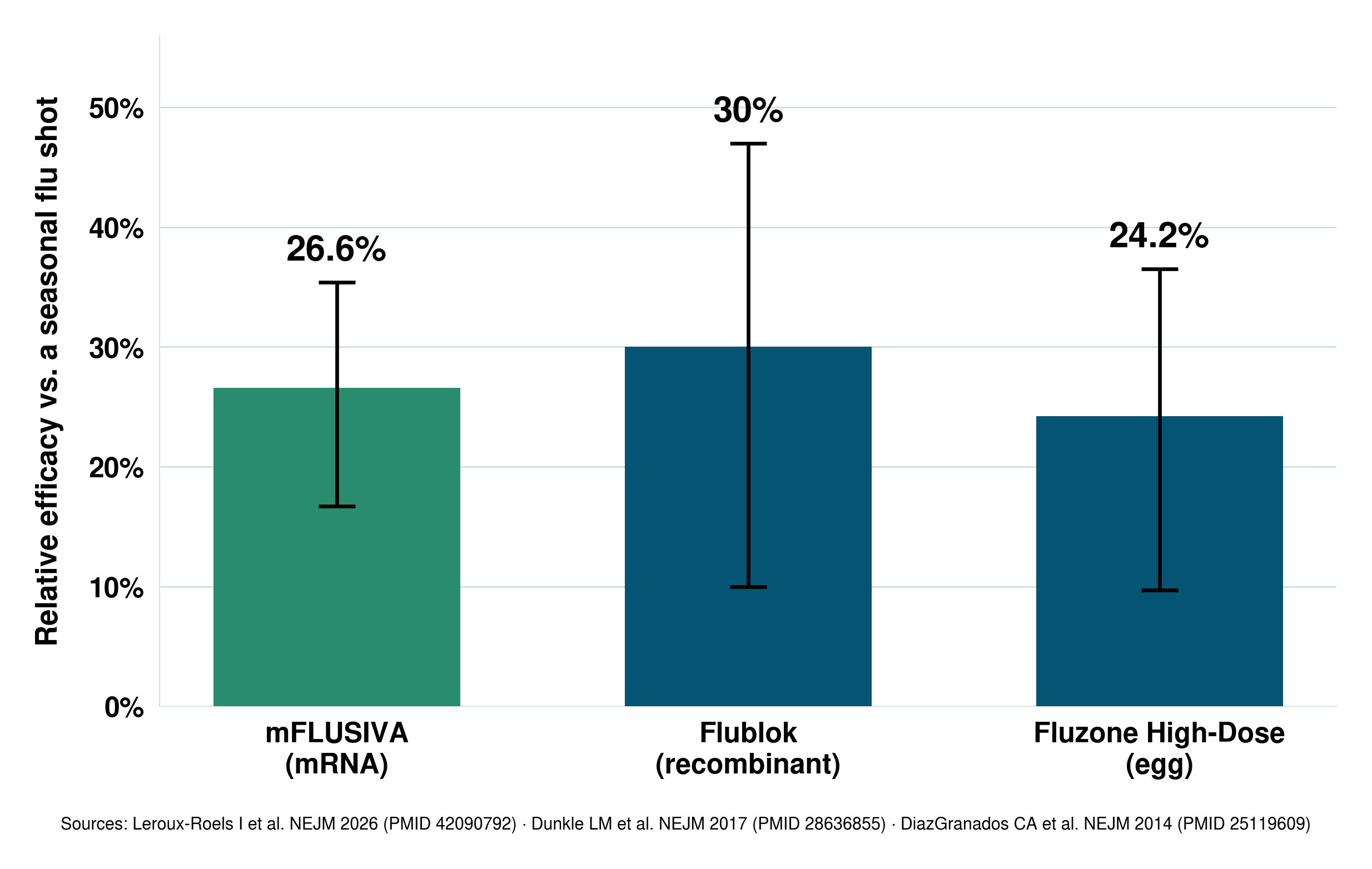
A phase 3 clinical trial showed that mFLUSIVA provided superior protection compared to a standard-dose shot. This trial looked at mFLUSIVA relative to an existing inactivated egg-derived vaccine, not to placebo. Placebo-controlled trials are not ethical when a vaccine is known to provide a significant benefit for mortality. Flu vaccines were first developed in the early 1940s, so there are eight decades’ worth of evidence proving that they do.
This trial involved more than 40,000 people, so it was well-powered as a comparator with the control. It showed ~27% relative efficacy compared to the other standard-dose shot.
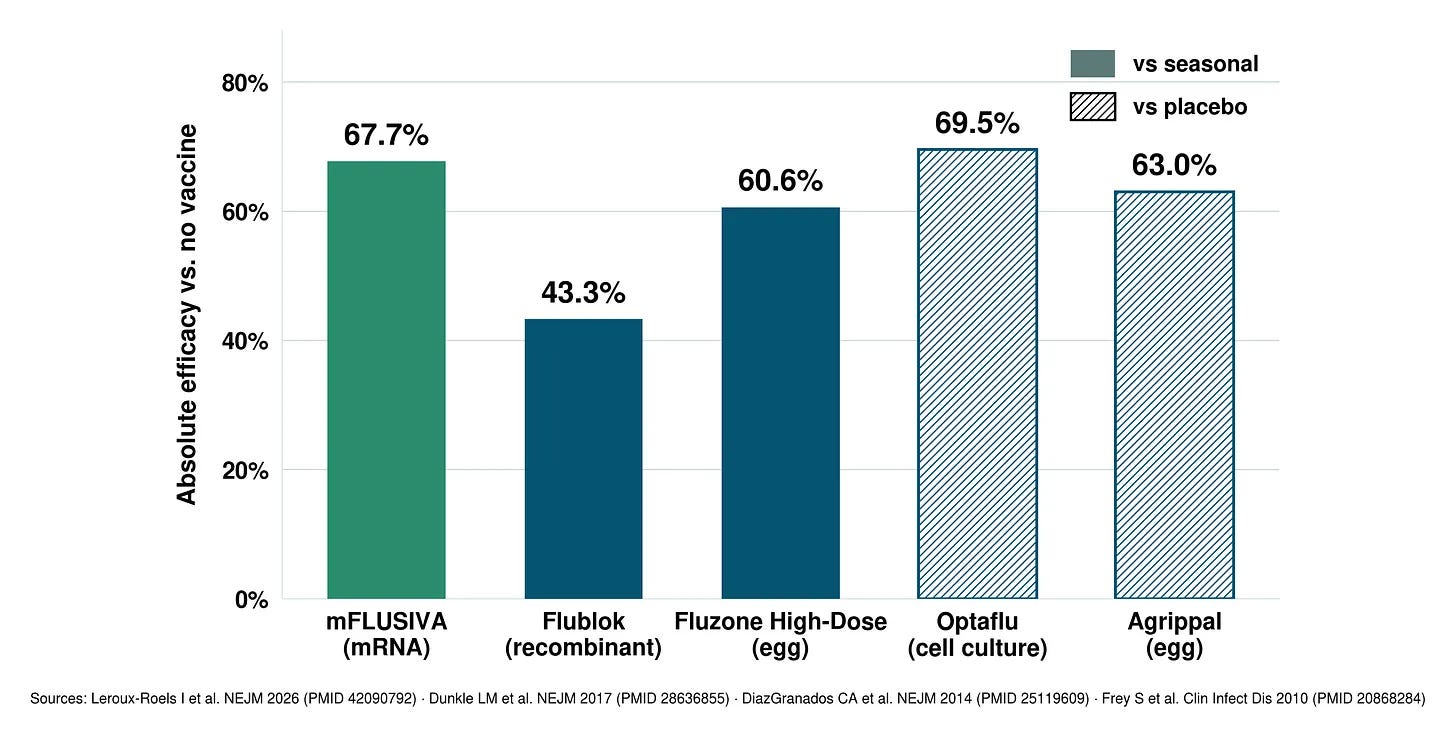
I did a quick and dirty analysis across a few other vaccine trials to compare overall efficacy (CAVEAT: this is not a comprehensive survey of vaccine trials and there are variables across these studies that need further adjustment so this should be considered a glance rather than a rigorous analysis). You can use the trial data to make estimates across these studies. When you calculate vaccine efficacy with the raw trial data, you see that mFLUSIVA vaccine efficacy overall was higher than other seasonal flu vaccines.
Time will tell if it performs better in real-world circumstances. Vaccines are constantly monitored for safety and effectiveness, and every year CDC calculates how well the vaccines worked the prior season.
Maybe. It did in the clinical trials and mRNA vaccines in general tend to be more reactogenic (likely to cause adverse events) than inactivated or recombinant vaccines. This reflects the fact that they are more immunogenic (cause stronger immune responses) than inactivated or subunit antigens, which often require a high dose, multiple boosters, and/or an adjuvant to induce lasting immune responses. The side effect profile is similar to the Moderna COVID vaccines. It’s still a lot better than getting the flu.
Yes. Like every vaccine, there were serious adverse events observed in the phase 3 trial. Every vaccine has risks. For flu vaccines, they have been studied extensively. Safety monitoring occurs continuously for all vaccines after approval, so there’s a lot of data about vaccine safety.
In the mFLUSIVA trial, serious adverse events occurred at a very low rate that was statistically indistinguishable from the inactivated vaccine used as a comparator in the trial. The package insert contains a warning about Guillain-Barré syndrome (GBS), although this is standard for all flu shots. The safety profile for mFLUSIVA is comparable to existing flu shots. This will continue to be monitored by FDA and CDC, as well as by Moderna, as is standard for all vaccines and drugs approved for use in the US.
In February, FDA issued a refusal-to-file notice that was personally signed by then-Center for Biologics Evaluation and Research (CBER) Director Vinay Prasad. Prasad, a hematologist-oncologist who used the pandemic to supercharge his career as a contrarian podcaster, had already distinguished himself as one of the least objective, most ethically challenged CBER Directors in history.
The Small Men Making a Big Mess at FDA
·
November 3, 2025
Since being abruptly run out of FDA and then rehired as the Food and Drug Administration (FDA) Director of the Center for Biologics Evaluation and Research (CBER), Vinay Prasad has kept a low public profile. It had to be embarrassing to do the walk of shame dragging his tattered little re…
Prasad claimed that, because Moderna compared mFLUSIVA against a standard-dose seasonal vaccine rather than a high-dose vaccine in the 65+ group, FDA would not consider the vaccine at all for anyone. That standard appears nowhere in FDA’s own influenza guidance. It is also unsupported by data from other clinical trials that compared high-dose to standard-dose. Although this comparison is preliminary and can’t fully adjust confounding variables across all the studies, mFLUSIVA is still clearly within the same relative efficacy range as the high dose comparators across these trials.
Clinical trials cost hundreds of millions of dollars, so before conducting one, manufacturers provide FDA with all the data they need to evaluate the vaccine. Manufacturers will not invest in a trial that FDA does not accept as sufficient for evaluating an application. CBER had previously agreed to the standard-dose comparator in writing before Prasad was hired. The high-dose comparator standard was something that Prasad, who eventually left FDA, imposed because he unilaterally decided to.
Moderna protested, supported by a pretty loud public outcry. FDA reversed their decision and accepted the filing two weeks later. The FDA Vaccines and Related Biological Products Advisory Committee (VRBPAC), an expert committee that reviews evidence and advises FDA on licensing decisions, then unanimously recommended approval in June. Prasad and FDA Commissioner Marty Makary left FDA by mid-May. The current Acting FDA Commissioner, Kyle Diamantas, has thus far not shown his predecessor’s enthusiasm for arbitrarily canceling vaccines based on vibes and personal preference.
For now, the FDA has approved the vaccine for adults age fifty and older. This is one of the highest risk groups for severe flu, so it makes sense to approve for them. Drug and vaccine approvals often work this way: they are initially approved for a narrow group based on strict interpretations of trial data. As additional trials are completed—some of which are justified by after-market monitoring for effectiveness and safety in the people it was approved for—the approval may be expanded to other groups of people.
Standards for approving pediatric drugs and vaccines are high for obvious reasons: children can’t legally consent to participate in clinical trials, these require additional oversight, and the entire point of making vaccines and drugs for kids is to improve their health, not put them at risk. For all those reasons, pediatric trials take longer and cost more to achieve the greatest benefit at the lowest risk.
Normally, there would be another barrier to access in the form of the Advisory Committee on Immunization Practices (ACIP). New vaccines typically require an ACIP recommendation before they can be incorporated into insurance plans and immunization campaigns. ACIP was suspended by a federal court order in March due to Kennedy stocking it with a bunch of anti-vaxxers and others who are mostly grossly unqualified to make evidence-based vaccine policy recommendations. In their absolutely unhinged series of three meetings, they stripped access to most multi-dose flu shots when they arbitrarily de-recommended thimerosal. ACIP has not met since, mostly because the court case is ongoing and they are still legally blocked from doing so. As long as ACIP doesn’t meet, new vaccines will not get recommendations.
Fortunately, seasonal flu shots are not dependent on an ACIP recommendation every year, since they remain recommended with updates. Even though mFLUSIVA is new, mRNA vaccines themselves are not, so it is not handled any differently than a new version of an inactivated or recombinant vaccine. It should be covered by insurance like any other flu vaccine.
Although her tepid endorsement of vaccination programs is disqualifying, the Senate confirmed Erica Schwartz as CDC Director last week. She could alter the recommendation, but it’s hard to say if she will. Her answers on flu vaccines were specifically evasive during her confirmation hearing, but did not indicate whether she plans to actively disrupt vaccination programs or merely not interfere with Kennedy doing so.
It should not be. The US makes policy decisions about vaccines and health based on evidence. Until recently, vaccines and scientific research enjoyed broad bipartisan support. However, the current administration came into power by politicizing public health and it’s a primary mechanism by which they are remaking the entire American government.
Kennedy’s policies at HHS have had a devastating effect on evidence-based policymaking. His vaccine decisions have been purely political and he has gone to great lengths to remove expertise from health and science agencies. Centuries of expertise have been lost at CDC with the departure of 25% of its workforce. CDC’s ability to carry out normal agency functions is severely impaired. None of the claims they have made about vaccination are supported by evidence and this has reduced access for millions of Americans.
What's Old is New and What's New is Dead
·
August 6, 2025
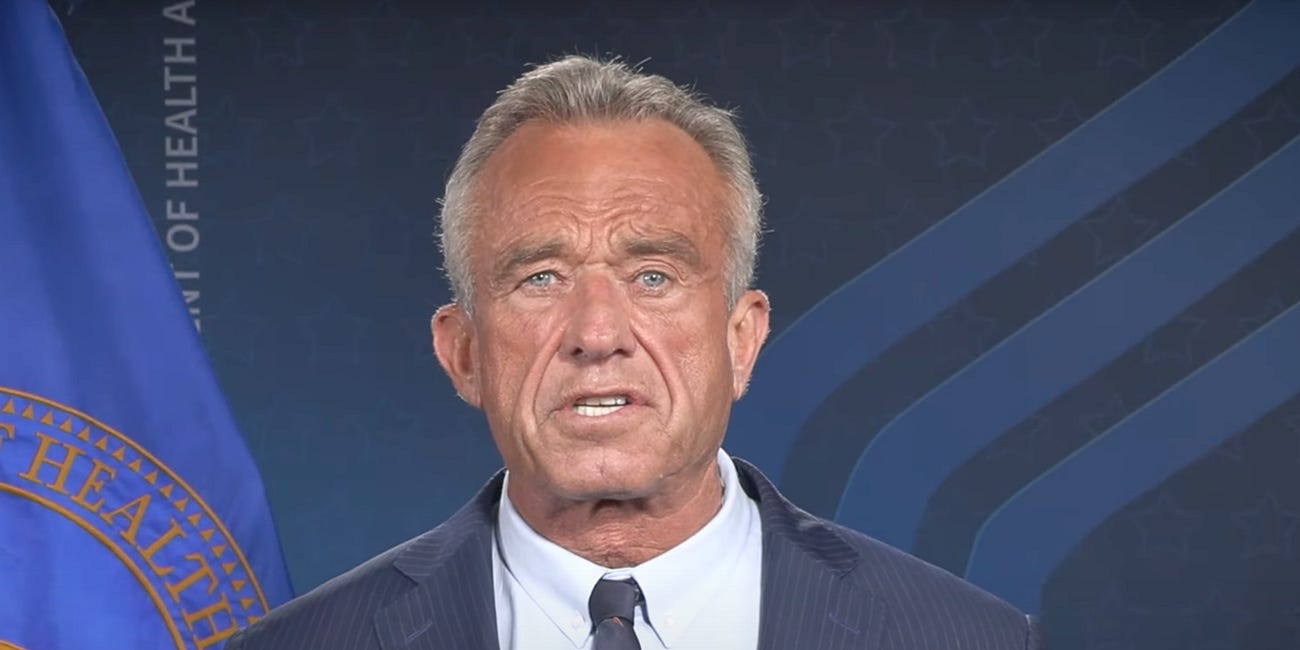
Another day, another assault on vaccines and pandemic readiness in America. US Health and Human Services Secretary Robert F. Kennedy, Jr. announced that he was terminating $500M worth of contracts at the Biomedical Advanced Research and Development Authority (BARDA) to develop new mRNA vaccines, including those targeting H5N1 bird flu.
Kennedy has gone out of his way to target mRNA vaccines. That may seem surprising, considering that bringing them to market was arguably one of Trump’s greatest achievements, until you recall that Trump loves payoffs even more than praise. Unfortunately, Trump would rather have mRNA vaccine research funding for himself and his cronies, so Kennedy has cut more than $1 billion in funding. Instead, Kennedy championed Generation Gold Standard, a whole-virus inactivated vaccine that is antiquated technology, tested using gain-of-function research, and repackaged as something new.
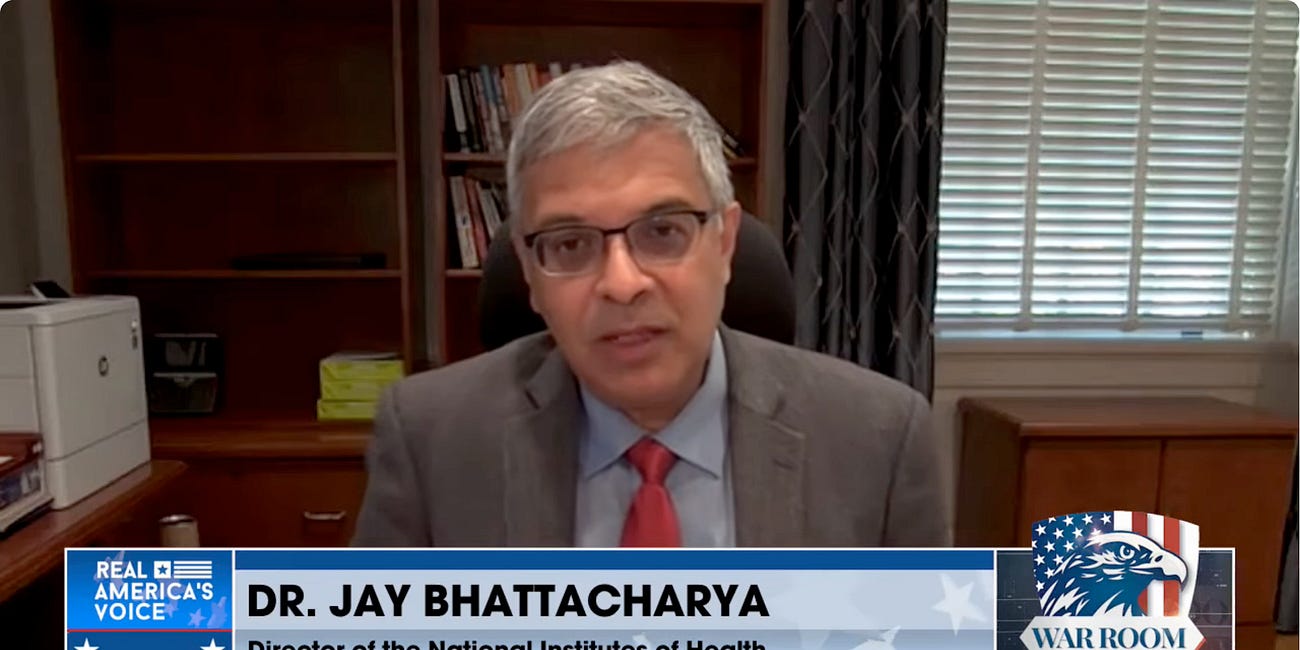
The administration has previously cited a “loss of trust” in mRNA technology to justify funding cuts. Last year, NIH Director Jay Bhattacharya appeared on Steve Bannon’s War Room to explain that Kennedy didn’t 86 mRNA technology because it’s unsafe or doesn’t work. It’s because the public doesn’t trust the technology.
mRNA Vaccines Can't Be Trusted, Says Known mRNA Vaccine Prevaricator
·
August 14, 2025
Another day, another opportunity for the anti-scientific charlatans running things over at Health and Human Services to justify policies that will lead to mass mortality. Last week, HHS Secretary Robert F. Kennedy, Jr. went after vaccine adjuvants, removed more experts from …
As you can see, I didn’t find that to be an adequate explanation. Nonetheless, Podcast Jay and his fellow minions at HHS drone on about lost trust in vaccines and science and public health and doctors and anyone who might have the expertise to refute his scientific claims.
I went looking for any kind of evidence about trust in mRNA vaccines and it didn’t take long to find it.
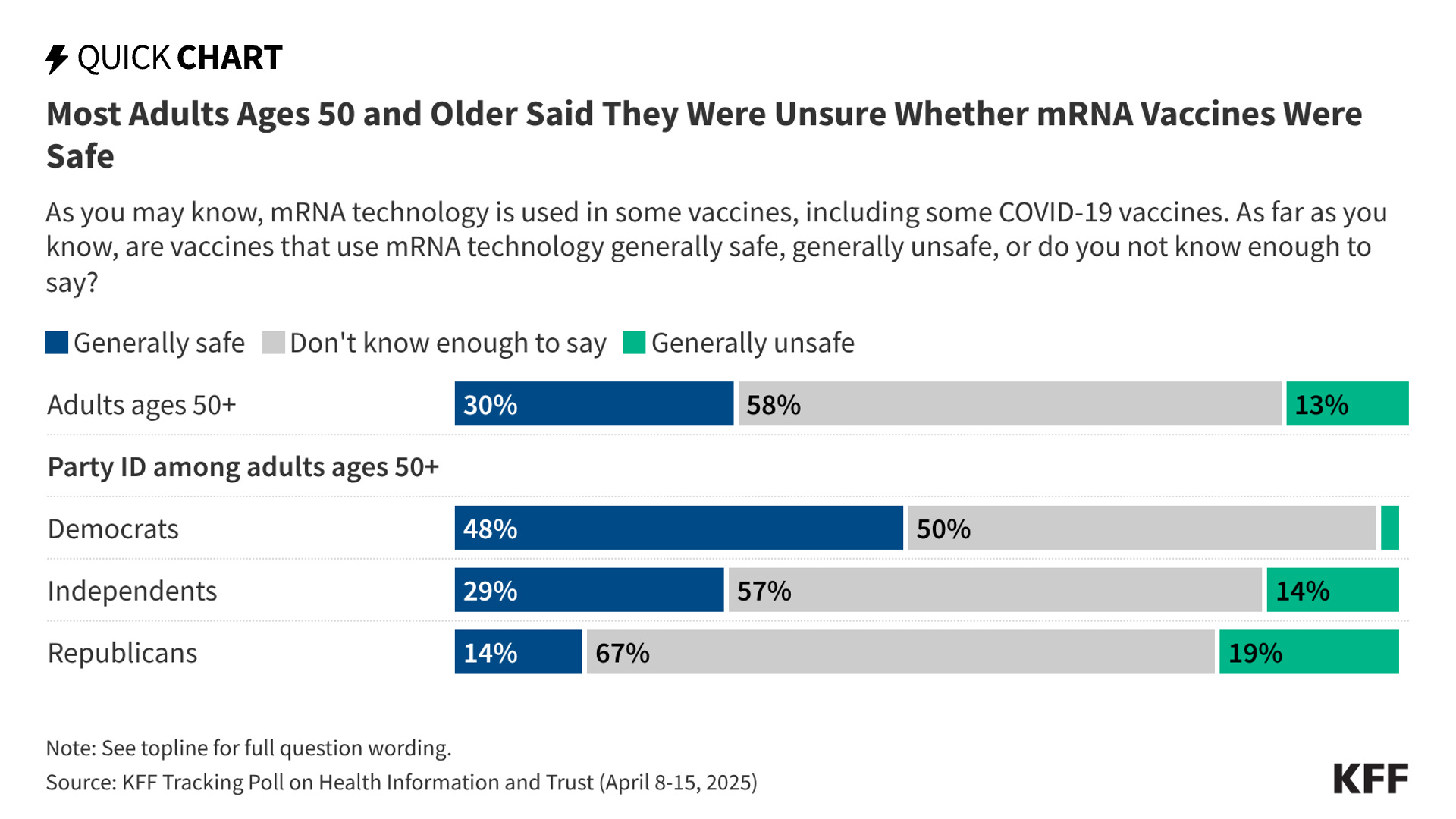
Scientists didn’t make vaccination political. Anti-vaxxers and the MAHA movement did, with increasing support from the Trump administration. In April 2025, KFF polling found that confidence in mRNA vaccine technology was split down party lines in adults over age 50.
Given all of the Republican political leaders’ constant talk about loss of trust in science and public health, I thought it was very interesting that Republicans were also the largest percentage of people who didn’t know enough about mRNA vaccines to say one way or the other. To me, this says a lot more about public trust in different media sources and access to reliable information. If the only thing someone ever hears about these vaccines are political pundit’s opinions of where the public should place its trust, not knowing enough to say is a very reasonable answer.
People are not stupid. Politicians want to exploit the trauma of the pandemic to convince people to act against their own interests, but most people are not going to blindly take someone’s word about trust regarding something they aren’t fully informed about. Most people need to see evidence before deciding if something is true enough to trust, even if it’s coming from an already trusted source. And more and more people are insisting on making decisions based on evidence rather than political ideology. Older people who in some cases have themselves had vaccine-preventable diseases know that vaccines work. Because they’ve already seen that vaccines work, they know that making the wrong decision about vaccines could kill them or their loved ones.
This is the only thing that polio survivor Senator Mitch McConnell (R-KY) ever did with integrity in his entire career. He was the sole Republican to vote against Kennedy’s confirmation. He failed his constituents and our country again and again, but he fought for vaccines because he placed his trust in the evidence of all of the vaccinated people who didn’t have paralyzed legs like his. McConnell’s sole reason for existing was incrementally acquiring political power by preventing his branch of the government from doing its job. Yet on vaccines, even a spineless, selfish, and unprincipled creature like McConnell trusted the evidence over party beliefs.
I don’t expect people to trust me. Not because I’m a scientist, but because I would rather have people take a look at the evidence themselves. If people do that with mFLUSIVA, they will see evidence that it is a vaccine that performs at least as well as existing flu shots, and maybe even better. It has a similar safety profile. It’s another option for people to consider regarding seasonal flu shots. I personally get seasonal flu shots because they are recommended based on evidence that shows that they work, not because someone told me to just trust them. Take a look at the evidence. I think mFLUSIVA is a pretty great vaccine, but I am a big proponent of our freedom to decide for ourselves.
Right around this time last year, the CDC detected a new circulating variant of H3N2 called subclade K. This was after strange influenza activity in the southern hemisphere earlier in the year that preceded the earliest start to flu season in the northern hemisphere in recent memory. It was not a good match for the H3N2 component of last year’s flu vaccine, so it started spreading widely once flu season really got going. I’m pretty sure my husband got it, since he had classical influenza symptoms when it was tearing through Canada. I never got sick at all, although I may have been infected asymptomatically. Both of us were vaccinated.
Flu is a fact of life that is never going away, so I’m not mad that my husband’s vaccine “didn’t work.” I am very glad we were both vaccinated. He’s in his 60s and at higher risk for severe disease. I have asthma and also hate getting sick in general, especially from viruses. So for me, it’s not a question about whether existing flu shots work. They do. It’s a question about whether they could work better. And these can.
It takes about six months to make flu vaccines with our existing technology. This is bottlenecked by the speed that flu viruses can grow or protein can be produced by cultured cells, supply of chicken eggs, and accumulation of cell culture- or egg-adaptive mutations in the vaccine strains. That means we are locked into our strain selection in February, before we know exactly what will circulate the next fall.
mRNA vaccines shave about three months off that timeline. They can be manufactured without eggs or cell culture and the process can begin as soon as you know the sequence of the antigen you are targeting. Manufacturing can begin that day at scale. This is why updated COVID shots only require three months of lead time.
If mFLUSIVA had been approved last year, when subclade K appeared in the southern hemisphere, we could have updated the seasonal H3N2 component. This would further reduce disease burden. It would have prevented the hospitals filling up with high-risk older people when subclade K circulation was highest. If my husband had mFLUSIVA for subclade K as an option, he might not have gotten sick at all.
The same thing is true for pandemic flu. I remain extremely concerned about the H5N1 situation in the US. I suspect there is still a lot of it around, but as the surveillance functions of our government have been destroyed at both CDC and USDA, we just aren’t seeing it beyond mandatory notification of poultry outbreaks. The current administration would like you to believe that if pandemic risk isn’t measured, it no longer exists. But even these prolific liars cannot overcome the constraints of reality.
If H5N1 gains the ability to transmit from person-to-person and establishes sustained transmission, that bird flu pandemic threat so many of us have warned about could become a reality. We aren’t going to know exactly what that virus is going to look like from an immune perspective until it emerges. We don’t know if such a virus will ever emerge. But if bird flu makes the jump and starts spreading, millions of lives will depend on the speed of vaccine development. Possibly millions more than depended on that speed for COVID. For that reason alone, I am very glad mFLUSIVA is approved.
Now that there is a precedent for using mRNA vaccine technology for influenza, the path is shorter to a pandemic flu vaccine. Despite this administration’s best efforts to thwart one of the most revolutionary pandemic risk reduction technologies, mRNA technology development continues. That’s great news for everyone. Let’s keep it coming.
No posts
Comments
Nothing yet. Say the first thing.
Sign in to join the conversation.