
This Week, Those Books links the big international story to the world of books and has a few thousand followers on every continent except Antarctica. We aim to provide, in roughly five minutes, crucial context – from fiction and non-fiction – to the shouty, doomscroll news cycle..
Housekeeping note: In the best traditions of August, we’re on holiday and will be back with fresh content in a few weeks.
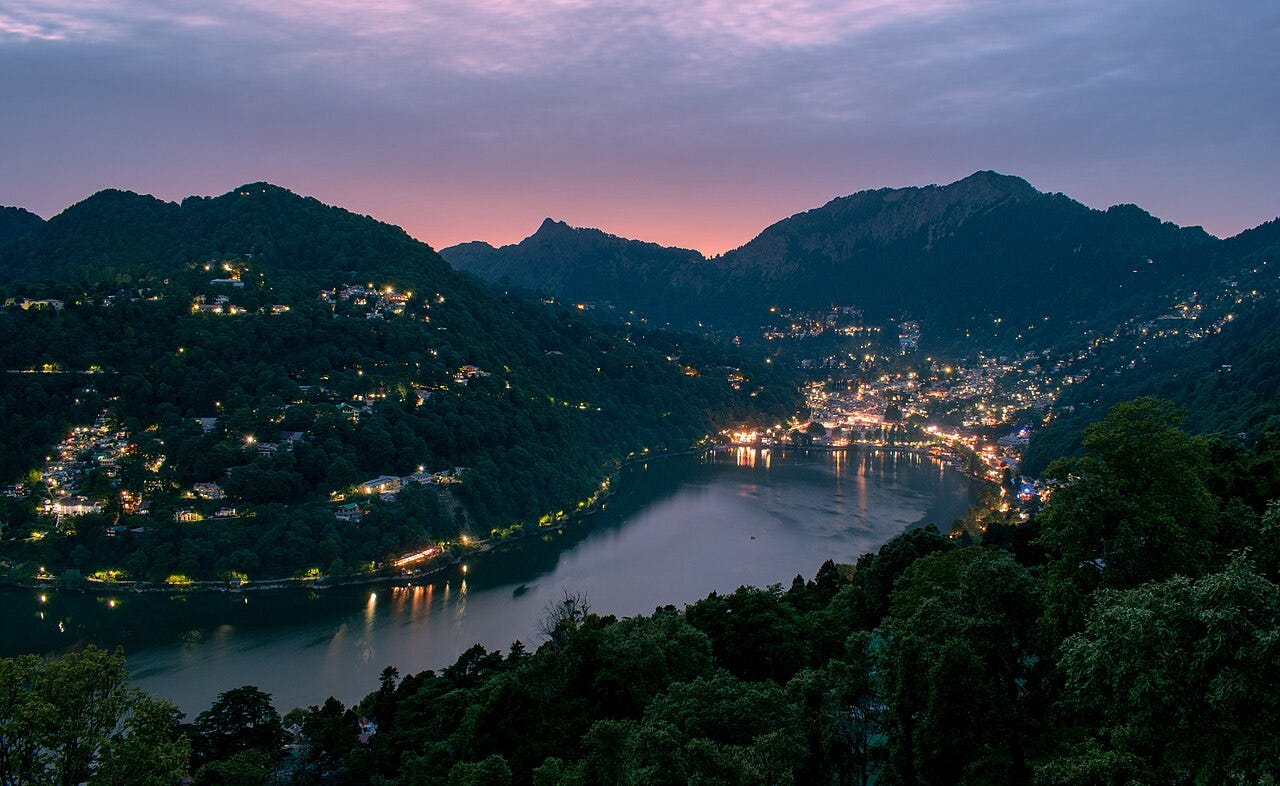
The summer holiday is changing to a search for ‘coolcations’, but this is not all that new. Remember the earlier colonial era of hill stations?
Today it’s climate change rather than imperialism that is driving people to vacation in cooler places.
Successive waves of extreme heat are pushing travellers towards cooler climes in Europe.
In the 19th century, European colonialists in south and southeast Asia and Africa, headed for highland resorts to escape the heat and dust of the plains.
This Week, Those Books has no paywalls when we publish. It’s a small operation here at TWTB so if you find our posts useful, thoughtful, and…a conversation starter, please read, refer a friend, and support us with a paid subscription. Cheaper than one matcha latte! You get access to our extensive archives and have the warm glow that comes from promoting informed conversation!
An anthropologist explains the creation of the modern tourism industry.
Stories from a cool holiday spot in colonial India.
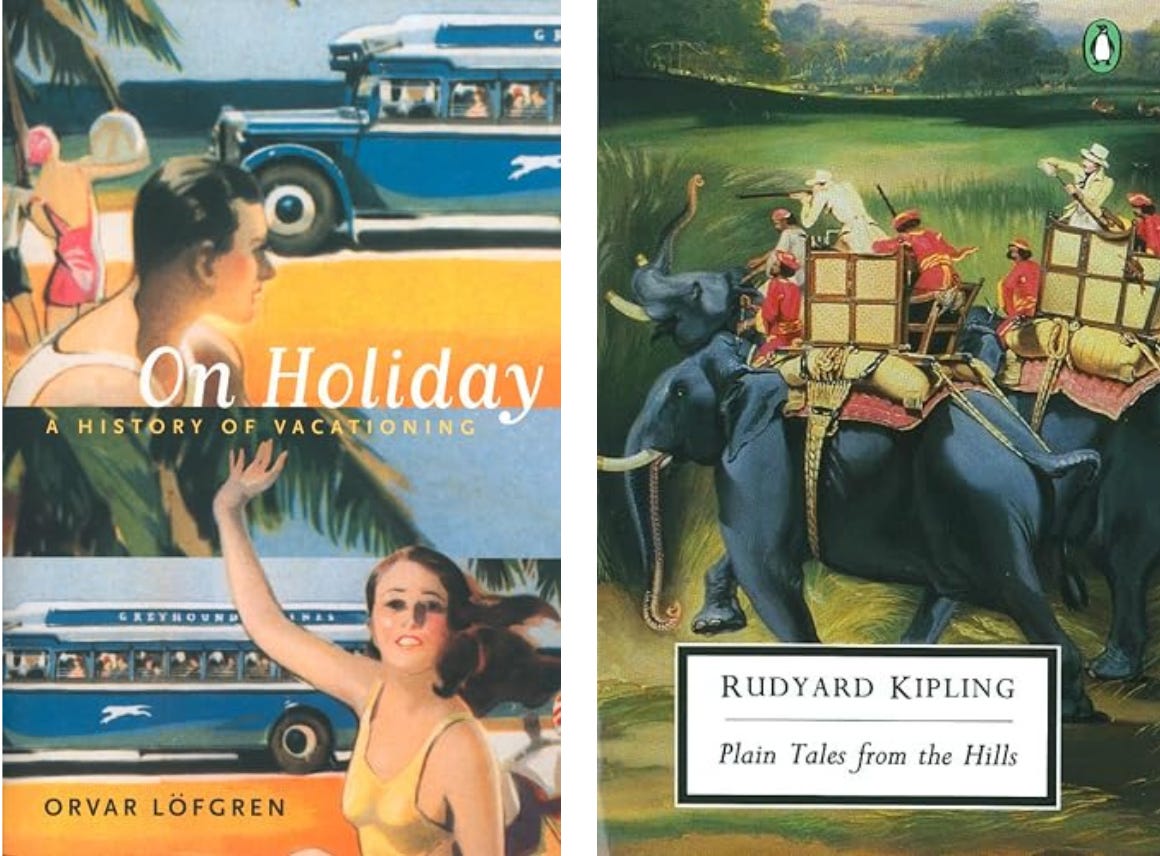
On Holiday: A History of Vacationing
By: Orvar Löfgren
Publisher: University of California Press
Year: 1999
Swedish professor Orvar Lôfgren is a distinguished anthropologist and it shows in this examination of human beings’ habit of going on holiday. He joins keen ethnographic analysis with an erudite rendering of the “archaeology” of vacationing. As Lôfgren tells it, the culture of the holiday is relatively recent. As late as the 1840s, newspaper articles were asking “what is a tourist?”
Apparently, modern tourism developed out of the construction of a “kind of virtual reality called the picturesque: a certain way of selecting, framing, and representing views”.
Think of it as vertical video without video, of capturing an image without a camera. That’s somewhat like today’s influencers and bearers of selfie sticks because Lôfgren says the picturesque was about being “able to locate landscapes with special qualities…the interplay of certain elements, shadow and light, foliage, irregular and varied landscape features…” These would later become sketches or watercolours. In suitably arranged 19th century locations, such as parks meant for pleasure trippers, “visitors learned to position themselves in order to take in a view and identify a picturesque sight”. Not that different from today’s TikTokkers then! Plus ca change.
Lôfgren distinguishes between two kinds of vacationers – Phileas Fogg and Robinson Crusoe. The first, named for the protagonist of Jules Verne’s 1872 novel Around the World in Eighty Days, is an “ardent and hurried traveler in search of new sights”. The second, named after the hero of the Daniel Defoe story about a man shipwrecked alone for nearly 30 years, wants “to get away from it all” and find an unspoiled corner of the world.
Unfortunately, both kinds of tourist end up with the same kind of holiday industry: dedicated to mass consumption.
Choice quote:
What started as a quest to get away from it all, often as a form of anti-consumption, to breathe fresh air, relax, do nothing, gradually became institutionalized into sites of production, providing hotel beds, breathtaking sights, transport systems, snacks, and souvenirs. Maybe it is the lightweight airiness of a few days at a beach or a hike in the wilderness that makes us forget the massive infrastructures needed to provide such moments on a large scale.
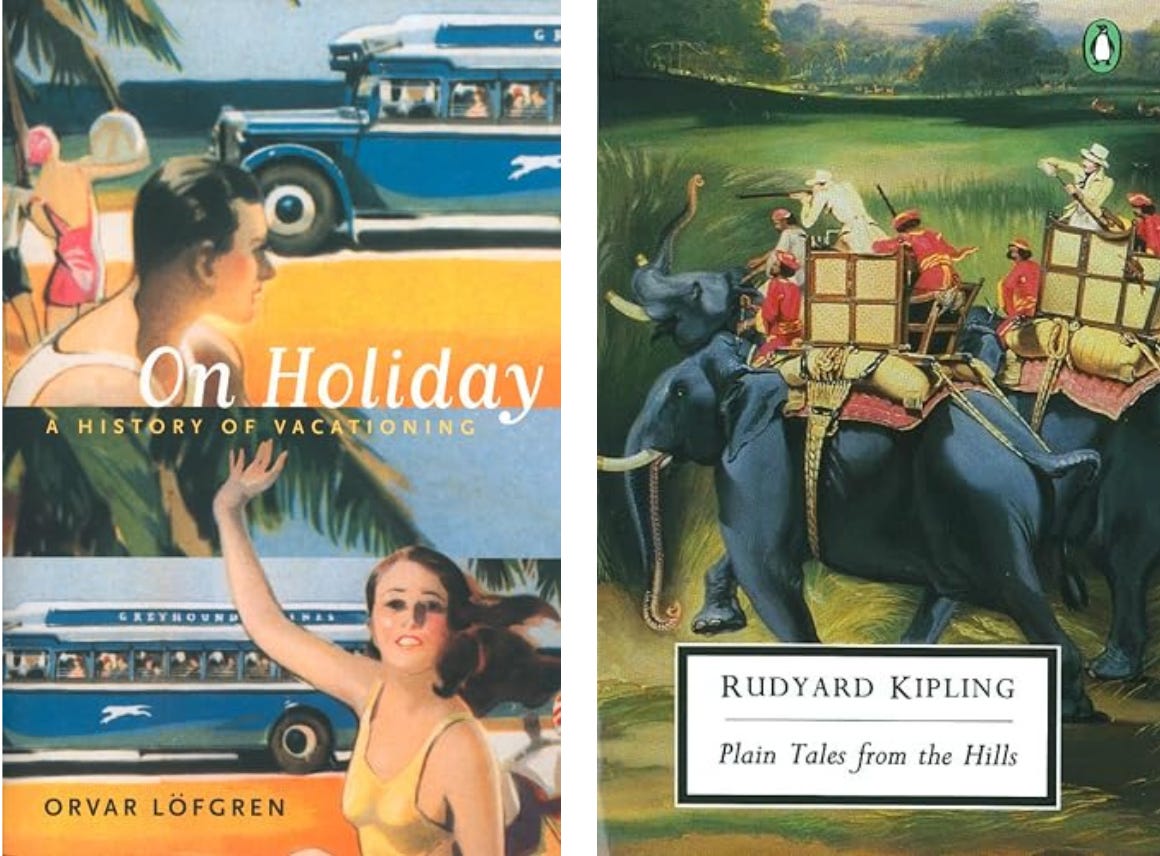
Plain Tales from the Hills
By: Rudyard Kipling
Publisher: Thacker, Spink & Company
Year: 1888
Rudyard Kipling’s first published work of fiction has 40 stories about life in colonial India, including from the hill station of Simla, summer capital of the British Raj.
The stories are set within bounds defined by Victorian England’s manners and conventions, as transported to India. However, they could also be seen as the 19th century version of today’s holiday romance. Many of Kipling’s stories cover the attraction, misunderstanding, farce and pathos that occur when people are on holiday and not in their usual habitat.
The characters in many of these stories have moved high above the plains of north India to open spaces, moderate climates and cool breezes. The journey up to the hill station offers respite – not just from the oppressive heat down below, but from conventions.
Just like today’s summer romance, the hill station holiday of colonial times offered the chance to be someone new, even if for a short while. But not always with a happy ending.
Choice quote:
He was a traveller in the East, he said – they never talked about “globe-trotters” in those days…
Coolcations today:
Europe is warming faster than most parts of the world, leading more tourists to visit Norway, Sweden, Iceland, Denmark and Finland this year, according to online travel agent Trivago.
Tourists are also favouring cooler northern areas of traditional summer destinations such as Spain, Italy and France.1
A seasonal redistribution may be underway, with trips to hotter destinations in spring or autumn to avoid both overtourism and enervating temperatures.2
…and in times past:
Hill stations in Malaysia, mainland British India and Africa, as well as in Dutch, French, and US colonies in Asia offered “a replica of home, a respite in a cool microclimate…familiar scenery…nostalgic triggers for homesick colonials”.
Popular hill stations included Simla, Darjeeling, Ooty, Nainital (India), Nuwara Eliya (Ceylon), Dschang (Cameroon), Dalat (Indochina) and Bandung (the Dutch East Indies).3

If you enjoyed this read, please forward to a friend to sign up.
Connect with me on: LinkedIn | X | Bluesky | Facebook | Threads | YouTube
Email: thisweekthosebooks@substack.com

Galicia in Spain, Trentino-Alto Adige in Italy and Normandy and Alsace in France are increasingly popular, according to research from Mabrian and Data Appeal, Europe’s largest data intelligence company specialising in tourism.
According to a trip advisor at New York-based Fora, the AI-powered platform that links human travel agents with people planning their holidays.
Jennings, Eric T. (2002). Colonial Tourism. In The Oxford Handbook of Tourism History (Eds.)
Comments
Nothing yet. Say the first thing.
Sign in to join the conversation.