
Ever feel like your phone is glued to your hand? So do we.
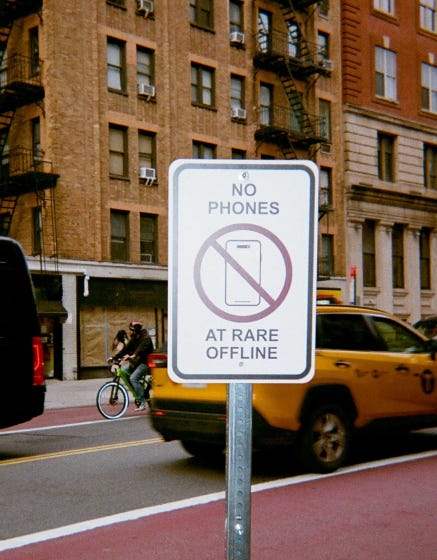
Earlier this year, we introduced Rare Offline, an intimate (and phone-free) dinner series encouraging real-life connection. After conversations with our Rare Impact Fund nonprofit partners about how much time we spend staring at screens, we knew it was time to step away from them, at least for a little while.
Need some motivation to unplug? I asked Dr. Laura Erickson–Schroth, Chief Medical Officer for The Jed Foundation (JED), about the importance of going offline—and how to actually do it.
Share this post with someone who might benefit from disconnecting.
Rare Beauty Insider: How does being online impact our mental health?
Dr. Erickson-Schroth: The truth is, being online can support or hurt mental health. It can help us stay connected with friends and family, find people who understand what we’re going through, learn something new, or access support when we need it. But there are also real downsides. Many online platforms are designed to maximize engagement, and those design choices can increase exposure to harmful content, reinforce negative thoughts and beliefs, fuel social comparison, make it harder to disconnect, and pull us away from relationships and activities that support our mental health.
Why is it important to make a point of spending time offline?
We know from research that connecting with other people is essential for positive mental health. And while online worlds can offer forms of connection, bonds are often stronger when they happen offline. Research also shows that spending time in nature supports mental health. Disconnecting from technology sometimes to do these very human things is important for all of us.
We’ve seen a new trend in old-school hobbies, like scrapbooking and letter-writing. Is the only alternative to being chronically online going completely analog?
It’s always great when we can find ways to connect with or express ourselves, and hobbies like scrapbooking can be a way to do that. But it’s also OK to find ways to do that using technology, like journaling with an app if that works better for you. You don’t have to go completely analog to feel emotionally well. Everyone is different, so finding an approach that works for you is key.
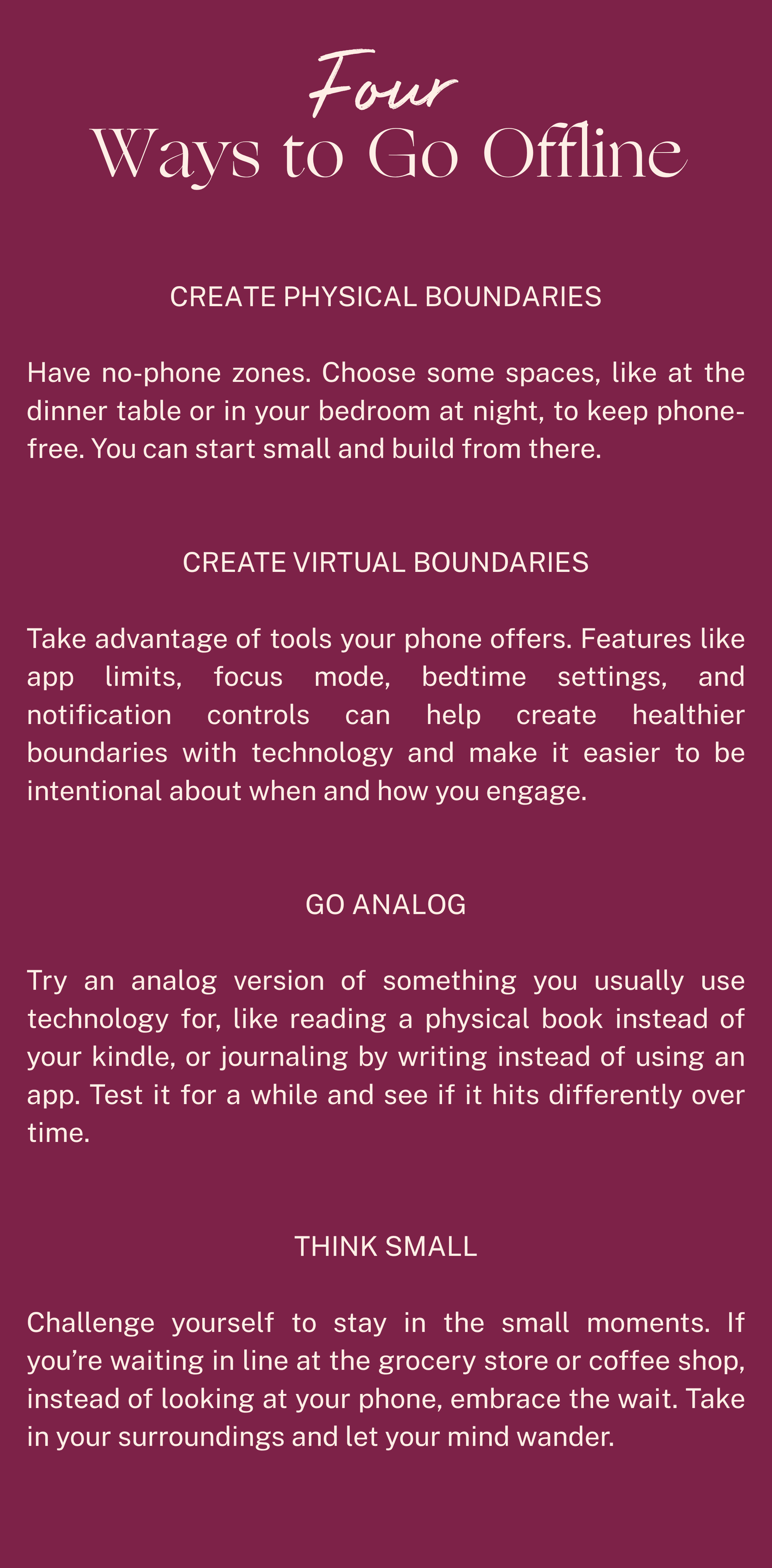
How do you make time to go offline? I’d love to hear your suggestions!

No posts
Comments
Nothing yet. Say the first thing.
Sign in to join the conversation.