
We will start off this Monday, and the first Manic Monday article, with Harlow’s Pit of Despair.
I will begin by saying that there is “good” (I put it in quotes because of how horrendous the studies were) that came out of Harlow’s experiments on the monkeys: because of the outrage sparked by his work, there was reform in the United States towards animal rights, and towards more standardization of ethical standards of experiments conducted in the US. (Yes, his experiments were that bad).
But, this article is the journey of a scientist to understand love—Harry Harlow. Harlow’s own relationship history was a bit tumultuous. His first wife, Clara, had once been his student.1 Harlow married his second wife, Margaret, who was a new assistant professor in the Psychology department, who later died of cancer. Harlow then remarried his first wife, Clara.
Harlow conducted his work at the University of Wisconsin-Madison,2 where he was studying social behaviors, isolation, and maternal separation, conducting his work on rhesus monkeys. What he learned was the social interaction is a staple component of social and cognitive development.
But to determine this, he used what was called the “pit of despair,”3 where rhesus macaque monkeys were placed in vertical cone-shaped steel structures, the floor made of wire mesh. The monkeys were then left alone in these steel structures—cages—for weeks at a time, only being fed and given water.
While in the cages, the monkeys quickly became depressed, and even after being removed from the cages found it difficult to return to normal social behavior. Just a money—30 days—of this social isolation was enough for the monkeys to avoid social interaction, playing, and lack of curiosity for months thereafter.
Harlow wrote,4
“One of six monkeys isolated for three months refused to eat after release and died five days later…the effects of six months of total social isolation were so devastating and debilitating that we had assumed initially that twelve months of isolation would not produce any additional decrement. This assumption proved to be false; twelve months of isolation almost obliterated the animals socially.”He also wrote,
“These monkeys suffer total maternal deprivation and, even more important, have no opportunity to form affectional ties with their peers.”
The paper, Total Social Isolation in Monkeys,4 whom Harlow wrote with his second wife, Margaret, and with Robert O. Dodsworth, described Harlow’s experimentation history. The paper described briefly that for the past ten years (the paper was published in 1965), Harlow and his team were studying the effects of partial isolation.
That is, they were raising monkeys from brith and onward in wire cages with no stimulation or toys or much of anything:
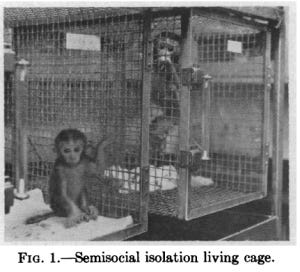
(Figure 1 from Total Social Isolation in Monkeys)4
The monkeys therefore suffered total maternal separation and had no opportunities to form ties with their peers. What the team found was that these monkeys were aggressive and hostile, not only to others, but towards their own bodies. They engaged in “repetitive stereotyped movements”, were detached from their environment, and were unable to form heterosexual attachments with other monkeys, even when given the opportunity to do so during preadolescence, adolescence and adulthood.4
In the paper, Total Social Isolation in Monkeys, the team sought to go one step further: partial social isolation was no longer enough. Total social isolation was now the name of the game.
The total isolation was achieved by housing the monkeys only a few hours after their birth in stainless-steel chambers, like this one:
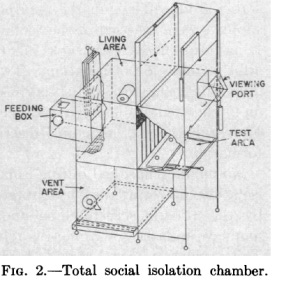
(Figure 2 from Total Social Isolation in Monkeys)4
The monkeys were isolated in these chambers until 3, 6, or 12 months of age. During the periods, the monkeys had no contact with any other animal, including humans. Harlow added, however, that no sensory deprivation was maximized. The chamber was also lighted, was allowed to emit sounds, and allowed for “adequate opportunities for cutaneous-proprioceptive expression and exploration.”4
However, the area beyond the cage was sound-masked by a white-noise source. Loud noises from the corridor beyond the cage, though, was found to produce attentive, or even freezing responses, in the monkeys.4
While running these conditions, Harlow also had another group of monkeys kept in partial isolation in individual cages for the first 6 months after birth. They were then placed in the total isolation chambers for another 6 months.
The effects of isolation were measured by “comparing the social behavior of pairs of isolated monkeys after release from the chambers with that of pairs of equal-aged monkeys raised in partial isolation.”4
The four monkeys who suffered isolation, either partial or total, were tested as a group of four in playroom situations, like the one here:
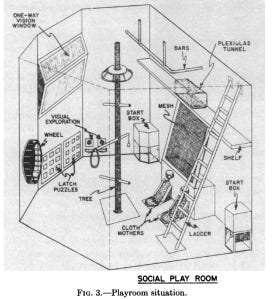
(Figure 3 from Total Social Isolation in Monkeys)4
The four monkeys were let out for thirty minutes per day, for 5 days a week. This part of the experiment ran for 32 weeks.
Harlow even went so far as to test long-term effects by assessing the behaviors of the monkeys from 1 to 2 years after the “termination of isolation.” Two observers then recorded the occurrence of preselected behaviors and social interactions.
The monkeys’ intellectual developments were also tested by utilizing learning tests, including “discrimination, delayed response, and learning-set formation.”
In case you were wondering if any monkeys died, Harlow kindly mentioned in his paper that “No monkey has died during isolation.”4
However, when the animals were pulled out from their isolation, they usually went into “a state of emotional shock, characterized by the autistic self-clutching and rocking…” An image of this behavior was provided in the paper:
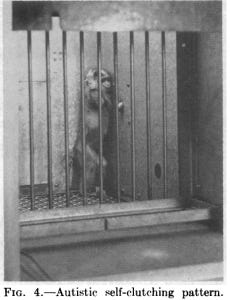
(Figure 4 from Total Social Isolation in Monkeys)4
One of the six monkeys that had been isolated for 3 months refused to eat. The monkey died 5 days later. So, yes, there were deaths, but not in the isolation chambers. The paper stated that the autopsy report “attributed death to emotional anorexia.”4
A second animal might have also died of refusing to eat, but the team intervened and force-fed the animal. Harlow mentioned that the refusal to eat did not appear in the 6 or 12 month groups.
Some of the results indicated in the paper were that the effects of social isolation for three months are reversible, though dramatic. The paper also stated that if there is any “long-term social or intellectual damage, it eludes our measurements. Given the opportunity soon after release to associate with controls of the same age, these short-term isolates start slowly during the first week and then adapt and show the normal sequence of social behaviors.”
Somehow, I find that hard to believe, that none of the effects are long-term damaging.
However, those monkeys who were isolated for 6 months, were severely impaired in their ability to socialize, and these monkeys were more easily threatened. These monkeys, unlike the 3-month isolation cohorts, did not engage in rough-and-tumble play, or any sort of play for that matter. “Social interaction throughout the entire 32-week test period…was for all practical purposes nonexistent except for bursts of aggression which the controls occasionally directed toward the isolate animals.”
I find it interesting that the controls were hostile towards the isolates. It almost makes sense evolutionarily: why keep around those who are least likely to benefit the pack? If an animal is not pulling their weight or interacting healthily, they could be a threat to the survival of the rest of the pack or group, therefore, aggression is necessary to keep them away. This reminds me a bit of the behaviors of baboons in a book I read back in college called, “A Primate’s Memoir.”
Harlow found that 12 months of isolation essentially obliterated the monkey’s ability to be social.
In terms of learning and his team wrote,4
“The striking fact, however, is that all the socially isolated monkeys learned effectively after being removed from the social isolation cages. We cannot, at the present time, adequately assess the effect of prolonged total social isolation on the intellectual capabilities of rhesus monkeys…We can, however, state with confidence that the ‘intellectual mind’ is far less crippled than the ‘social mind’ by prolonged total social deprivation if adequate experience is provided subsequently.”
I do have reservations with that, in the sense of the Genie, the feral child, who did not ever catch up in terms of language skills. However, Genie was also abused, and I’m not saying that social isolation is not abuse, but in Genie’s case, there were layers of abuse that involved social isolation, as well as physical and emotional abuse.
Harlow, through his experiments, which involved more than the pit of despair, became somewhat of a celebrity, appearing on TV and traveling around to speak. He was infamous for his terms of the devices he used, like the pit of despair, the rape rack (where female monkeys were forced to mate against their will,) and iron maidens (the term he used for the cloth surrogate mothers he made for baby monkeys).
Briefly, the rape rack was used when Harlow decided to breed the isolate monkeys and produce new offspring from them. When the females refused to mate, he placed them on the rape rack and had them subsequently inseminated. He then found that those isolate monkey mothers killed their infants by chewing off fingers and toes, or even crushing the infants’ head with their teeth.
As Harlow wrote,5
“By methods dark, dismal, and devious we impregnated several of these reluctant females over a period of years. We have called them "motherless mothers," since they never experienced mother love, nor any other kind of monkey affection, themselves. Most of the motherless mothers either completely ignored or abused their initial offspring.”
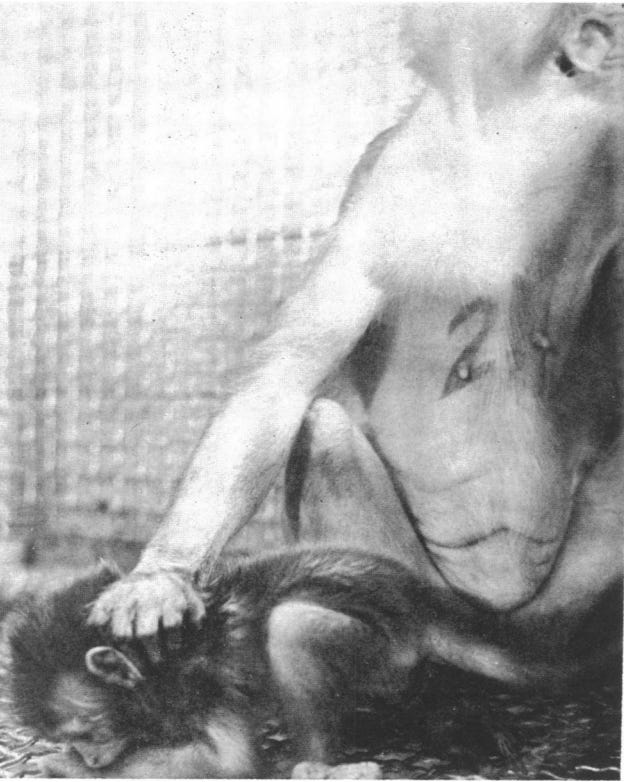
(Figure 2 from Social Recovery by Isolation-Reared Monkeys)5
FIG. 2. Motherless mother abusing her infant.
The iron maidens6 were metal “surrogate mothers” who had cloth wrapped around them. Baby monkeys were taken away from their real mothers and given to these iron maidens. The baby monkeys would cling on to these iron maidens, only leaving to feed.
Harlow went so far as to say he had not feelings for the monkeys.
“The only thing I care about is whether a monkey will turn out a property I can publish. I don’t have any love for them. How could you love a monkey?” He also said, “I just have no feeling for them—at all.”
He did add,
“If my work will save one million human children, I can’t get overly concerned about ten monkeys.”
Harlow was very outspoken. He pushed the idea that mothers are important in the emotional development of their children. The trend in the American psychology of Harlow’s time indicated to mothers to show their children as little affection as possible. Too much affection was considered coddling, and coddling created a weaker child. With these sorts of thoughts and beliefs running rampant, love, or the lack thereof, had to be tested in a controlled, experimental setting. And that’s what Harlow did.
It seems easy to think of Harlow as cruel for the work he did with his monkeys. But through his work, we began to realize that children need to be affectioned, to be loved. Which all seems common sense now, but did not seem to be in American psychology just decades ago.
Now the ethics.
Clearly, the work was unethical in the sense that it caused undue suffering to sentient organisms. It’s similar to the ticking time bomb scenario7: do we have the right to torture a small group of people if they are able of providing information that could prevent the mass death of others?
Harlow experimented in a time when animals were considered to be of base intellect and emotionality, without the complexities of human intelligence and emotions. Harlow’s work demonstrated that monkeys have emotional attachments and can learn and be intelligent. Harlow even worked to developed now-classic ways to measure learning, like the Wisconsin General Test Apparatus (WGTA),8 where monkeys are to discover food hidden under toys and objects. Scientists can then learn how the monkeys learn and remember and can discriminate between objects of different colors and shapes.
It is also through Harlow’s work that we know how to better take care of the emotional and cognitive needs of humans and other animals.
But then, do the ends justify the means?
Article originally published January 5, 2015 here, and has since been edited for clarity.
1 https://www.wellbeingintlstudiesrepository.org/cgi/viewcontent.cgi?article=1112&context=acwp_arte
2 https://search.library.wisc.edu/digital/AA5XC23KPVK4B28K
3 https://onlinelibrary.wiley.com/doi/full/10.1002/jhbs.22180
4 https://pmc.ncbi.nlm.nih.gov/articles/PMC285801/pdf/pnas00159-0105.pdf
5 https://www.pnas.org/doi/pdf/10.1073/pnas.68.7.1534
6 https://sanlab.psych.ucla.edu/wp-content/uploads/sites/31/2016/03/Harlow-1958-nature_of_love.pdf
7 https://www.bbc.co.uk/ethics/torture/ethics/tickingbomb_1.shtml
8 https://link.springer.com/rwe/10.1007/978-3-319-47829-6_1767-1
No posts
Comments
Nothing yet. Say the first thing.
Sign in to join the conversation.