
Last installment we discovered Jewel increasingly isolated but unwilling to give up power over the small community now just a quarter century from their destination in the Tau Ceti system, so far from Earth.
This is chapter 5 of a serial about a generation ship. This chapter takes place 75 years into the journey.
The main characters are:
Jewel, the 50 year old captain, who merged with the ship AI 25 years ago.
Sun, 49 years old, seems to have had his youthful rebellion squashed but retains a valuable spark of defiance.
Isaac, 31, is caught in the middle as Jewel’s son-in-law and Sun’s nephew.
“Good morning, Mamie.” Isaac nodded greetings as well to the others present already in the dining room — mostly family, including his grandfather, father, and some cousins. Of course these days, cousins to various degrees constituted much of the crew of the ship. Nicole, his great-grandmother, nodded as he took a seat. She leaned against the wall, a blanket wrapped around her shoulders, despite the fact that it seemed warmer than usual this morning. “I hope you weren’t waiting on me,” he added.
“We were,” his grandfather said. “You had sent a message that you were on your way.”
“Apologies, then. Cyonics1 let me know I should probably add a couple of laps to my morning exercise.” He patted his gut, causing a slight wobble. “The mirror agreed, and I was outvoted on the matter.”
“You did not bother to let us know? You know mother looks forward to —”
“It’s fine, Bojang.” The aged woman silenced her son’s correction. “Conversation was pleasant while we waited.” She looked at Isaac, and added, “We were talking about the weather.” It must have been a joke, for she smiled and her shoulders shook with silent laughter. An Earthborn inside joke, perhaps. On Earth that topic may well have been endlessly fascinating, but the only weather he’d ever seen was in Virtual.
“As you say then, mother,” Bojang conceded. “We finished father’s book last week. What shall we read today?”
“Start one of the gospels, please. For our guest,” Nicole said, gesturing to a dusky young man with a patchy beard seated at the end of the table. He glanced around the table before turning his gaze down again. Raban, a distant cousin, had surprised them by asking to attend the book club.
How many more generations until everyone was descended from her? It was a problem they had discussed extensively — not about Nicole specifically, but the need to add genetic diversity. The first humans born post landfall were to be pulled from the frozen stock of human embryos within the heavily shielded cargo containers, and thereafter none of the space-born were to mate with each other. Isaac gazed around the room, imagining the immense complexity of the ship, designed and built to keep them alive through the long journey so that those seeds could flourish in a functioning human society and endure so far from their origin. All of this community — the romances, the politics, the births, the deaths — all existed for that moment when a squalling child would open its eyes and gaze at a sun that previously had only been a star.
Isaac noticed his mind wandering, and brought his attention back to his grandfather’s deep, steady voice. Bojang stared at the blank table, his Cyonics pulling from the ship’s digital library to project English words into his visual field. No wonder his mind wandered; so far it was merely a list of names, tracing a lineage. Some he recognized from previous readings, like Isaac and Abraham, David and Solomon, but most meant nothing to him.
After a moment, even Bojang glanced around. “Sorry, I will skip ahead.”
“Genealogies,” Nicole said. They waited on her words. After a moment, she added, “It was important at the time of the writing. Established the lineage of the Messiah. Never used to interest me either, but now… you can feel the weight of history in the list of names, can’t you?”
Isaac wasn’t sure exactly what she meant; he suspected she was imagining, not the family of Israelites, but of those gathered here. Five generations of begats and father-ofs were on the ship, at least while Nicole clung to life.
His grandfather continued reading. They got into the next chapter while those with morning kitchen duty entered to begin their preparations across the room, chopping vegetables, maybe frying up patties of the vat-grown meat, and trying, likely in vain, to make the algae shakes palatable. The reading ended with recounting of Herod’s killing of the baby boys in Bethlehem.
Raban whistled. “Slaughtering half the babies in the city on the chance one will threaten him someday? That’s cold. Did that really happen?”
“Of course it did.”
“’Jang, have grace, please. It’s a reasonable question.” Nicole paused, gathering the blanket around her and looking at them. “Earth had so much history, children. There are many fields of study dedicated to discovering the past. You won’t have any of that to rely on. As much as Earth’s history matters… and it does. You don’t want to make the mistakes of your ancestors. Huh.” She lost herself in thought a moment, playing with a necklace she wore that contained two gold rings and a cross on a chain. She noticed them still looking at her, and continued, “But with archaeology beyond us now we have … what? Faith, tradition… and discernment, of course. Do the stories ring true in their depiction of human virtue and villainy? I will tell you this — worse has been done than is described here. Herod’s actions are plausible, by the standards of human rulers.”
“I suppose that makes sense,” Raban granted. “I could see our tyrant offing a kid if she thought it threatened her.”
Isaac saw uncomfortable glances exchanged among his family. Nicole said nothing, but he couldn’t let that statement stand unchallenged. “Jewel is harsh, Raban, but she’s not murderous. Nor a tyrant.”
Raban snickered. “Sure. Suck up to your mother-in-law and maybe your kid can rule over us someday.”
Isaac held his tongue. He could stand to have his own motives slandered. His father, though, took issue with a different point. “A day will come, in your lifetime, that we leave the ship. On the new world, this,” he tapped the back of his neck, “will have no sway over us. Nor daily instructions for us. We must be prepared to start our lives without these tools.”
Like Earth’s history, like Earth itself, their destination was something to be taken on faith, secondhand. Oh, they’d seen star charts, walked in virtual on topographic maps pulled from scans of the moon they were headed to, and grown up all their lives hearing about their great mission. But planets, with their flora, fauna, atmosphere, and more, were so far removed from real life as to be mythology. He didn’t quite buy into his uncle Sun’s pessimism — or was it nihilism? — on the matter, but he appreciated it.
“Without Cyonics, yes,” Nicole added. “And without factions. Without divisions and rancor. Or what was the point? Make peace, children.” Isaac swallowed and glanced away at his Mamie’s preaching. Harmony was also something whose existence he doubted.
“Raban.” Confirming their disunity was another matronly voice.
The family, minus Nicole, glanced up at the newcomer. The nonagenarian didn’t need to look to reply, “Good day, Aisha.”
This woman had not softened with age. Had she ever smiled? Certainly she was the last person on the ship, save his fragile great-grandmother, that one would want to run into carelessly in the halls. This morning she looked particularly disappointed with existence, half-lidded eyes staring down at them. “Raban,” she repeated her grandson’s name and he met her eyes sheepishly. “You have joined this group?”
The young man glanced around and shrugged. “Nah. I was just… listening to their Earth stories.”
“Silver tongues and honeyed words, Raban. And then betrayal. Inevitably.” Isaac wasn’t sure exactly who she had in mind. Ah Lam? Alex? The former Captain? The current? Sadly her list of justified grievances was not short.2
“Why do you come here with this nonsense?” Bojang asked, arms folded. “No one has ever meant you any harm.”
Aisha didn’t look at him, but addressed Raban. “No, they never mean us harm. They just take, and take, and take, and ask you to appreciate the sacrifice you make for the greater good. Some people will see you as family here. And some will only see you as tools. They have chosen her side, and their stories are how they get you to submit your interests and your rights.”
“We are all family here,” Nicole said.
“That may well seem the case to you. But we were not all granted the same abundance in our increase, were we? And still, you are trying to poach mine. Watch, Raban. When they take from you for the benefit of all, who benefits most? It will never be us.” Her grandson glanced back and forth.
More people were filing in now, including Aisha’s husband Gabriel, guided by their daughter. The tall, gaunt man was prone to startle and easily lost in thought, often mumbling conversations with himself in the halls. Improvement in his mental state had been rapid after his awakening from a coma twenty-five years ago, but then quickly tapered off. Jewel had tentatively used Cyonics to attempt to give order to his shattered sense of self, but she had admitted with chagrin that she couldn’t repair either the damage of brain injury decades prior, nor the confusion from fragments of data John had left in his mind, even with a tool as powerful as Cyonics.3 Today the old man’s idiosyncrasies served Aisha as a reminder of slights long past, and apparently she was determined to pass this feeling along to those she saw as hers.
Raban took the opportunity their arrival presented to mumble “thanks” to the rest of the meeting. He rose to help his mother and grandparents take a seat. Isaac’s grandfather Bojang clenched his teeth and drummed his fingers, but avoided saying anything further to Aisha. By now the room was quite boisterous, with children and adults waiting for the tardy breakfast to be unveiled — or unleashed, as Isaac sometimes joked. Aisha would have to either end the confrontation or raise her voice and cause a scene. While it seemed she was seriously considering the options, there had been no new reason for an argument and she would get little sympathy simply rehashing old complaints.
But someone else made the choice for her, as Jewel entered the room. “Aisha. Have a seat please. We’d like to have a pleasant breakfast. It’ll be a long day.”
It had taken a long time for the crew to adjust to the capabilities and demeanor of their new leader after she had strode into breakfast, nearly twenty-five years ago. Isaac had been there as a child of seven, freshly implanted with Cyonics, the computer interface device that was their greatest tool and toy. He was listening to the adults discuss what to do with the deceptive AI, John, when Jewel had walked in and announced the death of Isaac’s Great grandfather, Wei. He had died assisting Phillip in the reset and rewriting of the computer AI, which had suspiciously rebounded to Jewel’s benefit.4
Since then the remainder of the Earthborn generation, save Nicole, had passed, some few first reaching their centennial, but many succumbing to various cancers prior. During that time Jewel had ruled absolutely, though it took them a while to learn just how absolutely. Gradually they discovered how any stray thought could be picked up and passed to her. Her synthesis with the ship’s computer allowed her to sift through the minds of the almost two hundred occupants who were of age to take Cyonics. Inevitably a thought of dereliction or insurrection would get back to her, whereupon the woman’s disappointed voice would intrude in their thoughts, instructing them of their penance.
And in this demanding social environment, Isaac had married the queen’s daughter, Angel. It wasn’t for reasons Raban had suggested, nor for her physical beauty, although her sandy hair and dimpled cheeks were appealing enough. Rather, well, someone had to. They shared no common ancestors and his family was as close to hers as any was. So he obeyed without objection, and had gained two daughters, Aether and Vita, from the union, as well the occasional contemptuous look from such as Raban. His father told him to endure it; Tao was focused on the mission. In that way he was like Isaac’s mother-in-law. Or, to be honest, like Jewel claimed to be, ever only acting in the interest of survival. Were Isaac to allow himself honest assessment, it seemed like she quite enjoyed wielding the power of the ship, well beyond what survival demanded. But he didn’t so allow himself. Honest assessment of such things was dangerous.
Over time, the crew had adjusted. Fell into the rut of obeying the female voice instead of the male, and losing themselves in virtual as much as possible, enough that actual demonstrations of her power were rare now. But authority — such as the way in which she casually ordered around the older woman here — that was common enough.
Some chaffed under that authority even still. Some made peace with it. And some… he saw his uncle walk in. Some were broken by it long ago.
Haggard and slouching, Sun slunk in the door and glanced around nervously. Bojang indicated an empty seat nearby, inviting his son to join him. Sun saw that the serving stations set in the wall between the kitchen and dining room were still bare, and sat down in the first open table by the door, waiting impassively.
“So,” Jewel said, her voice soft but amplified by the technology built into every wall of the habitation ring, echoing into every adult head, “we’re going to need to make an alteration to the duty schedule. Jaya, Hosanna, you’re on mending again. I’ve found tears in the laundry. We don’t want our parents — or Grandmother — getting a chill.”
Cousin Jaya, seated with her sister and husband, sighed, her dark features pouting. “It’s not fair. There’s only so many times we can mend old uniforms. The stitching just comes out in the wash.”
Sun called out to his daughter softly. “Do not argue, please. Try to improve.”
She turned back to him, rolling her eyes. “I had leisure this morning. I was going to help with Vanya’s class.”
“I will take your place with the boy,” Sun said quietly.
“Excellent,” Jewel cut in. “Now if we could get some breakfast, we could all get to work.”
“About that,” her son Peter cut in from the kitchen service window. He set out a tall glass full of turbid, brown water. A foul smell drifted throughout the room. “Our faucets spewed this muck all over the pots. There’s got to be some problem with the recycling system for this section. Hopefully no one is trying to shower in this shit. I’ve sent the staff to wash and fill the pots from the showers in section 3 hygiene. I’ll put out some dry snacks in the meantime.”
“Vat jerky,” Raban muttered to the room. “Terrific.” The younger boys, however, were high-fiving.
“Great,” Jewel sighed. “Well, this takes priority over anything else. Let me see…” She stared vacantly a moment. “Now, this is going to be a dirty job. Any volunteers?” No immediate response. “Very well, Isaac, Ahmed, and Ilia. I’m sending you instructions now on how to verify the problem and resolve the most likely issue.”
Isaac groaned inwardly. So much for accusations of favoritism. Wait, was the accusation the reason for the assignment? He inwardly cursed Raban. Jewel went on to list other assignments. Isaac tuned her out and readied himself for an insufficient breakfast and an annoying day.
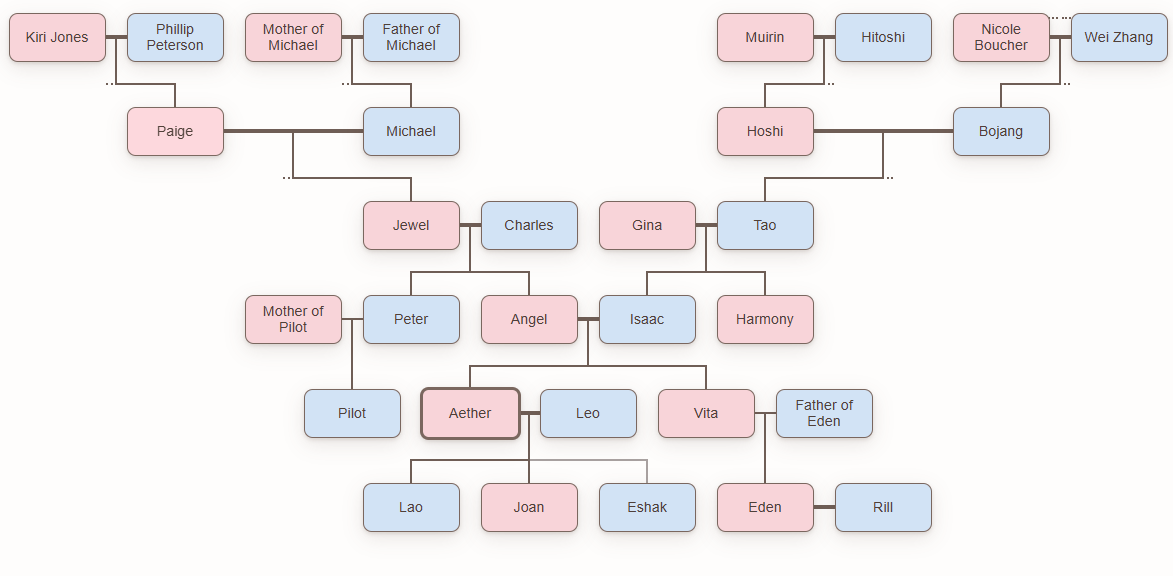
Well that… could be worse, yeah? Next week, school days and childish fables.
The crew is still using Cyonics, the lure of Virtual too strong to give up despite the oppression it enables.
Aisha spent years thinking her fiance, Gabriel, was killed by Jewel’s uncle Alex. See Impact for that saga (or read the next footnote)
Gabriel’s saga was the result of being used as computing medium after an assault left him comatose in Impact, Part 5, and he was revealed as alive and awake in Succession, Part 6.
The events of Succession Part 9
Comments
Nothing yet. Say the first thing.
Sign in to join the conversation.