
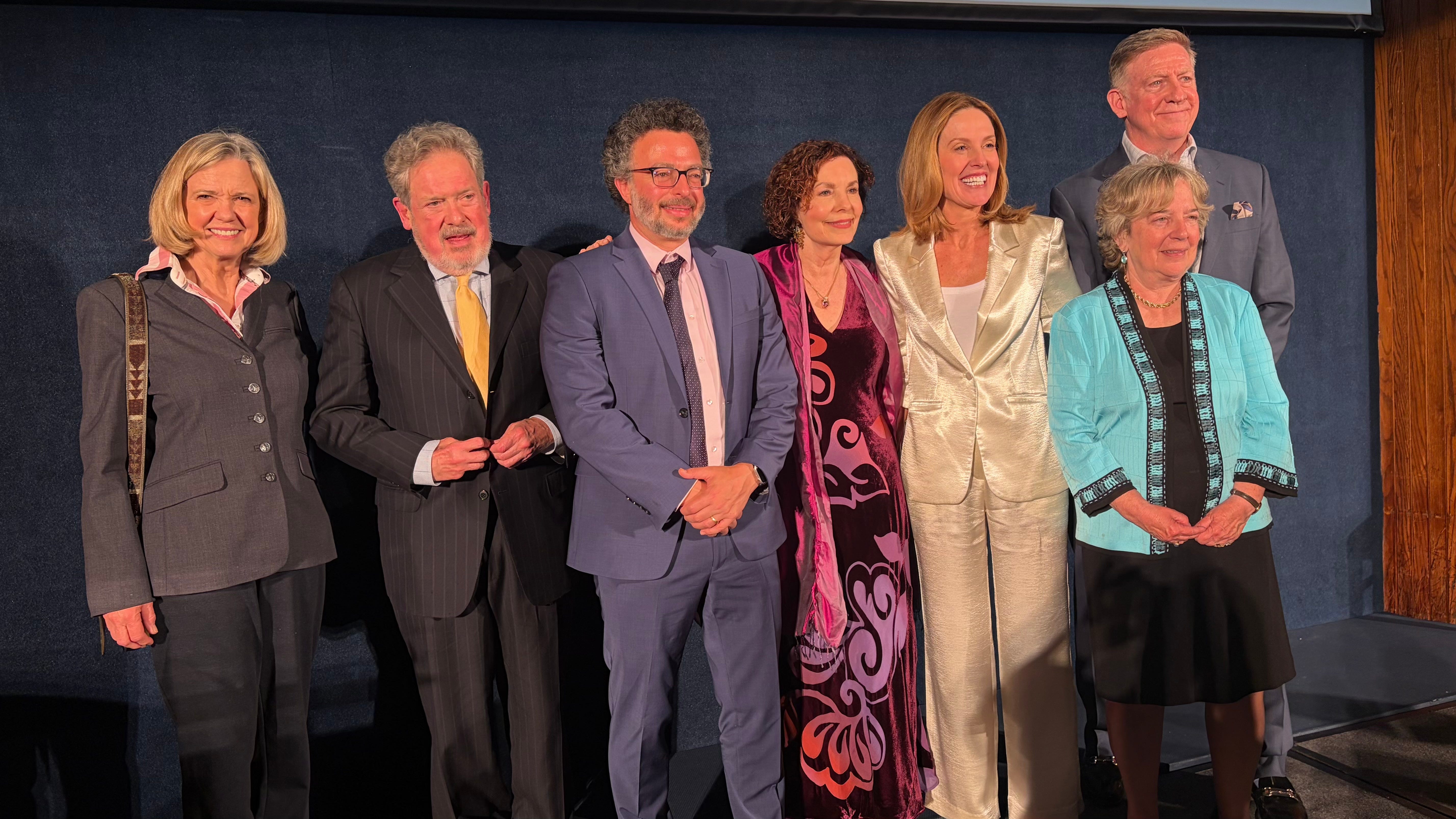
Thursday night was another extraordinary Ridenhour Prizes event. With 250 attending at the National Press Club, Roberta Baskin, an audience member in 19 of the past 20 events, served as MC. Roberta had a career in broadcast and was herself a CBS whistleblower who suddenly found herself “radioactive”—her word—when she asked on air at the Nagano Olympics why CBS reporters were wearing Nike jackets, the Nike swoosh competing with the CBS logo. Of course the unspoken—and unspeakable—answer was money. So Roberta was the perfect MC for an evening where money and power was the villain in the room.
Bill Owens, legendary executive producer of “60 Minutes,” shared the Courage Prize with his colleague Sharyn Alfonsi, a “60 Minutes” Correspondent for over a decade.
They both had pushed back against money and power interests at Bari Weiss-led CBS News. Their speeches were as on the money as we have come to expect from “60 Minutes.”
Former Acting Deputy Director of the DOJ Office of Immigration Litigation Erez Reuveni accepted the Truth-teller Prize for refusing to follow orders from DOJ head Emil Bove to lie to judges. His speech, too, brought the audience to their feet.
My speech, my longest in my many years of introducing the prizes, explored the echoes between the My Lai Massacre and Secretary of War Pete Hegseth’s promotion of the “warrior spirit.”
Their speeches will be posted when available. You will find mine below.
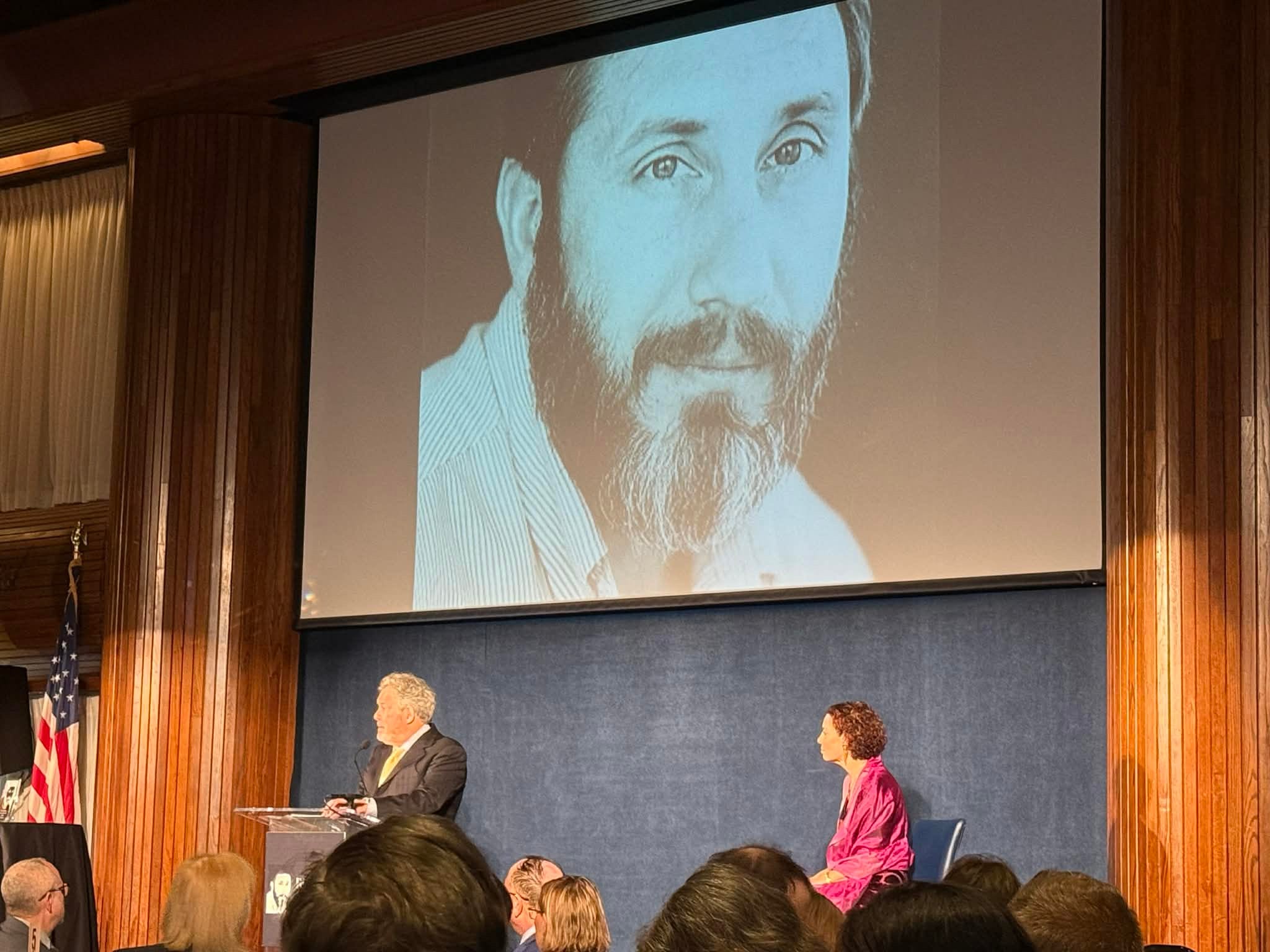
For those of you who might have experienced one of the great terrors of our times, the threat of gun violence, at the White House Correspondents dinner just five nights ago, you are especially embraced and welcome here tonight.
Your profession, your livelihood and yes, sometimes even your very lives have been under threat for decades. We celebrate all of you tonight, and we thank you for keeping up the most noble of fights.
Now, I’ve been standing up here for 20 years urging you to remember Ron Ridenhour and at the same time that the My Lai massacre should not be forgotten. Never have I felt both more strongly. So I’m calling this:
It’s always my privilege to inject the spirit of my friend Ron Ridenhour into this imposing room where so many distinguished men and women have spoken, the powerful, and those who speak truth to power.
At the tender age of 23 Ron Ridenhour delivered a letter to Congress and the Pentagon filled with facts he learned from men he’d served with in the American war in Vietnam.
They told him about an operation on March 16, 1968 led by a Lieutenant Calley who was ordered to clear the village of My Lai of Viet Cong regulars—the southern insurgent arm of the North Vietnamese Army—the enemy. Receiving no resistance, Charlie Company swept through the village.
At one point Calley directed his men to line up women, children and elderly men in a ditch, then mow them down with automatic weapons. They did. Some took a lunch break then finished off the noisy survivors. 504 civilians killed. In the official Peers Report on the My Lai Incident, one participant testified: “It was a Nazi kind of thing.”
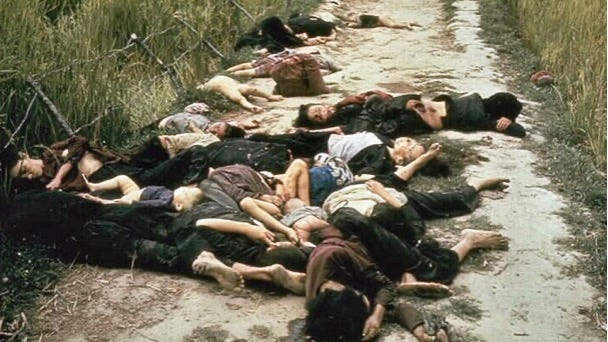
Learning of the massacre, Ron felt compelled to do something in order not to be part of the crime. Born to be an investigative reporter, he sought out witnesses to confirm the details.
Once home and out of the military’s reach he typed the map coordinates, the dates, the units involved. He called the village “Pinkville,” GI slang for My Lai because it was pink on the Army maps.
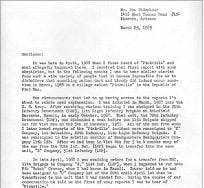
Years later Ron’s friends used to kid him: Ron, you never write short. Three pages, single spaced.
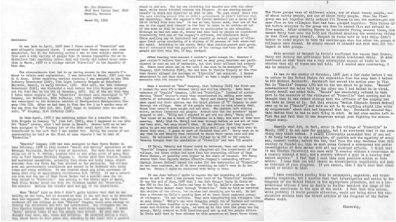
Ron’s detailed narrative was not to be ignored.
To complicate matters, it was actually the village of Song My. But the wrong name—My Lai—stuck.
To complicate matters, it was actually the village of Song My. But the wrong name—My Lai—stuck.
Ernest Hemingway, one of our great truthtellers, insisted that it’s important to push back against the “debasement of words by war”. For Hemingway: “Abstract words such as glory, honor, courage, or hallow were obscene beside the concrete names of villages, the numbers of roads, the names of rivers, the numbers of regiments and the dates.”
Because of Ron’s whistleblowing more dark facts emerged.
Facts. Not alt-facts. Not the Orwellian debasements of language we heard in Vietnam and heard recently in the “Iran Excursion”—not Incursion, itself a debasement of the Vietnam-era Cambodian Invasion. An Invasion became an Incursion became in Trump’s mealy mouth an Excursion, a pleasant springtime get-away with missiles in the picnic basket.
Just as the massacre of 504 noncombatants became, in officialeze, the My Lai Incident.
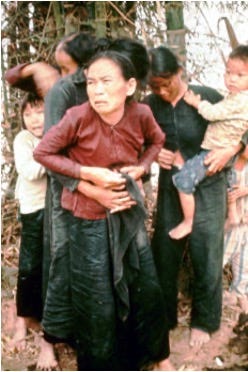
And so it goes in the fog of war, where often half the fog is what we call a coverup.
No, Ron with chiseled words recorded hard facts the Pentagon couldn’t ignore. Ron’s revelations led to another, that there was on that day another massacre just four clicks away, at My Khe 4. Uncovered by Sy Hersh, who worked with Ron on his Pulitzer Prize winning My Lai revelations, the My Khe massacre confirmed for Ron that My Lai was not an aberration but an operation, one of the tools in the army’s toolkit, to be employed whenever needed. Commonplace but—not by accident—little known.
The order to clear the 2 villages “filled with Viet Cong regulars” came from up the chain of command. Majors and colonels initialed those orders, then flew, stacked above in helicopters, witnessing the mayhem, for four hours.
No, the My Lai Massacre was not the result of a lieutenant and his men gone mad. It was not a bad apple that spoiled all the good apples. The barrel itself was rotten. The orders the soldiers followed came from the highest ranks, driven by the body count mentality that issued from Secretary of Defense Robert McNamara, approved by Secretary of State Kissinger, and by President Nixon.
Fighting a war of attrition, what you want is bodies. Any bodies will do. As the GIs commonly had it, “If it’s dead and Vietnamese, it’s VC.”
Such acts were war crimes. But the order to kill civilian non-combatants is also a criminal act, an order one can legally disobey. By law you must disobey it.
And just the threat to kill civilian non-combatants in the destruction of a 6000-year-old culture is also a war crime. An act of terrorism.
When warrant officer Hugh Thompson in his low flying helicopter saw GIs advancing on unarmed villagers, acting on his own, not on orders, he landed between them. He directed his crew to fire on those American soldiers if they continue to advance on the unarmed villagers.
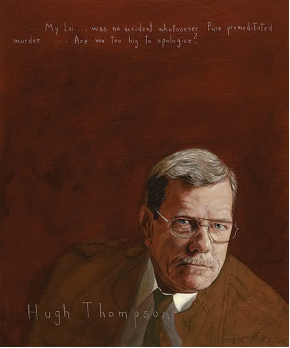
That brave act caused the command helicopters above to know the gig was up. The colonels and majors radioed to Calley who, not being crazy, followed the new orders from the sky. After four long hours, the massacre stopped, just like that.
Asked years later why he did that, Hugh, reared in Stone Mountain, Georgia, answered, “it’s how I was raised.”
The cover-up began. The fog rolled in. The official after-action report recounted the alt-facts: it was a great American victory where 128 Viet Cong regulars were killed.
But Thompson had reported the massacre to the command, to the command who had ordered the massacre. Gambling at Rick’s?!? I’m shocked, shocked.
An investigation followed.
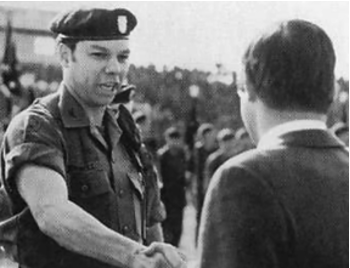
Colin Powell, then a major in Quang Ngai, ensured his political future by reporting: “relations between the Vietnamese and Americans are excellent.”
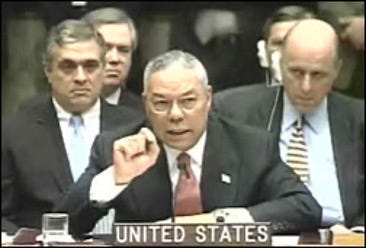
In 2003 General Powell, now Secretary of State, would make the case for WMDs to the UN Security Council. And so the fog of war rolls on.
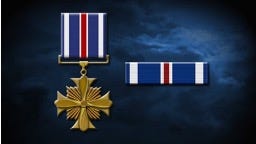
As part of their continuing cover up, the Pentagon quickly awarded Thompson the “Distinguished Flying Cross.” Its language echoed Major Powell’s and recalls Hemingway’s debasement of words in war: “Thompson’s sound judgment had greatly enhanced Vietnamese–American relations in the operational area.” He rescued a child “caught in intense crossfire.”
That medal will shut Thompson up, the Pentagon must have thought.
History now counts 170 dead children, 56 of them infants. No weapons found beside the dead. No hidden cache of Viet Cong weapons. The warrior spirit Pete Hegseth likes to promote had had a field day.
Intense crossfire is a complete fiction. Soldiers testified in the Peers Report that babies were thrown into the air and caught on bayonets. Calley testified at his trial that he killed babies because he “knew they would grow up to be Viet Cong.” His defense? He “was just following orders.”
During a VVAW protest march in the early 70s, Hugh Thompson threw his Distinguished Flying Cross onto the Capitol steps, calling the medal an obscenity.
The word “Atrocity” comes from the Greek for blackness. I’m sorry to speak of you these dark things just before your dinner, but they represent what can happen when you put boots on the ground and put no guardrails on their lethality.
That’s current Secretary of War Hegseth’s favorite word, lethality: their power not to win peace but to cause death. Other words Hegseth favors are the ones Hemingway studiously avoided: glory, honor, courage, and hallow.
Pursuing lethality, Hegseth promotes what he calls the warrior spirit. He seeks to untether the military from the Law of Armed Conflict and the Geneva Conventions. Both codes were written not by snowflakes but by those who witnessed the horrors of World War 2. Both codes shield 4 groups: wounded soldiers, shipwrecked personnel at sea, POWs, and noncombatants.
Hegseth dismisses as woke these efforts to leash the dogs of war. But these international codes of military conduct preserve some measure of our humanity when we most need it, when not to preserve them is to become ravening beasts. We’ve seen how his Department of War treats shipwrecked Venezuelans and Iranian schoolchildren.
Free of constraints, Hegseth’s warrior spirit operationalizes moral aberrations, what Robert Jay Lifton called atrocity producing situations: atrocities like My Lai, like Abu Ghraib, like Haditha, like Bagram, like Gaza, like the 168 dead school children in Iran’s Minab. What untethered warriors do lies at the feet of those who order them into battle untethered from humanizing rules of combat. What they do lies at the feet of those who do not speak up.
Ron Ridenhour spoke up.
Little wonder Ron made Nixon’s Enemies List.
Operationalized, the warrior spirit Hegseth celebrates is nothing to write home about. A young farm boy, Private Paul Meadlo’s life was changed forever because at My Lai he failed to question orders. Crying hysterically, he fired his automatic weapon into the ditch. His mother told a reporter, “I sent [the Army] a good boy, and they made him a murderer.”
When David Halberstam spoke at the Tulane conference to celebrate the 25th anniversary of Ron’s history-changing letter, David quoted Bobby Kennedy’s favorite Emerson passage, that “If one good man plants himself upon his instincts the whole world will come round.” As he quoted Bobby and the great transcendentalist, David pointed at Ron, “you are that one good man.”
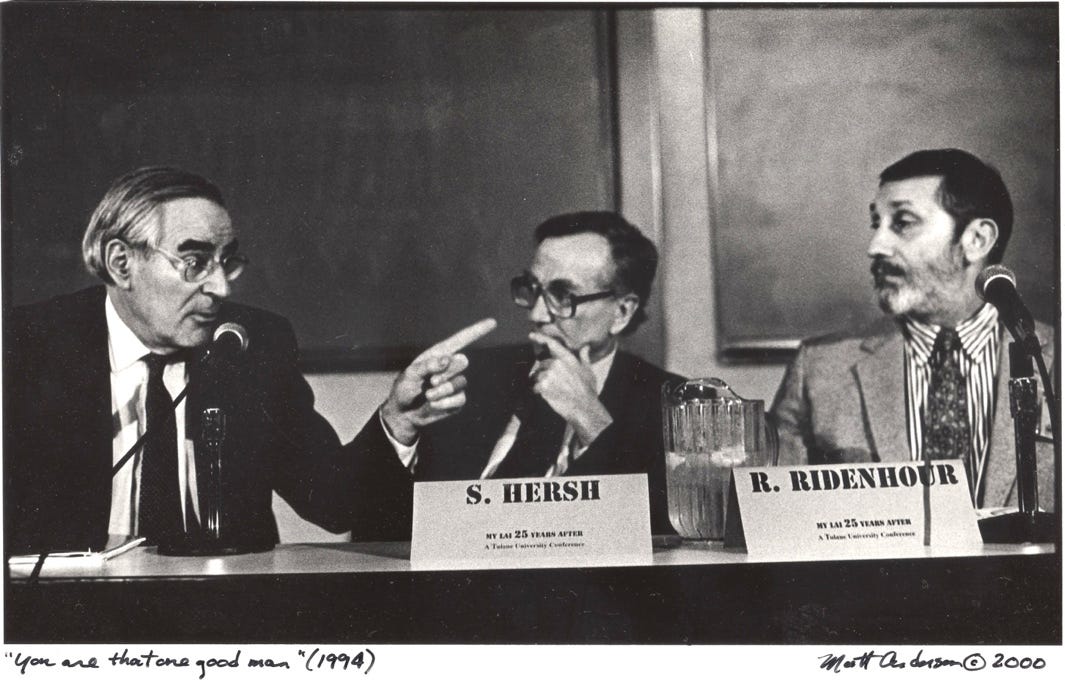
As you can see, Ron, a humble guy from Arizona who probably had read his dog-eared copy of The Best and the Brightest a dozen times, was abashed at this grand, unexpected compliment.
But why shouldn’t David have recognized it? They were both courageous whistleblowers. While Ron was writing his history-changing letter, David was telling the world in the New York Times that the American way of war was just “a giant lying machine.”
There’s only one way to stop giant lying machines. Whistleblowers. Truth-tellers.
In their honor, in honor of tonight’s winners, and in honor of those who blew the whistle on ICE in Minnesota, we have placed at each of your seats a little reminder of the moral duty we share. Please take it home and make good use of it.

The Ridenhour Prizes have never seemed so urgent or so essential. Our 21-year project to support whistleblowers and truth-tellers has run headlong into a blizzard of dogwhistles, alt-facts, gaslighting, glittery objects, and brazen lies.
Let’s blow the whistle on ‘em.
Thank you.
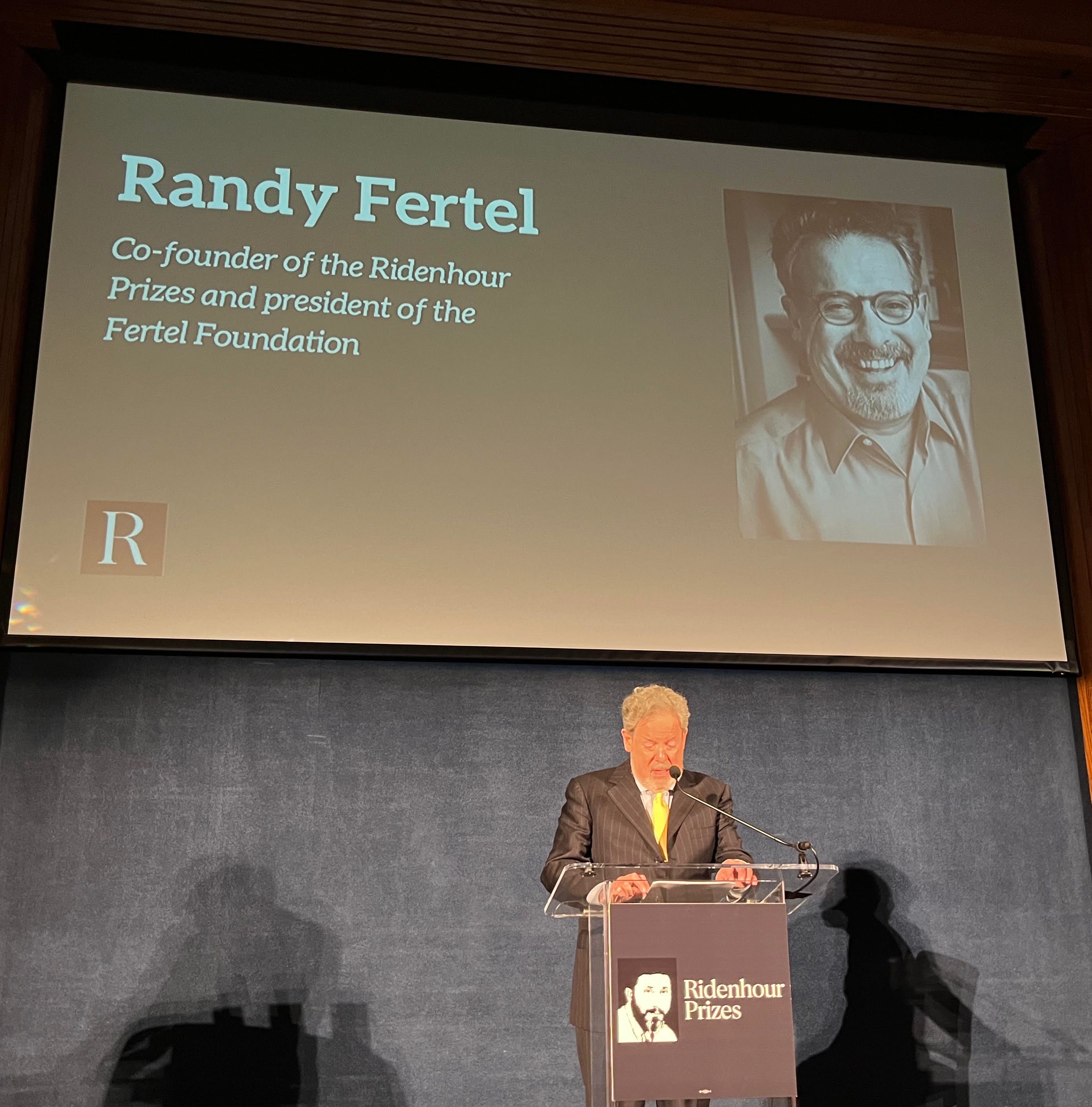
Listen to all of the speeches here.
If you liked this post, I’d be grateful if you’d give the ❤️ button a tap, or leave a comment below.
Thanks for reading “Yes And: Essays in the Age of Improv.” This post is public, so please share it with your friends who love democracy.
No posts
Comments
Nothing yet. Say the first thing.
Sign in to join the conversation.