
I was introduced recently as an “older gentleman.”
I have to admit, it stung a little.
Not because the person who said it was wrong. Quite the opposite. The description was probably perfectly accurate. But there is something about hearing the words older gentleman applied to yourself that makes you stop and think.
I am, in fact, getting older.
And one of the things I’ve become increasingly aware of as I age is memory. Not necessarily losing my memory, although there are certainly moments when I walk into a room and immediately forget why I went there. I’m talking more broadly about being intentional about taking care of my brain.
We spend a lot of time thinking about taking care of our bodies as we get older. We talk about walking, stretching, eating better, getting enough sleep and staying active.
But our brains need exercise, too.
Research into cognitive aging continues to point toward the importance of staying mentally, socially and physically active as we grow older. There isn’t one magic activity that keeps your brain young, but there are plenty of simple things we can do that challenge our minds and help us maintain cognitive function.
And here’s the part I find encouraging:
They don’t have to take hours.
In fact, some of the things I do take only a few minutes.
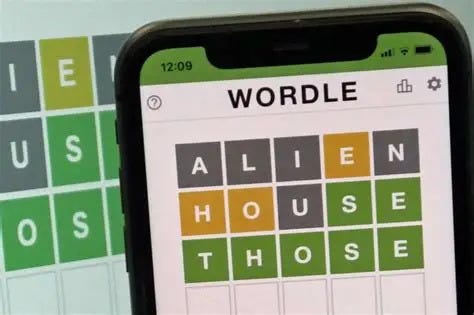
Every morning, I play Wordle.
If you’ve never played it, Wordle is a very simple word game. You have six attempts to guess a five-letter word, using clues from your previous guesses.
That’s it.
It takes me less than five minutes.
But for those few minutes, I’m thinking. I’m looking at letters. I’m considering possibilities. I’m remembering words. I’m eliminating possibilities. I’m making connections.
And I enjoy it.
That’s important, too. Taking care of our brains doesn’t have to feel like homework.
I also play an online game of chess.
Now, chess can certainly take longer than five minutes, so I’ve put a ten-minute limit on myself. I’m not trying to become a grandmaster. I’m simply giving my brain another kind of workout.
Chess requires planning, pattern recognition, memory, decision-making and critical thinking. Even when I make a move that I immediately regret, my brain is still working.
And then there is creativity.
I try to do something creative every day.
Sometimes that means writing a few words. Sometimes I’ll work on a song. Sometimes I’ll color in a coloring book. Other days, I might sit down and paint.
And occasionally, that little creative exercise turns into something much longer.
But it doesn’t have to.
That’s something I’ve had to learn: a meaningful activity doesn’t have to be a major activity.
Five minutes of writing is still writing.
Ten minutes of chess is still chess.
A few minutes with a coloring book is still creativity.
A short walk is still movement.
A conversation with a friend is still social connection.
We sometimes seem to have this idea that if we can’t devote an hour to something, it’s not worth doing.
I don’t think that’s true.
In fact, I think one of the most encouraging things about caring for our brains as we age is that we can incorporate little challenges into things we’re already doing.
And I think there’s something else worth considering: we shouldn’t exercise only one part of our brains.
Word games challenge us in one way. Chess challenges us in another. Creative activities engage different kinds of thinking. Reading, learning something new, playing music, having meaningful conversations, working with our hands and even navigating somewhere we’ve never been can all require different combinations of attention, memory, problem-solving and creativity.
Our brains aren’t one big muscle that gets stronger by doing one particular exercise.
They’re complicated.
So perhaps the best approach is to keep giving them different things to do.
And none of this means we need to turn our lives into one giant cognitive fitness program.
Please don’t misunderstand me. I’m not suggesting that everybody needs to start playing Wordle, learn chess and take up painting.
Those are simply the things that work for me.
They might not work for you at all.
Maybe you hate word games.
Maybe chess makes you want to throw the pieces across the room.
Maybe you haven’t picked up a paintbrush since high school.
That’s perfectly fine.
The point isn’t what you do.
The point is to find something that makes your brain work a little.
Learn a new song.
Do a crossword.
Read something outside your usual interests.
Learn a few words in another language.
Put together a puzzle.
Try a new recipe.
Take a different route somewhere and pay attention to where you’re going.
Write a paragraph.
Call somebody you haven’t talked to in a while.
Learn how to use something you’ve never used before.
Try something you’ve always thought you couldn’t do.
And then do it again tomorrow.
Because we’re living longer.
That’s wonderful.
But living longer also means we need to think about how we want to live those additional years. We want our bodies to keep working, of course. But we also want to remain curious. We want to remember. We want to learn. We want to create. We want to make decisions and solve problems and carry on conversations and discover new things.
I can’t stop myself from becoming an “older gentleman.”
Apparently, I’ve already achieved that distinction.
But perhaps I can be an older gentleman who is still learning.
Still creating.
Still curious.
Still challenging my brain.
And maybe that’s the real goal—not trying to make ourselves young again, but doing what we can to remain mentally engaged with the life we still have ahead of us.
Five minutes at a time.
No posts
Comments
Nothing yet. Say the first thing.
Sign in to join the conversation.